


 Home
HomeXHHW-2 Wire Installation Guide for Electrical Contractors and Engineers
 GERITEL
 Jul 01,2026

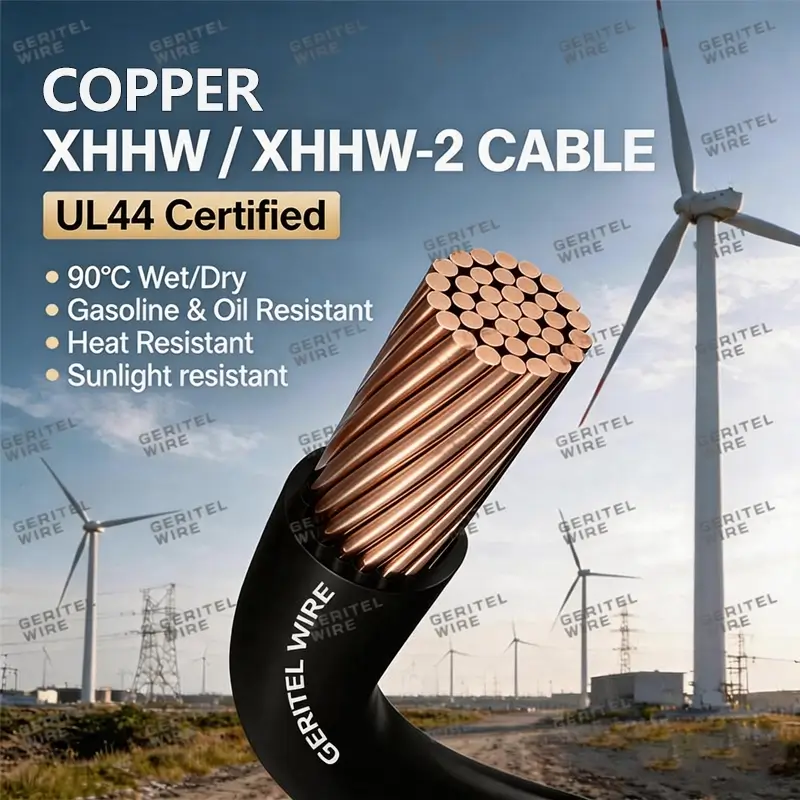
Improper pulling, burial and tray installation will scratch XLPE insulation, reduce ampacity and trigger project inspection failure. This step-by-step guide is written for field electrical contractors and design engineers working on commercial feeders, underground raceways and cable tray distribution. We cover installation specifications for 600V Copper XHHW Wire, standard 600V XHHW-2 Copper Cable, cross-listed Copper XHHW-2 RW90 Wire, as well as heavy-duty 600/1000V Copper XHHW-2 Wire. For long-term project procurement, cooperating directly with an XHHW/XHHW-2 Copper Wire factory eliminates dealer markup and lets you lock down a stable Copper XHHW-2 Wire price for tender projects.
1. Pre-Installation Inspection & Preparatory Work
Before starting any conduit routing, full pre-checks are required to avoid post-installation defects.
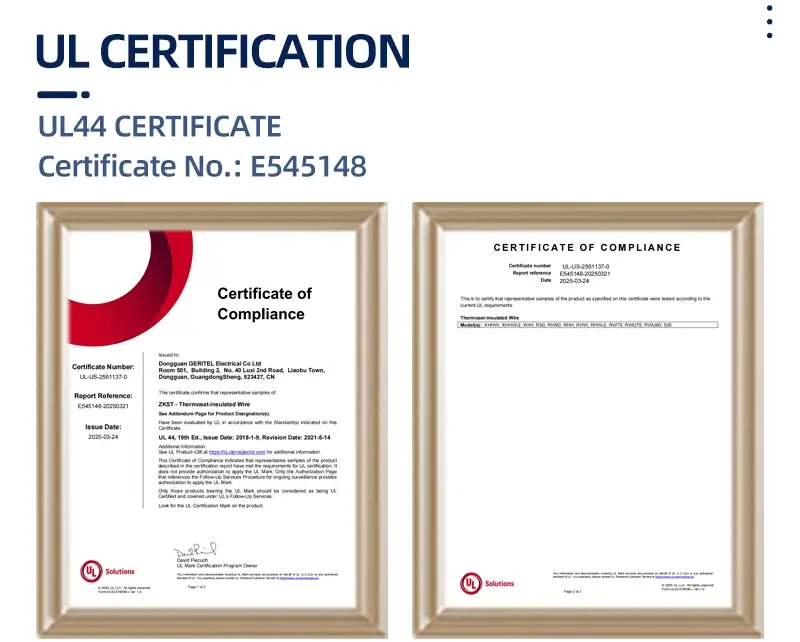
Certification Verification Always source from a qualified UL 44 Copper XHHW-2 Wire factory. Inspect UL test reports, reel marking and batch records to ensure the cable is thermoset XLPE insulation, not inferior thermoplastic material. All documents must match the wire model for third-party sampling inspection.
Voltage Grade Classification Do not mix different voltage classes inside one raceway.
600V grade: 600V Copper XHHW Wire and 600V XHHW-2 Copper Cable, used for conventional branch circuits and service entrance wiring.
600/1000V grade: 600/1000V Copper XHHW-2 Wire, designed for longer feeder circuits and industrial high-load distribution.
Physical Condition Check Check the outer sheath for pinholes, cracks or flattening caused by long-distance shipping. For Copper XHHW-2 RW90 Wire used in North American projects, confirm the UV-resistant jacket remains intact for outdoor exposed runs. Examine stranded copper conductors to rule out fraying, which would raise resistance and cause local overheating after power-on.
Tool Preparation Use non-marring pulling grips, low-friction wire lubricant compatible with XLPE, conduit reamers and bending radius gauges. Sharp metal edges inside EMT or rigid conduit must be deburred fully.
2. Conduit Pulling Procedures & Protection Standards
Conduit pulling is where most insulation damage occurs. These rules apply universally to 600V XHHW-2 cables and RW90 variants.
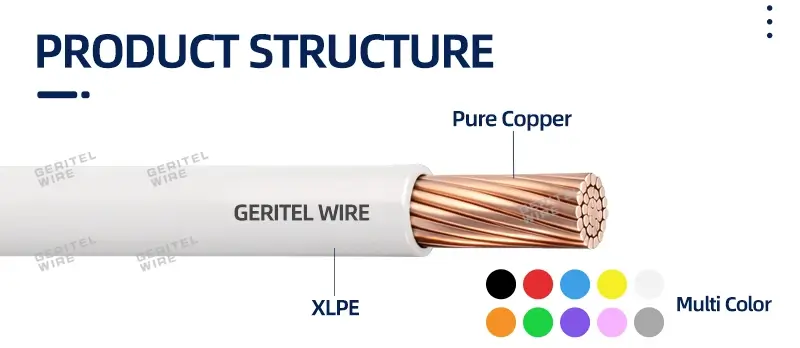
Strictly Follow Minimum Bending Radius XLPE thermoset insulation will crack if bent too sharply. For stranded copper building wire, maintain a bending radius no less than 8 times the overall cable diameter. Never force sharp 90-degree bends without proper elbows.
Control Pulling Tension Do not apply excessive tensile force during long conduit runs. Over-pulling stretches the stranded copper core and creates hidden breakages inside the wire. For multi-bend long-distance raceways, set up intermediate pull boxes to reduce friction.
Conduit Fill Ratio Control Follow NEC conduit fill tables strictly. Overcrowded raceways block heat dissipation, lower the 90°C ampacity rating and accelerate insulation aging. This rule is critical when running multiple runs of 600V XHHW-2 Copper Cable for industrial feeders.
Sheath Protection Only use XLPE-compatible pulling lubricant. Petroleum-based grease will corrode the outer jacket, gradually destroying the moisture-resistant property of the wire and invalidating its wet-location rating.
3. Underground Conduit & Wet Location Installation
Many contractors make mistakes when laying Copper XHHW-2 RW90 Wire in buried damp environments.
Conduit Sealing Although XHHW-2 carries wet-location approval, standing water trapped inside underground conduits will speed up insulation aging in tropical high-humidity soil. Seal both ends of buried raceways with approved cable sealing compound to stop groundwater and vapor penetration.
Burial Depth Match local building codes for underground power wiring. Protect rigid metal conduit with gravel bedding to avoid compression damage from heavy vehicle loads. Do not lay cable directly against sharp rock or construction debris.
Separation from Other Utilities Keep power cable conduits separated from water pipes and communication lines to prevent mechanical damage and electromagnetic interference. When running 600/1000V Copper XHHW-2 Wire for main feeders, maintain the required clear distance from low-voltage control circuits.
4. Open Cable Tray Installation Rules
For overhead cable tray routing on factory and commercial building projects:
Heat Dissipation Arrangement Spread out cable runs instead of stacking tightly. Free airflow preserves the full thermal rating of XLPE insulation. Stacked cables will run hotter and lose part of their designed ampacity.
Support Spacing Install cable supports at regular intervals to avoid excessive sagging. Long sagging stretches the cable jacket and conductor, shortening service life.
Outdoor UV Protection Standard XHHW-2 can be used indoors, while open-air exposed runs require UV-stabilized jacket material. Confirm this specification with your XHHW/XHHW-2 Copper Wire factory before ordering bulk reels.
5. Termination & Panel Connection Best Practices
Poor termination causes overheating at lugs and terminals, one of the most common electrical faults on XHHW-2 wiring systems.
Strip insulation carefully without nicking the stranded copper conductor. Even tiny cuts on the core will create hot spots under full load.
Compact stranded copper tightly before crimping lugs. Loose strands lead to high contact resistance and terminal overheating.
Match the wire gauge correctly with circuit breakers and distribution panel terminals to avoid continuous overload. This is essential for 600V Copper XHHW Wire used on heavy commercial branch circuits.
6. Top Installation Mistakes to Avoid
Pulling cables through sharp-edged conduit without reaming, which slices the XLPE outer jacket and ruins wet-location performance.
Mixing 600V and 600/1000V cable inside one raceway, violating voltage segregation code requirements.
Ignoring conduit fill limits, leading to heat buildup and premature insulation degradation.
Using non-compatible oil-based lubricant that slowly eats away the thermoset sheath.
Bypassing pull boxes on long multi-bend conduits, resulting in over-tension and hidden conductor damage.
7. Bulk Sourcing Strategy for Contractors & Distributors
If you frequently bid commercial and industrial projects, stable supply and clear cost control matter most.
Order directly from a UL 44 Copper XHHW-2 Wire factory rather than middlemen. FCL sea shipments cut unit cost significantly.
Ask your manufacturer for a detailed breakdown of the Copper XHHW-2 Wire price, including copper raw material cost, insulation material, reel packaging and export certification fees.
Place blanket orders to lock copper cost and avoid volatile market price jumps. Reserve stock for both regular 600V XHHW-2 Copper Cable and cross-border Copper XHHW-2 RW90 Wire.
Request pre-production samples to verify jacket hardness, conductor compactness and insulation thickness before mass shipment.
FAQ
Q1: Can 600V Copper XHHW Wire be used in 1000V industrial feeder systems? No. Insulation thickness differs strictly. Only 600/1000V Copper XHHW-2 Wire meets higher voltage system standards. Never downgrade or upgrade voltage grades arbitrarily.
Q2: Does Copper XHHW-2 RW90 Wire satisfy both NEC and CSA standards? Yes. This dual-certified cable is approved under UL 44 and Canadian RW90 specifications, perfect for contractors undertaking US and Canadian cross-border construction projects.
Q3: Will pulling tension damage XLPE insulation during long conduit runs? It will if you pull without intermediate pull boxes. Set up access boxes every 100 feet on multi-bend routes to reduce friction and tensile stress, protecting the thermoset jacket effectively.
Q4: How can I get the most favorable Copper XHHW-2 Wire price for repeated project orders? Establish long-term cooperation with an XHHW/XHHW-2 Copper Wire factory. Full-container bulk orders enjoy tiered discounts and stable pricing unaffected by regional dealers.
Dongguan Greater Wire & Cable Co., Ltd. is a professional UL 44 Copper XHHW-2 Wire factory. We manufacture a full range including 600V Copper XHHW Wire, 600V XHHW-2 Copper Cable, cross-listed Copper XHHW-2 RW90 Wire and heavy-duty 600/1000V Copper XHHW-2 Wire. We provide stable bulk stock, complete UL documentation and transparent Copper XHHW-2 Wire price for global electrical contractors, engineering companies and wholesale distributors. We support OEM marking, custom reel packaging and fast FCL delivery to Southeast Asia and North America.
Contact Us
Tel/WhatsApp/Wechat: +86 136 6257 9592
Tel/WhatsApp/Wechat: +86 135 1078 4550
Email: manager01@greaterwire.com
Website: www.greaterwire.com
 Top Advantages of Using XHHW Wire in Modern Electrical Construction



 Building 2, No. 40 Luxi 2nd Road, Liaobu Town, Dongguan City, Guangdong Province, China