


 Home
HomeHow to Read XHHW-2 Wire Specifications: Voltage, Insulation, and Ratings
 GERITEL
 Jul 01,2026

You have a project. You have a budget. And you have a specification sheet from a supplier. It lists conductor size, insulation type, voltage rating, and a dozen other numbers. But what actually matters?
Reading an XHHW-2 wire specification sheet is not difficult—but you need to know what to look for. This guide walks through the key sections of a spec sheet and explains what each number means for your project.
1. Start with the Basics: Wire Type and Size
Every XHHW-2 spec sheet starts with the wire type and size. This is the foundation of the specification.
- Wire type. Look for "XHHW-2" or "XHHW/XHHW-2." This tells you the insulation type (thermoset XLPE) and the wet location rating. The "-2" is critical—it means the wire is rated 90°C in both dry and wet locations.
- Conductor material. The spec sheet should state "copper" or "aluminum." For copper, check if it is bare copper or tinned copper. Most XHHW-2 building wire uses bare copper.
- Size. This is listed in AWG for smaller wires (14 AWG to 4/0 AWG) or kcmil for larger wires (250 kcmil and above). A 12 AWG XHHW-2 wire is common for branch circuits. A 2 AWG XHHW-2 wire is a typical feeder size. For large feeders, 500 kcmil XHHW-2 wire is a common service entrance size.
- Conductor construction. Look for "stranded" or "solid." Stranded is more flexible and easier to pull through conduit. Solid is less flexible but sometimes used for fixed installations.
This section is usually at the top of the spec sheet. Confirm it matches your order before reading further.
2. Insulation: The Heart of XHHW-2
The insulation section is where XHHW-2 differs from other wire types.
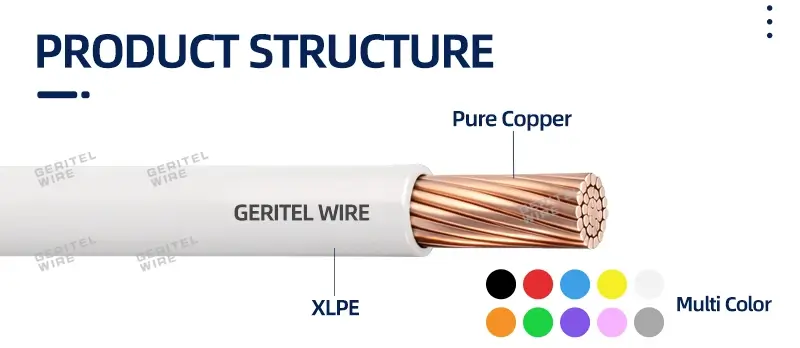
- Insulation type. Look for "XLPE" (cross-linked polyethylene) or "thermoset." This is the material that gives XHHW-2 its 90°C rating and chemical resistance. If the spec sheet says "PVC" or "thermoplastic," it is not XHHW-2.
- Temperature rating. Look for "90°C wet / 90°C dry" or simply "-2." This is the key specification. XHHW-2 maintains full ampacity in wet locations. XHHW (without -2) is only 75°C wet.
- Insulation thickness. The spec sheet will list thickness in mils or millimeters. This varies by voltage rating. Higher voltage wires have thicker insulation. Consistent thickness is a quality indicator.
XLPE insulation is the defining feature of XHHW-2 wire. It resists heat, moisture, chemicals, and abrasion better than thermoplastic alternatives.
3. Voltage Rating: What It Means for Your System
Voltage rating is one of the most important numbers on the spec sheet.
- 600V rating. This is the standard for most commercial and industrial building wire. It is suitable for 480V systems and most distribution applications. The 600V rating provides a safety margin above the nominal system voltage.
- 1000V rating. This is used for higher voltage systems, solar applications, and VFD motor leads where voltage spikes are a concern.
- 2000V rating. This is for the highest voltage systems and applications requiring maximum insulation protection.
What voltage rating to choose: Select a rating that exceeds your system voltage. For a 480V system, 600V is sufficient. For 690V systems, use 1000V. For VFD applications with long cable runs, consider 1000V for extra margin against reflected waves.
The XHHW-2 voltage rating will be clearly listed on the spec sheet. If it is not, the spec sheet is incomplete.
4. Ampacity: What the Wire Can Carry
Ampacity is the maximum current the wire can carry under specific conditions. This is where many buyers make mistakes.
- The table. The spec sheet should include an ampacity table or reference the appropriate code table. Ampacity depends on the conductor size, temperature rating, and installation conditions.
- Temperature derating. The 90°C rating of XHHW-2 provides higher ampacity than 75°C wire. However, terminations are often rated 60°C or 75°C, which limits the circuit ampacity.
- Conditions matter. Ampacity is affected by ambient temperature, number of conductors in a conduit, and installation method. The spec sheet may include derating factors or reference the code tables.
XHHW-2 wire specification sheets include ampacity information. Always check the conditions that apply to your installation.
5. Physical Characteristics: Diameter and Weight
These numbers matter for installation planning.
- Outside diameter (O.D.). This is the total diameter of the finished wire, including insulation. You need this number for conduit fill calculations. A 12 AWG XHHW-2 wire has a different O.D. than 12 AWG THHN because of the insulation thickness.
- Weight. This is listed in pounds per thousand feet or kilograms per kilometer. Weight affects shipping cost, handling, and pulling tension. Larger wires like 500 kcmil XHHW-2 wire have substantial weight that must be accounted for in installation planning.
- Bending radius. The spec sheet may list the minimum bending radius. This is important for installations with tight bends. Larger wires require larger bending radii.
6. Certification and Compliance
This section tells you what standards the wire meets.
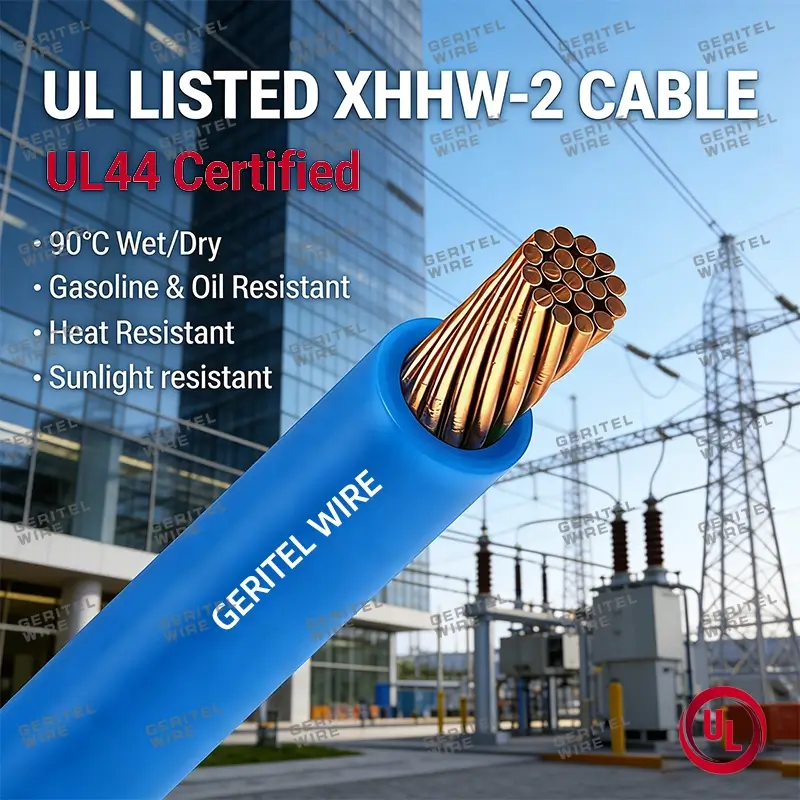
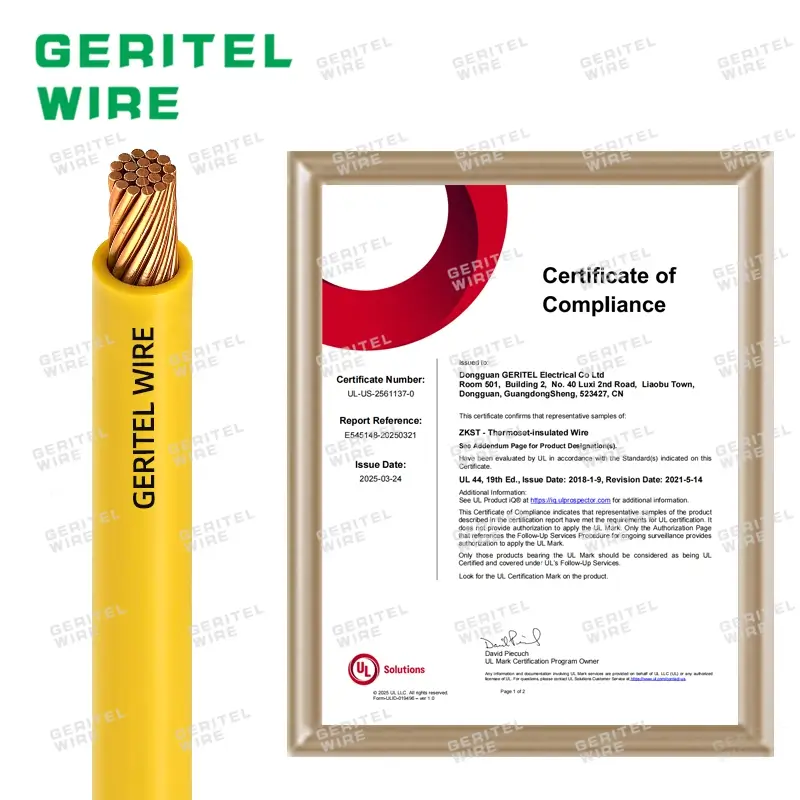
- UL 44. Look for "UL 44" or "UL Listed." UL 44 is the standard for thermoset-insulated wires. It ensures the wire has been tested and meets the requirements for XHHW-2.
- CT use. For wires 1/0 AWG and larger, look for "CT Use" on the spec sheet. This indicates the wire is suitable for cable tray installations.
- Sunlight resistance. Look for "Sunlight Resistant" or "SUN RES." This indicates the wire can be installed in exposed outdoor locations without degradation.
- Other standards. The spec sheet may reference ASTM, ICEA, or other standards. These are additional quality indicators.
Certification is not optional. If the spec sheet does not show UL 44 certification, do not buy the wire. The UL mark on the spec sheet should match the UL mark on the wire jacket.
7. What to Check Before Ordering
Before you finalize an order, run through this checklist.
- Wire type: XHHW-2, not XHHW
- Conductor material: copper or aluminum, as specified
- Gauge: matches the load requirement
- Voltage rating: exceeds the system voltage
- Temperature rating: 90°C wet and dry
- UL 44 certification: clearly stated
- Outside diameter: fits the conduit
- Stranding: matches flexibility requirements
- Sunlight resistance: if outdoor exposed
- CT use: if cable tray installation
XHHW-2 wire specification sheets are the primary source for this information. Read them carefully before ordering.
FAQ
Q1: What is the most important number on an XHHW-2 spec sheet?
The temperature rating in wet locations. If it says 90°C wet, it is true XHHW-2. If it says 75°C wet, it is XHHW or another wire type.
Q2: Can I trust a spec sheet without UL 44 marking?
No. UL 44 certification is the recognized standard for XHHW-2 building wire. Without it, the wire has not been tested to the standard.
Q3: What is CT use and why does it matter?
CT use means the wire is rated for cable tray installations. For 1/0 AWG and larger wires in tray applications, this marking is required.
Q4: How do I check the voltage rating on an XHHW-2 spec sheet?
Look for the voltage rating printed with the wire type. Common ratings are 600V, 1000V, and 2000V. The voltage rating must exceed the system voltage.
Q5: Does GERITEL provide UL 44 certified XHHW-2 wire with complete spec sheets?
Yes. Dongguan GERITEL Electrical Co., Ltd. provides fully detailed specification sheets for all XHHW/XHHW-2 copper building wires. We can provide the certificate and file number upon request.
Need Help Understanding an XHHW-2 Specification Sheet?
Not sure what you are looking at? Send us your spec sheet. We will review it and explain what matters for your project. We can also provide our own spec sheets for our XHHW-2 products.
Contact us
Dongguan GERITEL Electrical Co., Ltd.
Tel/WhatsApp/Wechat: +86 136 6257 9592
Tel/WhatsApp/Wechat: +86 135 1078 4550
Email: manager01@greaterwire.com
Website: www.geritelgroup.com
 XHHW-2 Wire Installation Guide for Electrical Contractors and Engineers



 Building 2, No. 40 Luxi 2nd Road, Liaobu Town, Dongguan City, Guangdong Province, China