


 Home
HomeXHHW-2 Cable vs Building Wire Types: A Technical Comparison Guide
 GERITEL
 Jul 01,2026

You are looking at a spec sheet. The project calls for building wire. The supplier offers several options: XHHW-2, THHN, THWN-2, USE-2. They all look similar. They are all 600V. They all go in conduit. So which one do you choose?
Building wire selection is not one-size-fits-all. The wrong choice leads to premature insulation failure, installation delays, or inspection failures. The right choice saves money and ensures long-term reliability.
This guide compares XHHW-2 cable with other common building wire types. By the end, you will know the differences and be able to select the right type for your project.
1. Why Building Wire Type Matters
The type of building wire you choose affects three things:
- Installation. Some wire pulls easier through conduit. Some is more flexible. Some requires special handling. Installation cost is directly affected by wire type.
- Performance. Different wire types have different temperature ratings, wet location ratings, and resistance to chemicals and abrasion. Performance in the field varies significantly.
- Cost. First cost is only part of the equation. The right wire type reduces maintenance, prevents failures, and avoids costly rework.
Understanding the differences between wire types helps you make the right trade-offs.
2. Key Wire Types in the Building Wire Market
Several wire types dominate the building wire market. Each has a specific construction and set of ratings.
- THHN (Thermoplastic High Heat-resistant Nylon). This is the most common building wire in commercial construction. It features PVC insulation with a nylon jacket. It is rated 90°C dry and 75°C wet. THHN is generally dual-rated THHN/THWN-2, but not always. The nylon jacket provides abrasion resistance during pulling.
- THWN-2 (Thermoplastic Heat and Water-resistant Nylon). This is the wet-location version of THHN. It is rated 90°C in both dry and wet locations. THWN-2 is the correct choice for damp or wet installations. Many THHN wires are dual-rated THHN/THWN-2, but not all.
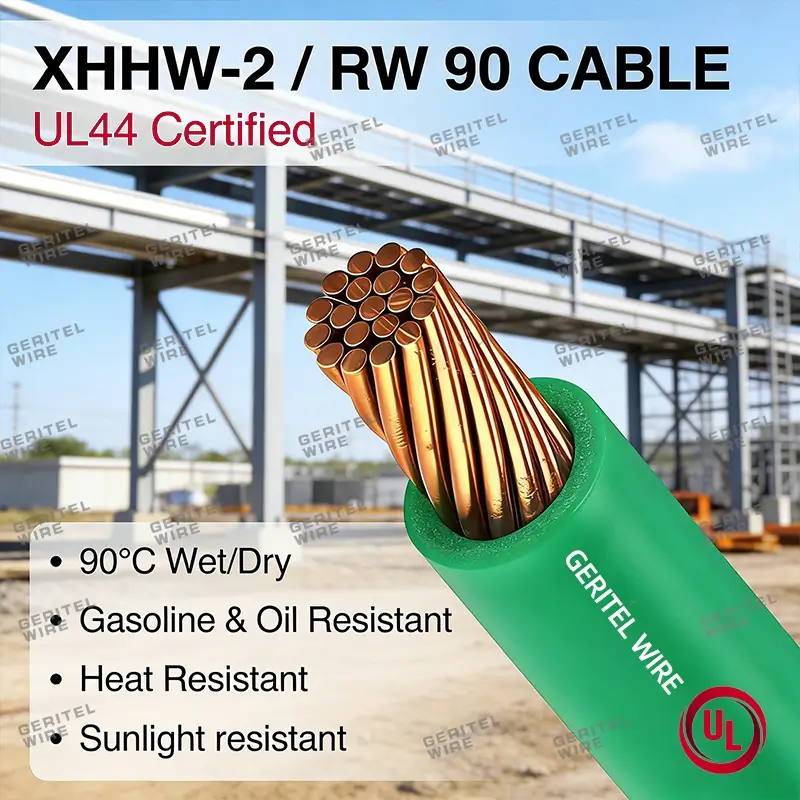
- XHHW-2 (Cross-linked High Heat Water-resistant). This wire uses XLPE (cross-linked polyethylene) thermoset insulation. It is rated 90°C in both dry and wet locations. The thermoset insulation offers better heat resistance, chemical resistance, and abrasion resistance than thermoplastic alternatives.
- USE-2 (Underground Service Entrance). This wire is rated for underground service entrance applications. It uses XLPE thermoset insulation similar to XHHW-2 and is rated 90°C wet and dry. USE-2 is suitable for direct burial.
- XHHW. This is the predecessor to XHHW-2. It is rated 90°C dry and 75°C wet. XHHW is still available but XHHW-2 has largely replaced it in many applications.
The differences are not just technical—they affect where and how each wire can be used.
3. XHHW-2 vs THHN: The Most Common Comparison
THHN and XHHW-2 are the two most commonly compared building wires. Here is the breakdown.
- Insulation type. THHN uses thermoplastic PVC. XHHW-2 uses thermoset XLPE. Thermoset insulation is cross-linked during manufacturing, which gives it superior heat and chemical resistance.
- Wet location rating. THHN is 90°C dry and 75°C wet unless dual-rated THWN-2. XHHW-2 is 90°C wet and dry. In damp or wet locations, XHHW-2 maintains full ampacity while THHN does not.
- Chemical resistance. PVC insulation is susceptible to oil and chemical degradation. XLPE thermoset insulation resists oils, chemicals, and solvents.
- Abrasion resistance. The nylon jacket on THHN provides good abrasion resistance. XHHW-2 XLPE insulation provides comparable or better resistance without the need for a separate jacket.
- Temperature performance. Both are 90°C dry. In wet locations, only XHHW-2 maintains 90°C.
- Cost. THHN is typically less expensive. The cost difference is significant in some cases and minimal in others.
When to choose THHN: Dry indoor applications, general-purpose commercial wiring, budget-conscious projects, low chemical exposure.
When to choose XHHW-2: Wet locations, industrial environments with oil/chemical exposure, long-term reliability, high-temperature areas, VFD applications.
4. XHHW-2 vs THWN-2: Wet Location Options Compared
THWN-2 and XHHW-2 are both rated 90°C wet and dry. This makes them comparable in wet location capability.
The difference lies in insulation type and durability.
THWN-2 uses thermoplastic PVC with a nylon jacket. XHHW-2 uses thermoset XLPE. The thermoset insulation of XHHW-2 provides better resistance to heat aging, chemicals, and abrasion.
In a wet location—underground conduit, outdoor installation, damp mechanical room—both wires are rated for the same temperature. However, XHHW-2's thermoset insulation lasts longer in harsh conditions and is less likely to degrade over time.
When to choose THWN-2: Wet locations where budget is a primary concern and chemical exposure is minimal.
When to choose XHHW-2: Wet locations with chemical exposure, high-temperature conditions, or where long-term reliability is critical.
5. XHHW-2 vs XHHW: Understanding the "-2" Difference
XHHW is the older version. XHHW-2 is the improved version.
The difference: XHHW is rated 90°C dry and 75°C wet. XHHW-2 is rated 90°C wet and dry.
Why it matters: In a wet location, XHHW loses ampacity. XHHW-2 maintains its full rating. This difference can mean using one size smaller conductor with XHHW-2 compared to XHHW in wet applications.
What else is different: XHHW-2 has been tested to more stringent requirements. The "-2" rating is a higher standard.
Today, XHHW-2 has largely replaced XHHW in new construction. Most specifications call for XHHW-2.
6. Insulation Type Comparison: Thermoset vs Thermoplastic
The fundamental difference between XHHW-2 and other building wires is the insulation type.
Thermoplastic (PVC). Used in THHN and THWN-2. PVC softens when heated and hardens when cooled. It can be remelted. PVC is less expensive but has lower temperature and chemical resistance. The nylon jacket adds abrasion resistance.
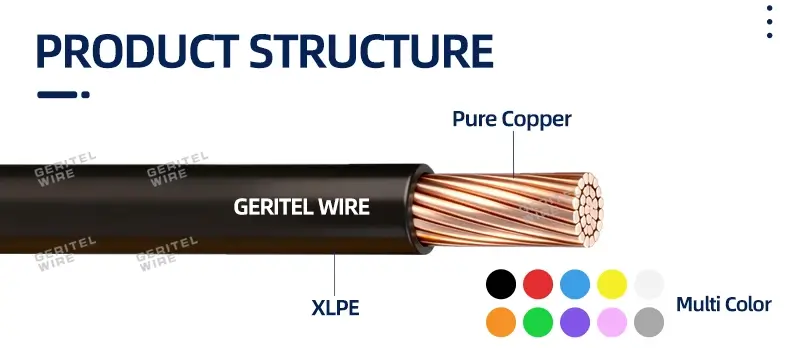
Thermoset (XLPE). Used in XHHW-2. XLPE is cross-linked during manufacturing. Once cross-linked, it cannot be remelted or reshaped. Thermoset insulation has higher temperature resistance, better chemical resistance, and greater durability.
The thermoset advantage is most pronounced in:
- High-temperature environments
- Chemical and oil exposure
- Wet locations
- Long-term aging
7. Application Comparison: Which Wire for Which Project?
Here is a practical guide for selecting building wire types.
Dry commercial building (offices, retail). THHN is common and cost-effective. XHHW-2 is an upgrade if the building has mixed wet areas.
Wet locations (outdoor, underground, damp). THWN-2 or XHHW-2 are both rated 90°C wet. XHHW-2 offers longer life in harsh conditions.
Industrial environments (chemicals, oils, heat). XHHW-2 is preferred. The thermoset insulation resists chemicals and heat better than PVC.
VFD motor leads. XHHW-2 is recommended. The thermoset insulation handles voltage spikes better than thermoplastic.
Service entrance. Either THWN-2 or XHHW-2 can be used. XHHW-2 offers better long-term durability.
Direct burial. USE-2 or XHHW-2 rated for direct burial are suitable options.
FAQ
Q1: What is the main difference between XHHW-2 and THHN?
XHHW-2 uses thermoset XLPE insulation and is rated 90°C wet and dry. THHN uses thermoplastic PVC insulation and is rated 90°C dry and 75°C wet unless dual-rated THWN-2.
Q2: Can THHN be used in wet locations?
Only if it is dual-rated THHN/THWN-2. THHN alone is dry-location only. Check the jacket marking to verify.
Q3: Is XHHW-2 worth the extra cost over THHN?
For wet locations, industrial environments, or long-term reliability, yes. For dry indoor applications with low chemical exposure, THHN is sufficient and more economical.
Q4: What does the "-2" mean on XHHW-2?
The "-2" indicates the wire is rated 90°C in both wet and dry locations. XHHW (without -2) is only 75°C wet.
Q5: Does GERITEL provide UL 44 certified XHHW-2 wire?
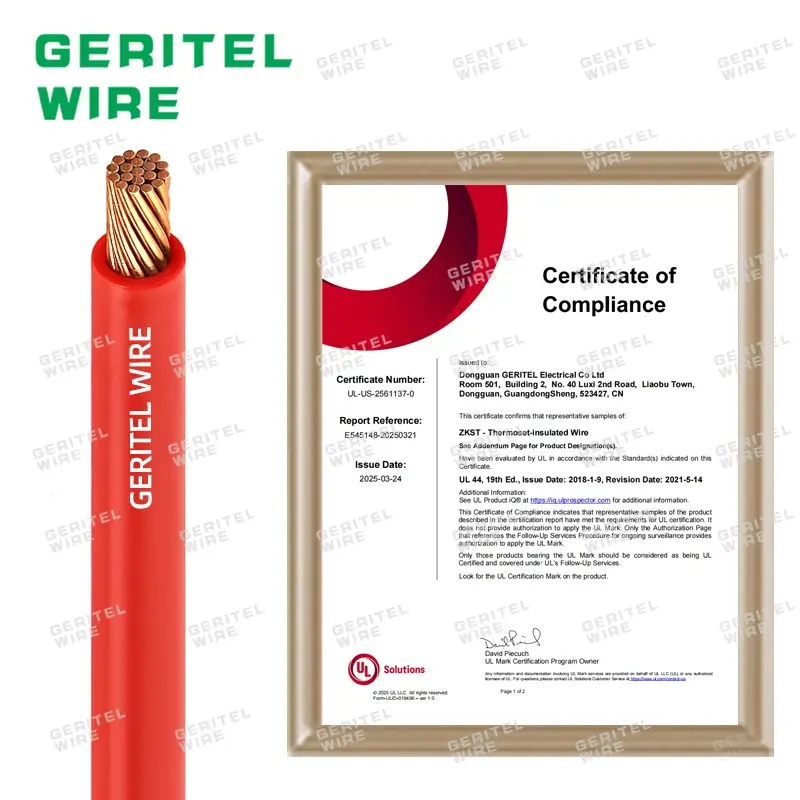
Yes. Dongguan GERITEL Electrical Co., Ltd. offers UL 44 certified XHHW/XHHW-2 copper building wire. We can provide the certificate and file number upon request.
Need Help Choosing the Right Building Wire Type?
Tell us about your project—location, conditions, and requirements. We will recommend the right building wire type and send a quick quote.
Contact us
Dongguan GERITEL Electrical Co., Ltd.
Tel/WhatsApp/Wechat: +86 136 6257 9592
Tel/WhatsApp/Wechat: +86 135 1078 4550
Email: manager01@greaterwire.com
Website: www.geritelgroup.com
 How to Read XHHW-2 Wire Specifications: Voltage, Insulation, and Ratings



 Building 2, No. 40 Luxi 2nd Road, Liaobu Town, Dongguan City, Guangdong Province, China