


 Home
HomeCommon Mistakes When Specifying XHHW-2 Wire for Electrical Projects
 GERITEL
 Jul 01,2026

For commercial building conduit wiring and wet-location electrical installations, XHHW-2 wire is one of the most trusted 600V low-voltage cables for MEP design engineers and electrical contractors. With superior XLPE insulation, all-weather rating, and better flexibility than traditional THHN/THWN-2 wire with PVC jackets, XHHW-2 has become the standard choice for modern commercial and industrial power distribution.
However, most on-site failures, inspection rejections, and premature cable damage do not come from poor product quality — they come from specification mistakes. Project specifiers and field teams often rely on old experience, generic ampacity charts, or confused XHHW/XHHW-2 rating rules, resulting in overloaded circuits, wet-location breakdowns, and costly full-cable replacement.
This article breaks down the five most dangerous and common XHHW-2 specification mistakes seen in commercial conduit projects and wet location installations, with field-proven correction rules aligned with NEC and UL standards.
1. Using Only Printed Ampacity Values (Skipping NEC Derating)
The #1 field mistake engineers and contractors make is selecting wire gauge strictly based on factory printed ampacity without adjusting for real installation conditions.
Manufacturer ampacity is tested under ideal single-wire, low-temperature conditions. On real job sites, bundled 3/C or 4/C cable groups, crowded conduits, and high indoor ambient temperatures drastically reduce actual current carrying capacity.
Many teams incorrectly install 1/0 AWG Copper XHHW-2 Wire, 2/0 AWG Copper XHHW-2 Wire, 4/0 AWG Copper XHHW-2 Wire, or 500 kcmil Copper XHHW-2 Wire without derating. The result is chronic overheating, routine breaker tripping, and long-term insulation degradation that creates hidden fire hazards.
Correct Specification Rule
Always derate XHHW-2 ampacity per NEC rules for:
· Multiple conductors bundled in one conduit
· High-temperature mechanical rooms and attic spaces
· Long continuous-load feeders
Never size cable purely by load calculation — always apply environmental derating factors.
2. Confusing XHHW vs XHHW-2 Wet Location Ratings (Critical Humidity Mistake)
This is the most common reason for insulation failure in commercial restrooms, basement conduits, and humid facility environments.
Standard XHHW only supports 75℃ rating in wet locations, while true XHHW-2 maintains a full 90℃ rating in both dry and wet conditions. Many project managers mistakenly substitute regular XHHW for XHHW-2 to save cost on paper, but in continuous humid environments, the older insulation quickly absorbs moisture, leading to dielectric breakdown and short circuits.
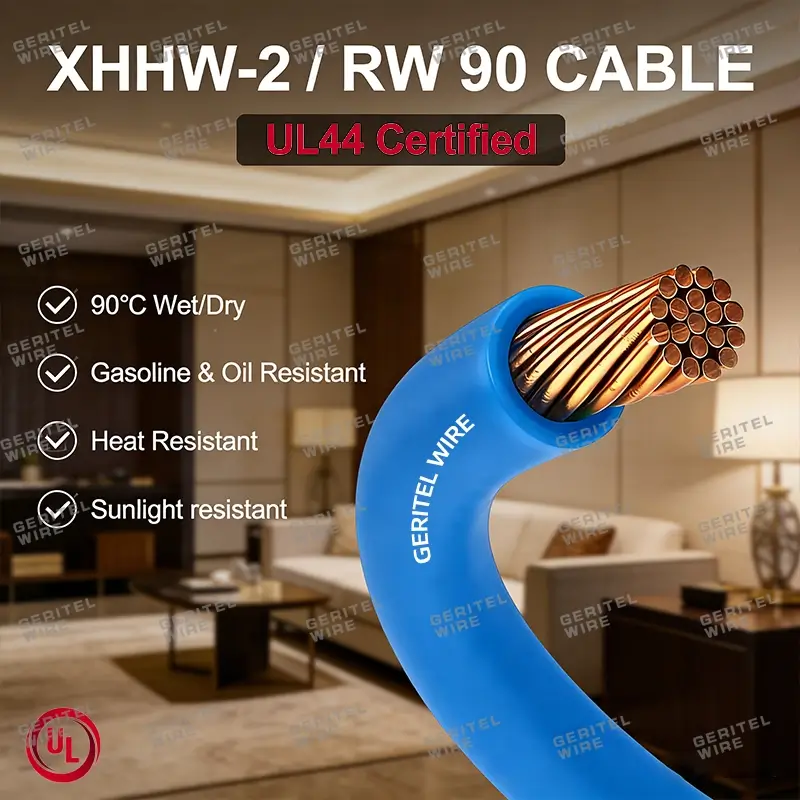
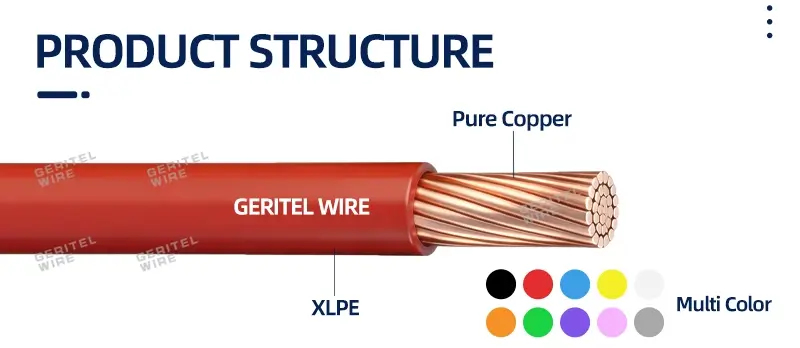
Unlike THHN/THWN-2 wires with moisture-sensitive PVC jackets, XHHW-2’s upgraded XLPE insulation delivers stable waterproof performance, making it the only safe option for persistent wet-location electrical installation.
3. Ignoring Temperature Ratings — Fast XLPE Insulation Aging in High-Heat Zones
Many designers underestimate how much heat accumulates in enclosed commercial conduits. Even premium XLPE insulation will age rapidly if the wire is specified without considering ambient heat.
PVC-insulated THHN cables degrade even faster under high heat, but improperly specified XHHW-2 also suffers accelerated aging when overloaded. Facilities with mechanical rooms, rooftop conduits, and sun-exposed wiring often face recurring cable faults simply because the specification did not account for continuous high-temperature operation.
Genuine XHHW-2’s 90℃ full-range thermal resistance extends service life dramatically when correctly sized, supporting stable long-term operation for large-feed 4/0 AWG and 500 kcmil Copper XHHW-2 Wire distribution runs.
4. Specifying Non-UL-Listed XHHW-2 Wire (Inspection Failure & Full Rework)
Many low-bid suppliers deliver uncertified XHHW-2 cable that visually matches standard products but lacks valid UL listing.
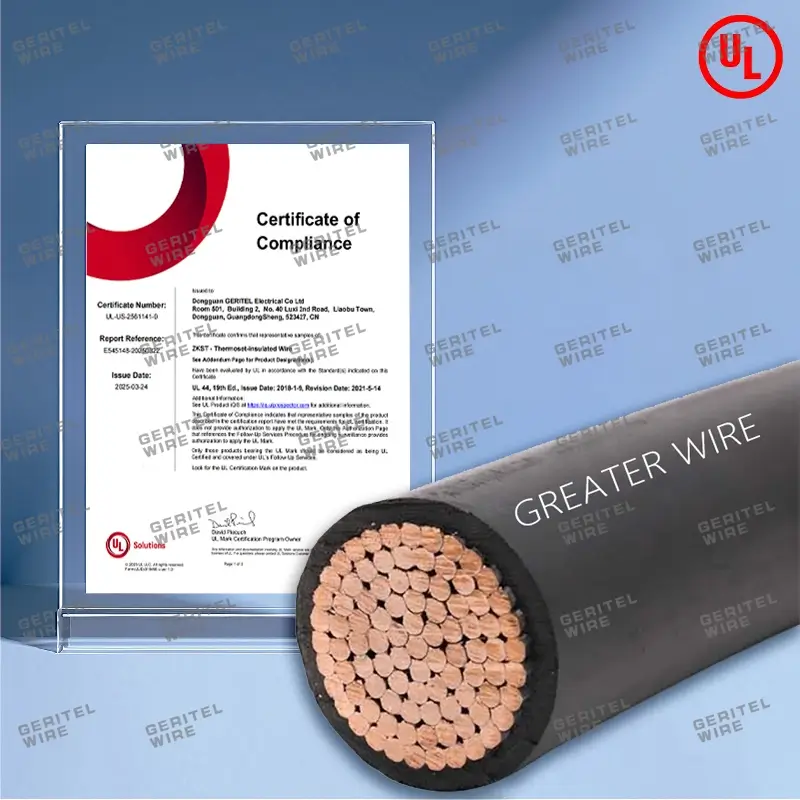
For commercial building and industrial electrical projects, inspectors strictly enforce UL 44 compliance. Non-listed cable will result in complete project rejection, forcing contractors to remove and reinstall entire wiring systems. This mistake causes massive schedule delays, budget overruns, and liability issues for project specifiers.
Always verify UL certification for all large-size feeder cables, including 1/0 AWG, 2/0 AWG, 4/0 AWG, and 500 kcmil Copper XHHW-2 Wire before installation.
5. Misapplying XHHW-2 for Direct Burial Without Protection (Severe Corrosion Damage)
A frequent long-term mistake is using standard XHHW-2 for underground direct burial without armor or protective jackets.
Standard XHHW-2 without aluminum interlocked armor or galvanized steel armor lacks anti-corrosion shielding for underground environments. Soil moisture, chemical corrosion, and underground pressure gradually erode the insulation and conductor structure, leading to premature cable failure and extremely expensive excavation and repair work.
For underground runs, always specify armored constructions or protected conduit systems instead of bare XHHW-2.
6. How Correct XHHW-2 Specs Improve Project Performance
When specified properly, XHHW-2 outperforms traditional wiring solutions for commercial and wet-location projects:
· Higher 90℃ XLPE temperature rating delivers larger ampacity than PVC-based THHN/THWN-2, saving wire gauge cost
· Dual wet/dry rating simplifies specification for mixed indoor humid zones
· Low-smoke zero-halogen properties improve building fire safety
· UV and aging resistance ensures 20+ year service life for outdoor and conduit runs
· Compact compressed conductor structure provides smaller bending radius, speeding up on-site conduit pulling for bare ground and insulated green ground circuits
7. FAQs
Q1: What is the main difference between XHHW and XHHW-2 in wet locations?
XHHW drops to 75℃ in wet locations, while XHHW-2 maintains a full 90℃ rating in both dry and humid conditions, preventing moisture breakdown.
Q2: Do I need to derate XHHW-2 ampacity for bundled conduit runs?
Yes. NEC requires mandatory ampacity derating for multiple bundled conductors and high ambient temperatures. Never use raw printed ampacity for final sizing.
Q3: Is XHHW-2 better than THHN wire for commercial conduit wiring?
Yes. XHHW-2’s XLPE insulation offers better heat resistance, moisture resistance, and longer lifespan than PVC-jacketed THHN, making it ideal for commercial wet and enclosed conduit environments.
Q4: Can standard XHHW-2 be used for direct burial?
No. Unarmored XHHW-2 is vulnerable to underground corrosion. Direct burial applications require armored cable or full conduit protection.
8. Final Takeaway & Inquiry CTA
Most XHHW-2 project failures stem from specification errors rather than product defects. Understanding wet location ratings, NEC ampacity derating rules, UL compliance requirements, and correct application boundaries eliminates 90% of on-site electrical faults and inspection risks.
If you need UL-verified 1/0 AWG, 2/0 AWG, 4/0 AWG, or 500 kcmil Copper XHHW-2 Wire for your next commercial conduit or wet-location project, contact us today for full spec sheets, certification validation, and a custom project quote.
Dongguan GERITEL Electrical Co., Ltd.
Tel/WhatsApp/Wechat: +86 136 6257 9592
Tel/WhatsApp/Wechat: +86 135 1078 4550
Email: manager01@greaterwire.com
Website: www.geritelgroup.com
 XHHW-2 Cable vs Building Wire Types: A Technical Comparison Guide



 Building 2, No. 40 Luxi 2nd Road, Liaobu Town, Dongguan City, Guangdong Province, China