


 Home
HomeXHHW-2 Wire and Raceway Systems: Installation Standards Explained
 GERITEL
 Jul 03,2026

1. The 3 Raceway Installation Mistakes That Trigger Inspection Failures
Anyone who has pulled wire through a commercial or industrial raceway knows: most inspection rejections don’t come from bad craftsmanship — they come from wrong wire selection and missed code details. For underground distribution runs and wet-location industrial sites, three mistakes show up on punch lists more than any others: using the wrong wire type for the environment, skipping ampacity derating for bundled conductors, and installing wire that lacks proper certification.
All three lead to the same outcome: re-pulling wire, wasted labor, pushed-back deadlines, and eroded profit margins. Many teams also struggle with sizing confusion between AWG and kcmil ratings, or fail to tell the difference between XHHW-2 vs THHN for raceway use. This guide breaks down installation standards by project phase, so you can verify compliance at every step and pass inspection on the first walkthrough.
2. Pre-Installation Verification: Wire Specs, Environment & Certification Checks
Before you feed a single wire into a raceway, three checks must be signed off. Skipping any of them is the most common cause of late-stage rework.
· Environment confirmation first: Document the maximum ambient temperature the raceway will see, and classify the location as dry, damp or wet. Underground commercial conduits and outdoor industrial raceways always fall under wet-location rules, and wire must be rated accordingly.
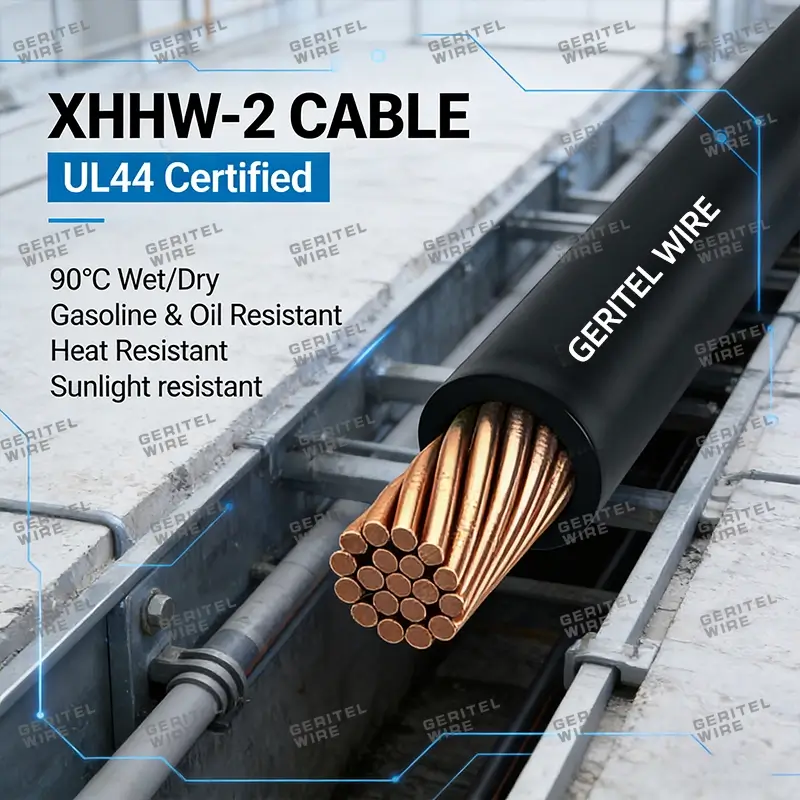
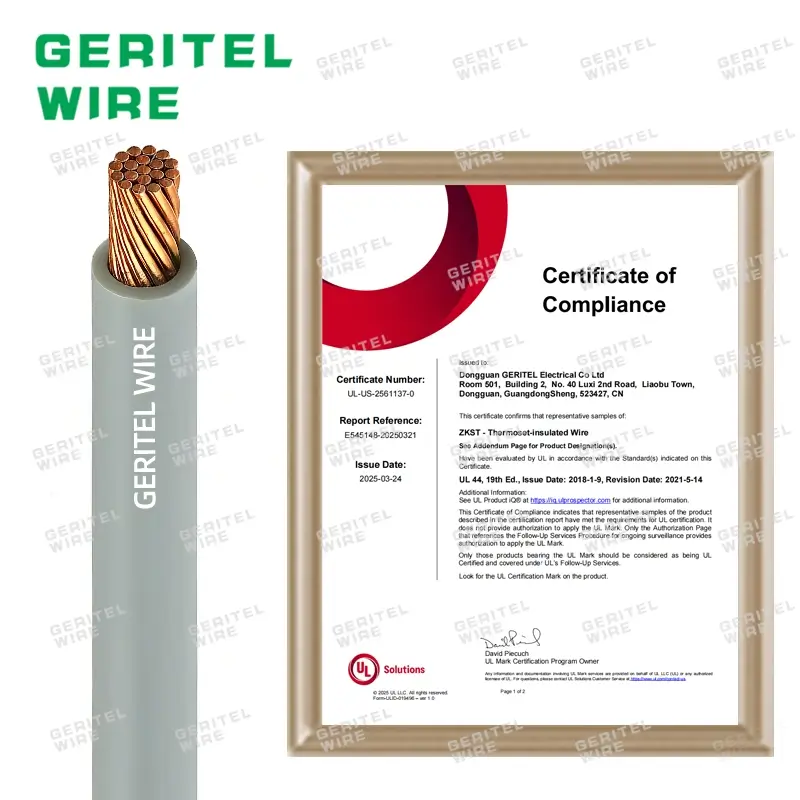
· Certification verification: Only UL Listed XHHW-2 Wire satisfies NEC product safety requirements for raceway installations. Confirm the UL marking is printed directly on the wire insulation, and that the rating matches project specifications.
· Size and configuration match: Confirm conductor sizes match drawings — for example, 12 AWG XHHW-2 Wire for lighting branches, 10 AWG XHHW-2 Wire for equipment circuits, and 250 kcmil XHHW-2 Wire for main feeder runs. Also verify core configuration: 3/C XHHW-2 Wire with bare ground or insulated green ground is standard for three-phase branch runs, while 4/C builds are used for grounded three-phase distribution.
For high-abuse industrial areas, you can also specify builds with aluminum interlocked armor or galvanized steel armor for extra mechanical protection, even when run inside raceway systems.
3. Core Execution Standards for XHHW-2 Wire for Conduit & Raceway Runs
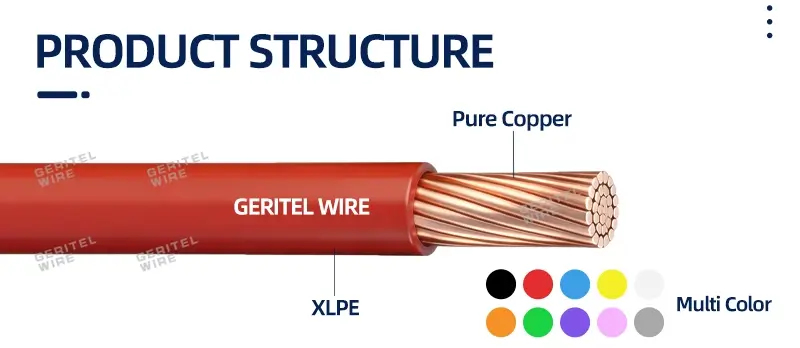
XHHW-2 Wire for Conduit and raceway systems follows established NEC installation rules, with a few key details specific to its XLPE insulation construction. When pulling wire and terminating, adhere to these standards:
· Raceway fill compliance: Calculate conduit and trunking fill ratios per NEC requirements. XLPE insulation on XHHW-2 is durable, but overfilling a raceway traps heat and forces derating — and in severe cases, creates a safety hazard. Always count all current-carrying conductors when calculating fill.
· Minimum bending radius: Follow the required minimum bend radius for the conductor size. Larger kcmil sizes in particular need wider bends to avoid insulation damage. XHHW-2’s XLPE insulation holds up better to pulling stress than standard PVC jacket wires, but bend rules still apply.
· Support and securement: Secure raceway runs and conductor supports per code requirements, especially for vertical runs and large-diameter feeder conductors. Loose conductors inside raceways can shift, chafe, and create long-term failure points.
All standard 600V rated XHHW-2 wire is approved for use in 600V and below raceway systems, covering nearly all commercial and industrial low-voltage distribution applications.
4. Wet & Underground Raceways: Special Rules for Commercial & Industrial Sites
Wet-location and underground raceways — such as commercial building underground distribution conduits and industrial plant outdoor raceways — have additional requirements that are often missed. XHHW-2 Wire for Wet Locations is purpose-built for these scenarios, with 90°C wet/dry XLPE insulation that does not degrade under constant moisture exposure.
Three rules apply specifically to these environments:
· No additional waterproofing is required: Unlike standard wires that need extra protective measures for wet use, XHHW-2’s native moisture-resistant insulation is approved for direct installation in underground and wet-location raceways. This cuts down on installation labor and material costs.
· Full temperature rating is maintained: 90°C wet/dry rated XHHW-2 retains its full temperature rating in approved wet-location raceways, unlike some wire types that require derating for humid environments. This is a key advantage for underground feeder runs like 250 kcmil XHHW-2 Wire serving commercial building main distribution.
· Oil and chemical resistance applies: For industrial raceways exposed to oils and mild chemical splash, XHHW-2’s inherent resistance slows insulation breakdown, extending service life and reducing long-term maintenance and replacement costs.
5. XHHW-2 Wire Ampacity: Step-by-Step Correction for Bundled Raceway Conductors
Base ampacity tables only apply to ideal conditions. Inside a crowded raceway, heat buildup reduces heat dissipation, so you must correct the value to get the real usable current rating. Follow this field-ready process:
· Start with the 90°C base ampacity for your selected XHHW-2 wire size. For reference, 12 AWG XHHW-2 Wire and 10 AWG XHHW-2 Wire have well-defined base values for branch circuit work, while 250 kcmil XHHW-2 Wire is sized for high-capacity feeder loads.
· Apply the ambient temperature correction factor. If the raceway runs through a hot mechanical room, unconditioned attic, or outdoor industrial area, use the appropriate correction multiplier for the expected maximum temperature.
· Apply the conductor bundling derating factor. Count all current-carrying conductors in the raceway, then apply the NEC derating percentage accordingly. This is the step most frequently skipped — and the one inspectors catch most often.
The critical selection reminder: always confirm ambient temperature and installation method before you size conductors. Never pull base ampacity values directly from a table for raceway work.
6. XHHW-2 vs THHN: A Simple Decision Tree for Raceway Projects
Both XHHW-2 and THHN/THWN-2 are widely used in raceway systems, but they excel in different environments. Use this quick decision tree to pick the right one:
· Choose THHN/THWN-2 for standard dry indoor commercial raceways, general office lighting, and typical receptacle circuits, where a standard PVC jacket meets all requirements.
· Choose XHHW-2 for projects that mix dry, damp and wet zones — especially underground commercial distribution, outdoor industrial raceways, and high-temperature facility wiring. Its 90°C wet/dry XLPE insulation delivers longer service life and more stable performance in harsh conditions.
· If a project spans multiple environment types, standardizing on XHHW-2 across all raceways simplifies procurement, reduces inventory SKUs, and eliminates the risk of installing the wrong wire in the wrong location.
7. FAQ: Raceway Installation Questions Contractors Ask Most
Q1: How many XHHW-2 conductors can I run in a single raceway?
A1: The exact number depends on raceway size, conductor AWG/kcmil size, and NEC fill percentage rules. You must also account for bundling derating once you exceed a set number of current-carrying conductors.
Q1: Does XHHW-2 wire in underground raceways need extra waterproof protection?
A1: No. XHHW-2 Wire for Wet Locations with a 90°C wet/dry rating is approved for direct installation in underground conduit raceways without additional waterproofing treatments, when installed per applicable code requirements.
Q1: Do armored XHHW-2 wires still need to be installed inside raceways?
A1: Aluminum interlocked armor and galvanized steel armor add mechanical protection, but they do not replace raceway requirements in all code scenarios. Always confirm whether the project specification and local code require raceway installation, even when using armored wire.
8. Get Project-Specific XHHW-2 Sizing & Compliance Support for Your Raceway Job
If you’re bidding or executing a raceway project for wet-location industrial facilities or underground commercial distribution, our team can help you lock in compliant, cost-effective XHHW-2 wire specifications. We supply full UL Listed XHHW-2 Wire in sizes from 14 AWG through 2000 kcmil, including 12 AWG XHHW-2 Wire, 10 AWG XHHW-2 Wire, 250 kcmil XHHW-2 Wire and 3/C XHHW-2 Wire configurations. Contact us today for project-specific ampacity guidance, certification documentation, and bulk pricing.
Dongguan GERITEL Electrical Co., Ltd.
Tel/WhatsApp/Wechat: +86 136 6257 9592
Tel/WhatsApp/Wechat: +86 135 1078 4550
Email: manager01@greaterwire.com
Website: www.geritelgroup.com
 XHHW-2 Wire in Underground Electrical Systems: Safety and Compliance



 Building 2, No. 40 Luxi 2nd Road, Liaobu Town, Dongguan City, Guangdong Province, China