


 Home
HomeWhy UL Listed Control Cables Are Preferred in Industrial Automation Projects
 GERITEL
 Jun 17,2026

In industrial automation deployments, control cables act as the nervous system of the entire production line, carrying PLC signals, sensor data and control commands between cabinets, drives and field devices. Yet many project teams prioritize hardware like PLCs and VFDs while treating cable selection as an afterthought. This oversight leads to two predictable, costly problems: intermittent signal faults from factory electromagnetic interference, and failed electrical inspections due to non-certified wiring. This is exactly why UL Listed Control Cable has become the non-negotiable standard for Industrial Automation Wiring across North American projects.
1. The Two Costliest Risks of Generic Control Cables in Automation Deployments
· EMI Interference: The Hidden Cause of Unplanned Production Downtime
Modern manufacturing floors are packed with high-power motors, welding equipment, variable frequency drives and power distribution lines — all of which generate strong electromagnetic interference.
Generic unshielded or low-quality shielded control cables cannot block this noise. For analog instrumentation signals such as 4-20mA sensor readings, interference causes drifting values and inaccurate measurements. For digital PLC and fieldbus signals, it leads to packet loss, false triggering, and even unexpected equipment shutdowns. For high-volume production lines, even one hour of unplanned downtime can cost tens of thousands of dollars in lost output — a price far higher than the upfront savings on cheap cable.
· Non-Certified Wiring: The #1 Reason for North American Project Delays
For any project falling under NEC jurisdiction, permanent industrial control wiring must use UL Certified Cable to pass official electrical inspection. Many procurement teams source generic shielded cables to cut costs, only to discover during final inspection that the products have no valid UL listing.
The result is mandatory full re-wiring, extended project timelines, penalty fees for late handover, and damaged client trust. For automation integrators, this single misstep can erase the entire profit margin of a project.
2. How UL Listed Control Cables Solve Both Compliance and Performance
· UL 1277 & NEC Compliance: Eliminate Inspection Rejection Risk
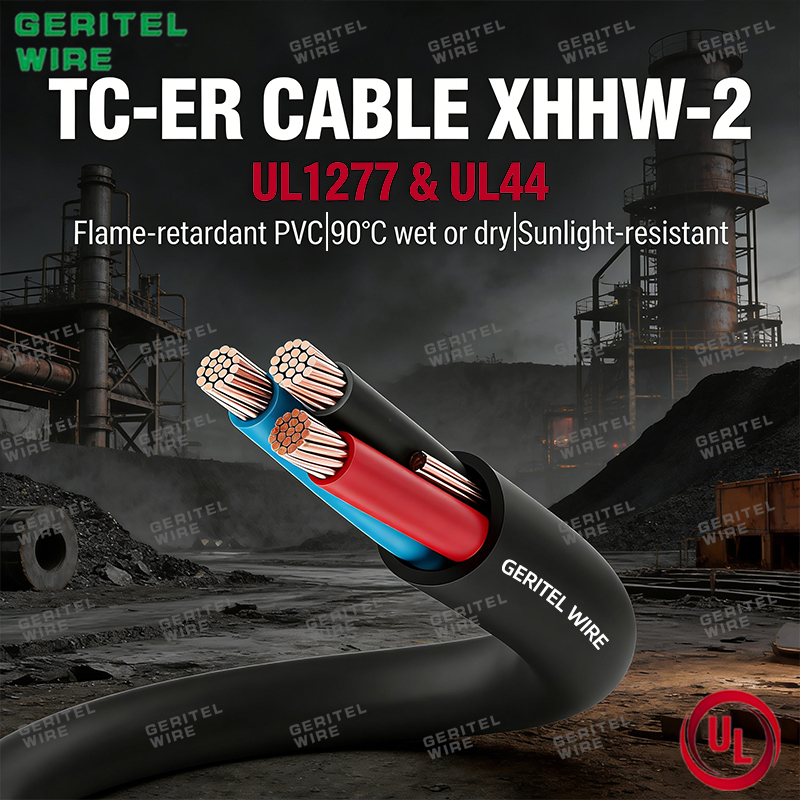
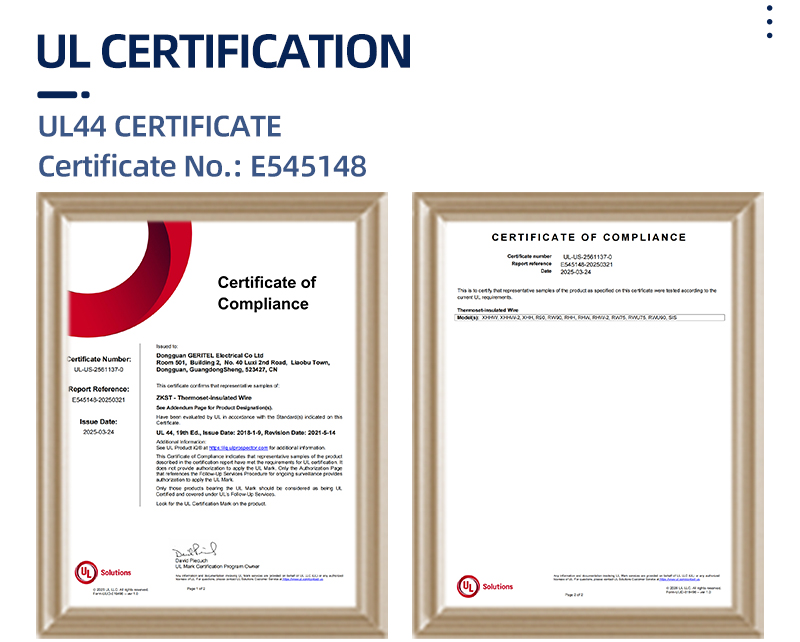
Genuine UL listed TC-ER cable is tested and certified under UL 1277, the official safety standard for industrial tray cables, and fully aligns with NEC requirements for industrial control wiring.
Unlike self-declared “UL compliant” products, a true UL listing means the cable design, material composition and production process have all undergone third-party audit and testing. The certification is publicly verifiable via the UL Product iQ database, so inspectors can confirm compliance instantly. For integrators and end users, this removes all risk of inspection rejection due to wiring certification issues.
· Validated Shielding: Reliable Signal Integrity in High-Noise Factory Floors
UL certification is not just a paperwork check — it also validates the cable’s electrical and mechanical performance. Industrial-grade TC-ER control cable with proper shielding is engineered to maintain consistent signal transmission even in heavy EMI environments.
The shielding structure, insulation materials and jacket thickness are all tested to standardized performance criteria, rather than being added as a cosmetic feature. This means predictable, repeatable signal quality across every meter of cable, reducing troubleshooting time and unplanned downtime over the system’s lifecycle.
3. Why TC-ER Control Cable Is the Industry Standard for Automation Wiring
· Core Construction and Standard Automation Specifications
TC-ER cable for industrial automation is purpose-built for both cable tray installation and short exposed transition runs, making it highly versatile for control panel wiring and field production line runs.
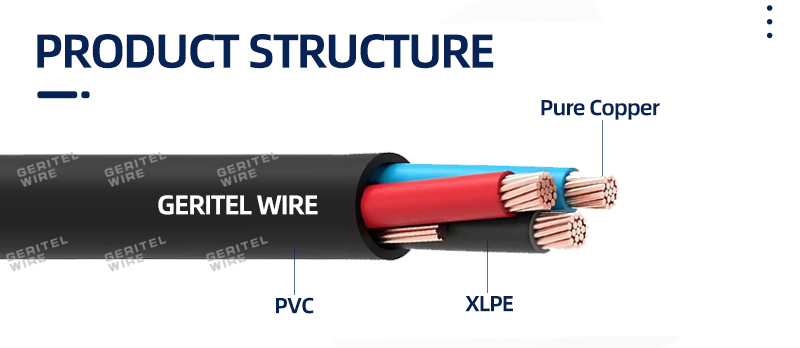
Standard industrial builds use XLPE TC-ER cable with XHHW-2 or THHN/THWN-2 insulated conductors, rated for 600V and suitable for both dry and damp factory environments. The outer PVC jacket provides abrasion and light oil resistance for typical plant conditions. Most multiconductor TC-ER cable configurations include an integrated bare ground or insulated green ground conductor, eliminating the need for separate grounding wire and simplifying installation.
For common control circuits, 3/C TC-ER cable is widely used for three-wire control and sensor circuits, while 4/C configurations are standard for circuits requiring separate signal and ground paths.
· Shielded TC-ER Cable: The Optimal Balance of Protection and Install Speed
For automation applications, shielded TC-ER cable delivers the best combination of EMI protection, installation efficiency and cost.
Compared to fully armored cables, shielded TC-ER is lighter, more flexible, and much faster to terminate inside control panels. Compared to generic shielded cable, it carries full UL 1277 certification and meets the mechanical durability requirements for exposed tray-to-equipment transitions. This makes it the default choice for TC-ER cable for control panels, internal cabinet wiring, and tray runs in low physical-damage areas of the production floor.
4. Actionable Selection Guidelines for Automation Control Wiring
· Match Shield Structure to Your Signal Type
Not all shielded cables perform the same — selecting the right shield architecture for your signal type is the most impactful decision for signal reliability:
Analog and instrumentation signals: For precision 4-20mA, RTD and thermocouple signals, use instrumentation TC-ER cable with individual pair shielding plus an overall shield. The pair shield eliminates crosstalk between circuits, while the overall shield blocks external EMI.
Digital PLC and control signals: For standard discrete I/O and low-speed fieldbus signals, an overall shielded TC-ER cable is sufficient and more cost-effective.
Always ensure the shield is properly grounded on one end for low-frequency circuits, to maximize noise rejection.
· Conductor Configuration: Standard Picks for Panels and Field Lines
For inside-panel wiring and short field runs: 3/C or 4/C shielded TC-ER in 16–12 AWG covers the vast majority of PLC I/O and sensor circuits.
For motor control and higher-power control circuits: Move to 10 AWG or larger conductors, and verify ampacity against your load and ambient temperature derating.
For multi-signal trunk runs: Use higher-count multiconductor TC-ER cable to reduce tray fill and simplify cable management.
5. Common Industrial Control Cable Myths Debunked
· Myth: Armored cable is always the better choice for industrial sites
Cables with aluminum interlocked armor or galvanized steel armor offer superior mechanical impact protection, but they come with significantly higher material cost, slower installation, and more labor-intensive termination. For standard control panel wiring, tray runs and low-impact production floor areas, shielded TC-ER cable is fully compliant, more cost-effective, and faster to install. Reserve armored cable only for zones with high risk of physical damage.
· Myth: Any shielded cable works for PLC control circuits
A thin foil wrap or low-coverage braid does not equal reliable EMI protection. Cheap shielded cables often have poor shield coverage, inconsistent grounding, and untested insulation performance. UL listed control cables require the shielding system to meet defined performance standards, so you get predictable noise rejection instead of hit-or-miss signal quality.
6. FAQ
Q1: Are UL listed control cables required for all industrial automation projects in North America?
A1: Yes. For permanent industrial electrical installations covered by the NEC, control cables used in tray and fixed wiring must carry valid UL certification to pass official inspection. Non-certified products will almost always result in rejection and required replacement.
Q2: Can TC-ER control cable be used for exposed runs outside of cable trays?
A2: Yes, TC-ER rated cables are approved for short exposed transition runs between cable trays and equipment terminals, per NEC Article 336, as long as runs stay within the allowed length and are routed away from high physical damage zones.
Q3: What voltage rating is standard for industrial automation control cables?
A3: 600V is the standard rating for nearly all low-voltage industrial control, instrumentation and PLC circuits, and matches the rating of UL 1277 TC-ER cables used in factory automation and control panel wiring.
If you are specifying cables for an automation project and need help confirming UL certification, matching the right shield structure, or building a full bill of materials, our technical team is ready to assist. Send us your project specifications or panel drawings, and we will provide a certified product recommendation and detailed quotation.
Dongguan GERITEL Electrical Co., Ltd.
Tel/WhatsApp/Wechat: +86 136 6257 9592
Tel/WhatsApp/Wechat: +86 135 1078 4550
Email: manager01@greaterwire.com
Website: www.geritelgroup.com
 How Cable Tray Systems Improve Efficiency in Industrial Power Distribution



 Building 2, No. 40 Luxi 2nd Road, Liaobu Town, Dongguan City, Guangdong Province, China