


 Home
HomeHow Cable Tray Systems Improve Efficiency in Industrial Power Distribution
 GERITEL
 Jun 17,2026

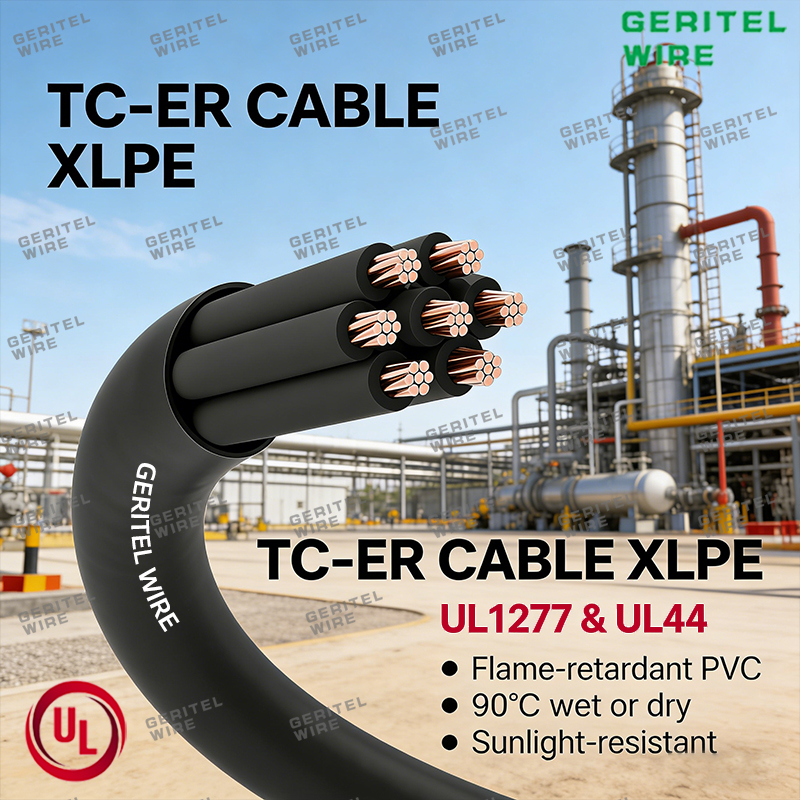
Industrial power distribution is the core backbone of manufacturing plants, water treatment facilities, logistics warehouses, food processing factories and commercial industrial parks. Traditional enclosed conduit wiring has long been plagued by slow installation, poor heat dissipation, difficult circuit maintenance and high renovation costs, which drag down overall operational efficiency and increase long-term facility maintenance budgets. Nowadays, standardized metal and fiberglass cable tray systems have become the mainstream wiring solution for modern industrial sites, optimizing circuit layout, heat dissipation, later modification and daily inspection comprehensively. When matched with UL 1277 compliant exposed-run wiring, including TC-ER cable for conveyor systems, TC-ER cable for HVAC systems and TC-ER cable for pump systems, cable tray systems maximize wiring safety and on-site efficiency. This blog elaborates on the core advantages of cable tray layout, NEC matching wiring rules, key design parameter TC-ER grounding conductor size, and procurement guidance to get verified TC-ER cable quotation from a professional TC-ER cable manufacturer China. Site engineers can download official TC-ER cable datasheet for tray layout design and code verification easily.
1. Core Pain Points of Traditional Conduit Wiring in Industrial Plants
To understand why cable tray systems boost distribution efficiency, it is necessary to sort out the drawbacks of full-conduit wiring adopted in old industrial projects:
Low construction efficiency: Conduit cutting, threading, bending, sealing and threading wire manually require massive skilled labor, extending project construction period by 40% on average;
Poor heat dissipation performance: Closed pipe structure traps operating heat from power and control cables, accelerating insulation aging, lowering cable ampacity and raising circuit short-circuit risks;
Hard later modification: Adding, removing or replacing equipment circuits requires dismantling wall or floor embedded conduits, causing site damage and extra rework cost;
Inspection obstacles: Hidden wiring cannot check cable jacket damage, aging or loose joints directly, bringing hidden safety hazards for long-term operation.
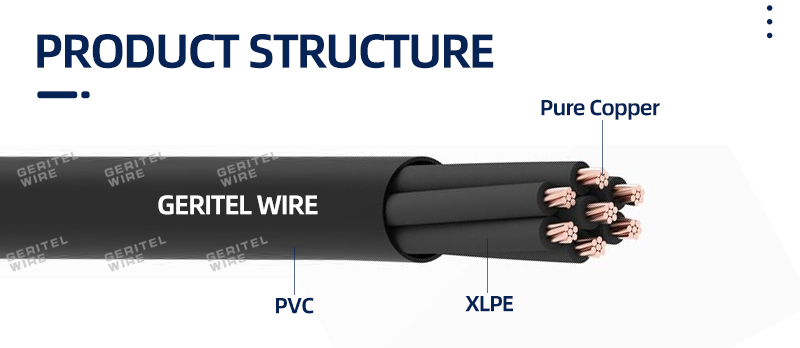
Cable tray open mounting perfectly solves all above pain points, and it is specially designed to accommodate multi-conductor tray cables, especially exposed-run approved TC-ER cables for on-site core equipment loads.
2. Seven Major Efficiency Benefits of Cable Tray Wiring Systems
2.1 Cut Installation Cycle & Reduce On-Site Labor Cost
Pre-assembled standardized cable trays feature snap-on installation, unified fixing brackets and adjustable height brackets, needing no pipe threading or waterproof sealing work. Electricians can lay bundled multi-conductor cables directly on tray surfaces, which greatly shortens wiring time. For full-process automated factory workshops, long-distance overhead trays are configured to lay dedicated TC-ER cable for conveyor systems for assembly line power transmission; for factory central air conditioning and ventilation workshops, overhead wall-mounted trays arrange dedicated TC-ER cable for HVAC systems for fresh air units, exhaust fans and temperature control cabinets. Different from ordinary TC tray cables, these three application-specific cables including TC-ER cable for pump systems for water circulation equipment support exposed run outside trays, which further reduces partial tray layout workload at equipment terminal ends.
2.2 Optimize Natural Heat Dissipation to Extend Cable Service Lifespan
Open hollow tray structure supports omnidirectional air convection around laid cables, lowering operating conductor temperature effectively. Under the same load current, TC-ER cables laid on trays have 15%-20% longer service life than those sealed in conduits. Meanwhile, industrial electrical designers must confirm compliant TC-ER grounding conductor size per NEC Article 336 during tray wiring design. Reasonable grounding conductor configuration disperses fault current rapidly, avoids static accumulation and electromagnetic interference on tray bundled cables, and protects core equipment such as water pumps, frequency conversion conveyors and HVAC host machines. All grounding size standards, temperature ratings, voltage grades and ampacity data are recorded in the official TC-ER cable datasheet released by formal manufacturers.
2.3 Support Flexible Circuit Upgrade & Production Line Reconfiguration
Industrial production lines often adjust operating speed, add pump units, expand conveyor branches or renovate HVAC ventilation systems according to production output changes. Cable tray systems reserve sufficient wiring space in advance, allowing staff to add new TC-ER cable for conveyor systems or replace aging TC-ER cable for pump systems directly without dismantling building structures. For park energy-saving renovation projects, contractors upgrade old control circuits with fire-resistant TC-ER cable for HVAC systems on original trays directly, realizing zero-damage circuit renovation and greatly improving facility iteration efficiency.
2.4 Facilitate Daily Inspection, Maintenance and NEC Code Audit
Electrical inspectors can observe cable outer jacket integrity, wiring separation and grounding connection status intuitively on open trays. Before annual factory electrical inspection, maintenance teams can check whether TC-ER grounding conductor size matches load power, and download updated TC-ER cable datasheet to verify UL1277 certification and tray laying specifications, passing local NEC inspection at one time without rectification.
2.5 Classified Wiring Reduces Cross Electromagnetic Interference
Large-size trays can install isolation clapboards separately, separating high-power power cables and low-voltage control cables. For high-EMI workshop environments, matched shielded TC-ER cables are adopted for conveyor frequency converters and water pump control cabinets, stabilizing signal transmission for automated equipment.
2.6 Strong Environmental Adaptability for Complex Industrial Sites
Hot-dip galvanized, stainless steel and anti-corrosion fiberglass trays adapt to humid sewage workshops, dusty logistics workshops and outdoor open-air plant areas. Matched UV-resistant, oil-resistant TC-ER cables fit harsh on-site working conditions perfectly.
2.7 Long-Term Comprehensive Cost Reduction
Although tray procurement cost is slightly higher than conduits, the saved labor cost, maintenance cost and replacement cost bring obvious long-term cost advantages. Bulk purchasing application-specific TC-ER cables from reliable suppliers can further control project budget.
3. Matching Wiring Rules: How to Select TC-ER Cables for Tray Projects
Select targeted functional cables: AdoptTC-ER cable for conveyor systems for automated assembly line motor power; choose oil-resistant TC-ER cable for pump systems for sewage, chemical and circulating water pump rooms; adopt low-smoke flame-retardant TC-ER cable for HVAC systems for factory ventilation and central control air-conditioning rooms.
Confirm grounding specification: Confirm compliant TC-ER grounding conductor size based on circuit ampacity, refer to NEC standard and manufacturer official TC-ER cable datasheet for parameter matching.
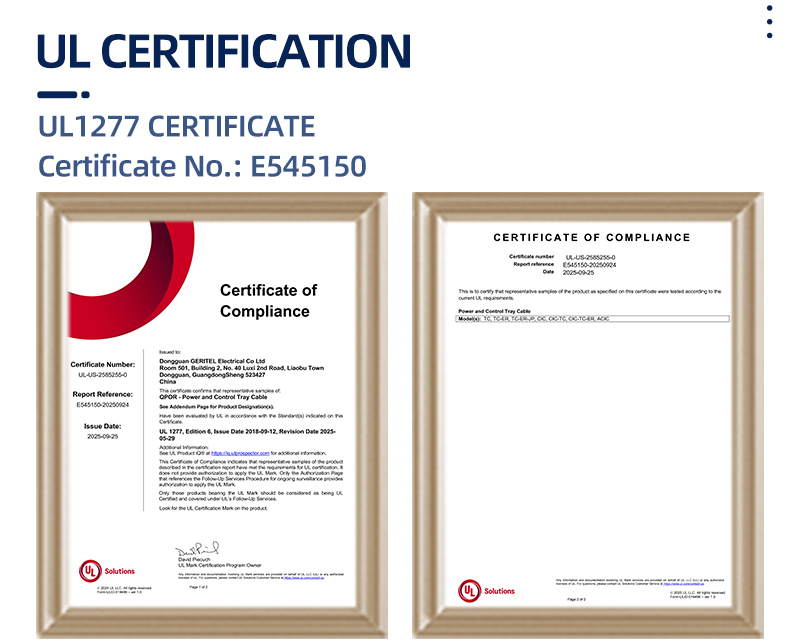
Source qualified certified products: Cooperate with formal TC-ER cable manufacturer China with complete UL, CSA certification, avoid non-standard cables failing site inspection.
4. Budget Tips: Get Accurate & Customized TC-ER Cable Quotation
For industrial tray wiring bidding and bulk procurement, project managers need to submit detailed parameters including cable core size, shielding type, usage scenario, total length and required grounding specs to obtain accurate TC-ER cable quotation. A professional TC-ER cable manufacturer China provides one-stop supporting service: customized jacket performance, customized conductor gauge, free TC-ER cable datasheet download, and batch delivery for global industrial tray projects. Compared with local American distributors, direct factory procurement cuts intermediate agent costs effectively for large-scale plant wiring projects.
Conclusion
Modern cable tray systems reshape industrial power distribution modes, solving multiple pain points of traditional conduit wiring from construction, heat dissipation, maintenance and renovation aspects. Pairing classified dedicated cables including TC-ER cable for conveyor systems, TC-ER cable for HVAC systems and TC-ER cable for pump systems maximizes overall operational efficiency. Always verifyTC-ER grounding conductor size via official TC-ER cable datasheet during design, obtain customized TC-ER cable quotation in advance, and cooperate with verified TC-ER cable manufacturer China to guarantee code-compliant, cost-effective and long-stable tray power distribution systems.
Professional UL1277 TC-ER Cable Supplier | Dongguan Greater Wire & Cable Co., Ltd.
As a trustworthy certified TC-ER cable manufacturer China, we develop and produce full-series UL 1277 shielded & unshielded TC-ER cables specially optimized for cable tray installation. We customize dedicated models for multiple industrial scenarios: TC-ER cable for conveyor systems, TC-ER cable for HVAC systems and TC-ER cable for pump systems. We offer free downloadable official TC-ER cable datasheet, assist engineers confirming standard TC-ER grounding conductor size per NEC codes, and deliver fast tailored TC-ER cable quotation for global contractors, plant owners and electrical distributors. All products pass UL, CSA certification, support bulk shipment to USA, Canada and North American industrial sites.
Contact Us
Tel/WhatsApp/Wechat: +86 136 6257 9592
Tel/WhatsApp/Wechat: +86 135 1078 4550
Email: manager01@greaterwire.com
Website: www.geritelgroup.com
 Best Electrical Wiring Practices for Industrial Maintenance and Facility Upgrades



 Building 2, No. 40 Luxi 2nd Road, Liaobu Town, Dongguan City, Guangdong Province, China