



 Home
HomeUnderstanding NEC Requirements for Exposed Run Power Cables in Industrial Facilities
 GERITEL
 Jun 17,2026

In manufacturing plant power distribution and industrial equipment wiring, short exposed cable transitions between cable trays and equipment terminals are consistently one of the top three causes of electrical inspection failures. Many industrial electrical contractors and facility engineering teams assume standard tray cables are acceptable for short open runs, only to have projects rejected at final sign-off, triggering costly rework and delayed handover. Misunderstanding the boundaries of NEC requirements for exposed wiring does not just erode project margins—it creates long-term safety hazards for on-site personnel.
This guide breaks down the formal code rules for exposed run power cable installations under the Industrial Electrical Code, explains why TC-ER power cable is the only widely accepted compliant solution, and delivers actionable selection guidance to help you pass inspection on the first attempt.
1. The Hidden Compliance Risks of Unregulated Exposed Run Wiring
Most industrial power circuits run the majority of their length inside enclosed cable trays or raceways, with only a short visible segment connecting the tray to motor control centers, pump systems, machine control panels and other end equipment. This 1–6 foot transition is where the vast majority of code violations occur.
The core misconception is that any cable rated for cable tray use qualifies as an exposed run tray cable. In reality, standard Tray Cable (TC) is tested and approved only for installation inside fully enclosed tray systems. Running standard TC cable openly, even for a very short distance, violates NEC Article 336 and will fail official inspection.
For project procurement buyers, this risk is often invisible at the purchasing stage. Selecting lower-cost standard TC cable to save on material costs almost always leads to higher total project costs later, including unplanned conduit purchases, overtime labor for rework, and delayed project revenue from late commissioning.
2. Core NEC Requirements for Exposed Run Power Cables (Article 336)
The NEC sets clear, test-backed rules for exposed run installations. All four conditions below must be met for an installation to be code compliant.
· Only TC-ER rated cables are approved for exposed installation
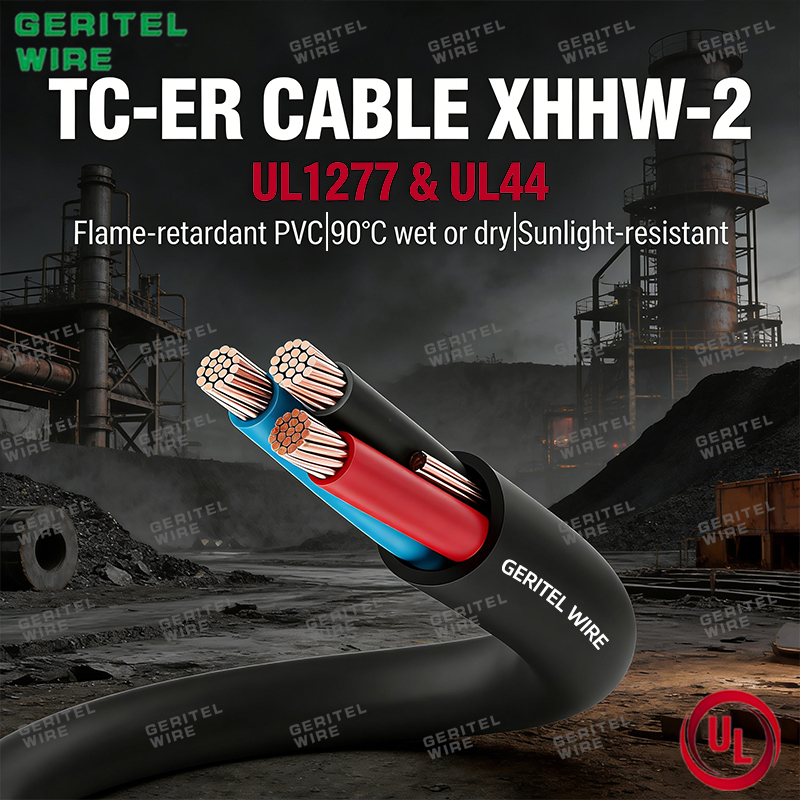
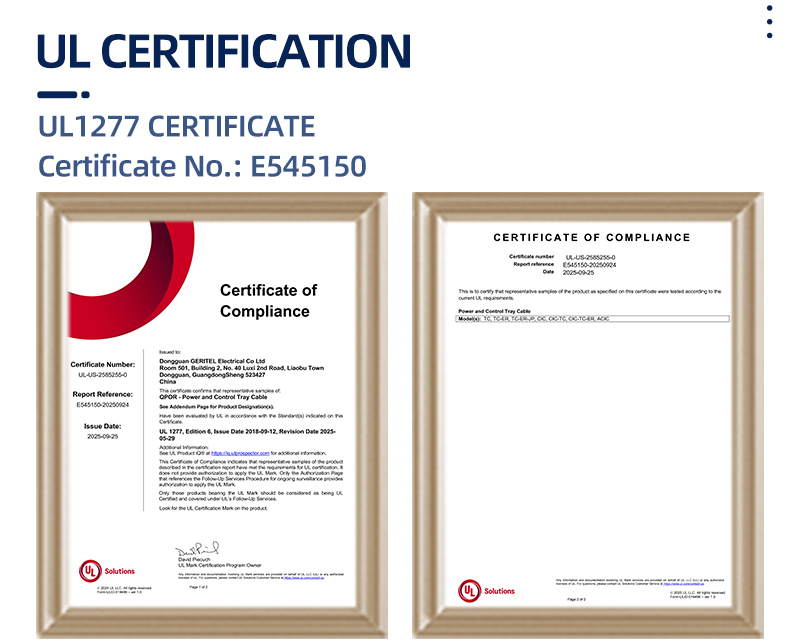
Under NEC 336.10, cables used for exposed runs must carry the official TC-ER (Tray Cable – Exposed Run) designation, verified by third-party testing to UL 1277 standards. This rating confirms the cable’s outer jacket and insulation system have passed standardized mechanical impact, crush and abrasion tests, proving it can withstand normal industrial environmental stresses without extra protective conduit. Standard TC cables without the -ER suffix are not subjected to these mechanical tests and do not qualify.
· Maximum exposed run length: 6-foot hard limit
The NEC enforces a strict 6-foot maximum length for exposed transition segments from cable tray to equipment terminals. This limit is not arbitrary: NFPA incident data shows that physical damage risk to unprotected cables rises exponentially once exposed runs exceed 6 feet. This rule applies universally to all TC-ER cable exposed run installations. If your required transition exceeds 6 feet, you must extend the cable tray or add metallic conduit to cover the full distance.
· Installation must be limited to low physical damage zones
Even with a fully rated TC-ER power cable, exposed runs must be routed in areas with minimal risk of impact. This means avoiding forklift traffic lanes, material storage zones, maintenance walkways and any location where falling tools or equipment could strike the cable. If routing through a high-risk zone is unavoidable, additional metal guard strips or conduit are required.
· Code edition alignment is mandatory
The NEC is updated on a three-year cycle, with minor but meaningful adjustments to exposed run rules between editions. Before finalizing your cable specification, always confirm which NEC edition is enforced by your local jurisdiction. Relying on outdated code knowledge from previous projects is the single most common cause of preventable inspection failures.
3. Why TC-ER Power Cable Is the Industry-Standard Compliance Solution
Industrial TC-ER cable is purpose-built to solve the exposed transition challenge, delivering both full code compliance and measurable project cost savings.
· UL 1277 certification: the foundation of compliance
All code-compliant TC-ER cables are certified to UL 1277, which validates mechanical durability as well as electrical performance. This certification is what allows TC-ER cable NEC requirements to be met without extra conduit protection. For facility teams, this means a single cable product can cover both in-tray and exposed transition segments, simplifying inventory and reducing installation complexity.
· Measurable cost and labor savings
Compared to running full metallic conduit or using armored cable for short transitions, TC-ER cable cuts material costs significantly and reduces installation time by 40–60% for typical equipment connections. For manufacturing facilities with dozens of equipment connection points, these savings add up quickly across an entire project.
· Standard industrial specifications in practice
For most low-voltage industrial power and control systems, 600V TC-ER cable is the default specification, aligned with standard North American industrial voltage classes. 12 AWG TC-ER cable is the standard choice for light-duty control circuits, lighting branches and low-power signaling, while 10 AWG TC-ER cable is widely used for small-to-medium motor circuits and higher-current power branches.
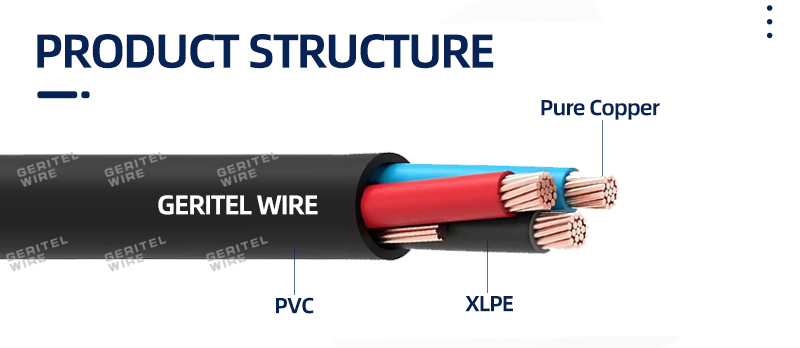
Virtually all heavy-duty industrial grades use copper conductor TC-ER cable construction for reliable conductivity and consistent overload performance. Individual conductors feature either THHN/THWN-2 or XHHW-2 insulation for suitability in both dry and damp locations, protected by a rugged PVC jacket for abrasion and light oil resistance. Standard configurations include an integrated bare ground or insulated green ground wire, with 3/C and 4/C designs being the most common for three-phase power and combined power-control circuits.
4. Four Actionable Selection & Installation Guidelines
Use these practical rules to make accurate, code-compliant purchasing and installation decisions.
· Verify code edition and certification upfront
Before issuing a purchase order, cross-reference the project’s required NEC edition against the cable’s UL 1277 certification and TC-ER rating. Do not assume all TC-ER products meet all edition requirements.
· Size conductors for actual load and derating
Match conductor gauge to your circuit load, and always build in headroom for ambient temperature derating. For control circuits, 12 AWG TC-ER cable is usually sufficient; for motor and power circuits, start with 10 AWG TC-ER cable and size up as needed.
· Design routes to stay under the 6-foot limit
Plan cable routes to minimize exposed transition length whenever possible, and position runs away from high-impact work zones. If a longer exposed run is absolutely necessary, upgrade to conduit or armored cable instead of attempting to stretch the TC-ER limit.
· Match construction to your facility environment
For facilities with regular oil, grease or moisture exposure, confirm the cable has a heavy-duty PVC jacket and wet-location rated XHHW-2 insulation to prevent premature jacket degradation.
5. Three Common Myths About Exposed Run Tray Cables Debunked
· Myth: All tray cables can be used for exposed runs
False. Only cables with an official TC-ER rating are approved for open exposed installation under the NEC. Standard TC cable is rated for enclosed tray use only, and open installation is a direct code violation.
· Myth: Armored cables are always the better choice
Cables with aluminum interlocked armor or galvanized steel armor offer superior mechanical protection, but they come with much higher material costs and slower installation. For short, low-risk transitions of 6 feet or less, TC-ER cable is the more cost-effective and fully code-compliant option.
· Myth: TC-ER rating covers direct burial
TC-ER is strictly an exposed run rating, not a direct burial rating. Never use standard TC-ER cable for underground direct burial applications; always select a cable specifically rated for direct burial when required.
6. FAQ
Q1: What is the maximum allowed length for TC-ER cable exposed run under NEC?
A1: Per NEC Article 336, the maximum permitted exposed run length between a cable tray and equipment terminals is 6 feet. Runs longer than 6 feet require additional conduit or extended cable tray to remain code compliant.
Q2: Can standard MC cable replace exposed run power cable?
A2: Properly rated metal-clad (MC) cables are also approved for exposed runs, but they carry higher material and labor costs. For short transition segments of 6 feet or less, industrial TC-ER cable provides a more economical, fully compliant solution.
Q3: Is 600V TC-ER cable suitable for all manufacturing plant power distribution?
A3: Yes. 600V is the standard voltage class for nearly all low-voltage industrial power, motor and control circuits in North America. It covers the vast majority of manufacturing plant power distribution, equipment connection and control panel wiring applications.
If you are specifying cables for an industrial project and need assistance confirming TC-ER cable NEC requirements or matching the right product to your application, our technical team is ready to support you. Reach out to us with your project drawings or specification sheet, and we will provide certified product data sheets and a tailored quotation.
Dongguan GERITEL Electrical Co., Ltd.
Tel/WhatsApp/Wechat: +86 136 6257 9592
Tel/WhatsApp/Wechat: +86 135 1078 4550
Email: manager01@greaterwire.com
Website: www.geritelgroup.com
 Why UL Listed Control Cables Are Preferred in Industrial Automation Projects



 Building 2, No. 40 Luxi 2nd Road, Liaobu Town, Dongguan City, Guangdong Province, China