


 Home
HomeWhat Temperature Rating Does UL44 Wire Have?
 GERITEL
 Mar 24,2026

When asking what temperature rating UL44 wire has, the most accurate and practical answer is that UL44 building wires are typically rated at 90°C in dry conditions and 75°C in wet conditions, while upgraded types such as XHHW electric cable high temp 90C in both dry and wet environments, and this distinction is not just a technical specification but a decisive factor that directly affects whether the cable can operate safely, efficiently, and compliantly within your specific installation scenario.
Because temperature rating determines how much heat the insulation can withstand under electrical load, it simultaneously defines where the wire can be installed, how much current it can carry, and how long it will last under continuous operation, which is why this parameter is often the first thing engineers and procurement managers evaluate when selecting UL44 cables.
How Temperature Rating Directly Influences Real Installation Scenarios and Performance
Although temperature ratings may appear as simple numbers, in practice they translate into clear usage boundaries, meaning that a 75°C wet-rated cable may be acceptable in controlled environments but becomes a limitation in underground conduits, humid facilities, or outdoor installations where moisture and heat accumulation are unavoidable, whereas a 90°C wet-rated XHHW-2 cable provides the necessary thermal margin and environmental resistance to ensure stable performance over time.
In real-world applications, this relationship becomes very clear, because a cable installed in a dry indoor conduit may never approach its thermal limits, while the same cable placed in a damp or enclosed environment may experience continuous heat buildup, which makes the difference between 75°C and 90°C not just relevant but critical to long-term reliability.
Why XLPE Insulation Allows UL44 Wire to Reach Higher Temperature Ratings
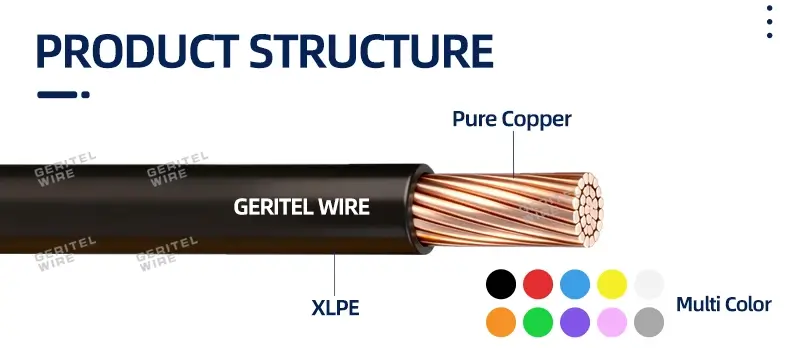
The reason UL44 wires can achieve these higher temperature ratings lies in their use of XLPE (cross-linked polyethylene) insulation, which fundamentally enhances thermal stability, moisture resistance, and mechanical strength compared to traditional PVC insulation, allowing the cable to maintain structural integrity and electrical performance even under sustained thermal stress.
This advanced insulation material enables the wire to operate continuously at higher temperatures without rapid degradation, resist moisture penetration in wet environments, and withstand chemical exposure and physical wear in industrial settings, which is why UL44 XHHW and XHHW-2 wires are widely adopted in demanding applications such as power distribution systems, commercial construction projects, and industrial installations where reliability is essential.
When these cables are produced by manufacturers with strict quality control and certification systems, the consistency of the insulation layer ensures that the rated temperature is not only a theoretical value but a dependable performance benchmark in real installations.
What Are the Risks and Costs of Choosing the Wrong Temperature Rating?
Selecting a UL44 wire with an insufficient temperature rating may not cause immediate failure, but it introduces long-term risks that can significantly impact system safety, operational stability, and total project cost, because continuous exposure to temperatures beyond the insulation’s design limit accelerates aging, weakens dielectric properties, and eventually leads to insulation breakdown or electrical faults.
In practical terms, this means that using a 75°C wet-rated cable in a high-moisture or high-load environment can result in overheating, premature insulation cracking, compliance issues during inspection, and increased maintenance or replacement frequency, all of which translate into higher lifecycle costs and potential operational downtime.
For this reason, experienced buyers tend to prioritize properly rated and certified UL44 cables, understanding that the initial cost difference is often negligible compared to the risks associated with incorrect selection.
How Different UL44 Wire Types and Sizes Match Different Applications and Buyers
Beyond temperature rating, UL44 wire selection also involves choosing the appropriate size and type, because different specifications are designed to meet completely different application requirements, meaning that a mismatch in size can be just as problematic as a mismatch in temperature rating.
For example, smaller sizes such as 14–12 AWG are typically used in residential lighting and branch circuits where loads are relatively low and environments are controlled, while medium sizes like 10–8 AWG are more suitable for commercial installations and equipment connections, and larger sizes such as 6 AWG and above are designed for industrial feeders and high-load power distribution systems, where both thermal performance and mechanical durability are critical.
In projects that involve mixed environments or uncertain conditions, many contractors and procurement teams prefer XHHW-2 cables, because their 90°C wet and dry rating allows a single cable type to cover multiple scenarios, thereby simplifying selection, reducing inventory complexity, and minimizing the risk of installation errors.
Conclusion: What Temperature Rating Should You Choose for UL44 Wire?
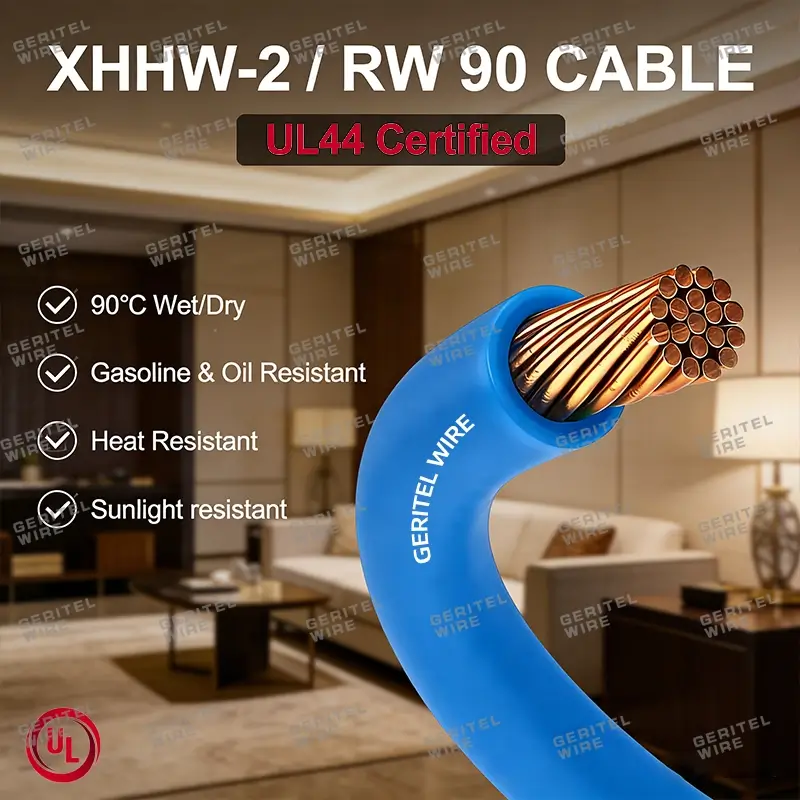
In summary, the standard temperature rating of UL44 wire is 90°C in dry conditions and 75°C in wet conditions, with XHHW-2 providing 90°C performance in both environments, and this difference plays a crucial role in determining not only where the cable can be used but also how reliably it will perform over time.
For projects involving moisture exposure, underground installation, or higher load demands, selecting XHHW-2 is often the more practical and future-proof decision, because it offers greater flexibility, improved durability, and reduced risk of failure, ultimately leading to better long-term value.
If your project involves complex conditions or you are unsure about the exact specification required, it is often more effective to consult with a knowledgeable supplier who can evaluate your load requirements and installation environment in detail, and then recommend a more precise and cost-effective UL44 cable solution tailored to your application.
Contact Us
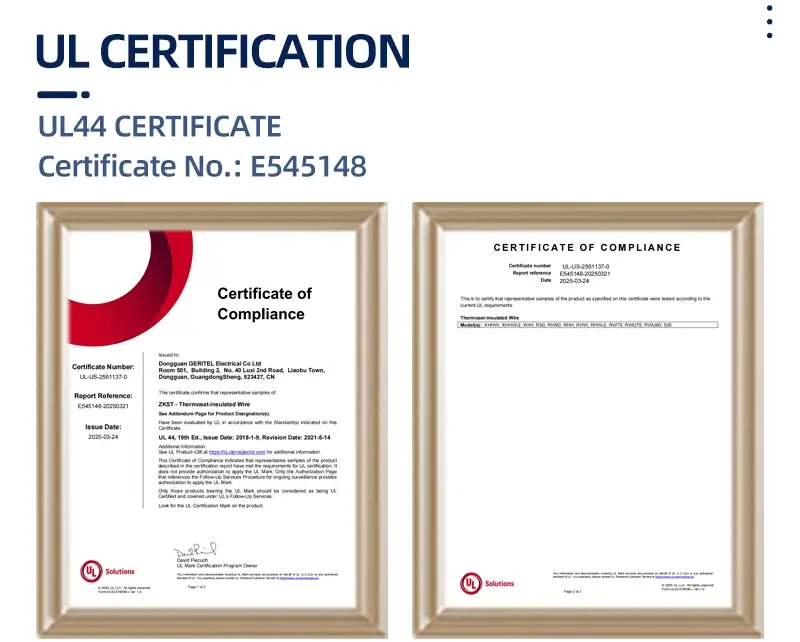
Dongguan GERITEL Electrical Co., Ltd. specializes in high-quality UL44-compliant wires, including XHHW, XHHW-2, RHW-2, providing reliable and customized solutions for industrial, commercial, and residential projects.
Phone: +86 136 6257 9592
Email: manager01@greaterwire.com
Website: www.greaterwire.com
 Top Advantages of XHHW-2 XLPE Insulated Wire



 Building 2, No. 40 Luxi 2nd Road, Liaobu Town, Dongguan City, Guangdong Province, China