


 Home
HomeIndustrial Electrical Cable Guide: UL44 vs THHN Wire
 GERITEL
 Mar 24,2026

For industrial electrical wiring projects, selecting the proper cable plays a critical role in safety, efficiency, and compliance. UL44 and THHN wires stand as two common solutions, each with unique features tailored to particular uses. Knowing how these wires differ can streamline your project, cut expenses, and deliver dependable performance in demanding industrial environments.
Here’s a detailed guide to help you make an informed choice.
Understanding UL44 Wire
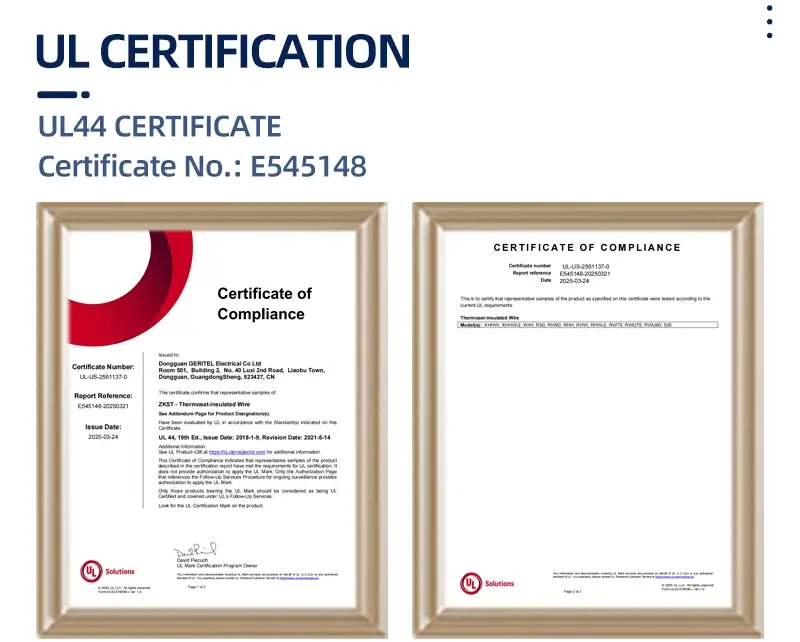
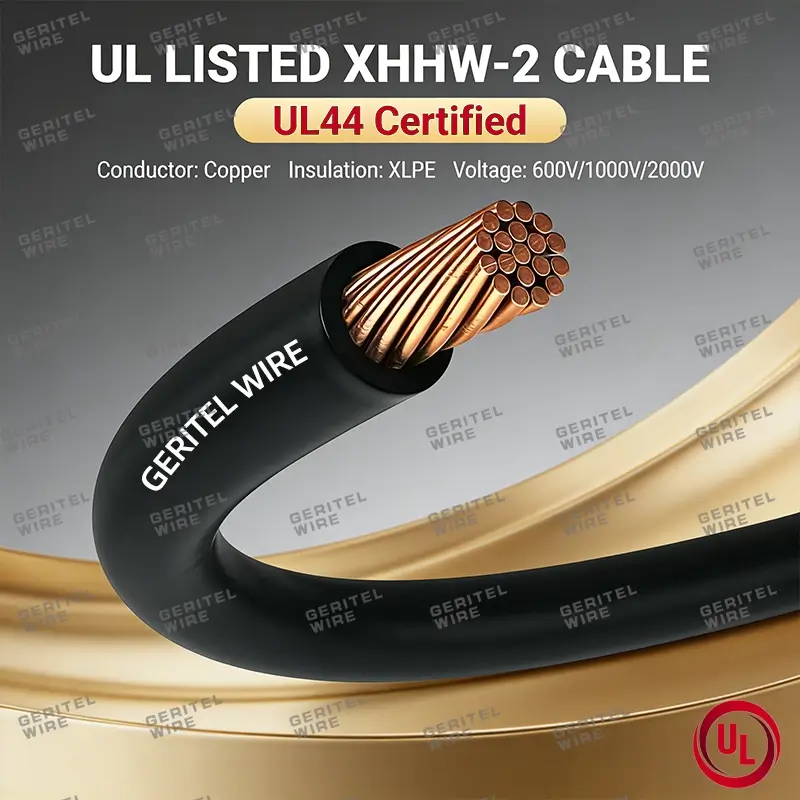
UL44 is a thermoset-insulated industrial wire, specifically rated for 600 volts and primarily used in fixed conduit applications. The insulation is typically made of rubber or cross-linked polyethylene (XLP), offering robust thermal and chemical resistance. For heavy-duty power transmission, 750 kcmil XHHW-2 power cable wire complements UL44 wires, providing enhanced capacity for industrial demands.
Applications:
- Industrial machinery wiring
- Switchgear connections
- Control panels
- Conduit installations in factories
Key Features:
- High thermal resistance up to 90°C (dry conditions)
- Excellent mechanical durability in harsh industrial environments
- Oil and chemical resistance, suitable for factory floors
- UL certification ensures the wire meets strict safety and performance standards
By choosing UL44 wires from a certified supplier, you gain assurance that the wire has passed rigorous testing, maintaining safety and reliability in high-demand industrial setups—just like XHHW-2 copper conductor cable wire, which also adheres to strict quality standards.
Understanding THHN Wire
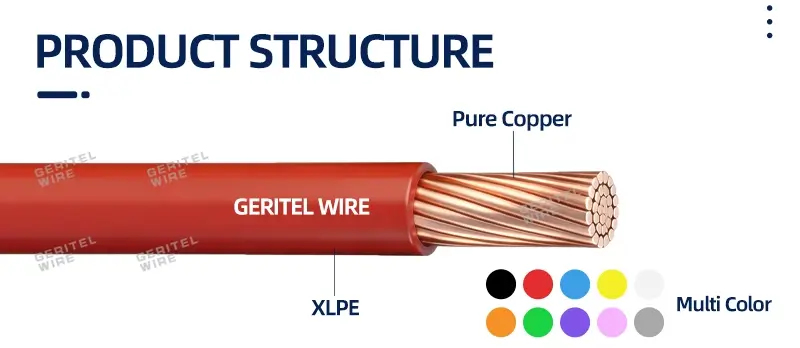
THHN wire (Thermoplastic High Heat-resistant Nylon-coated) is perhaps the most versatile wire in industrial and commercial installations. Rated for 600 volts, THHN features thermoplastic insulation and a nylon jacket that protects against abrasion and moisture. For building-specific industrial wiring, 3/0 AWG XHHW-2 building wire cable is a reliable companion, offering compatibility with THHN in many commercial-industrial setups.
Applications:
- Conduit wiring in commercial buildings
- Control circuits and motor connections
- Power distribution in dry and damp locations
Key Features:
- High heat resistance, suitable for up to 90°C dry, 75°C wet conditions
- Nylon jacket adds extra durability, preventing damage during installation
- Flexible and easy to route through conduits and cable trays
- Often available with UL certification, guaranteeing compliance and performance
Using THHN wires from a professional, certified supplier ensures consistent quality, minimizing installation errors and downtime.
UL44 vs THHN: Key Differences
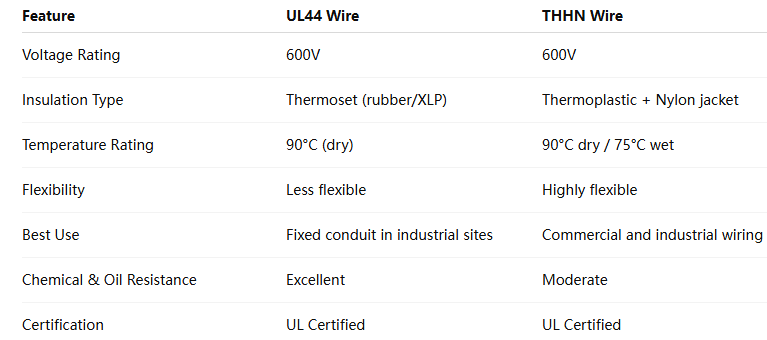
From the table, it’s clear that UL44 wires excel in harsh industrial environments, while THHN wires are better for general-purpose installations where flexibility and moisture resistance matter.
Selecting the Right Wire for Your Project
Choosing between UL44 and THHN depends on:
- Environment – Wet, dry, or chemically harsh conditions
- Installation type – Fixed conduit vs flexible routing
- Mechanical stress – Areas with abrasion or vibration
- Temperature requirements – High heat tolerance for industrial machinery
- Compliance – Always prioritize certified wires
Pro Tip: Working with a supplier who offers certified UL44 and THHN wires ensures not only compliance but also technical support and guidance for your project.
The Professional Advantage
Selecting high-quality, certified industrial cables from a professional supplier brings multiple benefits:
- Guaranteed UL certifications
- Expert advice for proper cable selection
- Consistent quality for high-demand industrial environments
- Reduced downtime and maintenance costs
- Confidence in long-term safety and reliability
Our company specializes in providing certified UL44 and THHN wires, combining professional expertise with rigorous quality standards. With our solutions, industrial operators can focus on productivity rather than worrying about wiring issues.
Conclusion
In summary, UL44 and THHN wires each have distinct advantages. UL44 is robust, ideal for industrial machinery and harsh environments, while THHN is flexible, versatile, and suitable for both dry and damp commercial or industrial settings. Choosing certified products from a professional supplier not only ensures safety but also enhances project efficiency and reliability.
Whether you’re designing industrial electrical systems or upgrading existing wiring, understanding the differences between UL44 and THHN wires—and choosing certified, professional-grade options—can make all the difference.
 What Temperature Rating Does UL44 Wire Have?



 Building 2, No. 40 Luxi 2nd Road, Liaobu Town, Dongguan City, Guangdong Province, China