


 Home
HomeWhat Is THHN Stranded Wire Used For?
 GERITEL
 Mar 27,2026

When engineers, electrical contractors, and procurement professionals are evaluating conductor options for modern electrical systems, THHN stranded wire is consistently selected not merely as a standard choice but as a strategic solution, because it combines flexibility, thermal resistance, and mechanical durability in a way that directly improves installation efficiency while ensuring long-term operational safety across a wide range of commercial and industrial applications.
Where Is THHN Stranded Wire Used in Real Projects?
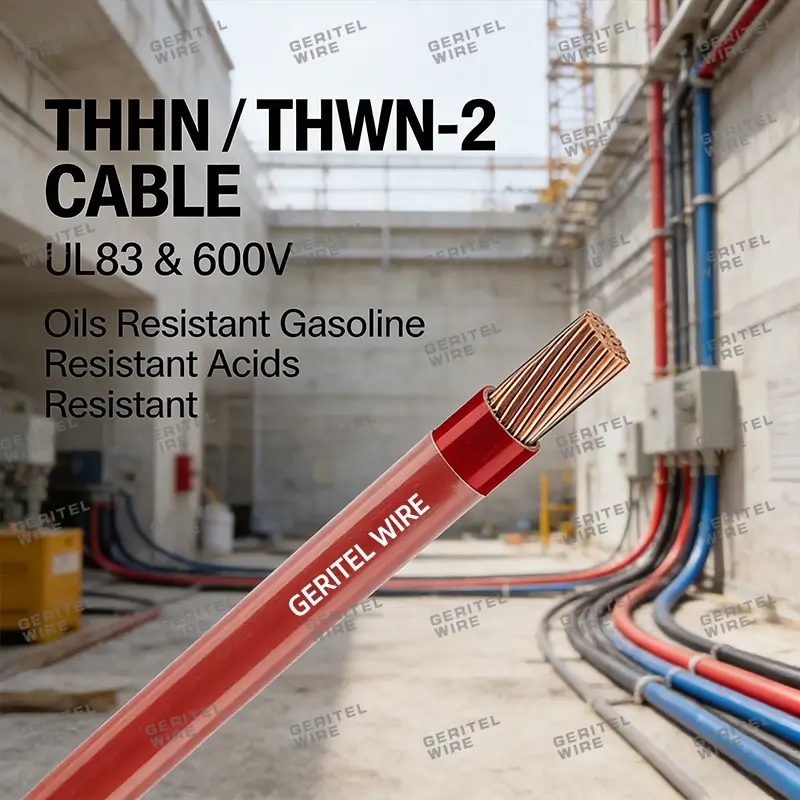
In real-world engineering scenarios, THHN stranded copper cable is primarily used in environments where wiring must pass through conduits, navigate complex routing paths, and maintain stable performance under varying load conditions, which is why it is widely applied in commercial buildings, industrial facilities, control panels, and HVAC systems, where the ability to bend, pull, and install wires efficiently can significantly reduce labor intensity while improving overall project timelines.
In large-scale commercial construction projects, for example, electricians often need to pull wires through long conduit runs across multiple floors, and in such cases, stranded THHN wire allows smoother installation compared to rigid conductors, while in industrial environments filled with machinery and tight spaces, its flexibility ensures that wiring can be routed without excessive force or risk of insulation damage.
THHN Stranded vs Solid Wire: Why the Difference Matters
When comparing THHN stranded wire with solid wire, the distinction goes far beyond structure and directly affects installation performance, cost efficiency, and system reliability, because stranded wire, which is made of multiple fine copper strands twisted together, provides significantly greater flexibility than solid wire, allowing it to bend easily around corners and adapt to complex conduit layouts, whereas solid wire, being a single rigid conductor, is more suitable for straight and simple runs but becomes difficult to manage in confined or intricate installations.
From a project execution perspective, choosing THHN solid copper conductor wire in situations that require frequent bending or long conduit pulls can lead to increased installation time, higher labor costs, and even potential conductor damage, while selecting stranded THHN wire enables faster, safer, and more efficient installation, ultimately reducing both direct and indirect project costs.
THHN Stranded vs Flexible Cable: Understanding Application Boundaries
Although THHN stranded wire is often described as flexible, it is important to understand that it is fundamentally different from highly flexible cables such as rubber-insulated or welding cables, because THHN stranded wire is designed for fixed installation within conduit systems where moderate flexibility is required, while flexible cables are engineered for dynamic environments involving continuous movement, vibration, or repeated bending.
This distinction is critical, because using THHN stranded wire in applications that require constant motion may result in reduced service life or mechanical fatigue, whereas using overly flexible cable in standard building wiring may unnecessarily increase costs without delivering additional benefits, which highlights the importance of selecting the right type of conductor based on actual application conditions.
Performance Advantages That Influence Buying Decisions
The widespread adoption of THHN stranded wire in engineering specifications is driven by its strong performance across multiple dimensions, which collectively make it a cost-effective and reliable solution for modern electrical installations.
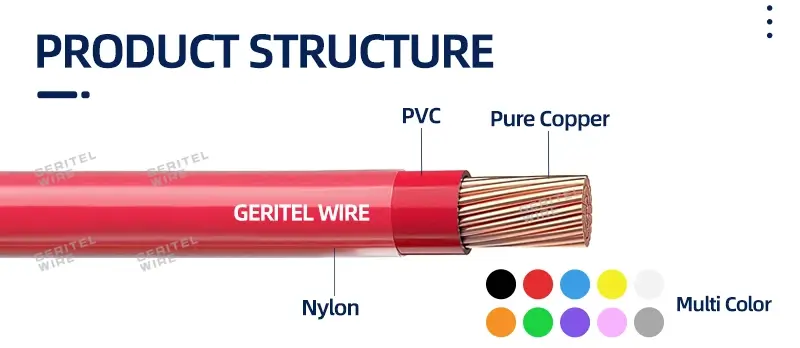
First, its thermoplastic insulation provides high heat resistance, typically THHN wire dry location rated 90C in dry locations, allowing it to carry higher current loads without compromising safety; second, the nylon jacket adds an extra layer of protection against abrasion, oil, and chemicals, making it suitable for demanding industrial environments; third, its stranded construction significantly improves installation efficiency by reducing pulling tension and minimizing the risk of conductor damage; and finally, it offers stable electrical performance while maintaining better resistance to vibration compared to solid conductors.
Matching Wire Specifications to Different Applications
In practical applications, selecting THHN stranded wire requires careful consideration of wire gauge, load requirements, and installation conditions, because different sizes are designed for completely different use cases, and improper selection can lead to inefficiencies or safety risks.
For example, smaller sizes such as 14 AWG and 12 AWG are commonly used in lighting and general-purpose circuits, while 10 AWG is often selected for higher-load equipment such as HVAC systems, and larger sizes such as 8 AWG and above are typically used in feeders, distribution panels, and heavy industrial machinery, where higher current capacity and system stability are required.
Risk Warning: What Happens If You Choose the Wrong Wire
In electrical engineering and project execution, selecting the wrong type or specification of wire is not a minor issue but a critical risk factor, because using an undersized conductor can result in overheating and insulation failure, choosing solid wire in complex installations can lead to physical damage during installation, and applying THHN wire in unsuitable environments such as wet or outdoor conditions without proper rating can significantly shorten its service life or even cause system failure.
These potential risks demonstrate that wire selection must always be aligned with real application conditions rather than based solely on cost considerations.
Why THHN Stranded Wire Is the Preferred Choice
From a comprehensive decision-making perspective, THHN stranded wire stands out as a highly balanced solution that offers flexibility, durability, and installation efficiency, making it particularly suitable for modern electrical systems where performance, safety, and cost control must all be considered simultaneously.
For buyers and engineers who are looking to optimize both installation processes and long-term reliability, choosing THHN stranded wire is not just a technical decision but a strategic investment in project success.
Conclusion
THHN stranded wire is widely used in applications that require efficient installation, reliable performance, and adaptability to complex routing conditions, and its clear advantages over solid wire, along with its defined role compared to highly flexible cables, make it an essential component in commercial and industrial electrical systems.
Need Help Choosing the Right Specification?
If you are currently evaluating different THHN stranded wire options and are unsure which size, insulation type, or configuration best matches your project requirements, it is highly recommended to assess your load conditions, installation environment, and compliance standards carefully, and to consult with a professional supplier who can provide tailored recommendations to ensure both safety and performance while avoiding unnecessary costs.
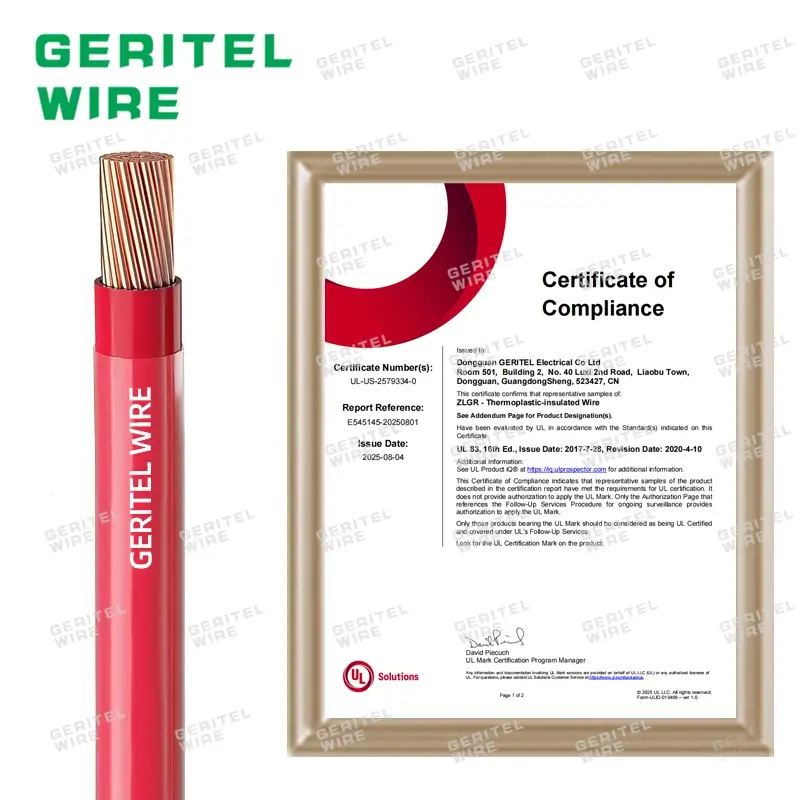
To support modern electrical systems that require both flexibility and reliability, Dongguan GERITEL Electrical Co., Ltd. supplies UL-compliant THHN and THWN-2 cables designed to perform consistently across diverse applications, from industrial power distribution to HVAC and machinery wiring, while also providing professional assistance to help you select the most suitable specification for your project.
Contact Us
Tel / WeChat / WhatsApp: +86 136 6257 9592
Email: manager01@greaterwire.com
Website: www.greaterwire.com
 THHN Electrical Wire Buying Guide



 Building 2, No. 40 Luxi 2nd Road, Liaobu Town, Dongguan City, Guangdong Province, China