


 Home
HomeTHHN vs THWN Cable Explained: A Quick Buyer's Guide
 GERITEL
 Mar 27,2026

When you are selecting building wire for a real-world project rather than simply comparing technical specifications, the difference between THHN and THWN cable becomes a critical decision that directly impacts installation safety, long-term reliability, and compliance with electrical standards, which is why understanding their practical differences is essential if you want to avoid costly mistakes while still optimizing both performance and budget.
Start with the Core Question: What Environment Will the Cable Operate In
Before evaluating price or availability, experienced buyers always begin by identifying whether the cable will be used in a dry, damp, or wet environment, because this single factor determines whether THHN is sufficient or whether THHN copper building wire 600V or THWN-2 electrical cable 600V copper becomes the more reliable and future-proof choice, especially in projects where environmental conditions may not remain constant over time.
If the installation is strictly indoors and fully controlled, THHN may be adequate, but if there is any possibility of moisture, condensation, or underground routing, selecting THWN is not optional but necessary in order to maintain insulation integrity and ensure long-term system performance.
Understanding THHN vs THWN: Construction and Performance Differences
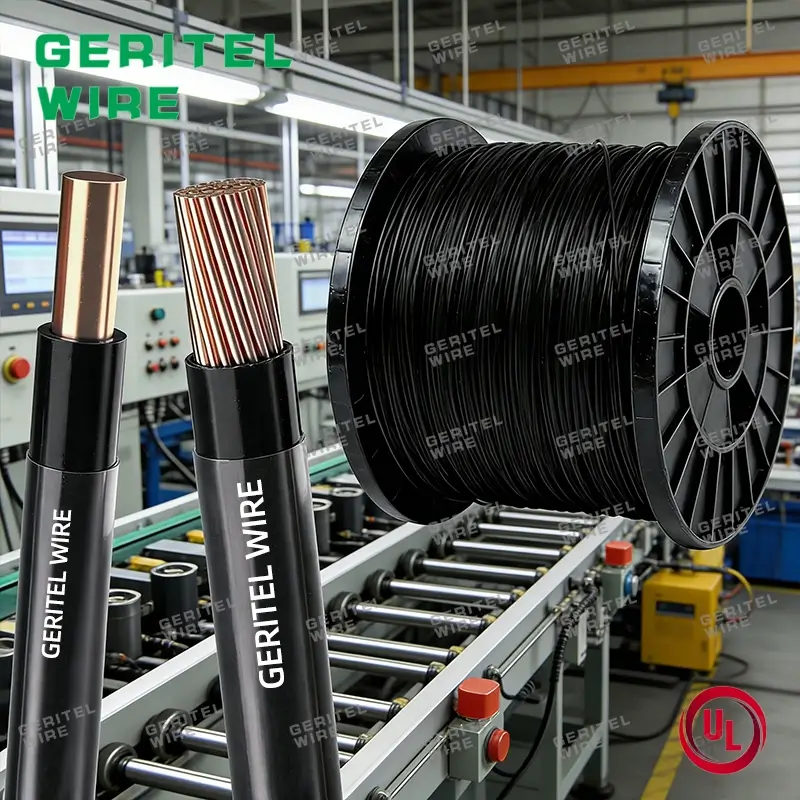
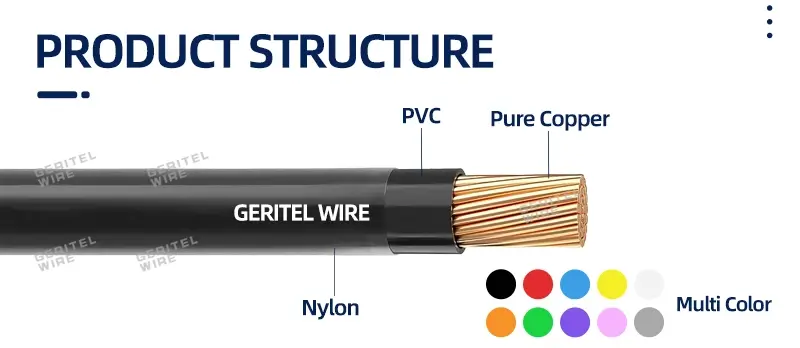
Although THHN and THWN cables share a similar construction consisting of PVC insulation combined with a nylon jacket that provides mechanical protection and smooth conduit pulling, their functional differences become significant when exposed to heat and moisture, which is where many selection mistakes occur.
THHN, which stands for Thermoplastic High Heat-resistant Nylon-coated wire, is designed primarily for high-temperature performance in dry locations and is widely used in indoor electrical systems where environmental exposure is limited.
THWN, which stands for Thermoplastic Heat and Water-resistant Nylon-coated wire, builds on this structure by adding water resistance, allowing it to perform reliably in wet, damp, or outdoor environments where standard insulation would otherwise degrade.
THWN-2, THWN-2 wire dual rated THHN THWN which has become the modern industry standard, further improves performance by offering a 90°C temperature rating in both wet and dry conditions, making it a more versatile and efficient solution for a wide range of applications.
From Specifications to Real Applications: How Professionals Make Decisions
Instead of evaluating parameters in isolation, experienced engineers translate specifications into practical value by understanding how each feature affects real-world performance and installation outcomes.
Temperature rating directly determines ampacity, meaning that higher-rated cables such as 90°C THWN-2 can carry more current or allow for smaller conductor sizes, which has a direct impact on both material cost and system efficiency.
Water resistance defines where the cable can be safely installed, and in the case of THWN, it enables use in underground conduits, outdoor environments, and humid industrial settings without risking insulation failure.
The nylon jacket contributes to installation efficiency by reducing friction during pulling, minimizing mechanical damage, and lowering labor time, which becomes particularly important in large-scale commercial or industrial projects.
Risk Awareness: The Consequences of Incorrect Cable Selection
Choosing the wrong cable type is not a minor oversight but a decision that can lead to serious technical and financial consequences, especially in projects with strict timelines and compliance requirements.
Using THHN in a wet environment can result in insulation degradation, leakage currents, and eventual short circuits, while selecting a cable with insufficient temperature rating can lead to overheating, reduced lifespan, and increased fire risk under load conditions.
In addition, decisions based solely on upfront cost without considering environmental suitability can result in compliance failures, inspection issues, and expensive rework, all of which significantly exceed the initial savings.
Why THHN/THWN-2 Is Becoming the Preferred Market Standard
In modern electrical projects where flexibility, compliance, and long-term reliability are equally important, THHN/THWN-2 has become the preferred choice because it combines the advantages of both cable types into a single solution that can adapt to varying installation conditions without requiring redesign or replacement.
By standardizing on dual-rated cable, buyers can simplify procurement, reduce inventory complexity, and ensure consistent performance across multiple applications, while also maintaining compliance with industry standards and improving overall system durability.
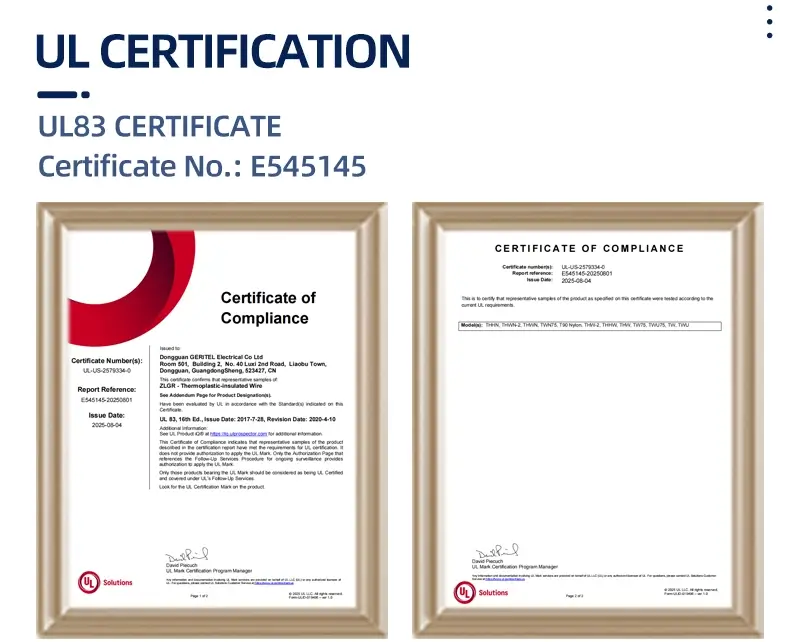
Working with a qualified and certified manufacturer further enhances these benefits by ensuring consistent conductor quality, precise insulation thickness, and adherence to recognized standards, which ultimately reduces installation risks and supports long-term operational stability.
Practical Buying Strategy: How to Make the Right Choice Efficiently
If your goal is to make a confident and efficient purchasing decision, the selection process should be guided by actual application conditions rather than assumptions or short-term cost considerations.
THHN should only be selected when the installation environment is strictly dry and controlled, while THWN or THWN-2 should be chosen whenever there is any uncertainty regarding moisture, outdoor exposure, or future environmental changes.
Priority should also be given to 90°C-rated cables in order to provide additional safety margin and load flexibility, and suppliers should be evaluated not only on price but also on certification, technical support, and manufacturing consistency.
Conclusion
The difference between THHN and THWN cables ultimately reflects their ability to perform under different environmental and thermal conditions, and while THHN remains a practical option for controlled indoor applications, THWN and especially THWN-2 offer the level of reliability, adaptability, and safety margin required for modern electrical systems, which is why informed buyers increasingly treat dual-rated cable as the default choice rather than an upgrade.
When consistency, safety, and certification matter in your procurement decision, Dongguan GERITEL Electrical Co., Ltd. delivers high-quality THHN and THWN-2 cables built to UL standards, helping you achieve reliable electrical performance across commercial and industrial applications, while reducing the risks associated with improper cable selection or inconsistent manufacturing quality.
Contact Us
Tel / WeChat / WhatsApp: +86 136 6257 9592
Email: manager01@greaterwire.com
Website: www.greaterwire.com
 What Is THHN Stranded Wire Used For?



 Building 2, No. 40 Luxi 2nd Road, Liaobu Town, Dongguan City, Guangdong Province, China