



 Home
HomeVariable Frequency Drive Cable vs Standard Motor Control Cable: Key Differences
 GERITEL
 Jun 11,2026

At first glance, a VFD cable and a TC-ER cable look similar. Both have copper conductors, insulation, and a PVC jacket. But inside, the construction is very different. TC-ER cable is Tray Cable with Exposed Run rating and UL 1277 listing. It is designed for general power and control in industrial trays. It works perfectly for fixed-speed motors, control panels, and instrumentation. A dedicated VFD cable is built specifically to handle the harsh electrical environment created by a VFD output. Using one in place of the other can cause problems or waste money. This guide explains exactly when to choose which.
1. How VFD Cable Differs from TC-ER Control Cable
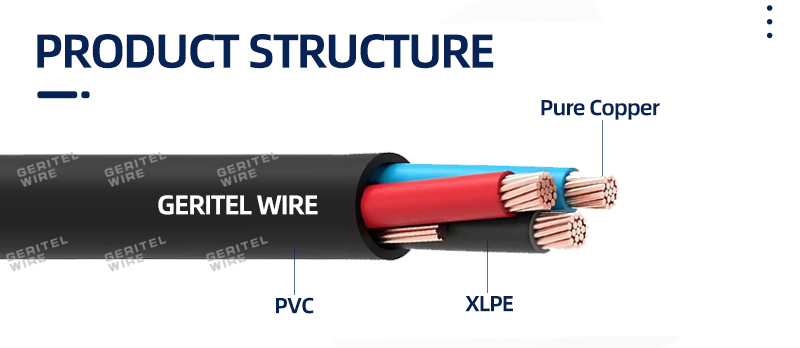
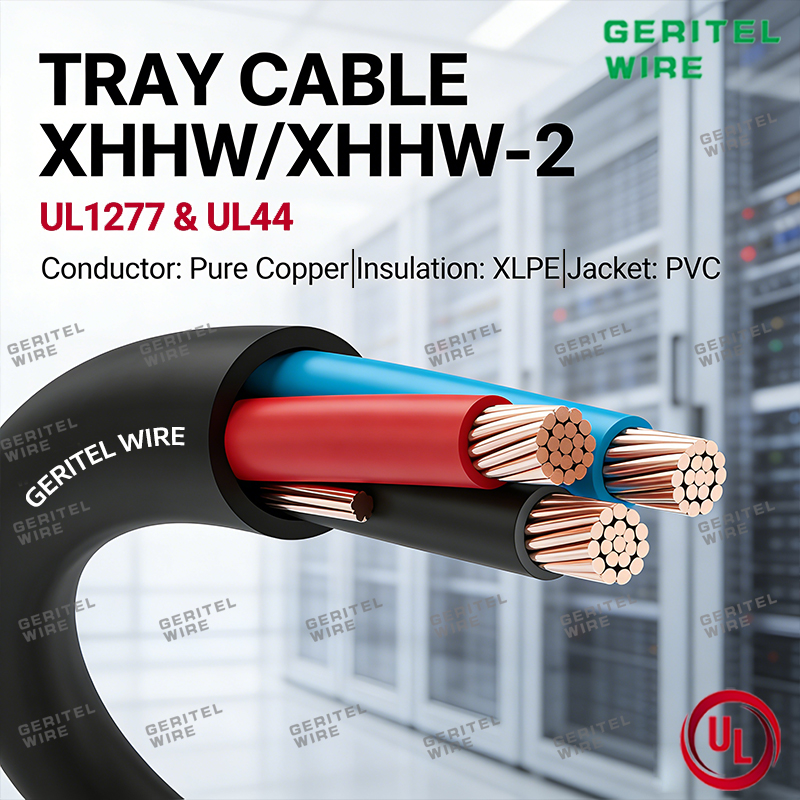
- TC-ER cable is a versatile, UL 1277 listed tray cable. Its typical construction includes THHN/THWN-2 or XHHW-2 insulation, an optional foil shield with drain wire, a single bare or insulated ground in 3/C or 4/C configuration, and a black PVC jacket that is sunlight resistant and oil resistant. It carries the exposed run rating, meaning no conduit is required in cable trays.
- VFD cable is specialized for connecting a VFD to a motor. Its typical construction includes XHHW-2 or XLPE insulation for higher dielectric strength, a heavy copper braid with 85 percent coverage plus foil for superior shielding, three symmetrical bare grounds with one per phase to cancel common-mode currents, and a flexible PVC jacket.
The key differences are simple. VFD cable has symmetrical grounds and heavy copper braid. TC-ER cable has a single ground and optional light foil shield.
2. Three Scenarios – When to Use VFD Cable vs TC-ER Cable
Scenario 1: Fixed-speed motor with no VFD, dry indoor tray
Use TC-ER cable, unshielded. For example, a 10 HP conveyor motor started by a contactor has no VFD and no high-frequency noise. Unshielded TC-ER saves cost and works perfectly.
Scenario 2: VFD-driven motor, short run under 50 feet, clean tray
You might use shielded TC-ER cable with foil and drain wire if the tray has no sensitive signals. But for best results, use proper VFD cable. The symmetrical grounds in VFD cable protect motor bearings – something TC-ER cannot do.
Scenario 3: VFD-driven motor, long run over 50 feet, or tray with instrumentation
You must use VFD cable. Shielded TC-ER with foil only is not sufficient for long runs. The heavy copper braid in VFD cable provides far better EMI suppression, and the symmetrical grounds prevent bearing currents. Using TC-ER here will cause nuisance trips and sensor errors.
3. Customer Pain Point – Using TC-ER Where VFD Cable Is Required
A plant electrician had a 75 HP VFD driving a pump. The run was 120 feet in an open cable tray. He used shielded TC-ER cable with foil and drain wire because it was in stock. After startup, the VFD tripped randomly every few hours. Sensors on the same tray fluctuated wildly. The foil shield was not enough to block the PWM noise from the VFD. The fix required replacing the TC-ER with proper VFD cable that has copper braid and symmetrical grounds. Downtime cost thousands of dollars.
Lesson: TC-ER cable is excellent for many applications like fixed-speed motors, control panels, and instrumentation. But for VFD motor leads longer than 50 feet, you need dedicated VFD cable. The extra cost is minimal compared to production loss.
4. Product Advantages – What TC-ER Cable Excels At
TC-ER cable advantages
First, the exposed run rating means no conduit is needed in cable trays, saving labor and material. Second, it is versatile for power, control, instrumentation, and fixed-speed motor feeders. Third, UL 1277 listing meets flame, crush, and impact tests for industrial trays. Fourth, the shielded option with foil and drain wire works well for short VFD runs under 50 feet or near moderate EMI. Finally, it is much less expensive than VFD cable for non-VFD applications.
VFD cable advantages
First, heavy copper braid provides superior EMI suppression for long runs. Second, symmetrical grounds protect motor bearings from common-mode currents. Third, XHHW-2 insulation handles reflected wave voltage spikes.
5. Selection Reminder – Two Simple Questions
From our sales team: Before you choose between VFD cable and TC-ER cable, ask two questions.
Question 1: Is there a VFD on this motor?
If no, meaning across-the-line start, use TC-ER cable. It is perfect for fixed-speed motors.
If yes, go to question 2.
Question 2: How long is the cable run from VFD to motor, and what is in the tray?
If the run is under 50 feet and no sensitive signals are nearby, shielded TC-ER cable with foil may work, but VFD cable is safer.
If the run is over 50 feet or the tray contains instrumentation or analog signals, you need VFD cable. Do not use TC-ER.
Critical reminder: TC-ER cable is not a substitute for VFD cable on long runs. The foil shield is not designed for continuous high-frequency noise. If you already have TC-ER in stock, it is fine for fixed-speed motors, control circuits, and very short VFD leads. For real VFD work, use proper VFD cable.
6. UL Certifications – What the Markings Mean
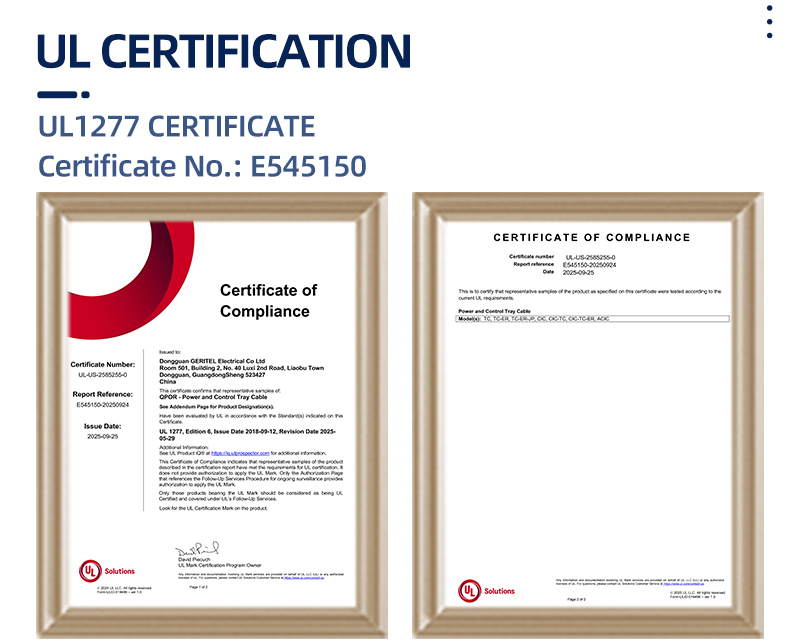
Our TC-ER cables are UL 1277 listed for Tray Cable with Exposed Run rating. Conductors with XHHW-2 insulation comply with UL 44. Conductors with THHN/THWN-2 comply with UL 83. VFD cables we supply also meet relevant UL standards. All markings are printed on the jacket. For UL file numbers, request the certificate from our technical team.
FAQ
Q1: Can I use TC-ER cable for a VFD motor if the run is only 30 feet?
A: Possibly. Use shielded TC-ER with foil and drain wire. Ground the drain wire at the drive end only. However, VFD cable still offers better bearing protection. For critical applications, use VFD cable.
Q2: What is the main disadvantage of using TC-ER on a VFD output?
A: Two issues. First, the single ground does not cancel common-mode currents, leading to motor bearing damage over time. Second, the foil shield is less effective than copper braid for high-frequency noise.
Q3: Is unshielded TC-ER ever acceptable for a VFD motor?
A: Only for very short runs under 10 feet in a metal conduit. Not recommended. Use shielded TC-ER at minimum.
Q4: Does Greater Wire sell both TC-ER cable and dedicated VFD cable?
A: Yes. We manufacture UL 1277 TC-ER cable in gauges from 14 AWG to 500 kcmil, shielded or unshielded. We also supply VFD cable with copper braid and symmetrical grounds. Contact us with your motor specifications.
Need a Quote for Your Motor Control Project?
Tell us your motor type: VFD or fixed-speed. Provide the distance between drive and motor, the environment such as wet, dry, or oily, and whether the cable tray contains sensitive signals. We will recommend the right cable, either TC-ER cable or dedicated VFD cable, and send a quote within 24 hours.
Contact us
Dongguan GERITEL Electrical Co., Ltd.
Tel/WhatsApp/Wechat: +86 136 6257 9592
Tel/WhatsApp/Wechat: +86 135 1078 4550
Email: manager01@greaterwire.com
Website: www.geritelgroup.com
 Cable Tray System Design Guide for Industrial Power and Control Networks



 Building 2, No. 40 Luxi 2nd Road, Liaobu Town, Dongguan City, Guangdong Province, China