


 Home
HomeWhat Is TC-ER Cable and Why It’s Popular in Industrial Facilities?
 GERITEL
 Jun 05,2026

1.What Is TC-ER Cable and Why It’s Popular in Industrial Facilities?
If you’ve ever spent hours bending conduit stub-ups between cable trays and industrial motors, you know how quickly those tedious, repetitive tasks derail project timelines and blow budgets. For electrical contractors, plant engineers and facility managers, standard tray cable (TC) has long been a reliable but inefficient choice—requiring extra materials, more labor and unnecessary connection points. That’s why TC-ER cable has become the fastest-growing wiring solution for modern manufacturing facilities. In this guide, we’ll break down exactly what tray cable TC-ER is, how it solves your biggest installation headaches, and how to select the right type for your next project.
· TC-ER Cable: The Conduit-Free Tray Cable That’s Transforming Industrial Wiring
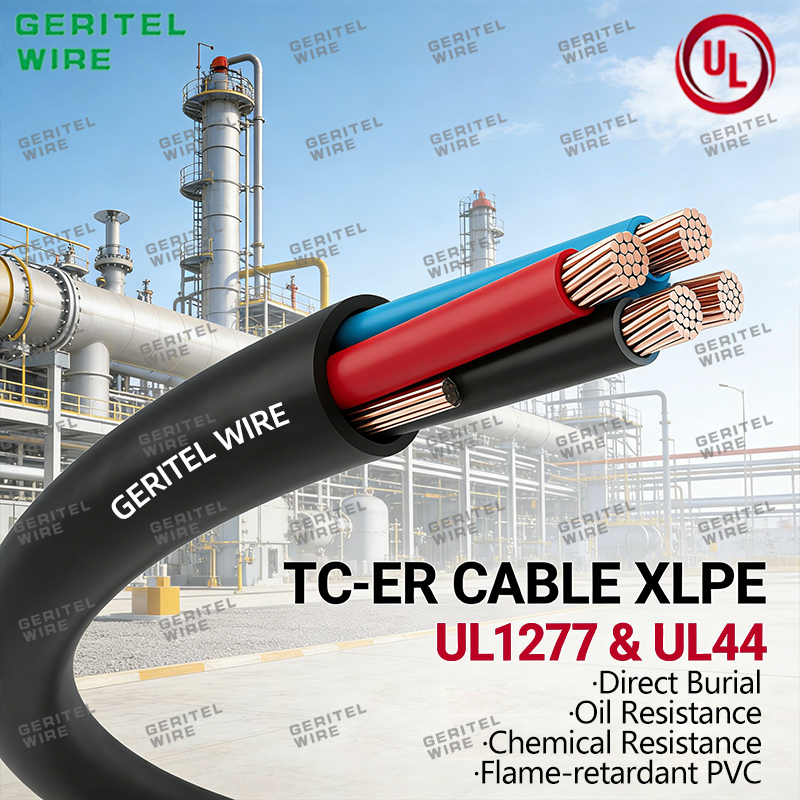
TC-ER stands for Tray Cable-Exposed Run, a specialized power and control cable designed exclusively for industrial applications. Unlike standard TC cable, which is only approved for installation inside fully enclosed cable trays or conduit, TC-ER cable is listed under UL 1277 for exposed runs between trays and equipment—eliminating the need for additional conduit protection entirely.
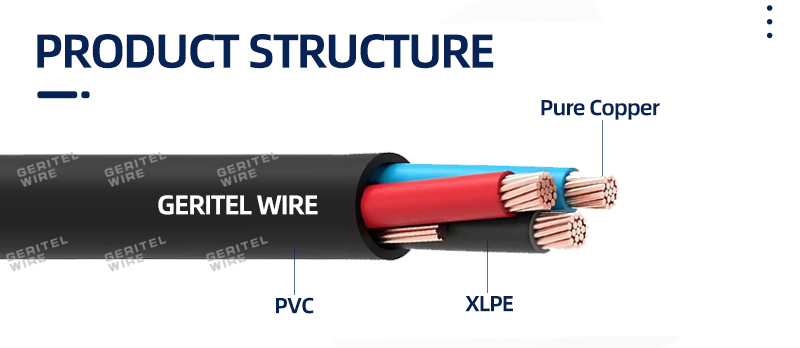
Most industrial TC-ER cable features THHN/THWN-2 or XHHW-2 insulated conductors wrapped in a durable PVC jacket, with optional aluminum interlocked armor or galvanized steel armor for enhanced mechanical protection in harsh environments. It is available with both bare ground and insulated green ground conductors, and comes in common configurations including 3/C and 4/C for three-phase motor connections.
The most widely specified options are 600V TC-ER cable, which covers the majority of general industrial applications, and 1000V TC-ER cable for higher-voltage equipment. For maximum flexibility across mixed systems, many forward-thinking facilities choose dual rated TC-ER cable, which meets both 600V and 1000V requirements and reduces inventory complexity.
2.Why TC-ER Cable Is Replacing Standard TC and MC Cable in Modern Manufacturing Plants
· Eliminate Conduit Stub-Ups and Cut Installation Costs by 30%+
The single biggest pain point with standard TC cable is its requirement for conduit at all tray-to-equipment transitions. Every motor connection means cutting, threading and installing conduit stub-ups, which adds significant material costs and can double installation time. For a typical manufacturing plant with 50+ motors, this translates to thousands of dollars in extra labor and materials that could be allocated elsewhere.
TC-ER cable eliminates this requirement entirely. Because it is approved for exposed runs, you can pull the cable directly from the cable tray to the motor terminals without any additional conduit or fittings. This not only cuts material costs by eliminating conduit, elbows and junction boxes but also reduces labor time by up to 50% for motor connections—allowing you to complete projects ahead of schedule and under budget.
· Equal Mechanical Protection to MC Cable at a Lower Price Point
For decades, engineers turned to metal-clad (MC) cable for exposed run applications, as it provides excellent crush and impact protection. However, MC cable is significantly more expensive than tray cable, and its rigid armor makes it extremely difficult to pull and terminate in tight spaces—common in crowded industrial facilities.
TC-ER cable solves this longstanding dilemma. It passes the exact same UL 1569 crush and impact tests as MC cable, providing equivalent mechanical protection for exposed runs. But because it uses a lighter, more flexible construction, it is easier to handle, pull and terminate than MC cable—and costs 20-30% less per foot.
· Fewer Connection Points = Higher System Reliability
Every conduit connection, fitting and junction box is a potential point of failure in an electrical system. Moisture, dust and constant vibration from industrial equipment can cause connections to loosen over time, leading to unplanned downtime and costly repairs.
By eliminating conduit stub-ups and all associated fittings, TC-ER cable reduces the number of connection points in your system by up to 70%. This not only lowers long-term maintenance costs but also dramatically improves overall system reliability—critical for 24/7 manufacturing operations where even an hour of downtime can cost tens of thousands of dollars in lost production.
3.Top Industrial Applications: Where TC-ER Cable Delivers the Most Value
· Motor Control Center (MCC) to Motor Connections: The #1 Use Case
The most common and most impactful application for industrial TC-ER cable is connecting motor control centers to industrial motors. This is where the conduit-free design provides the greatest time and cost savings, as every motor connection would otherwise require a separate conduit stub-up.
For standard 3-phase motors up to 600V, 3/C 600V TC-ER cable with an insulated green ground conductor is the industry standard. For larger motors or higher-voltage equipment such as large compressors and pumps, 4/C 1000V TC-ER cable or dual rated TC-ER cable is typically specified.
· Other High-Impact Industrial Installations
While MCC-to-motor connections are the primary use case, TC-ER cable is also ideal for:
· Conveyor system wiring
· Pump and compressor connections
· Industrial lighting systems
· Control panel interconnections
· Material handling equipment
4.Critical Selection Tips for Industrial TC-ER Cable Installations
· Verify the Built-In Equipment Grounding Conductor
All TC-ER cable installations require a proper equipment grounding conductor to ensure electrical safety. When selecting your cable, confirm that it includes a dedicated grounding conductor—either bare ground or insulated green ground. Insulated green ground conductors are preferred in most industrial facilities as they are easier to identify during installation and less prone to damage during pulling.
· Match Voltage Rating to Your Application
Choosing the correct voltage rating is non-negotiable for safety and compliance. 600V TC-ER cable is suitable for most general industrial applications, including motors, pumps and lighting systems. For higher-voltage equipment operating above 600V, 1000V TC-ER cable is required. Dual rated TC-ER cable is an excellent choice for facilities with a mix of 600V and 1000V systems, as it reduces inventory and simplifies ordering.
· Follow Proper Support Requirements for Exposed Runs
While TC-ER cable is approved for exposed runs, it still requires proper support to prevent damage from vibration and physical impact. According to standard installation guidelines, TC-ER cable must be supported at intervals not exceeding 6 feet for all exposed runs. This ensures the cable remains secure and protected throughout its service life.
5.Frequently Asked Questions About Industrial TC-ER Cable
Q1: What is the difference between TC cable and TC-ER cable?
A1: Standard TC cable is only approved for installation inside fully enclosed cable trays or conduit. TC-ER cable for motor connections and other equipment is listed under UL 1277 for exposed runs between cable trays and equipment, eliminating the need for conduit stub-ups.
Q2: Can TC-ER cable be used in place of MC cable?
A2: Yes, for most exposed run applications. TC-ER cable passes the same UL 1569 crush and impact tests as MC cable, providing equivalent mechanical protection at a significantly lower cost. It is also more flexible and easier to install than rigid MC cable.
Q3: What voltage ratings are available for TC-ER cable?
A3: TC-ER cable is available in 600V and 1000V ratings. Dual rated TC-ER cable, which meets both 600V and 1000V requirements, is also available for maximum flexibility across different systems.
Q4: What certifications should I look for in TC-ER cable?
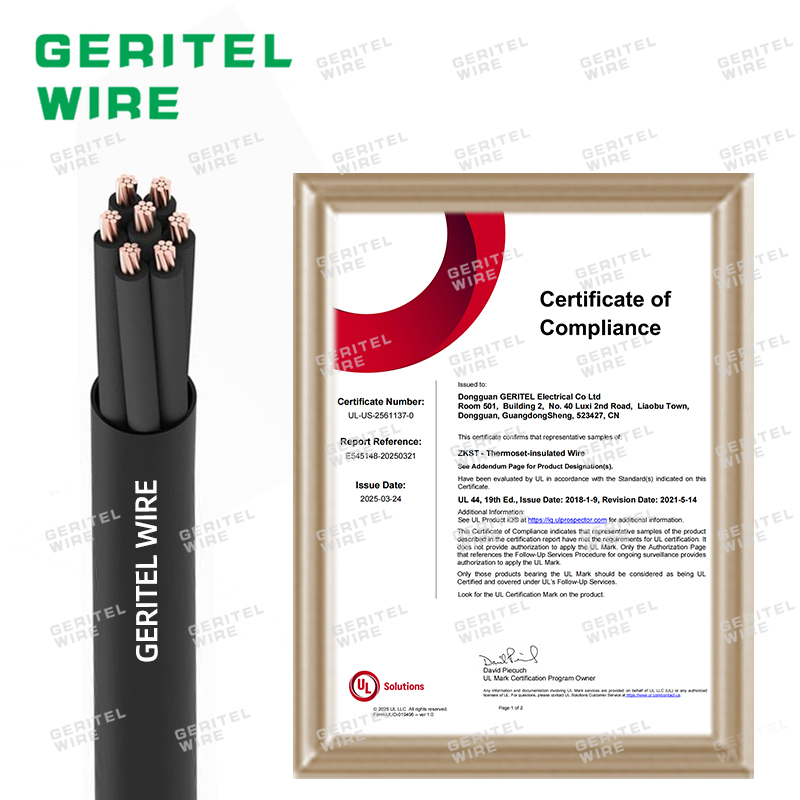
A4: Always ensure your TC-ER cable is certified to UL 44 (for thermoset-insulated wires and cables) and UL 1277 (for tray cable). These certifications confirm the cable meets strict safety and performance standards for industrial use.
6.Ready to Upgrade Your Industrial Wiring?
With more than 20 years of production experience, we manufacture high-quality TC-ER cable that is fully certified to UL 44 and UL 1277 standards. Whether you need 600V TC-ER cable for standard motor connections, 1000V TC-ER cable for high-voltage equipment, or custom dual rated TC-ER cable for mixed systems, we have the solution for you. Contact us today for a free quote and let our team of cable experts help you select the right product for your next industrial project.
Dongguan GERITEL Electrical Co., Ltd.
Tel/WhatsApp/Wechat: +86 136 6257 9592
Tel/WhatsApp/Wechat: +86 135 1078 4550
Email: manager01@greaterwire.com
Website: www.geritelgroup.com
 Variable Frequency Drive Cable vs Standard Motor Control Cable: Key Differences



 Building 2, No. 40 Luxi 2nd Road, Liaobu Town, Dongguan City, Guangdong Province, China