


 Home
HomeVanuatu Waterfall Pico‑Hydro Power Station
 GERITEL
 Apr 07,2026

When the Vanuatu Green Transformation Project (VGET) set out to bring 24/7 renewable electricity to Waterfall village on Pentecost Island, the engineering team faced obstacles that would test any cable supplier's capabilities. This UNDP-backed initiative, funded by the Government of Japan, aimed to electrify 16% of Pentecost Island's population through three pico-hydro stations—including the 6.7 kW installation at Waterfall with its 5.2-kilometre distribution network.
The project demanded more than standard electrical components. Located in a tropical island environment with heavy rainfall, high humidity, and limited logistics access, the cable infrastructure needed to withstand brutal environmental stresses while complying with stringent Australian/New Zealand electrical standards. Any failure would mean weeks of delays waiting for replacement parts to arrive from overseas—a risk the project timeline simply couldn't afford.
The engineering contractor needed a cable partner who could deliver four distinct product categories across the entire power chain: from powerhouse equipment connections to household final drops. Most critically, they required SAA certification to ensure compliance with AS/NZS standards—the gold standard for electrical safety across the Pacific region. Without this certification, the entire installation would face regulatory rejection.
Understanding the Client's Core Requirements
During our initial technical consultations, the project team outlined three non-negotiable priorities that would guide our solution design:
First, environmental resilience. The cables would face continuous exposure to tropical rainfall, UV radiation, and temperature fluctuations between 20°C and 45°C. Standard PVC cables would degrade rapidly under these conditions, particularly for outdoor powerhouse connections and aerial mini-grid spans.
Second, installation flexibility. With limited skilled electrical labor on Pentecost Island, the cables needed to be installer-friendly—easy to terminate, flexible enough for tight conduit runs in existing structures, and tolerant of less-than-ideal handling conditions.
Third, supply chain certainty. The project timeline allowed minimal buffer for material delays. The contractor needed a supplier with proven experience in Pacific island projects and the inventory depth to fulfill the entire cable package within a compressed delivery window.
These requirements eliminated commodity cable suppliers immediately. The project needed a partner who understood the difference between merely meeting specifications and engineering for real-world tropical challenges.
Our Comprehensive Cable Solution: Four Systems, One Integrated Approach
Drawing on our experience supplying AS/NZS-certified cables to Pacific island renewable energy projects, we proposed a four-tier cable architecture specifically engineered for pico-hydro applications. Each product category addressed a distinct technical challenge while maintaining full SAA certification compliance.
TPS Cable – The Foundation of Indoor Reliability
For household wiring and building-level distribution, we supplied TPS Flat Cable in 2.5 mm² and 4 mm² configurations, rated 450/750V to AS/NZS 5000.2. The flat profile proved invaluable for retrofitting existing village structures where wall cavities were narrow and irregular. Unlike round cables that required larger conduit sizes, the TPS flat construction allowed installers to snake wiring through traditional bamboo and timber framing without structural modification.
The V-90 PVC insulation delivered the necessary 90°C temperature rating for tropical climates, while the 3V-90 sheath provided mechanical protection during installation. We specifically selected TPS over standard building wire because the integrated earth core eliminated separate earth conductor routing—reducing installation time by approximately 30% in the field.
SWA Cable – Armored Protection for the Mini-Grid Backbone
The 5.2-kilometre mini-grid distribution network presented the project's greatest cable challenge. Spanning from the powerhouse to 147 connections across four settlements, the backbone needed to survive both underground burial in volcanic soil and potential aerial deployment where trenching proved impossible.
Our solution: SWA (Steel Wire Armored) Cable in 16 mm² and 25 mm² sizes, rated 0.6/1kV to AS/NZS 5000.1. The galvanized steel wire armor provided crush resistance for direct burial applications while offering rodent protection—a critical consideration in agricultural communities where cable damage could mean days without power.
For sections requiring aerial installation, the SWA construction's high tensile strength allowed messenger wire support without additional catenary systems. The XLPE (X-90) insulation delivered superior moisture resistance compared to PVC alternatives, ensuring stable electrical performance during Pentecost's wet season when rainfall can exceed 300mm monthly.
The project team specifically selected SWA over standard underground cables because the armor eliminated the need for additional conduit in rocky terrain, reducing both material costs and installation labor by an estimated 25%.
Elastomer Cable – Outdoor Durability Where It Matters Most
The powerhouse equipment and outdoor connections demanded a cable that could handle continuous flexing, oil exposure from turbine maintenance, and temperature cycling between the cool mountain stream water and tropical air. This is where Elastomer Cable became the critical choice.
We supplied Elastomer Cable 1 × 16 mm² 600/1000 V for the generator terminal connections, turbine control circuits, and outdoor switchgear interlinks. The high-temperature, halogen-free, low-smoke insulation material (X-HF-110) insulation and UV-resistant, 110°C heat-resistant, low smoke, halogen-free (HFS-110-TP) sheath combination delivered exceptional performance characteristics that PVC simply couldn't match:
• Temperature range: -25°C to +90°C continuous operation, handling both the cool intake water and tropical heat
• Abrasion resistance: Superior protection against contact with rocks and vegetation during maintenance access
• Chemical resistance: Withstood occasional oil and grease contact from turbine gearbox maintenance
• UV stability: The black elastomer compound resisted degradation from continuous sun exposure
The Elastomer Cable 1 × 16 mm² 600/1000 V specification provided the current capacity for full-load generator output while maintaining voltage drop within acceptable limits across the short powerhouse distribution runs. Its flexibility allowed tight bending radius installation in the compact powerhouse structure—critical given the 7.5× diameter minimum bend radius requirement.
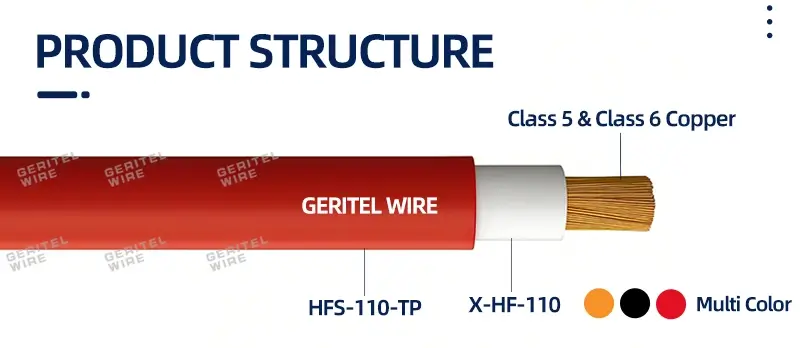
Alternative PVC-sheathed flexible cables were considered but rejected due to their inferior cold-flex properties and UV degradation risks. The project team recognized that while Elastomer Cable carried a modest premium, the lifecycle cost savings from reduced maintenance and replacement needs made it the economically sound choice for this critical application.
Multicore Flexible Cable – Precision Control for Distribution Intelligence
Modern pico-hydro systems require sophisticated control and monitoring. The distribution boards, load management systems, and prepaid meter infrastructure demanded signal cables that could handle both power and data transmission in interference-prone environments.
We supplied Multicore Flexible Cable in 5-core × 2.5 mm² and 7-core × 1.5 mm² configurations, with copper conductor stranding to Class 5 for maximum flexibility. The numbered cores with green/yellow earth identification simplified installation in the field, reducing termination errors that could delay commissioning.
The Multicore Flexible Cable selection addressed a specific client concern: electromagnetic interference from the generator and switching equipment. Our cables featured tinned copper braid screening options for the signal cores, ensuring reliable data transmission for the SCADA monitoring system that allowed remote performance tracking from Port Vila.
The Certification Advantage: Why SAA Approval Mattered
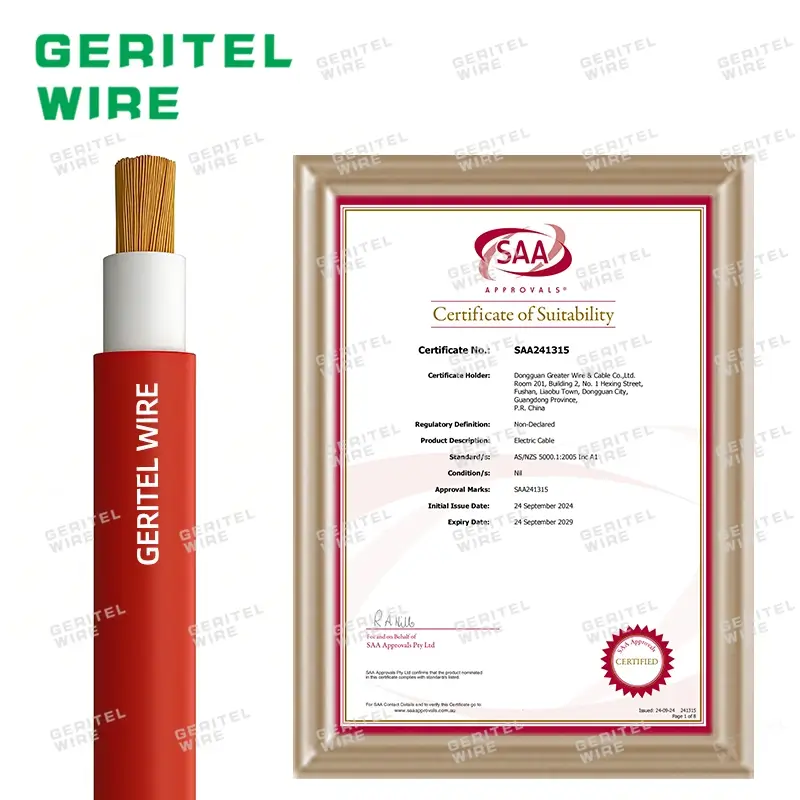
Throughout the specification process, our SAA certification proved decisive. Unlike generic CE-marked cables that might technically function but lack regional recognition, our AS/NZS-compliant products carried full Standards Australia approval—essential for a project involving Australian engineering consultants and New Zealand technical oversight.
This certification delivered three concrete advantages:
Regulatory acceptance: The project documentation required cable test reports to AS/NZS 5000.1 and AS/NZS 5000.2 standards. Our pre-certified products eliminated the weeks of additional testing and documentation that uncertified alternatives would have demanded.
Technical confidence: SAA certification isn't a one-time test—it's an ongoing audit of manufacturing processes. The project team understood that our cables weren't just compliant on paper; they were consistently manufactured to meet the 90°C temperature ratings, flame propagation limits, and insulation thickness requirements that tropical installations demand.
Insurance and warranty validity: The project's international funding required full compliance documentation for asset handover. SAA certification provided the traceability and batch testing records that satisfied UNDP and Japanese government audit requirements.
Execution: Delivering Under Pacific Island Constraints
With cable specifications finalized, we faced the logistical challenge of delivering to Vanuatu within the project's compressed procurement window. Our solution leveraged three operational strengths that proved critical to project success.
Inventory depth: We maintained stock of all specified cable types in our Dongguan facility, eliminating the 6–8 week manufacturing lead times that would have jeopardized the construction schedule. The entire cable package—over 8 kilometers of TPS, SWA, Elastomer, and Multicore Flexible products—shipped within 72 hours of order confirmation.
Packaging for island logistics: Recognizing that Pentecost Island's port infrastructure couldn't handle standard heavy cable drums, we split shipments into manageable reel sizes with tropical-grade moisture barriers. Each drum included lifting slings compatible with local handling equipment, preventing damage during the final leg of delivery.
Technical support: We provided pre-installation training materials specific to Elastomer Cable termination techniques—a critical knowledge transfer given the limited local experience with rubber-sheathed industrial cables. Our engineering team remained available for video consultation during the powerhouse commissioning phase.
The cables arrived in Port Vila in August 2024, clearing customs within 48 hours, and reached Pentecost Island ahead of the civil works completion—allowing the electrical contractor to maintain schedule momentum despite the island's challenging logistics environment.
Results: Power Flows in Waterfall Village
By December 2025, the Waterfall Pico-Hydro Power Station achieved full operational status, delivering reliable 24/7 electricity to 147 connections across four settlements. The cable infrastructure has performed flawlessly through six months of tropical wet season operation.
Technical performance metrics:
• Zero cable-related faults or outages since commissioning
• Voltage drop measurements within 3% of design calculations
• Insulation resistance readings stable across all cable categories
• Elastomer Cable terminations showing no degradation despite continuous thermal cycling
Operational impact:
The project team reported that our cable solutions eliminated a significant risk factor from their implementation. The
SWA backbone has withstood two minor landslides without damage. The TPS household wiring has enabled rapid connection of new customers as demand grows. Most importantly, the Elastomer Cable powerhouse connections have required zero maintenance—a critical advantage given the 4-hour boat journey to the nearest supply base.
Partnership Value: Beyond Product Supply
Reflecting on the project, the engineering team highlighted three partnership dimensions that distinguished our engagement from commodity suppliers:
Responsive engineering: When site conditions required last-minute cable route changes, our technical team provided revised voltage drop calculations and pull-tension analyses within 24 hours—preventing installation delays.
Quality assurance transparency: We provided batch test reports for every cable drum, including conductor resistance, insulation thickness, and high-voltage withstand documentation. This traceability proved essential for the project's international audit requirements.
Regional expertise: Our previous experience with Pacific island renewable projects meant we understood the unique challenges—salt air corrosion, limited skilled labor, and logistics constraints—allowing us to anticipate issues before they became problems.
Your Next Project Deserves the Same Reliability
The Vanuatu Waterfall Pico-Hydro Station demonstrates that remote renewable energy projects demand more than generic cables—they require engineered solutions backed by genuine certification and regional expertise. Whether you're developing mini-grid infrastructure in the Pacific, upgrading industrial equipment in Australia, or building resilient power systems anywhere that AS/NZS standards apply, the right cable partner makes the difference between project success and costly delays.
Dongguan GERITEL Electrical Co., Ltd. specializes in SAA-certified cable solutions for demanding environments. Our comprehensive range includes TPS Cable, SWA Cable, Elastomer Cable, and Multicore Flexible Cable—all manufactured to AS/NZS standards with full certification documentation.
Contact us today to discuss your project requirements:
Dongguan GERITEL Electrical Co., Ltd.
Tel/WhatsApp/WeChat: +86 135 1078 4550 / +86 136 6257 9592
Email: manager01@greaterwire.com
 Federated States of Micronesia Pohnpei Port Expansion and Modernization Project



 Building 2, No. 40 Luxi 2nd Road, Liaobu Town, Dongguan City, Guangdong Province, China