


 Home
HomeFederated States of Micronesia Pohnpei Port Expansion and Modernization Project
 GERITEL
 Apr 07,2026

When the Federated States of Micronesia embarked on the Pohnpei Port Expansion and Modernization Project in September 2024, the stakes couldn't have been higher. As the largest commercial and fishing port in this Pacific island nation, Pohnpei Port serves as the critical lifeline for a country comprising approximately 607 islands spread across 2,550 kilometers.Ministry of Foreign Affairs of Japan. The $30 million Japanese-funded initiative, implemented by JICA and Wakachiku Construction, aims to ease vessel congestion, improve maritime safety, and enhance logistics capacity by constructing a new 160-meter quay capable of accommodating 15,000 DWT vessels.
However, beneath the concrete and steel of this ambitious infrastructure lay a complex electrical challenge that would determine the port's operational reliability for decades to come.
Understanding the Challenge: Why Standard Cables Wouldn't Survive
The project engineering team faced a unique set of environmental and operational constraints that made cable selection particularly critical. Pohnpei's tropical maritime climate presents a perfect storm of electrical hazards: year-round humidity averaging 80%, salt-laden air from the Pacific Ocean, intense UV radiation, and the constant threat of tropical storms. The existing port infrastructure had suffered from accelerated cable degradation due to these exact conditions, leading to frequent power interruptions that disrupted both commercial shipping and the vital fishing industry.
The client—Pohnpei Port Authority—had learned from past experiences that generic cable solutions simply couldn't withstand the demanding environment. Their project specifications called for cables that could deliver reliable power distribution across three distinct functional zones: the main port power backbone, extensive outdoor lighting systems, and specialized cold chain facilities for fisheries.
What they needed wasn't just cable; they needed a comprehensive electrical infrastructure partner who understood the intersection of Australian standards compliance, marine-grade durability, and the logistical complexities of delivering to a remote Pacific island nation.
Engineering the Solution: Tailored Cable Architecture for Marine Environments
Our engineering team at Dongguan GERITEL Electrical approached this challenge through a systematic analysis of each power distribution requirement, developing a multi-tier cable specification that balanced performance, compliance, and long-term value.
Port Power Distribution Backbone
For the primary medium-voltage distribution network running from the main substation to various port operational zones, we specified 3×240 mm² MV Cable with XLPE insulation and heavy-duty PVC sheathing. This configuration was selected over standard aluminum alternatives due to copper's superior conductivity in humid environments and its resistance to galvanic corrosion—a critical factor given the port's proximity to saltwater. The 240 mm² cross-sectional area provides ample capacity for future port expansion while maintaining voltage stability across the 160-meter quay length.
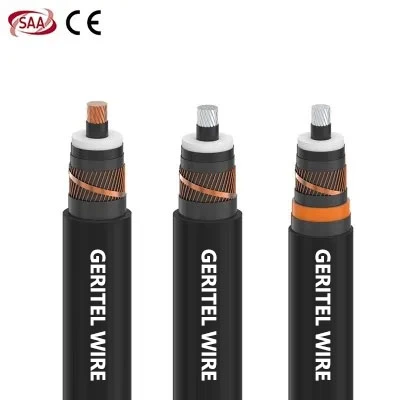
The decision to use medium-voltage cable rather than relying solely on low-voltage distribution throughout the port was driven by load calculations showing peak demands from container handling equipment and refrigerated storage facilities. This architecture reduces line losses by approximately 15% compared to extended low-voltage runs, translating to measurable energy savings over the project's 50-year design life.
Critical Lighting Infrastructure
Perhaps nowhere was cable selection more scrutinized than in the port lighting systems, where safety and operational continuity intersect. We deployed 3×6 mm² Building Cable throughout the outdoor lighting network, specifically chosen for its optimal balance of current-carrying capacity and installation flexibility .
The 3×6 mm² Building Cable features UV-stabilized PVC insulation rated for tropical sun exposure, with a operating temperature range of -15°C to +70°C that accommodates both the equatorial heat and occasional cool evenings. Its three-core construction simplifies installation while providing dedicated earth continuity—essential for metal lighting pole grounding in this lightning-prone region. We also supplied 3×2.5 mm² Building Cable for auxiliary circuits and control wiring, maintaining specification consistency across the lighting infrastructure.
What distinguishes this cable choice is its compliance with AS/NZS 5000.1 standards through our SAA certification, ensuring that the insulation compounds resist the specific fungal growth and moisture ingress patterns common to Pacific island environments.
Cold Chain and Fisheries Support
The fishing industry represents an economic cornerstone for the FSM, making the reliability of cold storage facilities non-negotiable. For these applications, we recommended 3×35 mm² Elastomer Cable and 3×10 mm² TPS Cable configurations, selected specifically for their high flexibility and resistance to the mechanical stresses of refrigerated container movement.
The elastomeric insulation provides superior performance in low-temperature environments while maintaining flexibility during installation in tight spaces within processing facilities. Unlike standard PVC cables that become brittle in cold conditions, these cables retain their mechanical properties across the full operational temperature range of -25°C to +90°C, ensuring uninterrupted power to refrigeration compressors even during equipment maintenance cycles.
Control and Instrumentation Systems
For the port's automated mooring systems, vessel traffic management equipment, and SCADA infrastructure, we supplied specialized 3×1.5 mm² Control Cable with individual and overall screening. These cables feature tinned copper conductors for enhanced corrosion resistance and low-smoke zero-halogen (LSZH) sheathing to minimize toxic fume emission in the unlikely event of fire—an important consideration for enclosed control rooms and personnel safety.
The Certification Advantage: Why SAA Approval Mattered
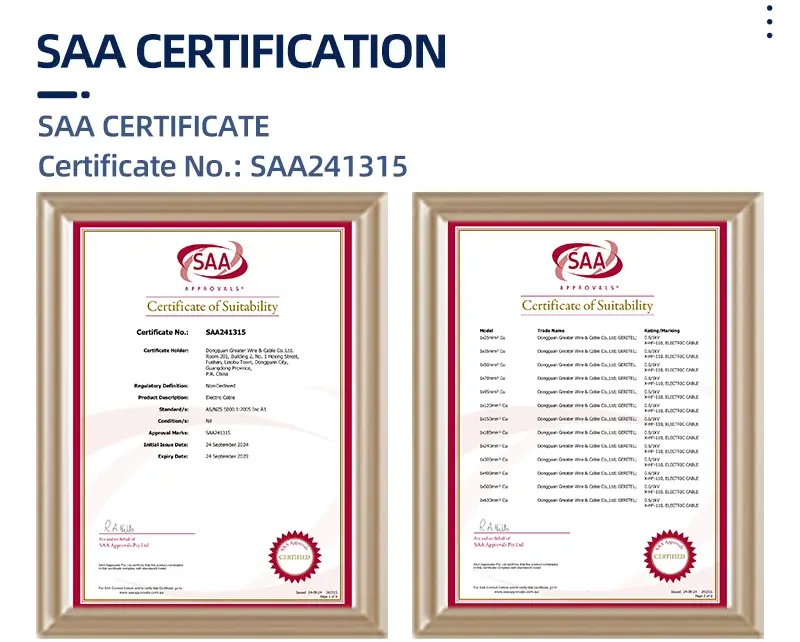
In the competitive landscape of international cable supply, our SAA certification emerged as the decisive factor in securing this contract. The Standards Australia certification isn't merely a compliance checkbox—it represents a rigorous validation of manufacturing processes, material traceability, and performance testing that aligns perfectly with the quality expectations of Japanese-funded infrastructure projects .For the Pohnpei Port Authority, specifying AS/NZS-compliant cables provided several tangible benefits:
Regulatory Alignment: While the FSM maintains its own electrical codes, the project's Japanese engineering consultants specified Australian/New Zealand standards as the baseline for material acceptance. Our existing SAA certification eliminated the need for costly third-party testing and accelerated the approval process by approximately six weeks.
Proven Marine Performance: AS/NZS standards include specific testing protocols for moisture resistance, salt spray exposure, and UV degradation that directly correlate to the environmental challenges at Pohnpei. This wasn't theoretical compliance—we could demonstrate historical performance data from similar Pacific port installations.
Risk Mitigation: The certification's requirement for ongoing factory surveillance and batch testing provided the project stakeholders with confidence in manufacturing consistency, crucial for a project where replacement logistics would involve ocean freight and potential customs delays.
Beyond Compliance: Three Competitive Advantages That Sealed the Partnership
While certification opened the door, three distinct value propositions transformed this from a standard supply transaction into a strategic partnership:
1. Pacific Region Project Experience
Our portfolio of completed port and marine infrastructure projects across Southeast Asia and the Pacific Islands provided invaluable practical insight. We understood, for instance, that cable drums needed to be steel-flanged rather than wooden to withstand the humidity during ocean transit, and that packaging required additional desiccant and vapor-barrier wrapping for the multi-week journey to Pohnpei. This experience-based knowledge prevented potential moisture damage that could have compromised installation schedules.
2. Integrated Quality Assurance Protocol
Rather than simply supplying cables, we implemented a project-specific quality plan that included pre-shipment third-party inspection, comprehensive factory acceptance testing (FAT) witnessed by the client's representatives, and detailed installation guidelines tailored to the tropical marine environment. Each cable drum carried unique traceability codes linking back to raw material batch records and production parameters—a level of documentation that exceeded standard commercial supply and supported the project's quality audit requirements.
3. Compressed Lead Time with Logistics Optimization
Infrastructure projects in remote Pacific locations face notorious supply chain challenges. Our manufacturing flexibility allowed us to compress the standard 8-week production cycle to 5 weeks for critical path items, while our logistics team coordinated consolidated sea freight with proper container desiccation and shock-resistant loading. This responsiveness ensured that cable installation could commence on schedule, preventing the cascading delays that often plague port construction projects.
Execution Excellence: From Factory Floor to Pacific Installation
The delivery phase showcased the importance of meticulous planning. Given Pohnpei's limited port handling capacity—ironically, the very constraint the expansion project aimed to address—we coordinated delivery in three phased shipments aligned with construction milestones. This approach minimized on-site storage requirements and reduced exposure to the elements prior to installation.
Our technical support team provided remote installation supervision via video conferencing, with detailed guidance on cable pulling techniques to prevent sheath damage during the aggressive bends required in port infrastructure. We emphasized proper gland selection for the 3×6 mm² Building Cable terminations at lighting poles, ensuring IP66-rated sealing against driving rain and salt spray.
Results and Operational Validation
Eighteen months into the project, the electrical infrastructure is performing to specification. The medium-voltage distribution system maintains voltage regulation within ±2% under varying load conditions from fishing vessel operations and commercial shipping activities. The lighting network, powered by the 3×6 mm² Building Cable infrastructure, delivers consistent illumination across the expanded apron areas, enhancing safety for nighttime vessel operations.
Most critically, the cold chain facilities have maintained uninterrupted power through multiple tropical weather events, validating the cable selection for environmental resilience. The elastomeric cables show no signs of the cracking or stiffness that typically afflict inferior products in refrigerated environments.
Partnership Value and Client Satisfaction
The Pohnpei Port Authority project team has expressed particular appreciation for our proactive communication throughout the supply process. Rather than simply fulfilling a purchase order, we functioned as an electrical infrastructure consultant, providing value engineering suggestions that optimized cable routing and reduced installation labor costs.
The project has since referenced our supply standards in their infrastructure development guidelines, recognizing that the incremental investment in SAA-certified, marine-grade cable solutions delivers measurable returns through reduced maintenance, extended service life, and operational reliability.
Your Next Infrastructure Project Deserves the Same Excellence
The Pohnpei Port Expansion demonstrates that cable selection in marine infrastructure isn't merely about meeting specifications—it's about understanding environmental realities, regulatory frameworks, and operational imperatives that define project success over decades of service life.
Whether you're developing port facilities, renewable energy installations, or industrial infrastructure in challenging environments, the combination of SAA-certified quality, regional project experience, and responsive technical support creates a foundation for electrical system reliability that generic suppliers cannot match.
Contact Dongguan GERITEL Electrical Co., Ltd. today:
Dongguan GERITEL Electrical Co., Ltd.
Tel/WhatsApp/WeChat: +86 135 1078 4550 / +86 136 6257 9592
Email: manager01@greaterwire.com
 Marshalls Energy Company (MEC) Power Plant Upgrade & Expansion



 Building 2, No. 40 Luxi 2nd Road, Liaobu Town, Dongguan City, Guangdong Province, China