


 Home
HomeUruguay Dairy Farm Energy Efficiency Upgrade
 GERITEL
 Apr 07,2026

It was mid-July 2023 when we received an inquiry through our Latin America distribution channel. The email was brief but urgent—a dairy farm manager in Uruguay's Paysandú region was dealing with recurring electrical failures that had shut down their milking parlor three times in two months. Each shutdown meant lost production, stressed livestock, and the very real risk of milk spoilage in their bulk tanks.
What caught our attention wasn't just the technical problem, but the context. This wasn't a small family operation. The farm ran approximately 800 head of cattle, milking 400 cows twice daily in a double-12 parallel parlor. They had invested heavily in modern equipment—automated sort gates, variable-speed vacuum pumps, and a new plate cooler system—but the electrical infrastructure was holding everything hostage.
The farm's technical director, who had spent weeks researching solutions, explained the situation in our first video call. Their existing wiring dated back to 2004, installed when the farm was half its current size. The original contractor had used aluminum conductors in PVC conduit, sized for the loads of that era. Now, with the addition of three 50-horsepower vacuum pumps, automated feeding systems, and plans for a 150kW solar array, the system was failing under load.
The specific failures were telling: voltage drops causing VFD drives to fault out, nuisance tripping of breakers during peak milking hours, and most concerning, measurable stray voltage in the parlor that was making cows hesitant to enter the milking stalls.
Walking the Site: Understanding the Real Conditions
We arranged for our regional technical representative to visit the site in early August. The assessment revealed conditions that text descriptions couldn't capture.
The milking parlor environment was exactly what you'd expect—high humidity from wash-down cycles, occasional chemical exposure from cleaning agents, and constant vibration from equipment. But there were also factors specific to this location: extreme temperature swings between summer days and winter nights, dust infiltration from nearby unpaved roads, and the reality that any electrical work had to happen around a milking schedule that ran 5:00 AM to 8:00 AM and 4:00 PM to 7:00 PM, seven days a week.
The existing conduit runs were corroded in places, with water accumulation in low spots that had degraded insulation over years. The aluminum feeders, while initially cost-effective, had developed high-resistance connections at terminations that were contributing to the voltage drop issues. And there was no provision for the solar installation the owners were determined to add—Uruguay's grid was already 98% renewable , and they wanted to align their operation with that national commitment while reducing their substantial electricity bills.
The technical director was candid about their constraints. They had received quotes from local suppliers offering standard PVC-insulated cables, but his research had led him to specifically request THHN/THWN copper conductors with nylon jacketing. He had learned that THWN copper conductor nylon jacket construction offered superior moisture resistance and abrasion protection compared to the THW products commonly available in the region.
He also knew they needed XHHW for larger feeders, MC Cable for equipment connections, TC-ER for outdoor runs, and PV Cable for the solar project. The challenge was finding a supplier who could provide the full range with consistent quality, proper certification, and reliable delivery to a landlocked agricultural region.
The Specification Process: Matching Products to Real Problems
Based on the site assessment, we developed a cable specification that addressed each identified failure mode.
Distribution Feeders: THHN/THWN and XHHW
For the main service entrance to the milking parlor sub-panel—a run of approximately 85 meters—we specified XHHW-2 in 4/0 AWG. The cross-linked polyethylene insulation's 90°C rating allowed us to use a smaller conductor size than thermoplastic alternatives would require, while providing superior resistance to the moisture that had plagued the existing installation.
The XHHW choice was deliberate. In the underground sections feeding remote pumps and the future solar inverter location, we needed cable that could handle wet conditions without the installation complexity of separate conduit systems. The XHHW-2 rating meant we could direct-bury where appropriate, using the same cable type for both wet and dry locations—simplifying the bill of materials and reducing the chance of installation errors.
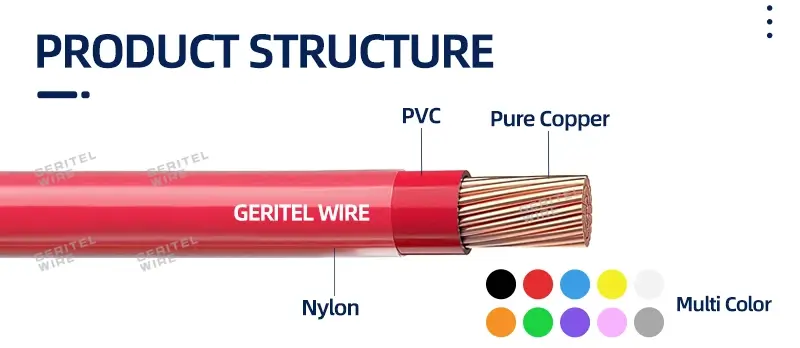
For branch circuits within buildings, we specified THHN/THWN in sizes from 10 AWG for lighting circuits up to 2/0 AWG for sub-feeders. Here, the THWN copper conductor nylon jacket specification was non-negotiable. The nylon outer layer provides mechanical protection during pulling through existing conduit that had tight bends and debris from years of use. More importantly, in an environment where cables might contact metal edges, chemical residues, or simply endure the abrasion of agricultural operations, the nylon jacket extends service life significantly compared to PVC-only insulation.
The technical director specifically requested documentation proving the THWN copper conductor nylon jacket construction. He had encountered inferior products claiming similar ratings but lacking the actual nylon layer that provides the abrasion resistance critical in his application.
Equipment Power: MC Cable
For connections to milking equipment, vacuum pumps, and ventilation fans, we specified MC Cable in 12 AWG and 10 AWG. The aluminum interlocked armor eliminated the need for separate conduit in many locations, reducing installation time—a critical factor given the tight window between milking shifts.
The armor also addressed a specific concern: mechanical protection in areas where equipment movement or livestock could damage exposed wiring. In the free-stall housing areas, where automated scrapers run on scheduled cycles, MC Cable provided protection without the corrosion susceptibility of steel conduit in a high-moisture environment.
Outdoor and Direct Burial: TC-ER
For runs to perimeter lighting, well pumps, and the planned solar array location, we used TC-ER in 8 AWG through 2 AWG sizes. The "exposed run" rating meant this cable could transition from tray to direct burial or aerial installation without requiring additional protection—perfect for the farm's layout where underground feeds needed to emerge and run along building exteriors.
TC-ER's sunlight resistance and -40°C to 90°C temperature rating handled Uruguay's climate extremes, from summer highs approaching 40°C to winter frosts that could damage lesser cables.
Solar Integration: PV Cable
The 150kW rooftop array required PV Cable in 10 AWG and 8 AWG for DC runs from string combiners to inverters. We specified 600V-rated cable with XLPE insulation, knowing that future array expansion might require higher voltage configurations. The PV Cable's flexibility facilitated installation on the metal roof structure, while its weather resistance ensured long-term reliability in an exposed location.
Why These Specific Products? The Technical Reality
The client had options. Local suppliers offered alternative products at lower prices. But the technical director had done his homework, and our proposal aligned with the research that led him to us.
THHN/THWN versus locally available THW: The difference is the nylon jacket. THWN copper conductor nylon jacket construction provides an additional layer of mechanical and chemical protection that THW simply cannot match. In a dairy environment where cables encounter cleaning agents, moisture, and physical abrasion, that nylon layer translates to years of additional service life and reduced risk of insulation failure.
XHHW versus standard USE: While both work in wet locations, XHHW-2's 90°C dry rating means it can be used throughout the facility without transition splices or cable changes. This versatility reduces installation complexity and potential failure points.
MC Cable versus EMT: In vibrating equipment applications—vacuum pumps, compressors, ventilation fans—the flexibility of MC Cable prevents fatigue failures at termination points. Rigid conduit would require expansion fittings and more complex supports, adding cost and potential maintenance issues.
TC-ER versus individual conductors in conduit: For the outdoor runs, TC-ER eliminated dozens of conduit joints and pull boxes, reducing installation time by an estimated 40% on those circuits. In a project where labor availability was limited and time was critical, that efficiency had real value.
Execution: The Logistics Reality
We shipped materials in three coordinated deliveries to align with the farm's construction phases. The first shipment—THHN/THWN and XHHW for the main distribution—arrived in late August, allowing the contracted electrical crew to begin work during the farm's lower-production period.
The second shipment, MC Cable and TC-ER for equipment and outdoor circuits, arrived in October. The final PV Cable delivery came in January 2024, timed for the solar contractor's installation schedule.
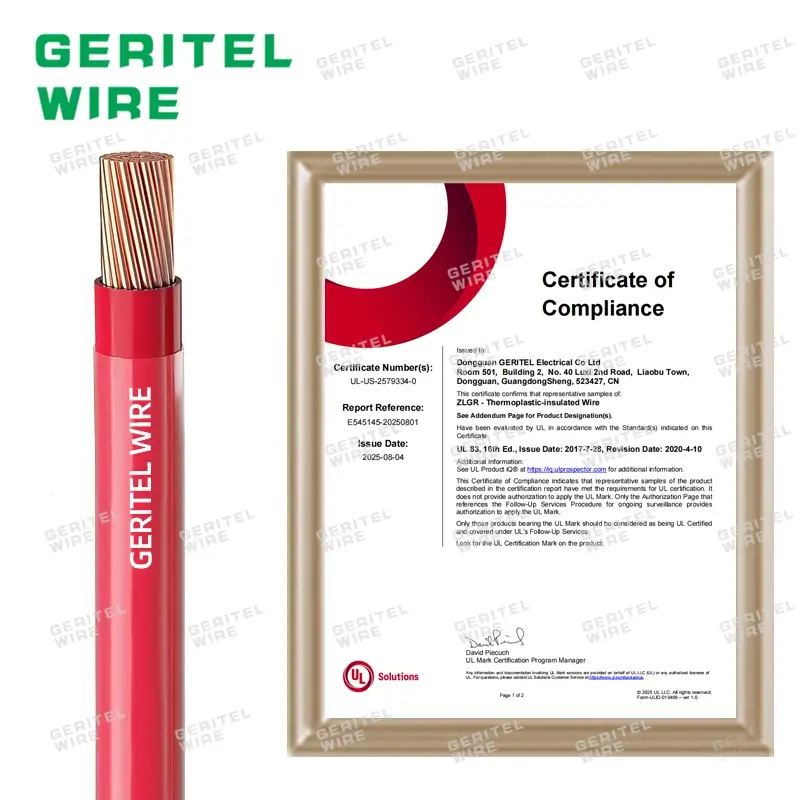
Each shipment included comprehensive documentation: UL certificates of compliance, ampacity tables adjusted for Uruguay's ambient temperature conditions, and installation guides in Spanish. We also provided technical support via video call during the first MC Cable terminations, ensuring the local crew understood proper armor grounding procedures.
The project timeline held. The milking parlor was never offline for more than a single milking shift during the entire upgrade. The solar array achieved commissioning in February 2024, and the farm maintained full production throughout.
The Results: What Actually Changed
Six months post-completion, we followed up with the technical director. The changes were measurable and significant.
Voltage drop issues disappeared. The VFD drives that had been faulting out two or three times weekly now run continuously without interruption. The stray voltage in the parlor—previously measuring 2.8 volts in some locations—dropped to undetectable levels with the new grounding system implemented using our specified materials.
The solar array is producing approximately 18,000 kWh monthly, offsetting roughly 35% of the farm's electrical consumption. During peak production months, that percentage climbs higher. The PV Cable connections have shown no degradation despite summer temperatures that exceed 35°C on the roof surface.
Most importantly, the modular design has already proven its value. When the farm added a new pre-cooling system for the bulk tank in April 2024, the existing XHHW feeders and panel capacity accommodated the additional load without requiring infrastructure upgrades. The technical director noted that this expansion would have been impossible with the previous electrical system.
What the Experience Taught Us
This project reinforced several principles that guide our agricultural electrical work.
First, product specification matters more in harsh environments than in controlled industrial settings. The difference between THWN copper conductor nylon jacket construction and standard PVC insulation isn't academic in a milking parlor—it's the difference between a 20-year service life and premature failure requiring costly replacement.
Second, certification documentation has real operational value. The UL listings on our products streamlined the approval process with Uruguay's electrical inspectors and satisfied the farm's insurance requirements without additional testing or verification.
Third, delivery reliability is itself a product feature. In agricultural projects, timing is often dictated by planting seasons, breeding cycles, or weather windows. A supplier who delivers on schedule enables the contractor to maintain productivity; a supplier who delays can derail an entire season's plans.
Why Work With Us
This Uruguay dairy project exemplifies what we deliver: not just cable, but solutions that solve real operational problems.
Verified Quality: Every product carries full UL certification. That documentation travels with the shipment, ready for inspector review, insurance verification, or your own quality assurance protocols.
Agricultural Experience: We've executed similar projects across diverse farming environments—from dairy operations in temperate climates to grain handling facilities in extreme conditions. We understand that agricultural electrical work happens in environments where standard industrial assumptions don't apply.
Delivery Commitment: We maintain inventory and logistics relationships that ensure your materials arrive when promised. In this project, that reliability allowed the farm to schedule contractors with confidence, avoiding the costly delays that plague agricultural construction schedules.
Ready to Solve Your Infrastructure Challenges?
If you're facing electrical limitations that are holding back your agricultural operation—whether it's voltage instability, capacity constraints for new equipment, or the need to integrate renewable energy—we can help. Our team understands the specific requirements of farming environments and can specify solutions that address your actual conditions, not generic assumptions.
Dongguan GERITEL Electrical Co., Ltd.
Tel/WhatsApp/WeChat: +86 135 1078 4550 / +86 136 6257 9592
Email: manager01@greaterwire.com
 Paraguay Paracel Pulp Mill & Forestry Industrial Hub



 Building 2, No. 40 Luxi 2nd Road, Liaobu Town, Dongguan City, Guangdong Province, China