


 Home
HomeParaguay Paracel Pulp Mill & Forestry Industrial Hub
 GERITEL
 Apr 07,2026

March 14, 2023. The construction gate at Paraguay's Paracel Pulp Mill project sat idle under a heavy, humid sky. Normally, this entrance would see a constant flow of cement trucks, equipment deliveries, and electrical contractors moving between the woodyard and the main process building. Today, it was quiet.
Inside the temporary project office, the electrical engineering team stared at a spreadsheet that refused to balance. Six weeks behind schedule. Six weeks of stalled medium voltage cable deliveries. Six weeks of mounting pressure from headquarters in São Paulo, where board members were questioning whether this $800 million investment would meet its production target.
The problem was not ambition. The project—a fully integrated pulp mill processing 1.5 million tons annually—was technically sound. The problem was infrastructure. Specifically, the 15kV distribution cables that would carry power from the main substation to the digesters, paper machines, and chemical recovery systems.
The original supplier had promised MV90 Cable. They had delivered confusion. Documentation gaps. Missing UL certificates. And when the engineering team finally received technical datasheets, the specifications revealed an uncomfortable truth: MV90 Cable rated for 90°C continuous operation would run too hot in Paraguay's climate, too close to thermal limits during peak production cycles. The safety margin was insufficient for a facility that could not tolerate unplanned shutdowns.
"We need a different approach," the project manager said, closing his laptop. "We need someone who understands what happens when these cables go live in 40-degree heat, running at capacity, surrounded by pulp mill humidity."
That evening, an email arrived at Dongguan GERITEL Electrical. The subject line read: Urgent: MV105 Cable and TC-ER Cable requirements for Paraguay industrial project. 6-week delay. Need solution in 48 hours.
The Video Call That Changed the Specification
The following morning, a video conference connected three time zones. In Paraguay, the project engineering team gathered in their container office, fans stirring the humid air. In Brazil, the owner's representative joined remotely, concerned about budget implications. In Dongguan, our lead applications engineer reviewed thermal calculation spreadsheets while the conversation unfolded.
"We considered upgrading to MV105 Cable," the lead electrical engineer admitted. "Higher temperature rating. 105°C continuous, 140°C emergency overload. But our current supplier cannot deliver certified product in the sizes we need. 350 MCM. 500 MCM. They have no stock. Eight-week lead time, minimum."
He paused. The spreadsheet on his screen showed the cascading impact. Every week of cable delay pushed the mill's startup into the next quarter. Every quarter of delay meant millions in lost pulp sales. The forestry integration—the timber plantations ready for harvest—could not wait.
"Tell me about your installation approach," our engineer asked. "How are you planning to wire the motor control centers? The valve actuators? The pump stations?"
The answer revealed the second crisis. The contractor had planned traditional rigid conduit for everything. Thousands of connection points. Thousands of hours of labor. A schedule that assumed materials would arrive on time, which they had not.
"Have you considered TC-ER Cable?" our engineer asked. "Tray Cable, Exposed Run rated. It can run from cable tray directly to equipment without conduit. UL 1277 listed. For an installation this size, you're looking at significant labor savings."
Silence on the line. Then the contractor's representative, who had been quiet until now, spoke up. "We looked at it. But we were told it's not code-compliant for our application."
"It is," our engineer replied. "For industrial establishments. Article 336 of the NEC. The key is proper support and the right jacket rating. Oil-resistant. Sunlight-resistant. We supply it with those specifications standard. We can show you installations in similar pulp mill environments."
The conversation shifted. From crisis management to solution architecture. By the end of the call, the project team had received preliminary ampacity calculations showing that MV105 Cable would provide the thermal headroom they needed. They had learned that TC-ER Cable could recover weeks from their installation schedule. And they understood that our UL certification documentation was complete, current, and available in Spanish for Paraguayan regulatory submission.
"We need formal proposals," the project manager said. "Forty-eight hours. Can you deliver?"
"We can deliver faster than that," was the response.
The Engineering Review That Prevented a Mistake
The proposal arrived in 36 hours. It was not merely a price list. It was a technical review that identified and corrected specification gaps the client had not recognized.
The Thermal Analysis: Our engineers had modeled the installation conditions—Paraguay's 40°C summer ambient, direct sunlight exposure on outdoor cable runs, soil thermal resistivity for buried sections. The calculations demonstrated that MV90 Cable, while code-compliant on paper, would operate at 87-89°C during normal production cycles. Too close to the 90°C limit. Insufficient margin for emergency overloads or ventilation failures.
MV105 Cable, with its 105°C continuous rating, would operate at a conservative 75-78°C under identical conditions. The XLPE wire insulation—cross-linked polyethylene—provided superior thermal stability and moisture resistance compared to the EPR alternatives some competitors offered.
For critical circuits, we specified 4 AWG XHHW electric cable XLPE wire, leveraging XHHW insulation's 90°C wet-location rating for outdoor terminations and sub-distribution panels.
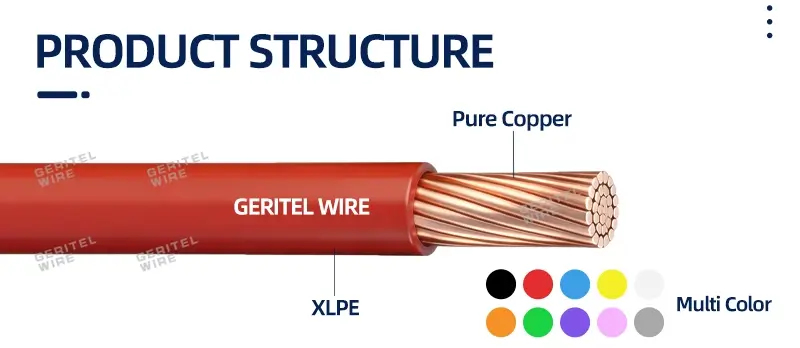
The Installation Strategy: We proposed a hybrid architecture. MV105 Cable for medium voltage distribution—4/0 AWG for secondary feeders, 350 MCM and 500 MCM for main substation connections. TC-ER Cable for motor controls and power distribution—12 AWG through 4/0 AWG sizes, multi-conductor configurations with shielded pairs for VFD applications where harmonic interference could corrupt equipment signals.
For areas requiring mechanical protection—wood chip handling zones, maintenance corridors—we specified MC Cable with interlocked aluminum armor. For building distribution and lighting, XHHW-2 and THHN/THWN building wire. For the distributed control system, PLTC/ITC with twisted-pair shielding to ensure signal integrity across the facility's extensive footprint.
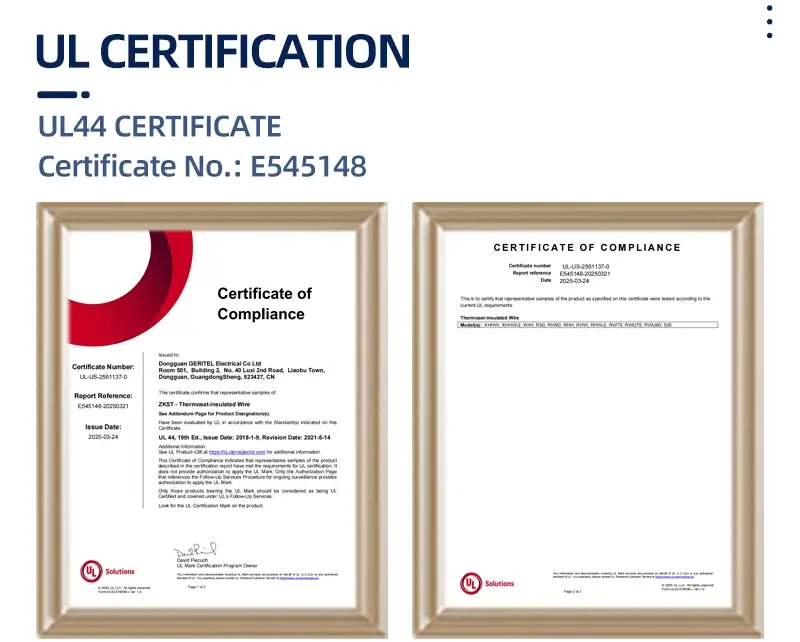
The Documentation Package: We attached current UL certificates for all product categories. MV105 Cable under UL 1072. TC-ER Cable under UL 1277. MC Cable under UL 1569. XHHW / THHN / THWN under UL 83. We included factory test reports, material certifications with batch traceability, and Spanish-language technical datasheets formatted for Paraguayan electrical authority submission.
The project engineer who reviewed the proposal later noted its distinction: "They did not just quote what we asked for. They explained why MV105 Cable was necessary instead of MV90 Cable. They showed us how TC-ER Cable would save installation time. They had already solved the compliance documentation problem we were struggling with. It was clear they had done this before."
The Factory Floor and the Delivery Promise
The order was placed on March 22. The requirement was complex: multiple cable types, non-standard sizes, custom configurations, and delivery to a remote Paraguayan location within a timeline that larger suppliers had called impossible.
Our manufacturing facility did not hesitate. The MV105 Cable production line, which typically schedules 500 MCM and 350 MCM sizes with 6-8 week lead times, resequenced to prioritize this order. The XLPE wire extrusion process—critical for the insulation quality that would determine long-term reliability—ran continuous quality checks on every meter. Copper tape shielding for the medium voltage cables received 100% coverage testing to ensure electromagnetic compatibility in a facility dense with variable frequency drives and high-power equipment.
TC-ER Cable production required custom configurations: mixed power and control conductors in single jackets, shielded pairs for instrumentation, oil-resistant and sunlight-resistant jacketing compounds formulated for the specific chemical and environmental exposure of pulp mill operations. Each reel was continuity-tested and high-potential tested before shipment.
The documentation team prepared compliance packages in parallel. UL certification certificates. Material test reports. Spanish-language installation guides. Ampacity derating tables specific to Paraguayan installation conditions—ambient temperature, burial depth, conduit fill calculations.
By April 5, the first phase was ready for shipment: MV105 Cable in 500 MCM and 4/0 AWG for main substation feeders. The logistics team coordinated ocean freight to Buenos Aires, inland transport across the Argentina-Paraguay border, and final delivery to the construction site. The cable arrived on April 28, three days ahead of the promised date.
The Installation That Recovered Time
May 2023. The electrical contractor, who had been skeptical of TC-ER Cable based on previous experiences with non-compliant products, watched the first reel installed. The cable pulled smoothly from tray to motor control center. No conduit required. No rigid elbows. No labor-intensive threading and coupling.
"With rigid conduit, that connection would have taken three hours," the foreman noted. "Tray to equipment, supports every six feet, proper bend radius. We did it in forty-five minutes. And the jacketing—it's clearly industrial grade. Oil-resistant. This isn't the cheap tray cable we've seen before."
The TC-ER Cable installation proceeded across the facility. Motor connections. Pump controls. Valve actuators. The labor savings accumulated. The contractor estimated that TC-ER Cable eliminated approximately 8,000 hours of conduit installation and wiring time compared to their original plan—translating to four weeks recovered on the construction schedule.
Meanwhile, the MV105 Cable medium voltage installation proceeded with confidence. The thermal calculations had provided assurance; the physical installation confirmed it. The XLPE wire insulation handled the pulling tensions through underground duct banks without damage. The copper tape shielding terminated cleanly at splices and switchgear. The 133% insulation level provided the enhanced protection the client wanted for ground fault conditions.
The MC Cable armored sections went into the woodyard and chip handling areas—locations where mechanical protection was non-negotiable. The XHHW and THHN/THWN building wire routed through administrative facilities and laboratories. The PLTC/ITC control cables networked the distributed control system, their shielded twisted pairs ensuring that 4-20mA process signals arrived uncorrupted at the control room.
By August 2023, the cable infrastructure was complete. The project had recovered five of the six weeks lost to the previous supplier's failures. The mill proceeded to commissioning on schedule.
Eighteen Months Later—The Validation
December 2024. The Paracel Pulp Mill has operated continuously for eighteen months. The production manager reviews the quarterly maintenance report. Zero cable-related incidents. Zero unplanned outages attributed to electrical distribution. Temperature monitoring on the MV105 Cable feeders shows maximum conductor temperatures of 82°C during peak summer production—23°C below the 105°C rating, confirming the engineering margin that will ensure decades of service life.
The maintenance team appreciates the documentation that arrived with the cables. Every reel labeled. Every circuit documented. When troubleshooting is required—which is rare—the technicians can trace circuits efficiently, verify specifications against the as-built drawings, and resolve issues quickly.
The TC-ER Cable installations have performed without degradation. The oil-resistant jacketing has withstood chemical exposure in the process areas. The sunlight-resistant compounds have maintained flexibility in the outdoor woodyard after continuous UV exposure. The XLPE wire insulation of the 4 AWG XHHW electric cable XLPE wire circuits shows no moisture ingress or aging in the humid Paraguayan climate.
The project engineer who managed the electrical infrastructure, reflecting on the engagement, summarized the outcome: "We did not just get cables. We got engineering partnership. When we were in crisis, they provided solutions that worked—technically, logistically, and commercially. The MV105 Cable decision, the TC-ER Cable installation strategy, the documentation that satisfied regulators without revision cycles—all of it demonstrated understanding of our actual needs, not just a desire to sell product."
The Deeper Pattern: What This Project Reveals
The Paracel Pulp Mill engagement illustrates three capabilities that differentiate industrial cable suppliers from industrial cable partners:
Technical Specification Authority: The upgrade from MV90 Cable to MV105 Cable was not a sales tactic. It was thermal engineering that prevented a reliability problem. The TC-ER Cable recommendation was not product substitution. It was installation optimization that recovered schedule. These decisions required application engineering expertise that commodity traders cannot provide.
Certification and Compliance Engineering: UL certification is not merely a label. It is documentation traceability, regulatory confidence, and inspection readiness. Our complete certification portfolio—MV90 / MV105 Cable, TC-ER Cable, MC Cable, XHHW / THHN / THWN, PLTC/ITC—eliminated the compliance delays that had stalled this project.
Project Execution Discipline: Manufacturing responsiveness. Logistics coordination. Delivery precision. When construction schedules are immovable, these operational capabilities determine success or failure as surely as product quality does.
Your Project, Your Deadline, Your Solution
The cable infrastructure decisions you make today will determine your facility's reliability for decades. When those decisions must be made under pressure, with incomplete information, against unforgiving deadlines, the quality of your supplier relationship becomes critical.
Dongguan GERITEL Electrical Co., Ltd. provides more than UL-certified cable products. We provide engineering partnership that transforms infrastructure challenges into operational advantages. From MV105 Cable thermal analysis to TC-ER Cable installation optimization, from 4 AWG XHHW electric cable XLPE wire specification to PLTC/ITC signal integrity engineering—we deliver solutions that work in the field, not just on paper.
Contact our engineering team to discuss your project:
Dongguan GERITEL Electrical Co., Ltd.
Tel/WhatsApp/WeChat: +86 135 1078 4550 / +86 136 6257 9592
Email: manager01@greaterwire.com
 Bolivia Tourism Infrastructure Upgrade – Uyuni Airport Project



 Building 2, No. 40 Luxi 2nd Road, Liaobu Town, Dongguan City, Guangdong Province, China