


 Home
HomeUL83 THHN/THWN-2 Cable vs PVC Cable: Comparison and Analysis
 GERITEL
 Mar 25,2026

In modern electrical wiring projects, choosing between different cable types often creates confusion, especially when performance mismatches can lead to safety risks or unnecessary long-term costs. In North American markets such as the United States and Canada, THHN copper building wire 600V UL83 THHN/THWN-2 Cable and standard PVC Cable are both widely used, yet their differences in structure, certification, and performance are significant. Understanding how UL83 certification impacts safety and compliance is essential for making the right decision.
1. Product Structure and Basic Cognition
UL83 THHN/THWN-2 Cable and PVC Cable differ fundamentally in structure design, material composition, and engineering intent, which directly influences their performance in real-world applications.
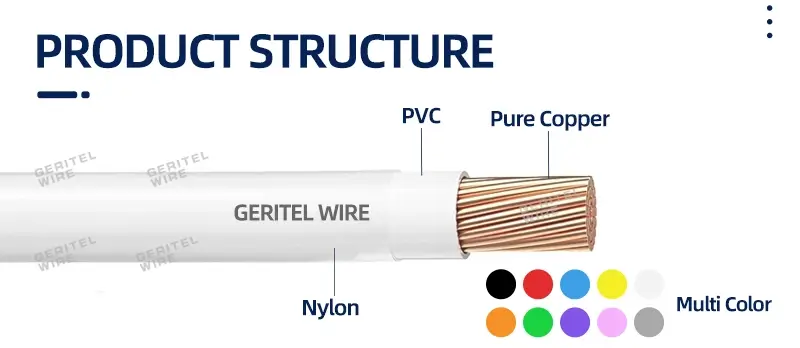
THHN/THWN-2 cable is designed with a stranded annealed copper conductor (≥90% compactness), ensuring excellent conductivity and flexibility for conduit installation. Its insulation layer is made of flame-retardant PVC, carefully formulated to provide stable dielectric performance under high temperatures. Over this insulation, THHN stranded copper cable UL83 a high-abrasion-resistant nylon (PA) jacket is applied, typically with a thickness optimized for mechanical protection without compromising flexibility. This dual-layer design significantly enhances durability, chemical resistance, and moisture protection.
In contrast, PVC Cable typically uses either copper or aluminum conductors, often with lower strand density. Both its insulation and outer sheath are made of PVC compounds, which include plasticizers and stabilizers to improve flexibility and processing. However, this single-material structure lacks the targeted engineering advantages of THHN/THWN-2 cables, making it less adaptable to demanding environments.
From a structural standpoint, THHN/THWN-2 cables are purpose-built for performance and compliance, while PVC cables are more general-purpose solutions with limited specialization.
2. UL83 Certification Analysis
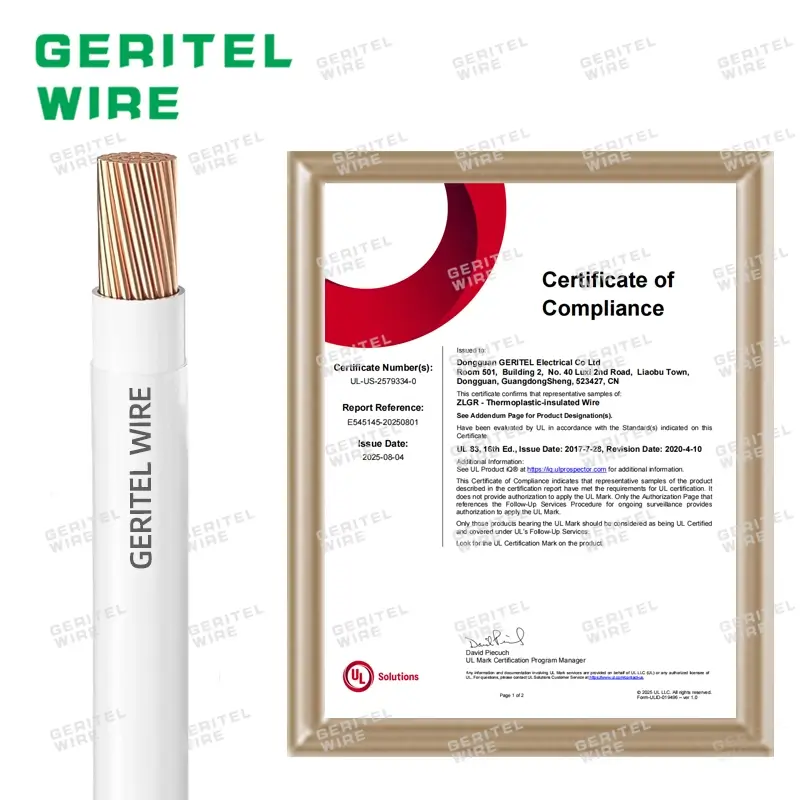
UL83 certification plays a critical role in defining the reliability and compliance of thermoplastic insulated wires used in North America. The latest revision (October 2025) specifies requirements for 600V single-conductor thermoplastic insulated wires, ensuring alignment with major electrical codes such as ANSI/NFPA 70 (NEC) in the United States and CSA C22.1 (Canadian Electrical Code).
THHN/THWN-2 cables that comply with UL83 must meet strict criteria, including insulation thickness, temperature ratings, flame resistance, and marking requirements. Each certified cable must carry UL markings, file numbers, and type designations, ensuring traceability and authenticity in the market.
The advantages of UL83 certification are substantial. It guarantees that the cable meets recognized safety standards, enables legal market access across the U.S., Canada, and Mexico, and assures consistent performance under specified conditions. This certification also simplifies project approval processes for engineers and inspectors.
On the other hand, most standard PVC cables do not meet UL83 requirements, which limits their acceptance in regulated electrical installations. Without certification, their performance and safety cannot be independently verified, creating potential compliance risks in professional projects.
3. Performance Comparison
3. 1 Heat Resistance and Moisture Resistance
THHN/THWN-2 Cable demonstrates superior thermal and environmental performance due to its engineered material combination. THHN nylon insulated copper wire is rated for 90°C in dry environments, making it ideal for indoor conduit systems. THWN-2 extends this capability to wet or damp environments, supporting 90°C in wet conditions and 75°C in dry conditions, with short-circuit resistance up to 250°C.
This performance is largely attributed to the synergy between flame-retardant PVC insulation and the nylon outer layer, which acts as a moisture barrier and enhances thermal stability.
PVC Cable, by comparison, typically operates at a maximum of 70°C, and its resistance to moisture is limited. Prolonged exposure to humidity or water vapor can accelerate aging, leading to insulation degradation and reduced service life.
3. 2 Mechanical Properties
The nylon jacket of THHN/THWN-2 Cable provides excellent abrasion resistance, oil resistance, and chemical resistance, allowing it to withstand harsh industrial environments. Its flexibility also makes it easier to pull through conduits during installation.
PVC Cable lacks this protective outer layer, resulting in lower mechanical strength. Over time, the PVC sheath may become brittle, crack, or degrade when exposed to mechanical stress or chemical agents, increasing the risk of failure.
3. 3 Electrical Performance
THHN/THWN-2 Cable offers superior electrical insulation, characterized by high dielectric strength, low dielectric constant, and high volume resistivity, which minimizes leakage currents and ensures stable operation in 600V systems.
PVC Cable provides basic insulation performance but is more prone to long-term degradation, especially under thermal or environmental stress. As the insulation ages, the risk of electrical faults increases, making it less reliable for critical applications.
3. 4 Environmental and Safety Performance
THHN/THWN-2 cables are designed with environmentally optimized formulations that produce low smoke density and minimal harmful emissions during combustion, enhancing safety in enclosed spaces such as buildings and industrial facilities.
PVC Cable, when burned, releases hydrogen chloride (HCl) gas, which is toxic and corrosive. This poses significant risks in fire scenarios, particularly in populated or sensitive environments.
3. 5 Cost and Service Life
Although THHN/THWN-2 Cable has a higher initial cost, its long service life, durability, and reduced maintenance requirements make it more cost-effective over time.
PVC Cable may appear economical initially, but its shorter lifespan and higher failure rate can lead to increased maintenance, replacement costs, and potential downtime, ultimately raising the total cost of ownership.
4. Application Scenario Comparison
THHN/THWN-2 vs PVC Cable selection becomes clearer when evaluated against real-world applications.
- For dry indoor environments, THHN cable is widely used in residential lighting circuits, office wiring, and industrial control panels, where stable temperature conditions and mechanical protection are required.
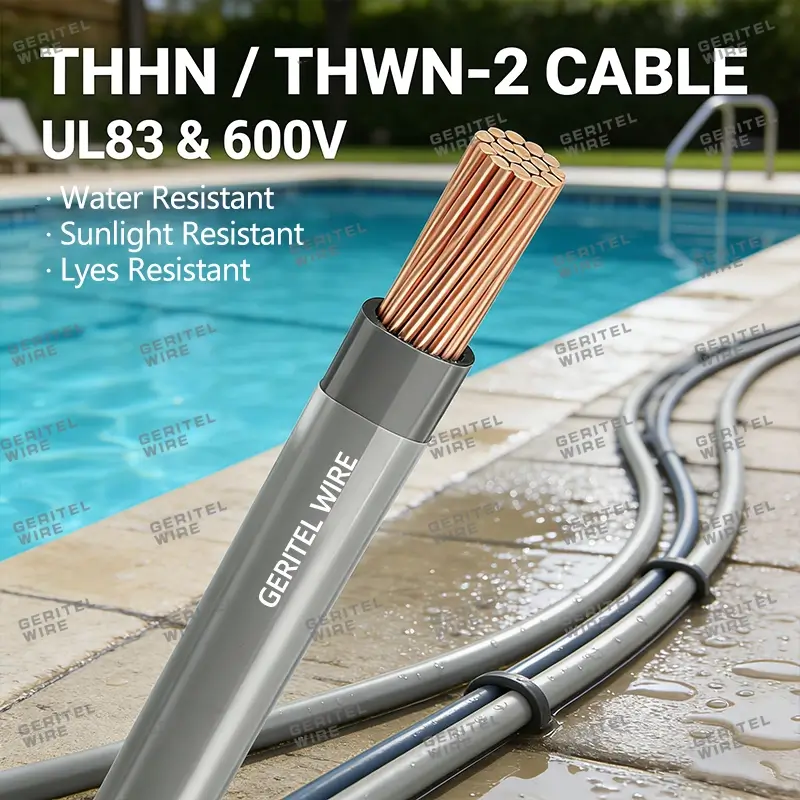
- In moisture-prone environments, THWN-2 cable excels in basements, bathrooms, outdoor conduits, and food processing facilities, where exposure to water or humidity is unavoidable.
- PVC Cable is generally limited to temporary wiring setups, low-demand equipment connections, or non-critical residential applications, where regulatory compliance and long-term durability are not primary concerns.
5. FAQ (Frequently Asked Questions)
What is the core difference between THHN and THWN-2 Cable?
The main difference lies in environmental adaptability, as THHN is designed for dry locations with a 90°C rating, while THWN-2 extends this capability to wet environments with dual temperature ratings, making it more versatile for diverse applications.
How does UL83 certification affect market access?
UL83 certification ensures compliance with North American electrical codes, allowing THHN/THWN-2 cables to be legally used in the United States and Canada, while non-certified PVC cables may face restrictions in regulated installations.
How should I choose between PVC Cable and THHN/THWN-2 Cable?
The decision should be based on application requirements, as THHN/THWN-2 cables are suitable for critical, long-term, and regulated installations, whereas PVC cables are better suited for temporary or low-demand scenarios.
What advantages does the nylon jacket provide in THHN/THWN-2 Cable?
The nylon jacket significantly improves abrasion resistance, chemical resistance, and moisture protection, while also enhancing the cable’s durability and installation performance.
6. Conclusion
When comparing UL83 THHN/THWN-2 Cable vs PVC Cable, the differences in structure, certification, performance, and application range clearly highlight the advantages of THHN/THWN-2 cables. With superior heat resistance, mechanical durability, electrical reliability, and compliance with UL83 certification standards, they provide a safer and more reliable solution for modern electrical systems.
For engineers, contractors, and procurement professionals, selecting UL83-certified THHN/THWN-2 Cable not only ensures compliance with safety regulations but also reduces long-term maintenance costs and supports stable system performance across a wide range of environments.
Contact us today:
Dongguan GERITEL Electrical Co., Ltd.
Tel / WhatsApp / WeChat: +86 135 1078 4550 / +86 136 6257 9592
Email: manager01@greaterwire.com
 TFFN vs THHN Wire



 Building 2, No. 40 Luxi 2nd Road, Liaobu Town, Dongguan City, Guangdong Province, China