


 Home
HomeHow to Verify if THHN/THWN-2 Cable Meets UL83 Certification
 GERITEL
 Mar 25,2026

When selecting electrical cables for residential wiring, commercial buildings, industrial equipment, or photovoltaic systems, understanding how to verify UL83 Certification for THHN/THWN-2 cable is not just a technical detail but a critical safety requirement that directly impacts system reliability and long-term performance.
In practical applications, cables that fail to meet UL83 Certification standards may suffer from overheating, insulation degradation, or even short circuits under load, which can lead to costly downtime or safety hazards. As a widely used 600V building wire in the North American market, THHN/THWN-2 cable is designed with a structured composition that includes a conductor, insulation layer, and outer sheath, and UL83 Certification ensures that each of these components meets strict material and performance benchmarks, making compliance not optional but essential for any serious project.
1. What UL83 Certification Requires for THHN/THWN-2 Cable
To effectively verify UL83 certification for THHN cable, it is important to first understand what the certification actually demands, especially in relation to cable structure and material composition.
From a conductor perspective, UL83 requires the use of annealed copper or copper-clad aluminum, with a high strand density typically not less than 90 percent, and up to 95 percent for THWN-2 cables, ensuring stable conductivity and reduced resistance under load conditions. This structural requirement directly affects electrical efficiency and heat generation, making it a key factor in compliance.
In terms of insulation, both THHN and THWN-2 cables must use flame-retardant PVC insulation, designed to withstand elevated temperatures, where THHN cables are rated for 90°C in dry environments, while THWN-2 wire for underground conduit maintain a 90°C rating in both wet and dry conditions, providing greater versatility across installation scenarios.
For the outer sheath, THHN cables typically feature a nylon jacket that enhances abrasion resistance and mechanical durability, whereas THWN-2 cables use a PVC sheath optimized for moisture resistance, and both types must pass UL83-defined tests for oil resistance, chemical stability, and flame performance. These structural specifications clearly demonstrate that UL83 certification is not just a label but a comprehensive validation of the cable’s internal design and real-world durability.
2. How to Verify UL83 Certification for THHN/THWN-2 Cable (4 Practical Steps)
For buyers, electricians, and project engineers, the ability to verify UL83 certification for THHN cable through practical steps is essential to avoid non-compliant products and ensure project success.
2. 1 Check Cable Surface Markings
The most immediate way to verify compliance is by examining the cable surface, where UL83-certified THHN/THWN-2 cable must display clear and continuous markings including the “UL” logo, cable type (THHN or THWN-2), conductor size, insulation type (PVC), sheath material (nylon or PVC), voltage rating (600V), and a certification file number.
High-quality cables will feature durable, legible markings that resist abrasion and fading, while counterfeit or substandard products often have incomplete or poorly printed information, making this step a quick but effective initial filter.
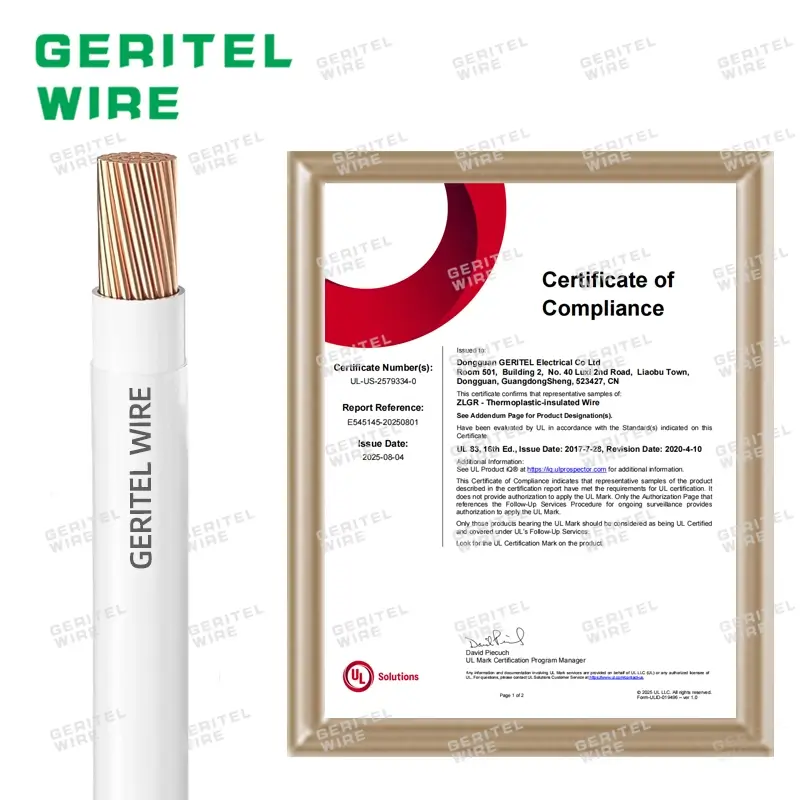
2. 2 Verify UL Certification Documents
Another critical step is to validate the certification itself through official documentation and databases.
By entering the manufacturer’s certification number into the UL iQ™ database, users can confirm whether the certificate is valid and whether it specifically covers THHN/THWN-2 cable types, including detailed parameters such as conductor material, insulation thickness, and sheath composition, all of which must align with UL83 standards.
2. 3 Cross-Check Cable Structure with UL83 Requirements
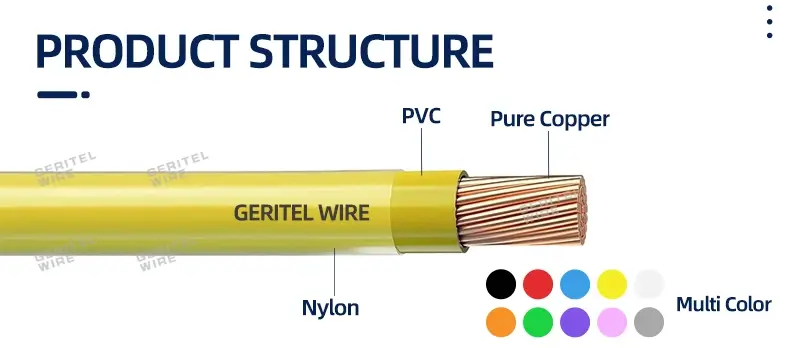
Beyond labels and documents, verifying the physical structure of the cable provides deeper assurance of compliance.
This can be done by inspecting cross-sections or reviewing manufacturer-provided structure diagrams to confirm that the conductor strand density, insulation thickness, and sheath material match UL83 specifications, where for example, a THHN cable should clearly exhibit a nylon jacket with strong abrasion resistance, and the PVC insulation should appear uniform without bubbles or cracks.
2. 4 Review Third-Party Test Reports
Reliable manufacturers will provide third-party testing reports that confirm compliance with UL83 standards, including metrics such as insulation resistance, thermal endurance, and flame retardancy.
By reviewing these reports and ensuring that all values meet or exceed UL83 thresholds, buyers can avoid so-called “fake certified” cables and ensure that the product will perform safely under real operating conditions.
3. Structural Advantages of High-Quality THHN/THWN-2 Cable
High-quality THHN/THWN-2 cable that meets UL83 Certification standards demonstrates clear structural advantages that translate directly into performance and reliability in the field.
The dual-layer protection design, consisting of PVC insulation combined with a nylon or PVC sheath, provides enhanced resistance to heat, moisture, and mechanical stress, ensuring consistent operation even in demanding environments such as industrial facilities or solar installations. This layered structure is not only a design choice but a requirement aligned with UL83 standards.
The conductor, typically made from high-purity annealed copper and manufactured according to ASTM B566, offers superior conductivity and reduced energy loss, which minimizes heat buildup and improves overall system efficiency, while also meeting UL83 limits on electrical resistance.
Additionally, the outer sheath materials are selected for their resistance to oil, chemicals, and environmental aging, extending the service life of the cable and reducing maintenance costs, which makes UL83-certified cables a long-term investment rather than a short-term expense.
4. Common Mistakes When Verifying UL83 Certification
Even experienced buyers can overlook critical details when attempting to verify UL83 certification for THHN cable, which can lead to costly mistakes.
The first common misconception is relying solely on the presence of a “UL” mark without verifying the completeness and authenticity of the marking, as counterfeit products may imitate the logo but omit key details such as certification numbers or structural specifications.
The second mistake involves confusing THHN and THWN-2 cable structures, where although both must meet UL83 requirements, THHN cables with nylon jackets are better suited for dry environments, while THWN-2 wire dual rated THHN THWN with PVC sheaths are designed for wet conditions, making it essential to match the cable type with the intended application.
The third issue is neglecting structural verification, such as ignoring insulation thickness or conductor strand density, which may not be immediately visible but are critical to compliance, and failure in these areas can result in safety risks despite seemingly valid markings.
5. Why Choosing UL83-Certified THHN/THWN-2 Cable Matters
In summary, understanding how to verify UL83 certification for THWN-2 wire for underground conduit empowers buyers and engineers to make informed decisions that directly impact safety, compliance, and operational efficiency.
Cables that meet UL83 Certification standards are designed, tested, and validated to comply with NEC installation requirements, reducing the risk of electrical failures, ensuring smoother project approvals, and preventing costly rework or safety incidents.
At the same time, the structural integrity of these cables, including high-quality conductors and robust insulation systems, ensures stable performance over time, even in challenging environments, which ultimately lowers maintenance costs and enhances system reliability.
If you are sourcing THHN/THWN-2 cable and need full UL83 certification documentation, detailed structure diagrams, and verified test reports, working with a professional manufacturer ensures that every cable you install meets the required standards and performs reliably across all applications.
Contact us today:
Dongguan GERITEL Electrical Co., Ltd.
Email: manager01@greaterwire.com
Tel/WhatsApp/WeChat: +86 135 1078 4550 / +86 136 6257 9592
Feel free to contact us for compliant, high-quality THHN/THWN-2 cable solutions tailored to your project needs.
 UL83 THHN/THWN-2 Cable vs PVC Cable: Comparison and Analysis



 Building 2, No. 40 Luxi 2nd Road, Liaobu Town, Dongguan City, Guangdong Province, China