


 Home
HomeUL44 Thermoset Building Wire Buying Guide for Electrical Engineers
 GERITEL
 Mar 24,2026

In modern electrical engineering wiring projects, engineers are often challenged by a recurring dilemma: how to balance safety, durability, and regulatory compliance while maintaining cost efficiency in increasingly demanding installation environments. Whether dealing with high-temperature industrial settings, compact commercial infrastructures, or long-term residential systems, the selection of building wire plays a critical role in ensuring system reliability and inspection approval. Among the many options available, UL44 Thermoset Building Wire has become a preferred solution for engineers who prioritize performance stability and compliance with stringent standards. This guide aims to provide a clear, technically grounded overview to help electrical engineers make informed procurement decisions when selecting UL certified building wire.
1. Understanding the Core Structure of UL44 Thermoset Building Wire
To make a confident selection, it is essential to first understand the structural composition of UL44 Thermoset Building Wire, as its performance advantages stem directly from its material design and construction.
1. 1 Conductor: The Foundation of Electrical Performance
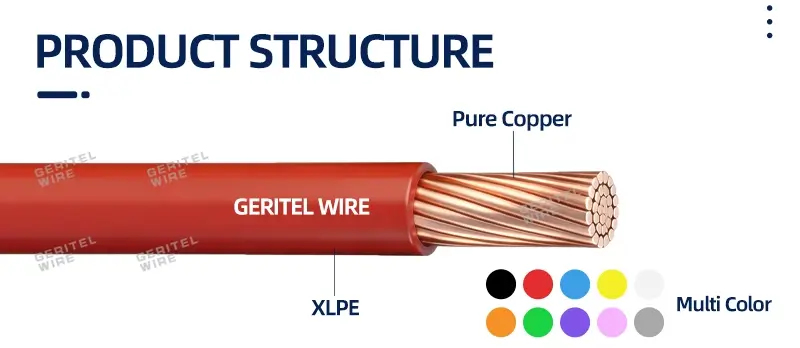
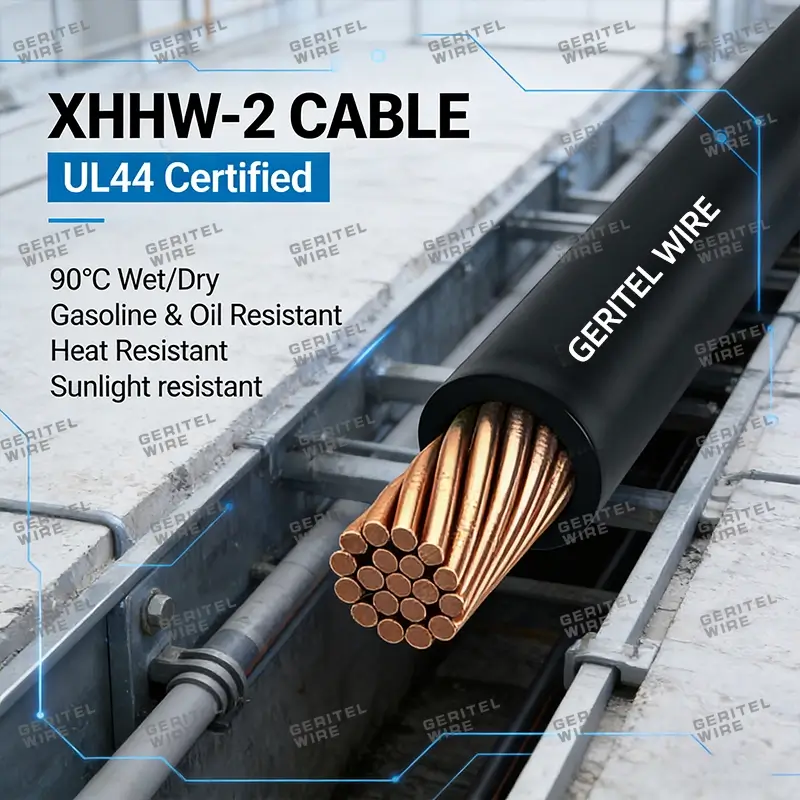
At the core of UL44 wire lies the conductor, typically made of annealed copper or aluminum, with copper being the more common choice due to its superior conductivity and mechanical flexibility. For electrical engineering wiring applications, stranded copper conductors are often preferred, as they offer enhanced flexibility for easier installation in conduits and complex routing systems, while maintaining excellent current-carrying capacity. Specifically, XHHW-2 stranded electric cable wire adopts this high-performance stranded copper conductor design, which is well-suited for scenarios requiring frequent bending and complex routing during installation, fully embodying the flexibility advantages of UL44 wire conductors.
1. 2 Thermoset Insulation: The Defining Advantage
What distinguishes UL44 Thermoset Building Wire from other types is its thermoset insulation layer, commonly made from cross-linked polyethylene (XLPE) or similar materials. Unlike thermoplastic insulation, thermoset materials undergo a chemical cross-linking process that permanently alters their molecular structure, resulting in:
- Higher thermal resistance, often rated up to 90°C or higher
- Improved resistance to deformation under heat
- Superior mechanical strength and abrasion resistance
- Enhanced chemical and moisture resistance
This makes thermoset insulation particularly suitable for demanding environments where heat and mechanical stress are significant concerns.
1. 3 Outer Jacket (Optional but Critical in Some Designs)
In certain UL44 constructions, an additional protective jacket may be applied, providing extra resistance against environmental factors such as oil, sunlight, or physical impact. This layer further enhances the durability of the cable in industrial or outdoor installations.
2. Why UL44 Certification Matters in Engineering Projects
In electrical engineering wiring, compliance is not optional—it is a fundamental requirement for safety, inspection approval, and long-term system reliability. UL44 certification plays a crucial role in this context.
2. 1 Assurance of Safety and Performance
UL44 is a standard developed by Underwriters Laboratories that specifically governs thermoset-insulated wires and cables. Products that meet this standard undergo rigorous testing for:
- Flame resistance
- Insulation integrity under thermal stress
- Electrical performance stability
- Mechanical durability
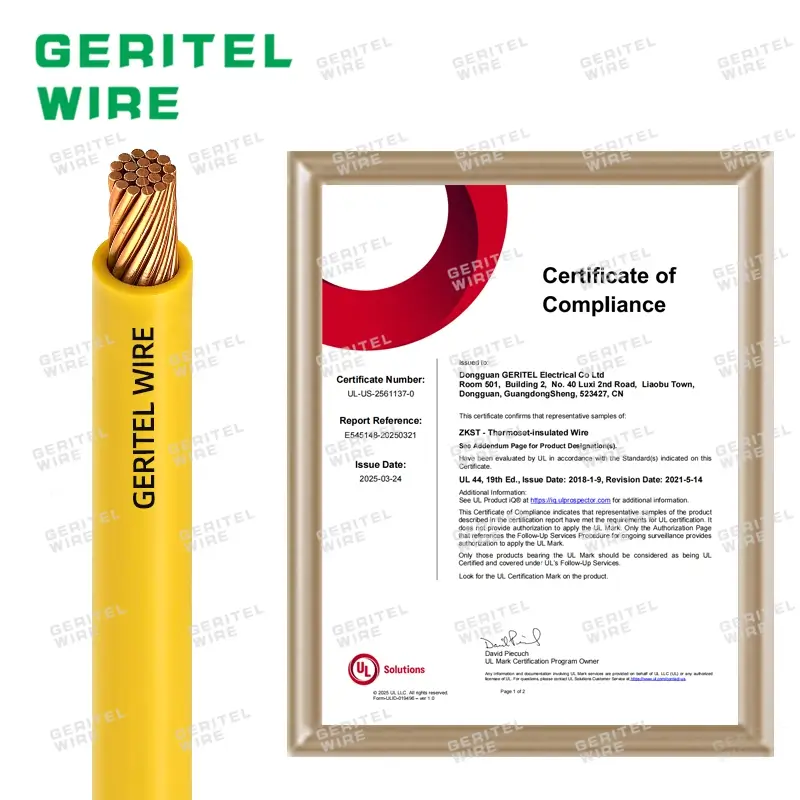
For engineers, specifying UL certified building wire ensures that the product has been independently verified to meet strict safety and performance benchmarks.
2. 2 Simplified Compliance and Inspection
In many regions, UL certification is either mandatory or widely accepted by authorities having jurisdiction (AHJs). Using UL44 Thermoset Building Wire can significantly reduce the complexity of project approvals, inspections, and audits, thereby minimizing delays and compliance risks.
2. 3 Risk Mitigation in Long-Term Operation
Electrical systems are expected to operate reliably over decades, and failures can lead to costly downtime or safety hazards. UL44-certified wires provide a level of assurance that reduces the likelihood of insulation breakdown, overheating, or premature aging.
3. Thermoset vs. Thermoplastic: A Critical Comparison
Electrical engineers often need to choose between thermoset and thermoplastic building wires, and understanding their differences is key to making the right decision.
- Thermoset wires (UL44):
These wires do not melt when exposed to high temperatures, as their cross-linked structure remains stable, making them ideal for high-heat environments and critical applications. As a typical representative, XHHW 600V electric cable power wire adheres to UL44 thermoset standards, with a rated voltage of 600V that meets the power transmission needs of most industrial and commercial scenarios, while maintaining excellent high-temperature stability.
- Thermoplastic wires (e.g., PVC-based):
While generally more cost-effective and easier to process, thermoplastic insulation can soften or deform under elevated temperatures, which may limit its use in demanding conditions.
From an engineering perspective, UL44 Thermoset Building Wire is often the preferred choice when safety margins, thermal endurance, and mechanical robustness are priorities.
4. Key Selection Criteria for Electrical Engineers
When specifying UL44 Thermoset Building Wire, engineers should evaluate several critical parameters to ensure optimal performance in their specific applications.
4. 1 Temperature Rating
Ensure that the wire’s temperature rating aligns with the expected operating conditions, especially in environments with high ambient temperatures or heat-generating equipment.
4. 2 Voltage Rating
UL44 wires are available in various voltage classes, and selecting the correct rating is essential for system safety and compliance.
4. 3 Conductor Size and Ampacity
Proper sizing based on load requirements and installation conditions is crucial to prevent overheating and energy loss.
4. 4 Installation Environment
Consider whether the wire will be exposed to moisture, chemicals, UV radiation, or mechanical stress, and select appropriate insulation and jacket properties accordingly.
4. 5 Flexibility and Installation Requirements
For complex routing or confined spaces, stranded conductors with flexible insulation may significantly improve installation efficiency.
5. Application Scenarios of UL44 Thermoset Building Wire
UL44 Thermoset Building Wire is widely used across a range of electrical engineering wiring applications due to its robust performance characteristics.
- Industrial facilities, where high temperatures and mechanical stress are common
- Commercial buildings, requiring reliable and compliant wiring systems
- Residential projects, particularly in areas with higher safety requirements
- Control panels and switchgear, where space constraints and heat buildup demand durable insulation
6. Common Procurement Pitfalls and How to Avoid Them
Even experienced engineers and procurement teams can encounter issues when sourcing building wire, especially in global supply chains.
6. 1 Overlooking Certification Authenticity
Not all products labeled as “UL compliant” are genuinely certified. Always verify certification details and ensure traceability.
6. 2 Focusing Solely on Price
While cost is an important factor, selecting lower-priced, non-compliant wires can lead to higher long-term costs due to failures, replacements, or compliance issues.
6. 3 Ignoring Application-Specific Requirements
Using a general-purpose wire in a high-temperature or chemically aggressive environment can compromise system performance.
6. 4 Choosing Suppliers Without Technical Support
Reliable manufacturers should provide not only products but also technical guidance to support engineering decisions.
7. Choosing a Reliable Manufacturer: A Practical Guide
For electrical engineers and procurement managers, selecting a trusted supplier is just as important as selecting the right product.
A qualified manufacturer should offer:
- Verified UL44 Thermoset Building Wire with full certification documentation
- Consistent product quality supported by strict manufacturing controls
- Technical expertise to assist with selection and application questions
- Responsive communication and reliable delivery timelines
Dongguan GERITEL Electrical Co., Ltd., as an experienced exporter of electrical wires and cables, provides UL44 Thermoset Building Wire designed to meet the practical needs of electrical engineering wiring projects. With a focus on compliance, material quality, and customer support, the company aims to help engineers achieve both performance and regulatory objectives.
8. Conclusion: Making Smarter Choices with UL44 Thermoset Building Wire
In today’s complex electrical engineering wiring landscape, the importance of selecting the right building wire cannot be overstated, as it directly impacts system safety, compliance, and long-term performance. UL44 Thermoset Building Wire, with its advanced insulation technology and verified UL certification, offers a reliable solution for engineers facing demanding application conditions.
By understanding its structural advantages, certification value, and application suitability, engineers can make more informed decisions that align with both technical requirements and project constraints. When sourcing UL certified building wire, prioritizing quality, compliance, and supplier reliability will ultimately lead to safer and more efficient electrical systems.
If you are planning your next project, consider integrating UL44 Thermoset Building Wire into your design to ensure a balance of performance, durability, and compliance that meets the expectations of modern electrical engineering.
Contact us today:
Dongguan GERITEL Electrical Co., Ltd.
Tel / WhatsApp / WeChat: +86 135 1078 4550 / +86 136 6257 9592
Email: manager01@greaterwire.com
 XHHW-2 vs THHN/THWN-2: Comparing XLPE and PVC Insulation



 Building 2, No. 40 Luxi 2nd Road, Liaobu Town, Dongguan City, Guangdong Province, China