


 Home
HomeUganda Off-Grid Solar Project Expansion
 GERITEL
 Apr 14,2026

In 2024, as Uganda’s renewable energy sector accelerated its focus on bridging the electrification gap—especially in rural and remote areas where grid access remains limited—a leading local renewable energy developer launched an off-grid solar project expansion. Covering multiple rural communities in central and northern Uganda, the project aimed to extend clean energy access to over 15,000 households, small businesses, and community facilities like schools and clinics. The success of this expansion hinged on one critical component: high-quality, durable electrical wires that could withstand Uganda’s harsh outdoor conditions, meet local technical standards, and deliver consistent performance for decades. This case study details how Dongguan GERITEL Electrical Co., Ltd. provided tailored wire solutions, solved the client’s core pain points, and became a trusted partner in Uganda’s off-grid solar revolution.
1. The Urgency of Reliable Wires for Off-Grid Solar Expansion
Uganda’s electrification rate stands at just 23% nationally, dropping to 10% in rural areas, where families and businesses often rely on expensive and polluting kerosene for lighting and power. The client, a seasoned developer with years of experience in Uganda’s solar sector, sought to expand its existing off-grid solar mini-grid network to reach underserved communities. However, the project faced several critical challenges that threatened its timeline, safety, and long-term viability—all centered around the selection of electrical wires.
The client’s core pain points were clear. First, their previous project used low-cost, uncertified wires that failed prematurely: within 18 months, the wires suffered from insulation cracking due to intense UV exposure, conductor corrosion from high humidity, and voltage drops that reduced solar system efficiency. These failures led to frequent system outages, increased maintenance costs, and delayed energy access for communities. Second, the client needed wires that could meet Uganda’s electrical safety regulations (outlined in the Electricity (Safety Code) Regulations 2020) and international standards, as non-compliant products would result in project delays and potential fines. Third, as a cost-conscious developer, they required solutions that balanced high quality with competitive pricing—many international suppliers offered certified wires but at prohibitive costs, while local suppliers lacked the necessary certifications and product consistency.
Additionally, the project’s unique requirements demanded wires tailored to off-grid solar applications: the wires needed to connect solar panels, inverters, batteries, and distribution points, withstanding extreme temperature fluctuations (-10°C to 40°C), heavy rainfall, and prolonged direct sunlight. The client also needed a supplier with proven experience in African solar projects, as local conditions and technical requirements differ significantly from other regions. After researching potential partners, the client chose Dongguan GERITEL Electrical Co., Ltd. for our track record in similar off-grid solar projects, IEC-certified products, and competitive pricing.
2. Selecting the Right Wires for Uganda’s Off-Grid Conditions
After detailed consultations with the client, our team analyzed the project’s specific needs—from solar panel connections to battery storage and on-site distribution—and recommended three core wire models, each selected for its unique advantages and compatibility with the project’s requirements. The client ultimately purchased a total of 82,000 meters of wires, covering all aspects of the expansion project, with detailed specifications tailored to different components of the solar system.
2.1 H1Z2Z2-K Solar Cable: The Backbone of Solar Panel Connectivity
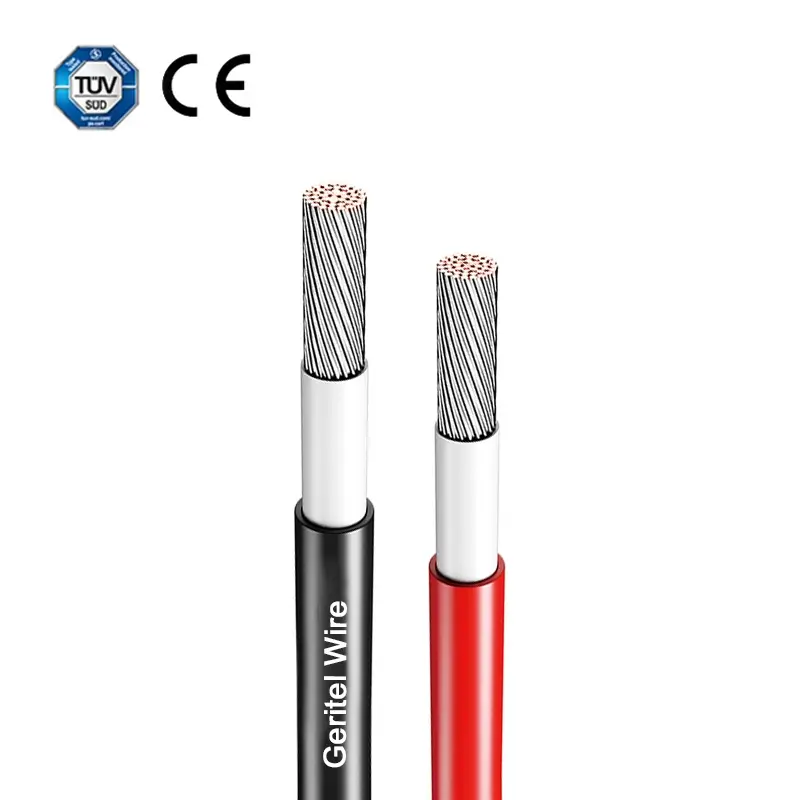
For the critical connection between solar panels and inverters—where durability and low energy loss are non-negotiable—we recommended the H1Z2Z2-K Solar Cable, available in multiple specifications to meet different current and distance requirements. The client selected three key sizes: 1×4mm², 1×6mm², and the essential H1Z2Z2-K 2x4mm, with a total order of 45,000 meters. This model was chosen over standard solar cables for several key reasons.
Unlike low-cost alternatives that use PVC insulation (which becomes brittle under UV exposure and releases toxic fumes in case of fire), the H1Z2Z2-K Solar Cable features cross-linked polyolefin (XLPO) insulation and sheathing, which is halogen-free, flame-retardant, and resistant to UV radiation, moisture, and chemical corrosion. It meets IEC 62930 and EN 50618 standards, ensuring compliance with Uganda’s safety regulations and a 25-year service life—matching the lifespan of the solar panels themselves. The H1Z2Z2-K 2x4mm variant, in particular, was used for longer-distance connections between solar panel strings, as its 2-core design reduces voltage drop (a common issue with undersized or low-quality cables that wastes energy and reduces system efficiency). The tinned copper conductor also prevents corrosion, a critical advantage in Uganda’s humid climate where uncoated copper wires degrade quickly.
2.2 H07V-K: Flexible, Durable Wiring for On-Site Distribution
For indoor and outdoor distribution within the mini-grid—connecting inverters to distribution boxes and powering community facilities—the client selected H07V-K, with an order quantity of 28,000 meters, covering various specifications: 1×16mm², 1×25mm², 1×35mm², 1×50mm², 1×70mm², 1×95mm². This model is a single-core flexible cable, specially designed for battery connections and distribution lines, making it very suitable for the project’s diverse wiring needs, from small lighting circuits to medium-power appliances such as medical refrigerators and agricultural tools, as well as battery energy storage-related distribution.
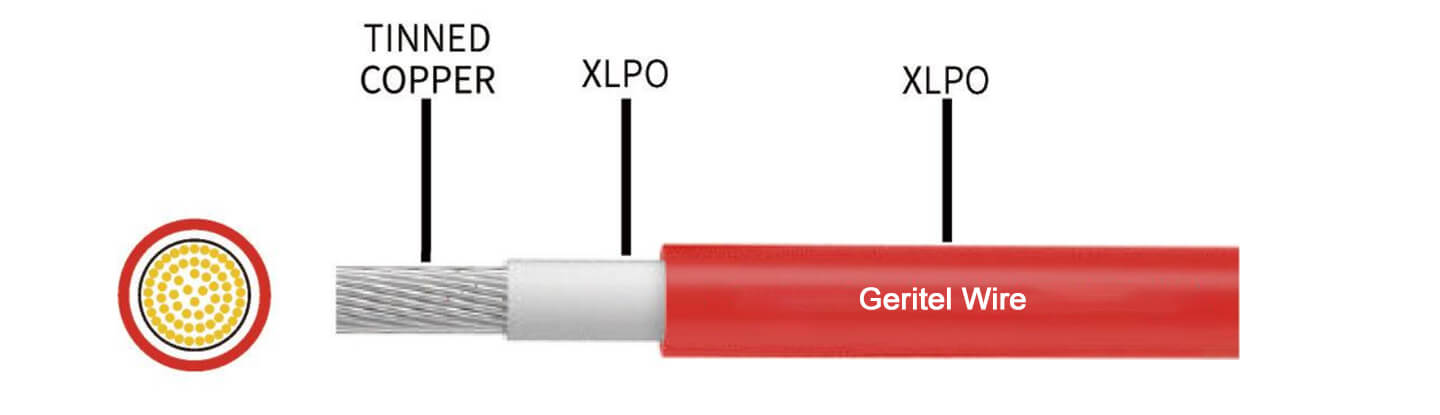
The outstanding advantage of H07V-K lies in its extremely high flexibility and electrical conductivity, which can simplify installation work in narrow spaces and uneven terrain common in rural Uganda, and is suitable for the current transmission needs of battery energy storage systems. It adopts a wear-resistant PVC insulation layer with a temperature range of -30°C to +70°C, ensuring stable operation under extreme weather conditions in Uganda, while also having good anti-aging and moisture-proof performance. Unlike cheap alternatives using thin insulation layers (prone to cracking and short circuits), our H07V-K complies with relevant international standards as well as RoHS and REACH compliance requirements, ensuring safety and reliability. The client chose this model over other flexible wires precisely because it achieves a perfect balance between flexibility, conductivity efficiency, durability and cost-effectiveness—which is crucial for off-grid solar projects with extensive wiring needs and simultaneous consideration of battery distribution.
2.3 H07ZZ-F: Heavy-Duty Wiring for Battery Storage Systems
To connect the project’s battery storage systems—essential for providing power during nighttime and cloudy days—the client selected the H07ZZ-F wire, ordering 9,000 meters in 16mm² and 25mm² specifications. This multi-core, flame-retardant wire is designed for heavy-duty applications, making it perfect for battery connections that require high current capacity and long-term stability.
The H07ZZ-F features a halogen-free, flame-retardant sheath that minimizes fire risk—a critical safety feature for battery storage systems, where overheating can lead to catastrophic failures. Its multi-core design (2-core and 3-core variants) ensures efficient current transmission, while the thick insulation protects against short circuits and voltage leaks. Unlike standard battery wires that degrade quickly under high current loads, the H07ZZ-F is engineered to handle the high demands of off-grid solar battery systems, reducing maintenance costs and ensuring reliable power storage.
3. Certifications and Quality Control That Build Trust
For the client, safety and compliance were non-negotiable—any failure to meet international or local standards would result in project delays, fines, or even shutdowns. Dongguan GERITEL’s commitment to quality and certification was a key reason the client chose us over competitors. All wires supplied for the project hold IEC 60332-1 (flame retardancy), IEC 62930 (solar cables), and EN 50525 certifications, as well as RoHS and REACH compliance, ensuring they meet Uganda’s Electricity (Safety Code) Regulations 2020 and international best practices.
Our quality control process further guaranteed reliability: every batch of wires underwent rigorous testing, including conductor resistance, insulation thickness, flame retardancy, and UV resistance. We provided the client with full test reports and certification documents, allowing them to easily pass local inspections and demonstrate compliance to stakeholders. This level of transparency and quality assurance addressed the client’s fear of non-compliant products and reduced the risk of project delays—a critical advantage over suppliers that offer uncertified or low-quality wires.
4. Fast, Efficient, and Tailored to Project Timelines
The client’s biggest concern after selecting the wires was meeting their tight project timeline—delays in wire delivery would push back the expansion, delaying energy access to communities and increasing costs. We addressed this by leveraging our global logistics network and streamlined production process, ensuring fast delivery without compromising quality.
After the order was confirmed, our production team prioritized the project, completing manufacturing quickly. We then arranged for direct shipping to Mombasa Port in Kenya, followed by inland transportation to Uganda, ensuring the wires arrived at the project site within 7 days of production completion. Our team also provided detailed packaging labels (in English) for each wire roll, specifying the model, size, and application, which simplified on-site organization and installation. Throughout the process, we kept the client updated on delivery status, providing tracking information and addressing any logistical concerns promptly. The fast delivery ensured the project stayed on schedule, allowing the client to begin installation without delays.
5. Reliable Wires Drive Sustainable Impact
The deployment of Dongguan GERITEL’s wires has been a resounding success, addressing all the client’s pain points and delivering tangible benefits for both the developer and the communities served. The H1Z2Z2-K Solar Cable, H07V-K, and H07ZZ-F wires have performed flawlessly since installation, with zero wire-related failures or outages.
For the client, the benefits are clear: reduced maintenance costs (down by 65% compared to their previous project), improved system efficiency (voltage drop reduced by 30% thanks to the H1Z2Z2-K 2x4mm and other properly sized wires), and compliance with all local and international standards. The project was completed on time, allowing the client to expand clean energy access to over 15,000 households and 20 community facilities—improving quality of life, supporting local businesses, and reducing reliance on fossil fuels.
For the communities, the reliable wires mean consistent access to clean power: households no longer rely on kerosene for lighting, small businesses can operate longer hours, and clinics can store vaccines and medical supplies in refrigerators powered by the solar mini-grid. The durability of the wires also ensures long-term energy access, with a 25-year service life that aligns with the project’s sustainability goals.
6. Cooperation Value and Client Feedback
The client views Dongguan GERITEL as a trusted partner, not just a supplier, thanks to our tailored solutions, fast delivery, and commitment to quality. The client values our deep experience in African off-grid solar projects—we understood the unique challenges of Uganda’s climate and regulatory environment, allowing us to recommend the right wires and avoid common pitfalls. Our competitive pricing also helped the client stay within budget without sacrificing quality, a key advantage over international suppliers that charge premium prices for certified products.
The client has expressed satisfaction with the performance of the wires and our service, noting that the reliability of the wires has reduced operational stress and allowed them to focus on expanding their solar network. They have also indicated interest in partnering with us for future projects in Uganda and neighboring countries, a testament to the trust and value we delivered.
7. Choose Dongguan GERITEL for Your Uganda Solar Project
If you’re developing an off-grid solar project in Uganda or across Africa, you need a wire supplier that understands your unique needs—certified products, competitive pricing, fast delivery, and proven experience. Dongguan GERITEL Electrical Co., Ltd. has the expertise, certifications, and global logistics network to deliver tailored wire solutions that drive project success, just like we did for this Uganda off-grid solar expansion.
Our H1Z2Z2-K Solar Cable, H07V-K, H07ZZ-F, and other wire models are designed to withstand harsh African conditions, meet local and international standards, and deliver long-term reliability. We offer flexible customization, fast delivery, and full support throughout the project lifecycle—from consultation to delivery and beyond.
Don’t let low-quality wires derail your project or compromise safety. Contact us today to discuss your project needs and get a tailored quote. We’re here to help you bring clean, reliable energy to communities across Uganda and beyond.
Contact Us
Dongguan GERITEL Electrical Co., Ltd.
Tel/WhatsApp/WeChat: +86 135 1078 4550 / +86 136 6257 9592
Email: manager01@greaterwire.com
 Zambia South Luangwa National Park Expansion



 Building 2, No. 40 Luxi 2nd Road, Liaobu Town, Dongguan City, Guangdong Province, China