


 Home
HomeTHHN/THWN-2 Cable Materials Explained: Copper Core, Insulation, and Jacket
 GERITEL
 Mar 25,2026

When selecting electrical wiring for modern projects, engineers and buyers consistently face three critical concerns: safety under load, long-term durability in diverse environments, and strict compliance with regulatory standards, all of which directly affect system reliability and project approval. Among the many wiring options available in the North American market, THHN/THWN-2 cable has established itself as a trusted solution due to its balanced performance and compliance profile, making it essential to understand how its core materials—copper core, PVC insulation, and nylon jacket—work together to deliver dependable performance.
1. Copper Core: The Foundation of Electrical Performance
At the heart of every high-quality THHN/THWN-2 cable lies the copper core, which plays a decisive role in conductivity, efficiency, and long-term stability. Typically manufactured from high-purity annealed copper or oxygen-free copper, this conductor material ensures minimal electrical resistance while maintaining excellent flexibility, allowing for efficient current transmission even under continuous load conditions. What’s more, this core is the key component of the THWN-2 copper conductor nylon cable, blending optimal conductivity with the protective benefits of the nylon jacket.
From a performance perspective, the use of high-grade copper core significantly reduces energy loss and heat generation, which is particularly important in commercial and industrial systems where consistent voltage stability is required. In addition, copper’s natural resistance to corrosion enhances the cable’s lifespan, especially in environments where humidity or chemical exposure may be present.
It is also important to distinguish between solid and stranded copper conductors, as each serves different installation needs. Solid copper core cables are commonly used in fixed residential wiring where stability and cost-efficiency are prioritized, while stranded copper core designs provide greater flexibility, making them ideal for conduit installations and complex routing scenarios often found in commercial and industrial projects. This material choice ultimately ensures that THHN/THWN-2 cable delivers both reliability and adaptability across applications.
2. PVC Insulation and Nylon Jacket: Dual-Layer Protection System
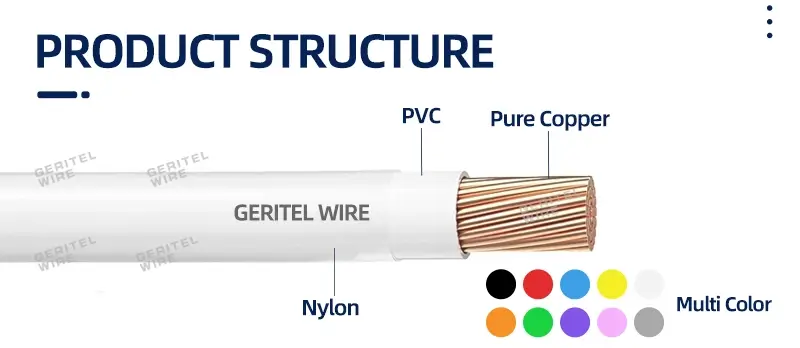
The insulation system of THHN/THWN-2 cable is designed as a dual-layer structure, combining durable PVC insulation with a protective nylon jacket, ensuring both electrical reliability and mechanical strength across various installation environments. Specifically, the THHN nylon insulated copper wire relies on this PVC-nylon dual layer to balance electrical insulation and mechanical protection, making it suitable for dry-location applications.
The inner PVC insulation functions as the primary dielectric layer, providing excellent thermal and electrical performance. For THHN-rated cables, the insulation is typically rated for 90°C in dry locations, making it suitable for indoor conduit systems and controlled environments. In contrast, THWN-2 cable is specifically engineered to maintain a 90°C rating in both dry and wet conditions, which makes it more versatile for installations where moisture exposure is expected, such as underground conduits or damp industrial areas. This versatility is what defines the THWN-2 copper wire wet dry rated, as it reliably performs in both environmental conditions without compromising safety.
In addition to temperature performance, PVC insulation offers inherent flame-retardant properties, helping to limit fire propagation in electrical systems, while also providing reliable moisture resistance to protect the copper core from environmental damage.
Covering the PVC insulation is a tough nylon jacket, which significantly enhances the cable’s resistance to abrasion, oil, and chemicals. This outer layer also improves tensile strength and reduces the risk of mechanical damage during installation, particularly in conduit pulling applications.
By combining PVC insulation with a nylon jacket, THHN/THWN-2 cable achieves a well-balanced structure that meets UL listed cable performance expectations while ensuring durability, safety, and adaptability in real-world installations.
3. Outer Jacket Performance: Enhancing Longevity and Environmental Adaptability
Beyond its role as a protective barrier, the nylon jacket contributes significantly to the overall lifespan and environmental adaptability of THHN/THWN-2 cable. Its smooth surface reduces friction during installation, minimizing the risk of tearing or deformation, while its resistance to oil and chemicals makes it particularly suitable for industrial and commercial settings.
In addition, the nylon jacket provides a degree of UV resistance and aging stability, allowing the cable to perform reliably in semi-exposed environments where occasional sunlight or temperature variation may occur. This durability ensures that the cable remains structurally intact over time, reducing maintenance costs and enhancing operational safety.
By combining mechanical strength with environmental resistance, the outer jacket plays a crucial role in extending the service life of the cable, making it a cost-effective choice for long-term infrastructure projects.
4. UL Certification: Guaranteeing Compliance and Market Acceptance
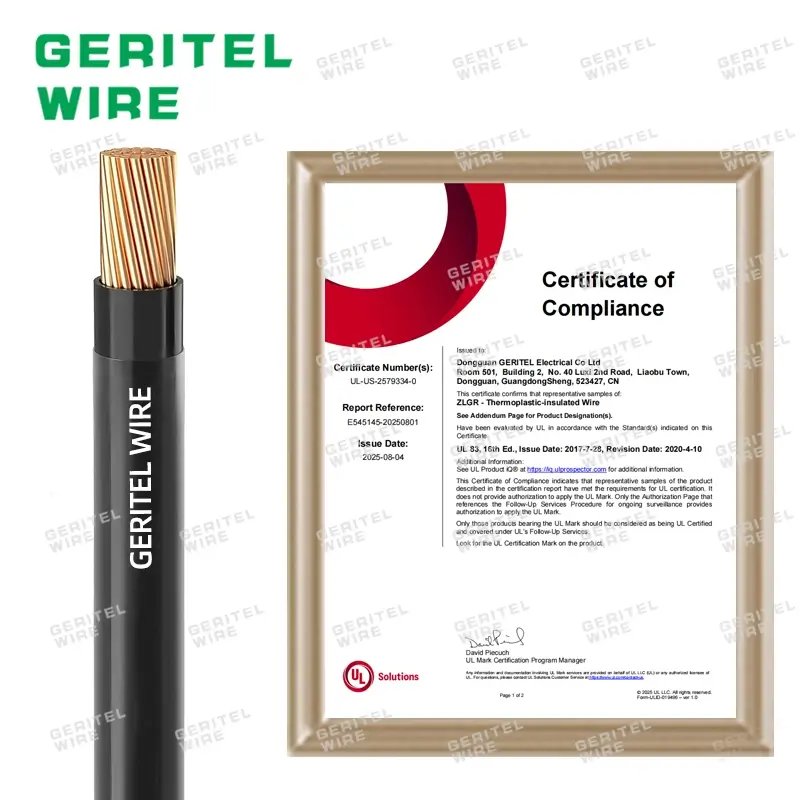
Compliance is a non-negotiable factor in electrical projects, particularly in North America, where regulatory standards are strictly enforced. THHN/THWN-2 cable is typically manufactured in accordance with UL 83 standards, ensuring that it meets the safety, performance, and construction requirements necessary for use in building wiring systems.
Being classified as a UL listed cable not only reflects adherence to rigorous testing procedures but also simplifies project approval and inspection processes, as contractors and inspectors recognize UL certification as a benchmark of quality and safety. This certification covers key parameters such as insulation thickness, temperature ratings, voltage capacity, and flame resistance, all of which are critical for safe operation.
For importers and distributors, UL compliance also serves as a gateway to the North American market, enhancing product credibility and reducing regulatory risks. Choosing a UL listed cable is therefore not just a technical decision, but also a strategic one that supports smooth project execution and long-term business success.
5. Application Scenarios: Matching Material Advantages to Real-World Use
The combination of copper core conductivity, PVC insulation protection, and nylon jacket durability allows THHN/THWN-2 cable to perform effectively across a wide range of applications.
In residential wiring, the cable provides stable power distribution with reliable insulation, making it suitable for branch circuits and general building wiring. In commercial buildings, its flexibility and durability support complex conduit systems and high-load electrical networks. For industrial environments, the oil-resistant and abrasion-resistant nylon jacket ensures dependable performance even in machinery rooms and production facilities.
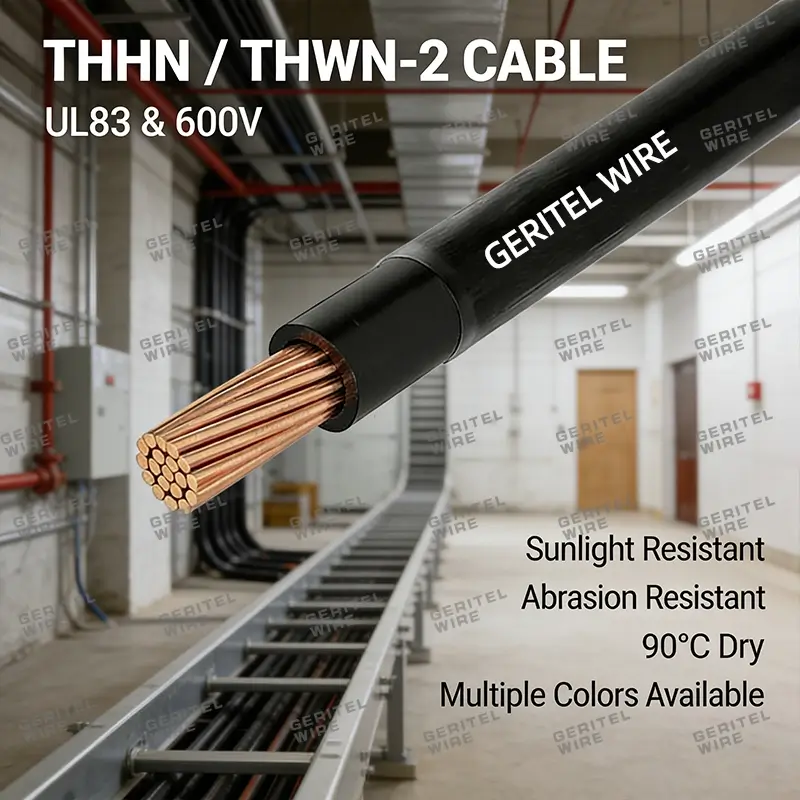
Additionally, the moisture-resistant properties of PVC insulation enable safe operation in damp or wet locations, such as basements, underground conduits, or utility areas, further expanding the cable’s versatility. By aligning material characteristics with application requirements, THHN/THWN-2 cable offers a practical and efficient solution for diverse electrical installations.
6. Conclusion: Material Quality Drives Long-Term Value
Understanding the material composition of THHN/THWN-2 cable—from its high-performance copper core to its dual-layer PVC insulation and nylon jacket—provides valuable insight into why it remains a preferred choice for modern electrical systems. Each component contributes to safety, durability, and compliance, ensuring that the cable performs reliably across a variety of environments and applications.
For buyers and project planners, selecting a high-quality UL listed cable is not only about meeting specifications, but also about securing long-term operational stability and reducing maintenance risks. If you are evaluating suppliers or looking to verify material quality in your next project, it is always advisable to request detailed specifications or sample products for testing, ensuring that the cable you choose aligns with both technical requirements and regulatory expectations.
Contact us today:
For more information or to request samples, feel free to contact us.
Dongguan GERITEL Electrical Co., Ltd.
Tel / WhatsApp / WeChat: +86 135 1078 4550 / +86 136 6257 9592
Email: manager01@greaterwire.com
 THHN/THWN-2 Cable Models and Specifications Explained



 Building 2, No. 40 Luxi 2nd Road, Liaobu Town, Dongguan City, Guangdong Province, China