


 Home
HomeTHHN vs XHHW-2 Wire: Which Cable Is Better for Power Distribution?
 GERITEL
 Mar 26,2026

When it comes to power distribution cable in both residential and industrial settings, selecting the right type of wire is crucial. Among the most popular options are THHN wire and XHHW-2 wire, each offering unique advantages. Understanding their specifications, performance characteristics, and ideal applications can help you make a smart investment in electrical wiring that is safe, efficient, and long-lasting.
Industrial vs Residential Wiring
If you’re an electrical contractor tasked with wiring a new industrial warehouse. You need electrical wiring that can handle high amperage, withstand harsh environmental conditions, and meet strict code requirements. On the other hand, for a residential building project, the demands are different: flexibility, ease of installation, and general safety are priorities. Choosing between THHN and XHHW-2 wires depends heavily on these scenarios.
What is THHN Wire?
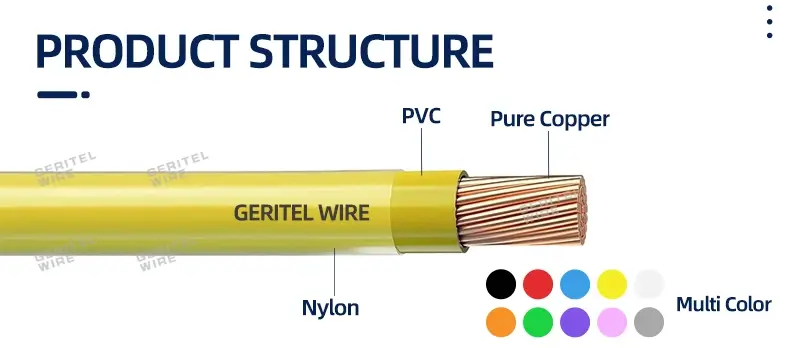
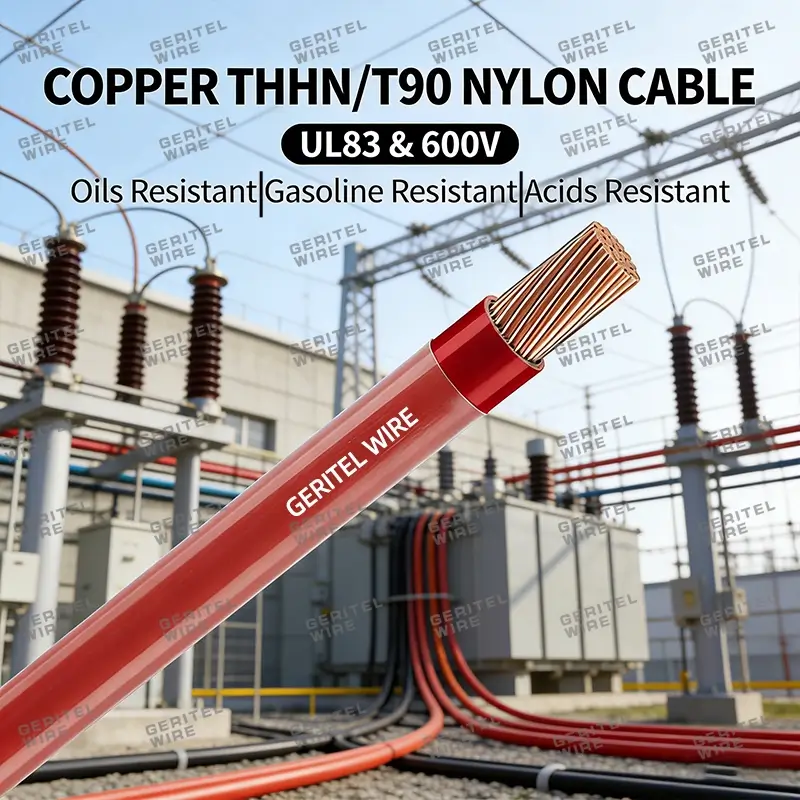
THHN wire stands for Thermoplastic High Heat-resistant Nylon-coated wire. It is one of the most commonly used electrical wiring types in construction, often specified as THHN copper building wire 600V for reliable power distribution. Key characteristics include:
- Temperature rating up to 90°C in dry locations
- Gauge sizes: Available from 18 AWG (smallest, for low-amperage lighting) up to 4/0 AWG (largest, for heavy-duty industrial feeders), with common residential sizes being 14 AWG and 12 AWG
- THHN electrical wire nylon jacket for mechanical protection
- Available in both solid and stranded forms
- Excellent for conduit installations in dry or damp conditions
THHN wire is typically preferred in indoor environments where heat resistance and durability inside conduits are needed. It’s widely used for branch circuits, feeders, and general wiring purposes.
What is XHHW-2 Wire?
XHHW-2 wire is Cross-Linked High Heat Water-resistant wire, version 2. It represents a more advanced design in industrial wiring solutions, with improved insulation that offers:
- 90°C temperature rating in both wet and dry locations
- Gauge sizes: Ranges from 14 AWG to 4/0 AWG, with larger gauges (2 AWG and above) ideal for industrial feeders and high-amperage equipment (up to 400 amps for 4/0 AWG)
- Superior chemical and moisture resistance
- Easier pull-through in conduit due to smooth insulation
- Ideal for high-voltage power distribution and outdoor use
The water-resistant insulation of XHHW-2 makes it the go-to choice for harsh environments, outdoor conduit runs, and industrial plants where safety and durability are critical.
Key Differences Between THHN and XHHW-2
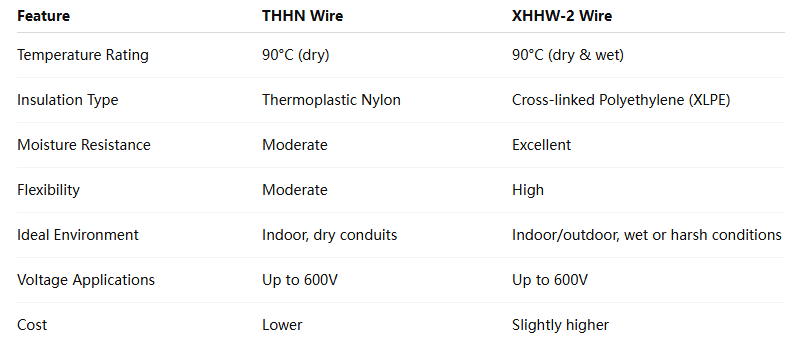
To make the selection process simpler, let’s look at a comparison table summarizing the critical differences:
How to choose the Right Wire
- Indoor Residential Wiring: THHN wire is sufficient for most home wiring needs, including outlets, lighting, and indoor appliances. Its durable nylon coating and affordability make it a practical choice.
- Industrial or Outdoor Projects: XHHW-2 wire is better for industrial plants, outdoor wiring, or locations prone to moisture. Its cross-linked insulation reduces the risk of failure due to chemical exposure, water ingress, or extreme temperatures.
- High-Voltage Feeder Runs: For long conduit runs or feeder cables in commercial settings, XHHW-2 provides easier pull-through and superior heat dissipation, reducing installation time and long-term maintenance.
Practical Tips for Installation
Conduit Consideration: Both wires work in conduit, but XHHW-2 slides more easily in tight conduit runs, saving labor time.
Temperature Environment: If wiring passes through high-temperature zones, choose XHHW-2 for wet areas, THHN for dry areas.
Cost Efficiency: For budget-sensitive projects where wet location resistance is not required, THHN offers excellent performance at a lower cost.
Final Thoughts
Choosing the right power distribution cable is not just about meeting code requirements—it also impacts installation efficiency, long-term reliability, and safety. THHN wire is ideal for dry, indoor environments where cost efficiency and standard durability are sufficient. XHHW-2 wire shines in industrial, outdoor, or wet conditions where chemical and moisture resistance are necessary. By carefully evaluating your project environment and wiring needs, you can make an informed decision that saves time, money, and potential headaches.
Remember, the best choice depends on your specific project scenario. For electrical contractors, engineers, or DIY enthusiasts, understanding the nuanced differences between THHN and XHHW-2 can make a significant difference in performance and safety.
Contact us
DONGGUAN GERITEL ELECTRICAL Co., Ltd– sincere service for long-term partners.
Tel/WhatsApp/WeChat: +86 136 6257 9592 / +86 135 1078 4550
Email: manager01@greaterwire.com
 THHN Wire Temperature Rating and Insulation Guide



 Building 2, No. 40 Luxi 2nd Road, Liaobu Town, Dongguan City, Guangdong Province, China