


 Home
HomeTHHN vs MTW Wire: Key Differences for Industrial Wiring
 GERITEL
 Mar 26,2026

When it comes to industrial wiring, making the wrong wire selection can have severe consequences. Choosing the incorrect wire type—such as confusing THHN and MTW—can lead to insulation degradation, circuit shorts, equipment failures, and even violations of electrical codes. These issues not only jeopardize safety but also drive up project rework costs and timelines. In this blog, we will break down the key differences between THHN and MTW wires, examine how their specific parameters impact industrial wiring applications, and help you make the right choice for your project. By the end, you will understand which wire suits your needs, ensuring a smooth, cost-efficient, and safe installation process.
1. Understanding THHN and MTW Wires
Both THHN and MTW wires are commonly used in industrial wiring projects, but they have different characteristics that make them suitable for distinct applications. Before diving into the critical parameters, let's quickly review their basic structures:
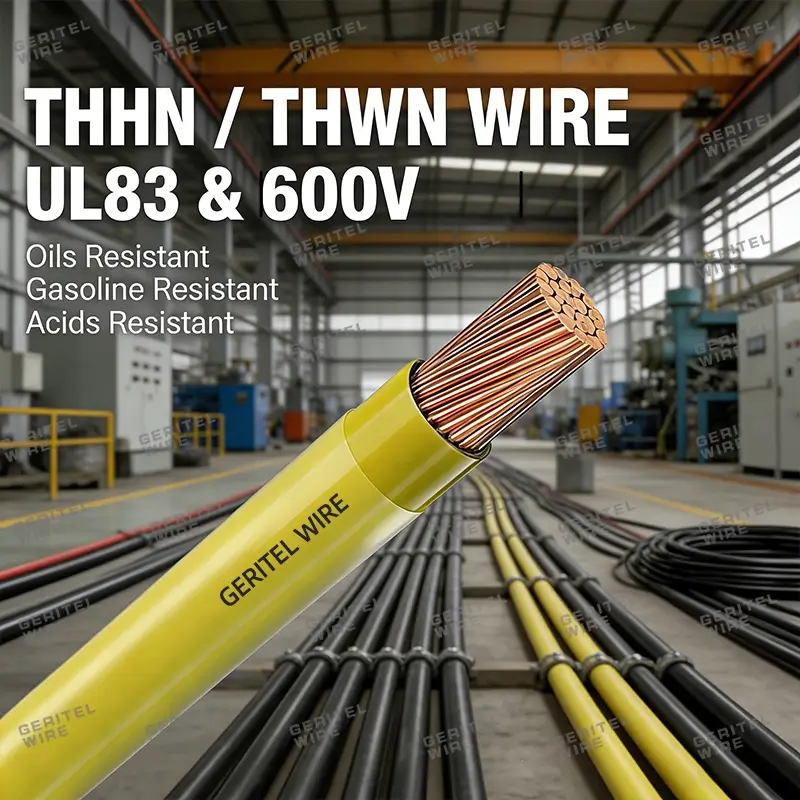
- THHN Wire: Typically features PVC insulation and a nylon jacket. It is available with either solid or stranded conductors. THHN electrical cable UL listed complies with UL 83 standards and is designed for dry or slightly damp environments.
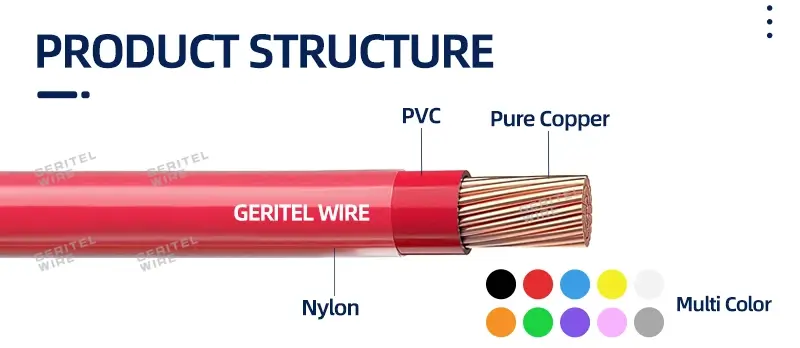
- MTW Wire: Features PVC insulation but lacks the nylon jacket. The conductor is typically finely stranded, providing better flexibility. MTW wire meets UL 1063 standards, and its design is suited for environments with moderate flexibility requirements.
2. Key Parameter Differences and Application Scenarios
Now, let's break down the crucial parameters that influence how each wire should be used in various industrial settings.
2. 1 Flexibility and Conductor Structure: Which Wire Offers Better Flexibility?
- MTW Wire: With its finely stranded conductors, MTW wire offers superior flexibility. This makes it ideal for environments where frequent bending and vibration are common, such as in machine tool wiring, control panels, and other areas where cables must navigate around equipment and components.
- THHN Wire: While THHN wire can also be found in stranded configurations, its flexibility is limited compared to MTW. It is more suited for fixed installations like wiring in conduit or cable trays. It does not perform well in applications where cables need to frequently bend or flex, as this can cause insulation damage or conductor breakage.
Recommended Application for MTW: Machine wiring, control cabinets, equipment wiring where frequent movement is involved.
Recommended Application for THHN: Fixed, permanent installations like those in electrical panels or conduit.
2. 2 Temperature Resistance and Environmental Adaptability: Which Wire Handles Tougher Conditions?
- THHN Wire: THHN is rated for 90°C in dry environments and is suitable for lightly damp conditions as well. It is typically used in factory floors, electrical distribution systems, and building wiring where moisture exposure is minimal.
- MTW Wire: MTW wire, on the other hand, is rated for 90°C in dry conditions but only 60°C in wet or oil-laden environments. Without the nylon jacket, MTW has less protection against wear and environmental hazards, making it less suitable for areas with high moisture, oil exposure, or abrasion. MTW is best used in controlled, dry environments or internal machine wiring.
Recommended Application for THHN: Factory workstations, electrical distribution systems, and building wiring in dry or lightly damp conditions.
Recommended Application for MTW: Internal machine wiring, industrial control panels, and dry factory environments.
2. 3 Wire Gauge and Ampacity: Ensuring Proper Current Capacity
Both THHN and MTW wires are available in various gauges, including 14 AWG, 12 AWG, and 2 AWG. Understanding how these different wire sizes correspond to ampacity is key to selecting the right wire for your project.
- 14 AWG: Ideal for low-load applications like small control circuits, lighting, and sensors.
- 12 AWG: Suitable for moderate loads, such as supplying power to small motors or control panels.
- 2 AWG and larger: These are used for high-load applications such as feeding large machinery, heavy equipment, or the main supply line for industrial systems.
Recommended Application for THHN: Power distribution systems, fixed industrial wiring, and high-load machinery installations.
Recommended Application for MTW: Equipment wiring, especially in scenarios requiring frequent movement or vibration.
2. 4 Installation Considerations: Fixed vs. Flexible Installations
- THHN Wire: Best suited for installations within conduit or cable trays. Its nylon jacket allows for smoother and easier routing through pipes, making it ideal for industrial building wiring where long, straight runs are required.
- MTW Wire: MTW is often used for internal wiring within machines or equipment, where it can be installed directly without conduit. This flexibility makes it a go-to choice for control circuits inside industrial machinery, robotics, and factory floor equipment.
Recommended Application for THHN: Permanent installations like electrical panels and fixed building wiring.
Recommended Application for MTW: Flexible, internal wiring in equipment or machines.
3. The Risks of Incorrect Wire Selection
Choosing the wrong wire for your industrial wiring project can lead to serious problems. For example:
- Using THHN for Machine Tool Wiring: The reduced flexibility of THHN wire for switchgear panel in these environments can cause insulation to tear or conductors to break, potentially resulting in circuit shorts and equipment failure, leading to costly repairs and downtime.
- Using MTW for Outdoor or Wet Conditions: MTW lacks the nylon jacket found in THHN, making it unsuitable for outdoor or high-moisture environments. The wire can degrade, causing insulation failure and the risk of electrical shorts, as well as non-compliance with electrical codes such as the National Electrical Code (NEC).
- Incorrect Gauge Selection: Using a wire that is too small for the application can lead to overheating, insulation damage, and a reduction in the wire’s lifespan. On the other hand, oversized wire can increase material costs and make installation more difficult.
4. Choosing the Right Wire for Your Project: Practical Tips
To make the best wire selection for your industrial wiring needs, consider these four core factors:
- Environment: Is your wiring exposed to moisture or oil? For dry environments, MTW is suitable, but for moist or oily areas, THHN cable for residential wiring should be your go-to option.
- Installation Method: Are you running wires through conduit, or are they within equipment that needs flexibility? Choose THHN for fixed installations and MTW for flexible, internal wiring.
- Current Load: Select the right gauge wire for the load requirements. Higher-gauge wires (e.g., 2 AWG) are necessary for heavy industrial machinery, while smaller gauges like 14 AWG work for light controls and sensors.
- Movement and Vibration: If the wire will be exposed to frequent bending or vibration, MTW is the better choice due to its superior flexibility.
5. Conclusion: Get Expert Assistance for Your Wiring Needs
Selecting the correct wire for your industrial wiring project is essential for ensuring safety, efficiency, and long-term performance. If you’re still unsure whether THHN or MTW is best for your specific application, feel free to reach out. Whether you need factory wiring, machine tool wiring, or any other industrial solution, we can recommend the right wire specifications based on your environment, load, and installation method.
Rest assured that both THHN and MTW wires meet UL certifications, ensuring compliance with industry standards and providing you with safe, reliable solutions for your wiring needs. Contact us today for expert guidance and precise product recommendations.
Dongguan GERITEL Electrical Co., Ltd.
Tel/WhatsApp/WeChat: +86 135 1078 4550 / +86 136 6257 9592
Email: manager01@greaterwire.com
 THHN Copper Wire Specifications and Applications



 Building 2, No. 40 Luxi 2nd Road, Liaobu Town, Dongguan City, Guangdong Province, China