


 Home
HomeTHHN Copper Wire Specifications and Applications
 GERITEL
 Mar 26,2026

As an electrician or contractor, you know that not all wires are created equal. When it comes to reliable, code-compliant wiring for dry environments, THHN copper wire stands out as a workhorse. Its combination of durability, heat resistance, and ease of installation makes it a staple in residential, commercial, and industrial projects. But to choose the right THHN wire for the job, you need to understand its specifications—and how they align with your specific needs. In this guide, we’ll demystify THHN copper wire specs, share real-world application scenarios, and explain why our UL-certified products are the best choice for your next project.
What is THHN Copper Wire?
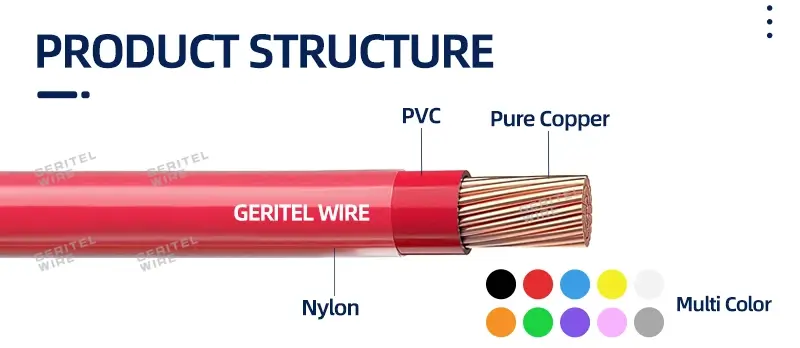
First, let’s recap the basics: THHN stands for Thermoplastic High Heat-resistant Nylon-coated wire. It features a solid or stranded annealed copper conductor insulated with a heat-resistant thermoplastic (PVC) and coated with a smooth nylon jacket. This design delivers three core benefits: excellent heat resistance, abrasion protection, and easy pull-through through conduits. Unlike wires designed for wet environments, THHN copper wire is optimized for dry locations, specifically as a THHN wire dry location rated 90℃,making it the go-to for indoor wiring where reliability and cost-efficiency matter.
Key Specifications: What You Need to Know
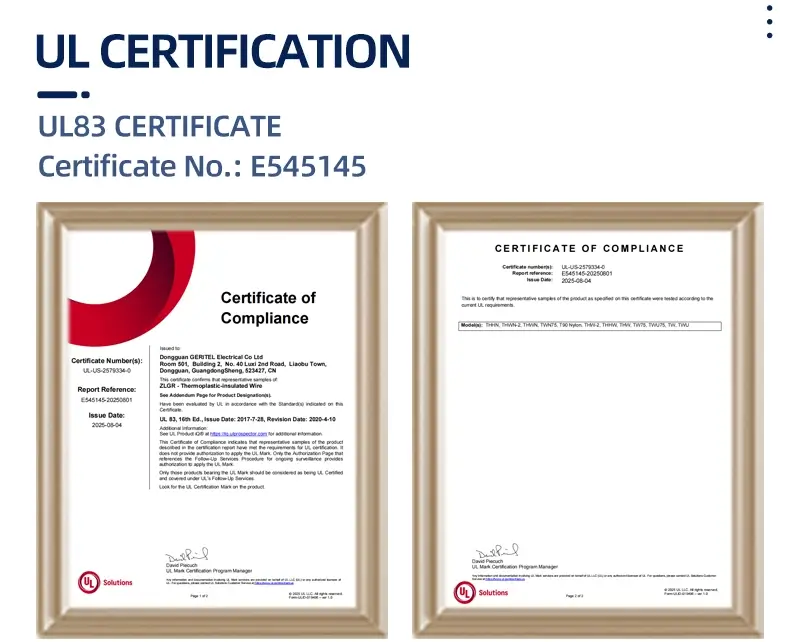
To select the right THHN copper wire, you must master its critical specifications. Below is a breakdown of the most important parameters, with our UL83-certified products meeting or exceeding industry standards.
| Specification | Temperature Rating | Voltage Rating | Gauge Sizes | Conductor Type | Insulation & Coating | Certification |
| Details | 90°C in dry locations | 600V |
14 AWG – 4/0 AWG 14 AWG 12 AWG 10 AWG 6 AWG+: Heavy-duty feeders |
Solid or Stranded Annealed Copper | PVC Insulation + Nylon Jacket | UL83 |
| Impact on Application | Higher heat tolerance than standard wires, suitable for circuits with sustained load | Compatible with most general-purpose circuits, from residential outlets to commercial lighting | Gauge size directly determines ampacity—smaller gauges for light loads, larger for heavy machinery | Solid: Best for straight runs (e.g., wall conduits). Stranded: More flexible for tight bends or industrial equipment. | Nylon coating reduces friction for easy pulling; PVC insulation provides electrical insulation and abrasion resistance. | Ensures compliance with national electrical codes (NEC) and global safety standards. |
When to Use THHN Copper Wire: Real Scenarios
Let’s put these specs into context with three common project scenarios.
Scenario 1: Residential Remodel
You’re rewiring a 1,500 sq. ft. home, replacing old knob-and-tube wiring with modern circuits. THHN copper wire is the perfect choice here. For standard 15A lighting circuits, use 14 AWG THHN wire; for 20A outlets (e.g., kitchen appliances), opt for 12 AWG THHN wire. Its solid copper conductor ensures stable performance, and the nylon jacket makes pulling through wall conduits quick—saving you time on installation. Our UL-certified THHN wire meets NEC 310.10 standards, so you’ll pass inspections with ease.
Scenario 2: Commercial Office Build
Outfitting a new 10,000 sq. ft. office space with lighting, HVAC, and workstation outlets. Here, stranded THHN copper wire is preferred for its flexibility, making it an ideal THHN building wire commercial use option. Use 12 AWG stranded THHN for general outlets and 10 AWG for high-draw HVAC systems. The 90°C temperature rating handles the heat from continuous equipment operation, while the 600V voltage rating covers all office circuits. Our THHN wire’s abrasion-resistant nylon jacket stands up to high-traffic conduit runs, reducing the risk of damage during installation.
Scenario 3: Industrial Control Panel Wiring
Wiring control panels and machinery in a manufacturing plant. For heavy-duty circuits powering motors or machines, select 6 AWG or larger THHN copper wire (e.g., 6 AWG for 55A loads), specifically THHN power cable 600V copper for reliable high-voltage performance. Stranded conductors are ideal here, as they flex easily around tight panel components. The 90°C dry rating ensures the wire won’t degrade from the heat of industrial equipment. Our THHN wire’s UL83 certification guarantees it can handle the rigorous demands of industrial environments, making it a trusted choice for plant electricians.
How to Choose the Right THHN Copper Wire
Follow these three steps to select the ideal THHN wire for your project:
Assess the Environment: Confirm the location is dry—THHN wire is not rated for wet or damp spaces. For wet areas, switch to THWN-2.
Match Gauge to Load: Calculate the circuit’s ampacity:
- 14 AWG: 15A (lighting, small appliances)
- 12 AWG: 20A (outlets, refrigerators)
- 10 AWG: 30A (washers, dryers)
- 6 AWG+: 55A+ (feeders, industrial machinery)
Choose Conductor Type: Use solid copper for straight runs (e.g., residential walls) and stranded copper for flexible installations (e.g., industrial machinery or tight bends).
Final Thoughts
THHN copper wire is a versatile, reliable choice for dry-location wiring across residential, commercial, and industrial settings. Its well-defined specifications—from 90°C temperature rating to 600V voltage capacity—make it adaptable to nearly any indoor circuit. When you choose our UL83-certified THHN copper wires, you’re getting a product that combines high-quality annealed copper, durable nylon coating, and code compliance. Whether you’re wiring a home, office, or factory, our THHN wire will deliver the performance and peace of mind you need for a successful installation.
Contact us
Stable quality makes stable business. Let’s cooperate for success.
Tel/WhatsApp/WeChat: +86 136 6257 9592 / +86 135 1078 4550
Email: manager01@greaterwire.com
 Can THHN Wire Be Used Outdoors?



 Building 2, No. 40 Luxi 2nd Road, Liaobu Town, Dongguan City, Guangdong Province, China