


 Home
HomeTechnology Trends and Innovations in UL83 THHN/THWN-2 Cables
 GERITEL
 Mar 26,2026

Whether you’re working on a THHN cable industrial wiring use, industrial equipment installation, or outdoor conduit deployment, understanding the Technology Trends and Innovations in UL83 THHN/THWN-2 Cables is critical to avoiding selection mistakes, reducing safety risks, and optimizing project efficiency, especially as modern electrical systems become more demanding and diversified. In North America, UL83 THHN/THWN-2 cables remain a core solution for low-voltage power distribution, yet ongoing material upgrades and performance innovations are reshaping how engineers and contractors evaluate and select them. All products comply with UL 83 standards, ensuring basic safety and performance compliance, while recent innovations focus more on adaptability, durability, and cost-efficiency in real-world applications.
1. Current Technology Trends and Innovations in UL83 THHN/THWN-2 Cables
1. 1 Advanced Insulation and Sheath Material Evolution
One of the most noticeable THHN/THWN-2 technology trends lies in the continuous evolution of insulation and sheath materials, where traditional PVC insulation combined with a nylon outer jacket is being optimized through improved formulations that enhance thermal stability, moisture resistance, and long-term durability without significantly increasing cost or installation complexity. These innovations allow cables to maintain structural integrity under higher temperatures and fluctuating environmental conditions, which is particularly valuable for projects involving rooftop conduits, compact electrical rooms, or THWN-2 wire for outdoor installation mixed indoor-outdoor routing.
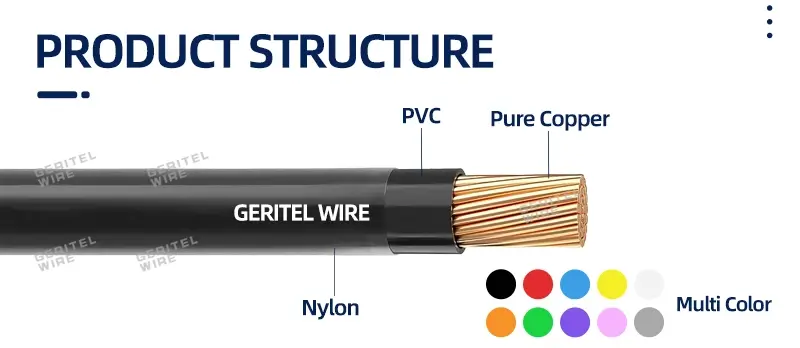
Rather than focusing purely on material composition, the real benefit for end users lies in reduced cracking, improved abrasion resistance during pulling, and better moisture sealing performance, all of which directly contribute to fewer installation failures and lower maintenance costs over the lifecycle of the project.
1. 2 Performance Optimization and System Compatibility
Another important innovation trend is the gradual improvement in electrical and mechanical performance, where manufacturers are optimizing conductor stranding, insulation thickness balance, and surface smoothness to achieve better ampacity efficiency and easier pulling through conduits. These refinements may appear subtle, yet they significantly impact installation labor efficiency and long-term energy performance, especially in large-scale THHN building wire commercial use, commercial or industrial systems where cable runs are extensive.
At the same time, modern THHN/THWN-2 cables are increasingly designed to be compatible with emerging electrical infrastructures, including smart distribution systems and energy-efficient buildings, where stable conductivity and predictable thermal behavior are essential for system reliability. While UL 83 provides baseline requirements, these innovations go beyond compliance by aligning with evolving project expectations rather than merely meeting minimum standards.
1. 3 Expansion into New Application Scenarios
Traditionally associated with building wiring and general industrial use, UL83 THHN/THWN-2 cables are now being applied in a broader range of environments, including renewable energy support systems, data centers, and outdoor installations exposed to variable weather conditions. This expansion is driven by improvements in moisture resistance, temperature tolerance, and mechanical strength, allowing the same cable family to perform reliably across more diverse applications.
For example, in data centers where cable density and heat accumulation are critical concerns, improved insulation performance helps maintain stable operation, while in outdoor conduit systems, enhanced THWN-2 moisture resistance ensures longevity even in humid or wet environments. These evolving use cases highlight how innovation is not only about materials, but also about enabling flexibility in project design and execution.
2. How to Choose the Right UL83 THHN/THWN-2 Cable Specifications and Parameters
2. 1 Matching Cable Types to Installation Environments
Selecting the right cable begins with understanding the installation environment, as different scenarios demand different performance characteristics even within the same UL83 THHN/THWN-2 category.
For dry indoor environments such as office lighting systems or residential distribution panels, THHN is typically sufficient due to its high heat resistance and cost efficiency.
For wet or outdoor conduit installations, such as underground routing or exposed rooftop conduits, THWN-2 becomes the preferred option because of its superior moisture resistance and dual temperature rating under both dry and wet conditions.
In industrial environments where elevated temperatures and mechanical stress are common, selecting cables with a 90°C rating ensures stable performance under continuous load.
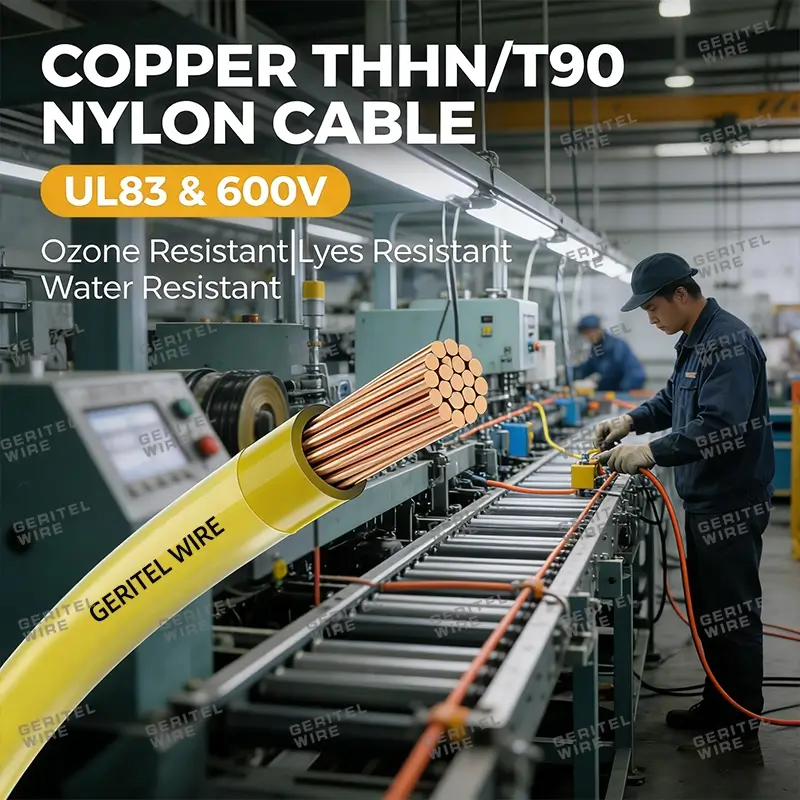
For high-density data centers or critical infrastructure, cables with optimized insulation and smoother jackets can significantly reduce installation difficulty and improve airflow management.
2. 2 Understanding Key Parameters and Their Impact
Beyond environment selection, understanding how parameters affect performance is essential for making the right decision.
Wire gauge (AWG) directly determines current-carrying capacity, where smaller sizes such as 14 AWG are suitable for lighting circuits, while larger sizes like 2 AWG or above are required for heavy industrial loads or main feeders, and choosing the wrong size can lead to overheating or unnecessary cost increases.
Temperature rating plays a crucial role in ensuring safety and longevity, as cables rated for 90°C can handle higher thermal stress compared to 75°C alternatives, making them more suitable for confined or high-load environments.
Voltage rating, typically 600V for UL83 cables, must align with system requirements to avoid compliance issues and operational risks, while conductor material, usually copper, affects conductivity, flexibility, and installation ease.
Each of these parameters should be evaluated together rather than in isolation, as real-world performance depends on their combined effect within the specific project environment.
2. 3 Risks and Consequences of Incorrect Selection
Incorrect cable selection often leads to issues that are not immediately visible but can result in serious long-term consequences, particularly in large-scale or compliance-driven projects.
For instance, using THHN cables in wet environments without proper rating can accelerate insulation degradation, increasing the risk of short circuits and system failure over time.
Similarly, undersized wire gauges may cause excessive heat buildup under load, potentially damaging connected equipment and creating fire hazards, while oversized cables can unnecessarily increase project costs without delivering proportional benefits.
In addition, improper selection may lead to difficulties in passing inspection or meeting project specifications aligned with UL 83 requirements, which can delay project timelines and increase overall costs.
3. Comparison and Boundary of UL83 THHN/THWN-2 Cables
3. 1 Key Differences Between THHN and THWN-2
Although THHN and THWN-2 are often grouped together, their differences are critical when making selection decisions, particularly regarding environmental suitability.
THHN is primarily designed for dry locations with high heat resistance, while THWN-2 offers dual ratings for both wet and dry environments, making it a more versatile choice for projects with variable conditions or uncertain installation environments.
3. 2 THHN/THWN-2 vs Other Cable Types
When compared with alternatives such as XHHW or XHHW-2, THHN/THWN-2 cables generally provide easier installation due to their nylon jacket and smoother surface, while XHHW cables offer thicker insulation and may perform better in certain heavy-duty or high-moisture environments.
For most commercial and general industrial applications, THHN/THWN-2 strikes a balance between flexibility, cost, and performance, making it a preferred choice unless the project involves extreme environmental conditions.
3. 3 Application Boundaries and Limitations
Despite their versatility, UL83 THHN/THWN-2 cables are not suitable for all scenarios, and understanding their boundaries is essential for avoiding misuse.
They should not be used in high-voltage transmission systems, environments with strong chemical corrosion, or situations involving prolonged submersion in water, as these conditions exceed their design capabilities and may compromise safety and performance.
Within the same cable type, different AWG sizes also define their application scope, where smaller sizes are ideal for branch circuits and lighting, while larger sizes are required for feeders and industrial equipment, highlighting the importance of precise specification matching.
4. Making Smarter Decisions with Evolving Cable Technologies
With the continuous evolution of technology and the increasing complexity of project requirements, choosing the right UL83 THHN/THWN-2 cable specifications has become more critical than ever, especially as innovations in materials and performance continue to expand their application boundaries.
If you’re not sure which size, parameter, or innovative type fits your specific project, whether it’s a commercial building, industrial facility, or new energy supporting system, we can provide personalized recommendations based on your load requirements, installation environment, and compliance needs, helping you reduce risks, improve efficiency, and optimize overall project costs.
Contact Us Today
Dongguan GERITEL Electrical Co., Ltd.
Tel/WhatsApp/WeChat: +86 135 1078 4550 / +86 136 6257 9592
Email: manager01@greaterwire.com
Feel free to contact us for technical consultation, product details, or a customized quotation tailored to your project.
 Energy-Saving Advantages of THHN/THWN-2 Cables in Green Buildings



 Building 2, No. 40 Luxi 2nd Road, Liaobu Town, Dongguan City, Guangdong Province, China