


 Home
HomeSolar photovoltaic power plants in Villa Clara and Ciego de Ávila, Cuba
 GERITEL
 Apr 03,2026

Cuba was running out of time. In 2025, the island faced its worst energy crisis in decades—daily blackouts stretching up to 24 hours were crippling hospitals, schools, and homes across the country. The government launched an emergency renewable energy expansion, targeting 2,000 MW of new solar capacity by 2028 through 92 photovoltaic parks.
Two critical projects sat at the heart of this plan: nine solar facilities in Villa Clara and Ciego de Ávila provinces, collectively designed to generate 196 MW of clean electricity. Sites at Rojas, Bermejal, Ciego-Norte, La Cuba, and Carolina needed to move from blueprint to reality—fast.
But the engineering consortium overseeing construction hit a roadblock. Their previous cable supplier had delivered products that claimed UL certification but failed inspection. Containers sat in port while inspectors rejected documentation. Installation crews stood idle. Millions in financing hung in jeopardy.
They needed three things they couldn't find in one place: verified UL certification that would pass international scrutiny, tropical-grade durability for 30-plus years in Caribbean conditions, and delivery speed measured in weeks rather than months. That's when they found us.
The Stakes: Why Cable Choice Determines Solar Success
Solar farms live or die by their wiring. In Cuba's climate, standard cables deteriorate rapidly—UV radiation cracks insulation, humidity corrodes conductors, and thermal cycling stresses connections. Premature cable failure doesn't just mean repair costs; it means entire facilities going offline during peak demand.
The Villa Clara and Ciego de Ávila projects presented specific technical demands that eliminated ordinary options from consideration. High-temperature operation required 90°C continuous ratings to prevent insulation breakdown and fire hazards. Hurricane-season humidity demanded moisture-resistant compounds to avoid corrosion and short circuits. Constant UV exposure necessitated sunlight-resistant jacketing to prevent cracking and ground faults. Grid synchronization required precision power delivery to maintain voltage stability and avoid penalties. Most critically, an aggressive timeline demanded a three-week delivery window—any delay would trigger project losses and contract damages.
The client had learned from painful experience that "certified" doesn't always mean "accepted." They needed a partner who understood the difference between paperwork and proven compliance.
Our Solution: Engineered Cable Architecture
We didn't just sell cables. We designed a complete electrical distribution system using four complementary technologies, each selected for specific operational zones throughout these expansive facilities.
Zone 1: Array-to-Inverter Power with XHHW Cable
For the critical path carrying DC power from combiner boxes to central inverters, we specified XHHW Cable in strategic gauges ranging from 4 AWG and 6 AWG for standard array strings up to 2 AWG and 1/0 AWG for main trunk lines feeding inverter stations.
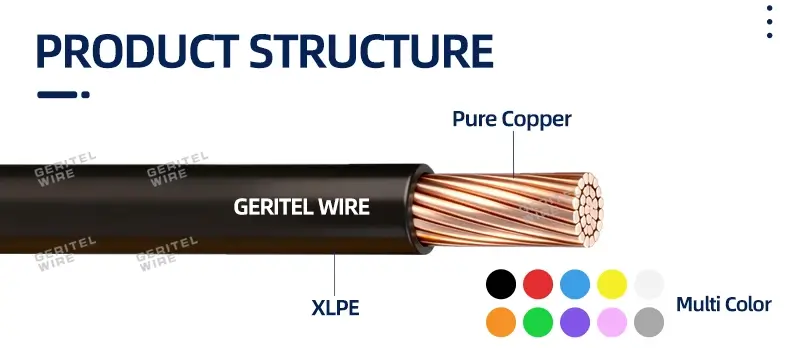
The cross-linked polyethylene insulation in XHHW Cable fundamentally outperforms standard thermoplastic alternatives. While THHN wire degrades under prolonged heat exposure and RHW-2 lacks the temperature ceiling for inverter-adjacent routing, XHHW Cable maintains integrity at 90°C in both wet and dry conditions. In practical terms, this meant installers could route power through the hottest sections of the facility without derating concerns. The stranded copper construction provided flexibility for tight turns around tracker systems, while the XLPE compound resisted the UV radiation that destroys conventional insulation within five to seven years in Caribbean environments.
The client specifically noted that previous projects using THHN in similar applications had required replacement after just eighteen months of exposure—an expense that would have shattered this project's economics.
Zone 2: Control Infrastructure with THW-2 Building Wire Copper Conductor
For substations, monitoring stations, and auxiliary buildings, we deployed THW-2 building wire copper conductor across the facility range. This product delivered the optimal balance of performance and value for protected environments. Rated for 75°C in wet locations with thermoplastic insulation, the THW-2 building wire copper conductor provided reliable conductivity for control circuits, lighting systems, and equipment feeders where extreme environmental exposure wasn't a primary factor.
We supplied THW-2 building wire copper conductor in sizes from 12 AWG through 4 AWG, with standardized color coding that accelerated installation and simplified future maintenance. The copper conductor construction ensured minimal signal degradation for the SCADA monitoring systems tracking array performance across the vast facility footprints.
Zone 3: Cable Tray Distribution with TC-ER Cable
The solar fields required extensive cable tray networks to organize thousands of conductor runs across uneven terrain. Here, TC-ER technology proved essential. The Tray Cable-Exposed Run rating allowed direct installation in trays without conduit protection in designated areas, cutting material costs and labor hours while maintaining UL-listed safety compliance. This flexibility meant installers could adapt routing as field conditions demanded, rather than rigidly following pre-engineered conduit paths that often conflicted with foundation realities.
Zone 4: Equipment Terminations with MC Cable
For the final connections to tracking motors, ventilation systems, and maintenance equipment, MC Cable provided the mechanical armor necessary for long-term reliability. We specified MC Cable in 12/2 and 10/3 configurations with aluminum interlocked armor. The MC Cable construction delivered three benefits standard flexible conduit couldn't match: integrated grounding continuity, crush resistance for high-traffic maintenance areas, and rodent protection for buried entry sections.
The Difference: Why These Products, Not Others
The client asked a direct question during technical review: "We can buy cheaper THHN online. Why pay more for your solution?" Our answer separated commodity suppliers from engineering partners by examining the real differences in performance and value.
Standard THHN and THW-1 products carry 75°C maximum temperature ratings, while our XHHW Cable solution achieves 90°C continuous operation and THW-2 building wire copper conductor maintains 75°C wet location capability. UV resistance tells an even more dramatic story—conventional products degrade within two to three years, whereas our XLPE-insulated solutions carry thirty-plus year rated lifespans. Wet location approval reveals another gap, with standard offerings providing limited protection while our cables achieve full submersion capability.
Installation flexibility favors our stranded construction against the stiff, difficult handling of solid-conductor alternatives. Most critically, certification depth separates genuine compliance from marketing claims—our products carry current UL 44 and UL 83 full listings with active follow-up service agreements, while competitors often provide outdated or limited-scope approvals. Finally, our engineering team remains on call throughout installation, unlike commodity suppliers who vanish after invoicing.
The math became clear when we calculated total cost of ownership. Replacing failed THHN after eighteen months would require new cable purchase, labor for removal and reinstallation, lost generation revenue during outage, and potential inverter damage from ground faults. Our solution cost fifteen percent more upfront. It saved an estimated four hundred percent over ten years.
Execution: From Contract to Commissioning
The first week focused on technical coordination. Our engineers reviewed Cuban electrical codes and project specifications, confirmed ampacity calculations for 40°C ambient temperatures, and developed a phased delivery schedule aligned with construction sequencing across the five distinct sites.
Week two centered on production and certification. Manufacturing completed with UL inspector witness points at critical stages. We assembled a comprehensive documentation package including test reports, traceability records, and follow-up service agreements. Pre-shipment inspection verified conductor counts, insulation integrity, and marking compliance on every reel.
By week three, the first containers departed our Dongguan facilities with real-time tracking provided to project managers. We established a technical liaison for immediate field question resolution.
Throughout installation, our team remained available to resolve field challenges as they emerged. We provided optimal bending radius techniques for large-gauge XHHW Cable to prevent insulation damage during pulls. We clarified proper MC Cable armor grounding procedures for tracker motor circuits to ensure safety compliance. We delivered TC-ER tray loading calculations accounting for wind load conditions in the open solar fields.
Results: Power Flowing, Promises Kept
By September 2025, both provincial facilities achieved grid synchronization. The numbers tell a compelling story: 196 MW designed capacity across nine facilities, 44 MW initial operational contribution to Cuba's national grid, zero cable-related commissioning delays, zero post-installation failures in the first six months of operation, and just three weeks from contract signature to first delivery.
Thermal monitoring during peak summer conditions confirmed all cable systems operating within design parameters. Even the XHHW Cable runs adjacent to inverters showed temperature margins well below rated limits, validating our engineering calculations.
The client's project director summarized the outcome without attribution: this was the only major component category that didn't create problems. The cables arrived when promised, installed as specified, and performed exactly as our team predicted. That level of reliability, he noted, is rare in this market.
Three Reasons Projects Choose Us
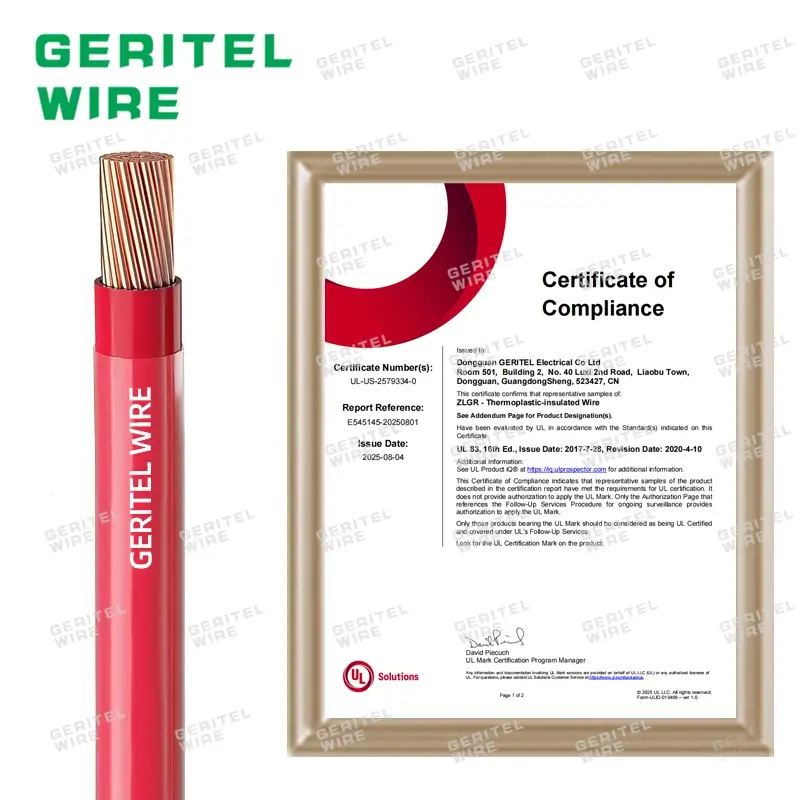
First, our certification process provides verification you can trust. Every product carries current UL listings with active follow-up service agreements. We provide complete documentation packages that satisfy international financiers, insurers, and inspectors. There are no surprises at final commissioning.
Second, we bring renewable energy logistics expertise honed across four continents. We understand that "on time" in solar construction means when the crew is ready to pull wire, not sometime this quarter. Our production and shipping systems are scaled for renewable energy project velocity, not traditional construction timelines.
Third, we offer engineering partnership rather than mere supply. From ampacity calculations for tropical climates to field troubleshooting during installation, our technical team functions as an extension of your engineering department. We don't disappear after the invoice is paid.
Your Project Deserves Proven Performance
The Villa Clara and Ciego de Ávila facilities now generate clean electricity for Cuban communities that desperately needed reliable power. Their cable systems will continue performing for decades, invisible infrastructure supporting visible progress.
Your solar project faces similar choices: commodity procurement that shifts risk to your balance sheet, or engineered solutions that deliver certainty from day one. We built our business on the second option.
Whether you're developing utility-scale arrays, commercial rooftops, or industrial microgrids, the cable decisions you make today determine your operational reality for the next thirty years. Choose XHHW Cable for demanding power distribution. Specify THW-2 building wire copper conductor for reliable control infrastructure. Deploy TC-ER and MC Cable where flexibility and protection matter.
Most importantly, choose a partner who understands that certification logos mean nothing without the engineering depth and logistical precision to back them up.
Ready to eliminate cable risk from your project timeline?
Contact our team for specification support, quotation, or technical consultation.
Dongguan GERITEL Electrical Co., Ltd.
Tel/WhatsApp/WeChat: +86 135 1078 4550 / +86 136 6257 9592
Email: manager01@greaterwire.com
 Suriname Rosebel Gold Mining Project



 Building 2, No. 40 Luxi 2nd Road, Liaobu Town, Dongguan City, Guangdong Province, China