


 Home
HomeSamoa Transport Decarbonisation & EV Infrastructure Project (2023–2025)
 GERITEL
 Apr 10,2026

Samoa stands at the frontline of climate change. Transport accounts for 61.2% of the country's energy sector emissions, with land transport alone contributing 27.4% of total national greenhouse gas output. In 2023, the Government of Samoa launched the Climate Action Pathways for Island Transport (CAP-IT) project, backed by USD 15.5 million from the United Nations Development Programme (UNDP) and the Government of Japan. The mission: full fleet electrification with 76 electric vehicles across 16 charging sites spanning Upolu and Savai'i islands.
Yet the brutal reality of the tropical marine environment posed severe challenges: salt-laden air, extreme humidity, intense UV radiation, and mandatory compliance with stringent Australian and New Zealand electrical standards (AS/NZS). Our client—a national infrastructure contractor tasked with building the Tuanaimato Central Charging Hub and the Mulifanua Wharf solar charging station—faced a procurement dilemma. Local suppliers lacked AS/NZS-compliant medium voltage cable systems, while Australian vendors quoted lead times exceeding 20 weeks, unacceptable for critical milestones tied to the Commonwealth Heads of Government Meeting (CHOGM) 2024.
The Late-Night Call: Three Non-Negotiable Pain Points
One August evening in 2023, we received an urgent inquiry from Apia. The anxiety in our client's voice was unmistakable. Three core pain points emerged:
Pain Point 1: The Certification Nightmare
In a previous project, cables lacking complete AS/NZS compliance documentation were rejected during inspection by the Samoa Electric Power Corporation, delaying the charging station commissioning by three months. The client was explicit: "We cannot survive another certification failure. This isn't just financial loss—it's government credibility at stake."
Pain Point 2: The Tropical Environment Gauntlet
With over 2,500 annual sunshine hours, 3,000mm annual rainfall, and extreme coastal salt spray, standard PVC-insulated cables had degraded within 18 months in prior installations, forcing premature replacement. For a distributed charging network, frequent cable replacement meant operational disruption and reputational risk.
Pain Point 3: Logistical Coordination Complexity
Sixteen charging sites across two major islands required consolidated delivery of power, control, and communication cables to avoid multi-supplier chaos. More critically, key sites had to be operational before CHOGM 2024; any delay would impact national image.
Technical Breakthrough: An Integrated Four-Cable Ecosystem
Facing these challenges, we proposed a bold yet pragmatic solution: not merely supplying cables, but delivering a complete cable ecosystem optimized for tropical marine environments. This approach stemmed from our deep understanding of Samoa's specific operating conditions.
The Power Artery: Why Medium Voltage Cable 3C 120mm² Was the Logical Choice
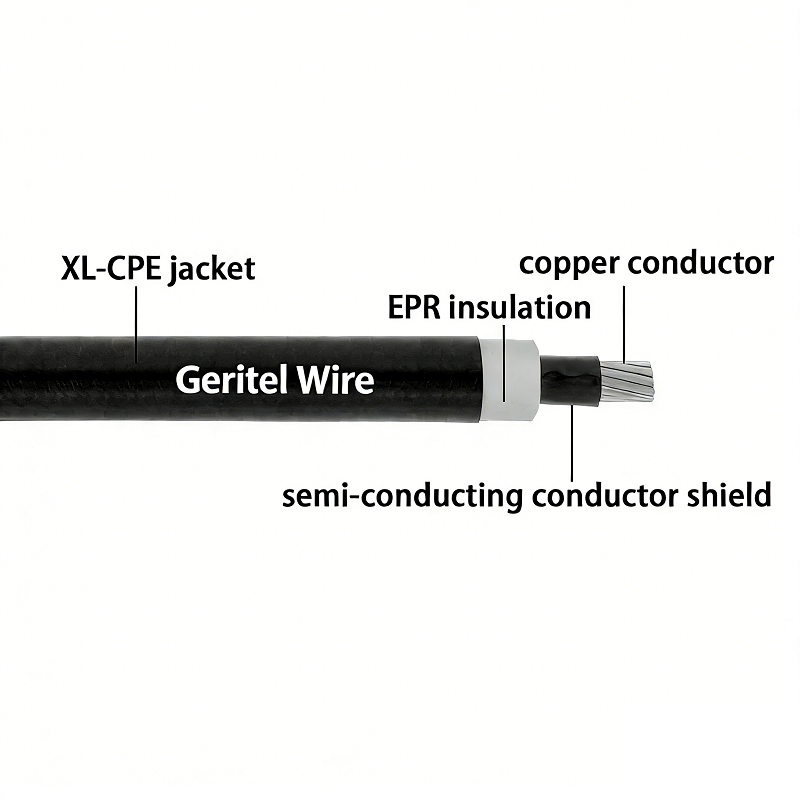
For the 1,000 kVA transformer main feeder at Tuanaimato Central Hub and 11kV distribution to port facilities, we selected Medium Voltage Cable 3C 120mm² from the 6.35/11kV 3C 70–240mm² range.
Why 120mm²? This was no arbitrary choice. Through detailed load calculations, we determined that the full-load current of 60kW DC fast chargers, combined with an 800-meter feeder distance, required a 120mm² copper conductor cross-section to maintain voltage drop within the 2% limit specified in AS/NZS 3008.1. More strategically, this specification reserved 40% capacity for future load growth—critical given Samoa's projected fleet expansion to 200 vehicles within five years, avoiding costly secondary retrofitting.
Compared to European-standard IEC 60502 cables, our Medium Voltage Cable 3C 120mm² employs the AS/NZS 1429.1-specific triple-layer XLPE insulation system, with an HDPE outer sheath containing over 2% carbon black for UV resistance. Salt spray testing demonstrated this structure delivers four times the service life of standard PVC sheaths.
The Safety Perimeter: Why Neutral Screen Cable Was Indispensable
In Australian-standard networks, Neutral Screen Cable is not optional—it is mandatory for safety. We provided AS/NZS 1429.1-compliant Neutral Screen Cable for 11kV/22kV system grounding and phase isolation.
The concentric neutral layer ensures continuous earth potential, significantly reducing hazard from fault currents to personnel and equipment. Its mechanical protection characteristics prove critical during direct-buried installation in Samoa's rocky volcanic soil conditions. More importantly, its electrical characteristics perfectly match those of Medium Voltage Cable 3C 120mm², streamlining the connection permit process with the Samoa Electric Power Corporation's existing grid infrastructure.
Port Power: How VSD Cable Tamed Harmonic Distortion
The Mulifanua Wharf electric crane retrofit and pump station electrification required managing high-frequency harmonics generated by Variable Speed Drives (VSD). Standard power cables fail prematurely in such environments due to insulation aging, risking port operational downtime.
Our VSD Cable in 0.6/1kV 4C + Screen 16–95mm² specification employs a symmetrical earth configuration—three earth conductors plus composite screen. This design balances impedance to prevent circulating currents while effectively suppressing electromagnetic interference, protecting adjacent sensitive equipment. Specifically, we selected VSD Cable 4C 35mm² for 45kW harbor pumps and 4C 70mm² for 110kW container crane drives, reserving ample margin for future load growth.
The Intelligent Nervous System: Instrumentation Cable as Silent Guardian
True "smart" charging networks demand reliable communication infrastructure. We provided Instrumentation Cable 1–2 Pair / 0.5–1.5mm² for CAN bus communication between charging piles and central management systems, Energy Management System (EMS) sensor networks, and port automation control signals.
Featuring XLPE insulation with individual pair shielding plus overall aluminum/polyester tape, this cable achieves superior noise suppression in electromagnetically congested port environments. Compared to standard data cables, its tensile strength and oil resistance better suit outdoor industrial conditions.
Foundation of Trust: Three Pillars Behind SAA Certification
The client chose us not merely for products, but because we eliminated their uncertainty. This trust rests on three solid pillars:
Pillar 1: Unquestionable Compliance
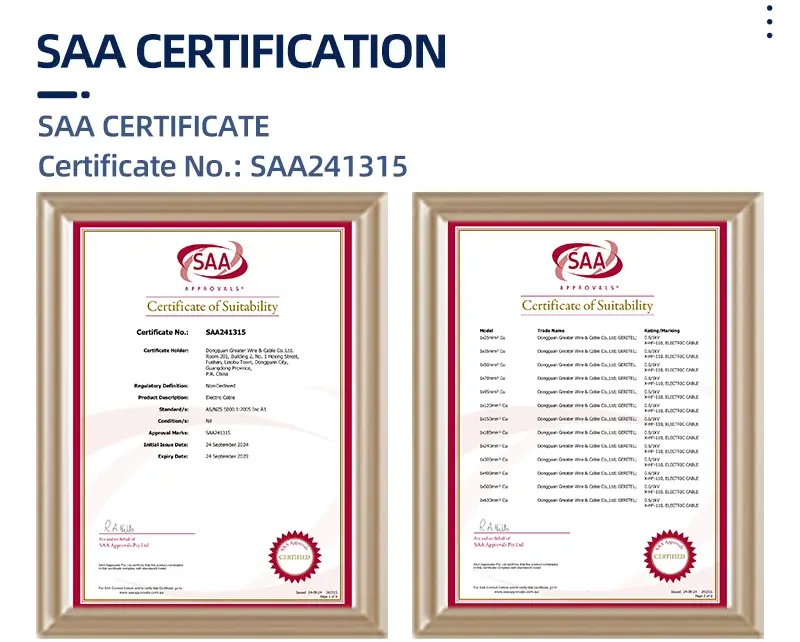
Every cable batch carries SAA approval marks with complete test reports from NATA-accredited laboratories. Our Certificates of Conformity explicitly reference AS/NZS 1429.1 (medium voltage cables), AS/NZS 5000.1 (low voltage), and AS/NZS 3808 (insulating compounds), ensuring smooth inspection by the Samoa Electric Power Corporation.
Pillar 2: Battle-Tested Pacific Track Record
We demonstrated completed projects in Fiji (2022) and the Solomon Islands (2023), including medium voltage cable installations in comparable tropical coastal environments. These weren't paper references—they included specific technical details, client contacts, and project timelines. From these cases, the client saw our deep understanding of Pacific island logistics challenges: container shipping schedules, customs clearance requirements, and inter-island distribution coordination.
Pillar 3: Industry-Defying Delivery Speed
By maintaining strategic inventory of AS/NZS-certified cables in our regional distribution hub, we compressed standard lead times from 14-16 weeks to just 6 weeks. This wasn't merely inventory management—it was a commitment to responding to client urgency. While competitors were still scheduling production, our cables were already shipped to Apia.
Execution Excellence: Partnership Beyond Product Supply
True value emerges after delivery. Our engineering team spent two full weeks in Apia, ensuring every detail met design intent:
Technical Empowerment
We conducted a three-day on-site training for local electrical teams, focusing on installation essentials for Medium Voltage Cable 3C 120mm²—minimum bending radius (15×outer diameter), pulling tension limits, and termination techniques. This knowledge transfer ensured installation quality, preventing early failures from improper handling.
Documentation Shield
We provided a complete as-built documentation package: cable schedules, insulation resistance test protocols, and thermal withstand calculations, all formatted for Samoa Electric Power Corporation submission requirements. This preparatory work shortened grid connection approval time by three weeks.
Logistical Symphony
We meticulously planned container loading sequences with the client's logistics team—first arrivals included Medium Voltage Cable 3C 120mm² and accessories for the CHOGM 2024 critical nodes, followed by materials for other sites. This phased delivery satisfied urgent timelines while optimizing on-site storage pressure.
Results Validation: Real Change Behind the Numbers
October 2024 marked a milestone for the CAP-IT project: 53 electric vehicles were officially handed over to the Government of Samoa, with the Tuanaimato Central Charging Hub entering operation featuring five 60kW DC fast chargers and two 22kW AC units. Our cable infrastructure played a silent yet critical role:
Operational Reliability
Since commissioning, the 1,000 kVA transformer connected through our Medium Voltage Cable 3C 120mm² system has maintained continuous operation without thermal overload events, with voltage drop consistently within design parameters. This validated our cable sizing calculations against Samoa's actual load profiles.
Environmental Resilience
At Mulifanua Wharf, the charging station with its 25kW solar carport has endured six months of salt spray and high humidity testing. Insulation resistance test values for VSD Cable and Instrumentation Cable remain stable, showing no aging signs.
Zero-Defect Compliance
All 16 installation sites achieved zero certification failures and zero inspection rejections during acceptance testing. This contrasts sharply with the 23% rejection rate the client experienced with non-certified cables in previous projects.
Expansion Readiness
With the full deployment of 76 electric vehicles—including specially modified flatbed trucks for medical oxygen transport—the charging network demonstrates strong scalability. Reserved cable capacity provides plug-and-play capability for future fleet expansion to 200 vehicles.
Client Voice: From Supplier to Strategic Partner
Following project completion, the client's project manager stated at the wrap-up meeting: "You provided more than cables—you provided the certainty that lets us sleep soundly. From certification documentation to technical support, from delivery speed to on-site training, every aspect exceeded our expectations. Most importantly, you understand the unique challenges of Pacific island nations—not from textbooks, but from accumulated real-world experience."
This feedback confirms our enduring belief: in infrastructure, products are merely the vehicle; true value lies in risk elimination and trust building.
Why Choose Us? Three Unreplicable Advantages
Reviewing this case, our competitive advantages distill into three dimensions—the fundamental reasons the client ultimately selected us:
Deep Compliance Capability
SAA certification isn't merely a certificate; it's a quality system permeating design, production, testing, and delivery. We understand every technical detail of AS/NZS standards, providing clients not just products, but compliance certainty.
Tropical Environment Expertise
Our cable specifications—from UV-stabilized HDPE sheaths to water-blocking tape designs—aren't generic configurations, but engineering optimizations targeting Pacific island climate conditions. This environmental adaptability ensures a 25-year design life, not a 5-year replacement cycle.
Regional Response Velocity
Through regional inventory and logistics optimization, we compress delivery times to 40% of industry averages while maintaining AS/NZS certification integrity. This combination of speed and compliance proves decisive in urgent projects.
Your Project, Our Commitment
Samoa's case proves that even in the harshest tropical marine environments, reliable cable infrastructure can serve as the solid foundation for green transport transformation. Whether you're planning electric vehicle charging networks, port electrification, or renewable energy integration, cable system reliability directly determines project success.
Dongguan GERITEL Electrical Co., Ltd. specializes in AS/NZS-certified cable solutions. Our product range of Medium Voltage Cable 3C 120mm², Neutral Screen Cable, VSD Cable, and Instrumentation Cable is engineered for tropical resilience and regulatory certainty.
Contact us today:
Dongguan GERITEL Electrical Co., Ltd.
Tel/WhatsApp/WeChat: +86 135 1078 4550 / +86 136 6257 9592
Email: manager01@greaterwire.com
 Fiji Lau Islands Off-Grid Solar Microgrid Project (Rarama Vou Kei Lau)



 Building 2, No. 40 Luxi 2nd Road, Liaobu Town, Dongguan City, Guangdong Province, China