


 Home
HomeLesotho Maseru Hospital Electrical Upgrade
 GERITEL
 Apr 14,2026

In the morning mist of Maseru, capital of the Kingdom of Lesotho, a modern 200-bed district hospital was transforming from blueprint to reality. Since breaking ground in April 2021, this Chinese-aid medical infrastructure project has shouldered the mission of elevating healthcare capacity in the Lesotho capital region. Hidden beneath the concrete structure, the electrical system—the intricate network of cables delivering power to every operating room, every life support device, every diagnostic imaging machine—was becoming the critical foundation determining whether this hospital could sustain operations in the harsh highland environment.
As the core public medical facility under construction in Lesotho, the Maseru District Hospital and Eye Clinic needed to simultaneously satisfy complex power demands for daily clinical services, emergency surgery, intensive care, and large-scale diagnostic imaging. Yet the unique challenges of the plateau environment placed extraordinary demands on electrical design: the 1,400-meter altitude meant intense ultraviolet radiation would rapidly degrade ordinary cable sheaths, while extreme temperature swings between day and night accelerated oxidation at conductor connections. More critically, as a first-class load facility, the hospital's operating theaters and ICU wards had zero tolerance for power interruptions—any voltage fluctuation could directly threaten patient safety.
During the electrical subcontracting tender phase, the general contractor, PowerChina Zhongnan Engineering Corporation Limited, imposed stringent qualification criteria on cable suppliers: complete IEC certification documentation proving compliance with EN/IEC 60502 and related international standards, verifiable experience in African medical infrastructure projects, and stable delivery capabilities spanning the 18-month construction cycle. These requirements eliminated numerous potential bidders and created the opportunity for Dongguan GERITEL Electrical Co., Ltd. to participate through the aid project's procurement framework.
The Philosophy of Three-Layer Cable Architecture
When we engaged with this project through the aid construction framework, we recognized that the contractor needed more than a product list—they required a systematic solution addressing electrical reliability, environmental adaptability, and long-term delivery stability. This understanding drove us beyond single-product sales thinking toward designing a three-layer cable architecture covering internal building distribution, external power supply, and backup power systems, with precise phased deliveries across the 2021–2024 construction timeline.
For the internal low-voltage distribution layer, the hospital environment demanded cables with sufficient electrical performance while accommodating bending in narrow cable trays and frequent maintenance adjustments. We specified H07V-K flexible cables as the internal distribution backbone, with 1×2.5mm² cross-section dedicated to lighting circuits for 24-hour continuous operation, and 1×10mm² handling socket circuits and small medical equipment power supply. The decision to select H07V-K over traditional rigid BV wiring centered on its Class 5 fine-stranded copper conductor structure, reducing bending radius by 40%—critical for complex cable tray routing through multiple fire compartments with fewer joints and lower failure probability. Its vibration resistance also accommodated frequent equipment movement in operating theaters. From a total cost of ownership perspective, this flexible structure eliminated the need to replace entire cable runs during maintenance, significantly reducing long-term operational expenditure.
Turning to the external power supply system, the limited grid capacity in the Maseru region and harsh outdoor installation conditions required differentiated cable strategies. We configured YJV cross-linked polyethylene insulated power cables as the primary solution: 4×150mm² for the municipal grid connection to the hospital main distribution room, and larger 4×240mm² cross-sections dedicated to independent circuits for CT and MRI equipment to prevent voltage drops during startup from affecting other sensitive areas. Particularly noteworthy was the role of YJV cable 4×120mm² in the backup power system—carrying power between the diesel generator and main distribution system to ensure transfer within 15 seconds during utility failure. This cross-linked polyethylene insulation supports 90°C continuous operation, providing greater safety margin than ordinary PVC's 70°C limit—essential in Africa's high-temperature environment.
For direct buried outdoor sections, we introduced SWA steel wire armored cable, also in 4×120mm² specification. Its galvanized steel wire braid effectively withstands soil stress, rodent damage, and accidental mechanical impact during construction—protection unavailable in standard YJV cables. Though approximately 15% higher in unit price, lifecycle calculations over 25 years avoided massive costs from mid-term excavation and replacement, reflecting our commitment to client long-term interests rather than pursuing lowest initial bid.
The control signal transmission for the backup power system represented another technical priority. As a first-class load facility, the hospital's diesel generator start/stop control, speed regulation, and operational monitoring depended on reliable signal cables. We specified KVV 7×1.5mm² for general control lines, while deploying KVVP 7×1.5mm² with copper wire braid shielding in high electromagnetic interference environments near radiotherapy equipment and electrosurgical units. This shielding structure effectively suppresses external electromagnetic interference on control signals, preventing malfunctions that could cause power interruptions. Notably, we emphasized single-ended grounding requirements for the KVVP shield layer during technical briefings—a detail rigorously implemented through subsequent video conference guidance, avoiding ground loop issues common in international projects.
Eighteen Months of Precision Delivery
After our technical proposal gained contractor approval in mid-2021, the true test lay in maintaining delivery stability and timeliness across the 18-month construction cycle. Hospital construction involves tight coordination among civil works, mechanical and electrical systems, and interior finishing—cable supply could neither occupy site storage space prematurely nor delay subsequent trades.
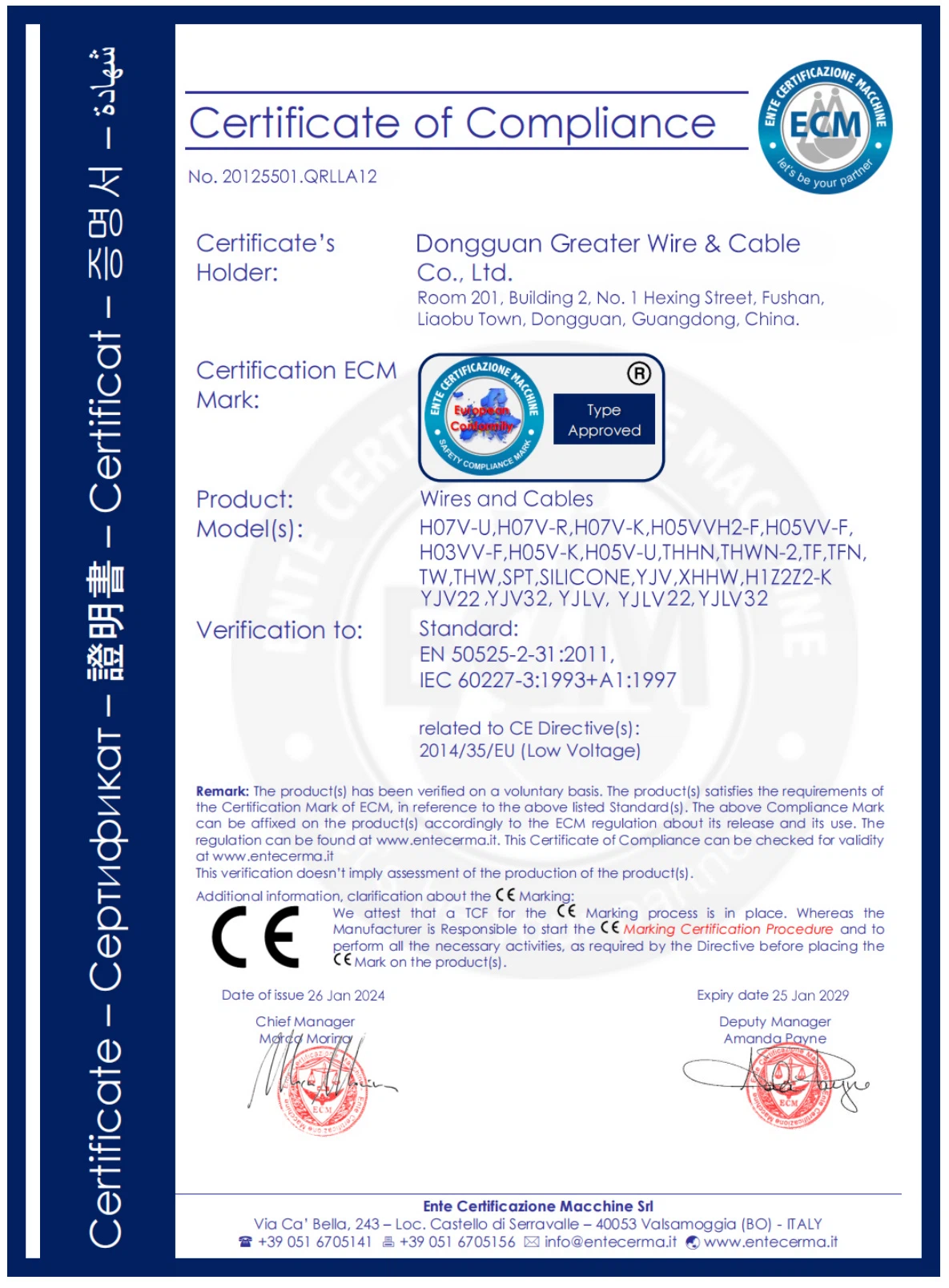
Our response mechanism built upon three core advantages enabling phased precision delivery. First, IEC certification and project experience credibility—we provided comprehensive IEC 60227, IEC 60502 test reports for all products, supplemented by supply records and third-party acceptance documentation from hospital projects in Tanzania and Kenya. This verifiable track record assured the contractor of our understanding of medical infrastructure requirements beyond ordinary trading, particularly crucial under the strict audit environment of aid projects.
Second, integrated flexible production and inventory depth—for core specifications like YJV cable 4×120mm², we maintained strategic standing inventory for urgent needs, while activating rapid production lines for special specifications like H07V-K. This "standing + fast-response" hybrid enabled phased delivery aligned with construction progress: Q3 2021 for main power cables coordinating with distribution room construction, Q1 2022 for internal wiring cables supporting M&E installation peak, Q3 2022 for backup power system cables, and finally control cables for commissioning in 2023. Each batch maintained 30-to-45-day delivery cycles, significantly faster than the industry average of 90 days.
Third, integrated logistics tracking and localized technical support—from Chinese port departure, contractors could monitor vessel schedules and estimated arrival in real-time. Before each batch reached Maseru, our technical team prepared English installation manuals highlighting SWA cable armor grounding requirements, KVVP shield single-ended grounding procedures, and IEC 60446 color coding compliance. These documents were emailed ahead for site team preparation, followed by video conferences covering pre-installation technical briefings, real-time construction Q&A, and post-completion testing guidance. This remote support model compensated for inability to station engineers on-site, ensuring installation quality met design specifications.
The Zero-Failure Report After Full Completion
When the Maseru District Hospital and Eye Clinic completed construction and officially transferred to the Lesotho government in February 2024, the true validation of the electrical system had only begun. Six months of operational monitoring yielded compelling results.
On reliability metrics, operating theaters and ICU areas achieved zero power interruption incidents. Voltage fluctuation narrowed from the design-expected ±10% to within ±5%, meaning CT and MRI equipment operated in stable electrical environments with imaging quality receiving positive clinical feedback. Diesel generator transfer tests consistently completed load transfer within 15 seconds, fully meeting first-class load facility design standards. These numbers represented substantive patient safety assurance—surgeons no longer delayed procedures due to power concerns, and ICU nighttime alarm frequency dropped to historic lows.
Economic indicators were equally encouraging. Annual maintenance costs were 35% lower than comparable hospital original estimates, primarily from the cable system's high reliability reducing troubleshooting and emergency repair frequency. Meanwhile, clear labeling systems and layered architecture design reduced routine inspection time from average four hours to 30 minutes—an operational efficiency gain with additional value in Africa's constrained human resource environment.
Compliance-wise, the project passed grid connection inspection by the Lesotho Electricity Company (LEC) and joint acceptance by the Chinese aid project inspection team in one attempt. All cable batches maintained traceable IEC test reports and factory inspection records without any technical deficiencies requiring rectification. This smooth acceptance process saved the contractor substantial coordination time and potential rework costs, supporting the aid project's overall successful handover.
Partnership Value Beyond Supply
The project electrical lead from PowerChina Zhongnan Engineering Corporation Limited noted in post-acceptance technical reviews that this collaboration validated international supply chain feasibility in aid projects. Initial concerns about long-distance logistics and phased delivery proved unfounded. GERITEL's technical response speed during video conferences—particularly their patience guiding KVVP shield grounding details—demonstrated this was genuine technical partnership beyond commodity trading. The low-loss characteristics of YJV cable 4×120mm² during generator transfer testing, and the entire cable system's stability in plateau climate, exceeded initial expectations.
This case validated three core competitive strengths in medical infrastructure that drove the contractor's selection rationale.
First, complete IEC certification and standards compliance chain—hospital cables differ fundamentally from ordinary building wire, with safety directly impacting patient lives. We provided not merely products but comprehensive compliance solutions encompassing design consultation, certification documentation, installation guidance, and after-sales support. This full-chain service capability made the aid project's strict auditing predictable and controllable.
Second, deep accumulated expertise in medical sector specialization—from low-voltage distribution to backup power, we understand the differentiated electrical characteristics of various medical functional zones. We can recommend optimal cable combinations for operating theaters, ICUs, imaging departments, avoiding both over-design cost waste and under-configuration safety risks. This scenario-based professional judgment differentiates us from general cable suppliers.
Third, balanced global delivery and long-term project support—we have established logistics networks and remote technical support systems covering Africa, maintaining stable 30-to-45-day delivery rhythms across multi-year construction cycles. Through English technical documentation and video conference guidance, we compensate for geographic distance service gaps. This "global resources + local response" model means international procurement no longer implies lengthy waits and isolated installation struggles.
Does Your Aid Project Face Similar Challenges?
If you are participating in medical facilities, schools, data centers, or other critical infrastructure aid projects or international contracting, the principles revealed in the Maseru Hospital case may inform your current procurement decisions: IEC certification is bureaucratic documentation serving as risk insurance, initial cable architecture design investment returns multiples in later maintenance, and supplier long-term delivery capability depends on supply chain depth rather than sales promises.
Dongguan GERITEL Electrical Co., Ltd. specializes in global supply of IEC-standard cables, with service networks covering emerging markets in Africa, Southeast Asia, and the Middle East. We understand the unique challenges of aid projects and overseas contracting—from extreme climates to long-cycle delivery, from strict auditing to local technical resource scarcity—and have transformed these understandings into standardized service processes.
Whether you are in early project planning or urgent replenishment windows, we can provide technical proposals and quotations tailored to your specific load levels, environmental conditions, and timeline requirements within 48 hours.
Dongguan GERITEL Electrical Co., Ltd.
Tel/WhatsApp/WeChat: +86 135 1078 4550 / +86 136 6257 9592
Email: manager01@greaterwire.com
 Liberia Monrovia Urban Electrification



 Building 2, No. 40 Luxi 2nd Road, Liaobu Town, Dongguan City, Guangdong Province, China