


 Home
HomeKisumu Solar Power Station, Kenya
 GERITEL
 Apr 14,2026

It was a November evening in 2024. On the eastern shore of Lake Victoria in Kisumu County, Kenya, the real-time generation curve on the 40MW solar farm's monitoring screen was climbing steadily. John, the project manager, stood in front of the control building, watching kilometers of photovoltaic arrays glowing blue in the sunset. Suddenly, he remembered an anxious morning nine months ago—when they had stood on the same patch of wilderness, clutching a construction schedule about to expire, while the cable supplier's cargo was drifting in some port three thousand kilometers away.
That moment is where our story truly begins.
June 2023: The Countdown Before the Rains
Rewind eighteen months. June 2023. At an engineering consulting firm in Nairobi, a European EPC contractor was finalizing the design for the Kisumu Solar Project. This was a flagship renewable energy initiative under Kenya's "Vision 2030," with a 40MW capacity destined to power 120,000 households. But the design team faced a thorny problem: the cable system.
"We don't just need cables," the technical lead told our sales director during a video conference. "We need a complete solution that guarantees grid connection before the rainy season."
Kenya's climate divides sharply into dry and wet seasons. Kisumu receives heavy rainfall in April-May and October-November. Miss the 2024 dry season construction window, and the entire project would slip by at least six months. The cables—the "vascular system" of the power station—would determine whether the project lived or died.
The client's initial plan involved three suppliers: DC cables from Europe, medium-voltage cables from South Africa, and control cables from a local trader. But when the logistics team calculated arrival times and clearance costs for three separate shipments, the plan collapsed. Mombasa Port is notorious for congestion. Three deliveries meant three customs clearances, three inland transports, three site storage cycles. Any delay in one batch would trigger a domino effect.
"Is it possible," the client asked tentatively during the third technical meeting, "for a single supplier to provide all cables from the PV modules to the transformers?"
That question placed us at the center of the story.
August 2023: A Promise of Forty-Five Days
On August 15, 2023, we received the formal inquiry. The attachment was a 47-page cable list covering six categories from H1Z2Z2-K photovoltaic cables to 33kV medium-voltage lines, totaling over 800 kilometers.
The delivery requirement sat in the first line of the email body: 45 days to Mombasa Port.
This timeline compressed our standard production cycle by one-third. But the greater challenge lay in the certification requirements. All cables had to comply with full IEC 62821, IEC 60502 standards, plus PVOC conformity certificates—Kenya's mandatory pre-export verification regime. Any documentation flaw could trap cargo at the port indefinitely.
Our engineering team delivered the technical proposal within 24 hours. For Kisumu's high-temperature, high-humidity environment, we made three critical adjustments to the standard solution:
For the DC side, we recommended 1×6mm² H1Z2Z2-K cables instead of the conventional 4mm². Kisumu's intense solar radiation pushes module surface temperatures beyond 70°C. The larger conductor reduces line losses by approximately 0.4%, translating to significant additional generation revenue over the 25-year operational life.
For the medium-voltage collection system, we proposed 3×240mm² 33kV XLPE cables as main lines, rather than the single-core design the client initially envisioned. African construction conditions are challenging. Three-core integral construction reduces joints by 70%, dramatically lowering failure risk.
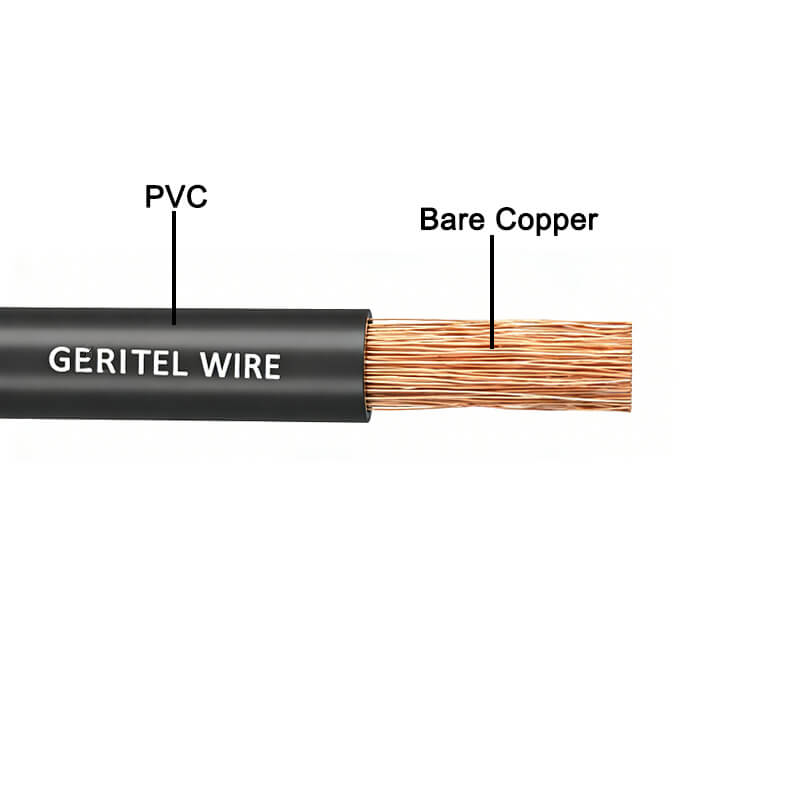
For the control building interior, we specifically emphasized H07V-K flexible copper conductors. These cables employ Class 5 ultra-fine copper stranding with a bending radius of just 4 times the outer diameter—ideal for dense BMS wiring in control cabinets. Standard rigid conductors easily suffer insulation damage when bent in confined spaces.
Three days after submission, the confirmation email arrived with a single line in the postscript: "We believe you can make this happen."
September 2023: African Time on the Production Line
The contract was signed in early September. When we mapped out the production schedule, the real challenge emerged.
800 kilometers of cable across seven different types required coordinating three production lines simultaneously. To meet the 45-day deadline, we adopted "reverse scheduling": slicing the 30-day production cycle into weekly milestones, implementing double-shift operations for critical processes, and moving quality inspections mid-production rather than post-completion.
One midnight in mid-September, the quality manager discovered a batch of YJV (0.6/1kV) cables with insulation eccentricity approaching tolerance limits. Though technically acceptable, he ordered a complete rework, considering the high temperatures the cables would endure during African transport. This decision delayed production by two days but guaranteed absolute reliability in the field.
Meanwhile, our logistics team was coordinating with customs agents at Mombasa Port. Kenya's PVOC certification requires pre-export inspection at the loading port. We booked SGS inspectors two weeks in advance and employed special moisture-resistant packaging for the palletized cargo—Mombasa humidity hovers perpetually above 80%, and standard wooden pallets risk mold that could complicate clearance.
By the final week of September, all cables had passed testing and awaited shipment. The project manager posted a photo in our group chat of the neatly stacked containers, captioned: "They're about to go far away and shine."
October 2023: The Voyage Across the Indian Ocean
The cargo departed from Dongguan in early October, crossing the South China Sea, threading the Malacca Strait, traversing the Indian Ocean—an 18-day voyage.
But those 18 days brought surprises. The fleet encountered monsoon delays off Somalia, pushing arrival 48 hours behind schedule. With only five days remaining until the client's site delivery deadline, and at least three days needed for inland transport from Mombasa to Kisumu, the margin had evaporated.
Our African agent spent two sleepless nights at the port. They had pre-filed electronic customs declarations, and the moment the vessel docked, they activated the "green channel"—a Kenyan customs priority policy for major infrastructure projects, contingent on flawless documentation. When the trucks finally rolled out of the port on the third morning, the agent sent a photo: company logos glinting beneath reflective tape in the dawn light.
October 24, 2023. The cables arrived at the Kisumu construction site. Two days ahead of the 45-day contractual deadline.
November 2023: The First Lesson on the Wilderness
Cargo arrival was merely the beginning. The real test lay in installation—the client's local construction team, though experienced, had primarily handled building wires and were relatively unfamiliar with photovoltaic cable standards.
Our technical engineer, Lao Zhou, accompanied the shipment. His first action on site was not directing work, but training. For H1Z2Z2-K photovoltaic cables, he demonstrated proper MC4 connector crimping techniques, emphasizing the "no over-twisting" principle. For SWA steel wire armored cables, he explained how the steel armor doubles as an earth conductor, preventing the crew from laying redundant ground wires. Inside the control building, he personally guided electricians in identifying H07V-K flexible copper conductor core markings to ensure correct BMS signal polarity.
The most dramatic moment came during medium-voltage cable pulling. The crew had planned to use standard pulleys for the 3×240mm² 33kV cables. Lao Zhou intervened immediately—these cables weigh over 8kg per meter, and standard pulleys would damage the outer sheath. He improvised wide-groove pulleys with rubber padding on site, and recommended "sectional pulling with mid-point assistance," keeping traction forces within 50% of the cable's permitted sidewall pressure.
These details never appeared in the contract. But this unexpected technical support compressed the planned two-week cable installation into one week, buying precious time for subsequent module mounting.
June 2024: The Final Check Before Grid Connection
June 2024. The dry season was ending. The plant entered pre-commissioning testing.
Inspectors from Kenya's Energy and Petroleum Regulatory Authority (EPRA) arrived to sample the cable system. They randomly selected sections of H1Z2Z2-K DC cable and 33kV medium-voltage cable for insulation resistance and withstand voltage testing. All results passed. The inspectors specifically requested certification documents—when we produced complete IEC type test reports and TÜV certificates, they nodded and signed the acceptance forms.
June 28, 2024. The plant achieved first grid synchronization. Forty megawatts of current flowed through our cables from the photovoltaic arrays to the step-up station, then into Kenya's national grid. On the monitoring screen, the power curve climbed steadily to rated capacity, inverter efficiency reaching 98.7%—above design expectations.
John wrote in his project log that day: "Cable system zero faults. More than we expected."
November 2024: The Invisible Connections
Now, standing before the control building, John cannot see the SWA steel wire armored cables beneath his feet resisting rodent gnawing from the grassland, nor the H07V-K flexible copper conductors transmitting precise BMS data inside the cabinets. These cables bear no external brand markings. They simply work quietly, as they have every sunny day for the past five months.
From the initial contact in June 2023 to stable operation in November 2024, the project's full cycle witnessed countless details: the midnight rework for insulation eccentricity, the dawn wait at Mombasa Port, the morning demonstration of connector crimping on the wilderness. Together they compose the complete narrative of a cross-border supply operation.
The client later told us their reason for choosing us was simple: when they asked other suppliers about providing a full solution from DC to high voltage, they received either "we don't do that" or "you'll need to find someone else." When we responded to their 47-page list with a complete answer, they saw a partner who could actually solve problems.
Your Project Deserves This Same Narrative
Every solar plant has its story. Some are remembered after grid connection; others are forgotten in construction delays and maintenance troubles. What made Kisumu special was proving that correct cable selection transforms technical details into commercial success—lower line losses, shorter construction periods, reduced maintenance, all ultimately reflected in the project's IRR.
If you are planning a photovoltaic project, whether on East African savannas, Middle Eastern deserts, or Southeast Asian islands, we offer the same narrative template: comprehensive cable solutions, IEC/EN certification assurance, 45-60 day expedited delivery, and on-site technical support.
Dongguan GERITEL Electrical Co., Ltd.
Tel/WhatsApp/WeChat: +86 135 1078 4550 / +86 136 6257 9592
Email: manager01@greaterwire.com
 Lesotho Maseru Hospital Electrical Upgrade



 Building 2, No. 40 Luxi 2nd Road, Liaobu Town, Dongguan City, Guangdong Province, China