


 Home
HomeLa Libertad New Dock Project in El Salvador
 GERITEL
 Apr 07,2026

El Salvador has accelerated its port infrastructure development under the “Surf City” national strategy, aiming to boost tourism, fishery exports, and regional trade. The Nuevo Puerto de La Libertad project represents a landmark of China‑El Salvador cooperation – the first Chinese‑aided turnkey infrastructure project completed in the country. For cable suppliers, this coastal port posed extreme environmental and installation challenges: a 200‑meter long conduit pull across an approach bridge, persistent Pacific salt spray, intense tropical UV, seasonal flooding inside conduits, and mixed dry/wet zones within the same facility. Selecting the wrong wire type would have led to premature insulation failure, unsafe ampacity derating, or costly rework.
1. Project Overview and Key Challenges
Nuevo Puerto de La Libertad is the first Chinese‑aided turnkey project in El Salvador, built by China Harbour Engineering Company. Construction started in June 2021 and the port began operation in November 2024. The project includes a 200‑meter approach bridge, a 200m x 20m wharf platform, and a commercial complex with a fish market, specialty product exhibition area, public health zone, and tourist viewing area. The port is located on the Pacific coast of El Salvador, facing tropical sun, high humidity, and heavy seasonal rain.
Five major cable‑related challenges were identified:
Challenge 1 – Long conduit pull. The 200‑meter approach bridge required power feeders to be pulled through underground conduits. Ordinary wires create high friction, risking insulation damage and requiring extra labour and lubricants.
Challenge 2 – Marine salt spray and intense UV. The Pacific coastline exposes all outdoor cables to persistent salt fog and strong ultraviolet radiation. PVC insulation ages quickly under these conditions, cracking and losing flexibility.
Challenge 3 – High humidity and standing water. Rainy season floods the conduits. The fish market area has near‑constant moisture and standing water on the floor. Many wires must derate in wet locations, forcing larger conductors for the same current.
Challenge 4 – Mixed indoor/outdoor environments. The project includes dry commercial areas, a wet fish market, open bridge cable trays, direct‑burial sections, and indoor vertical risers. Using too many different cable types complicates procurement and installation.
Challenge 5 – Need for international certification. El Salvador follows North American standards. Local electricians and inspectors are familiar with UL‑listed products, especially THHN. Non‑UL cables would face inspection delays.
2. UL Wire Selection and Why Each Was Chosen
To address these challenges, the project used three UL‑certified wires: THHN, THWN‑2, and XHHW‑2. Below are their parameters, suitable environments, and the cause‑and‑effect logic for selection.
THHN (UL 83 Thermoplastic Wire)
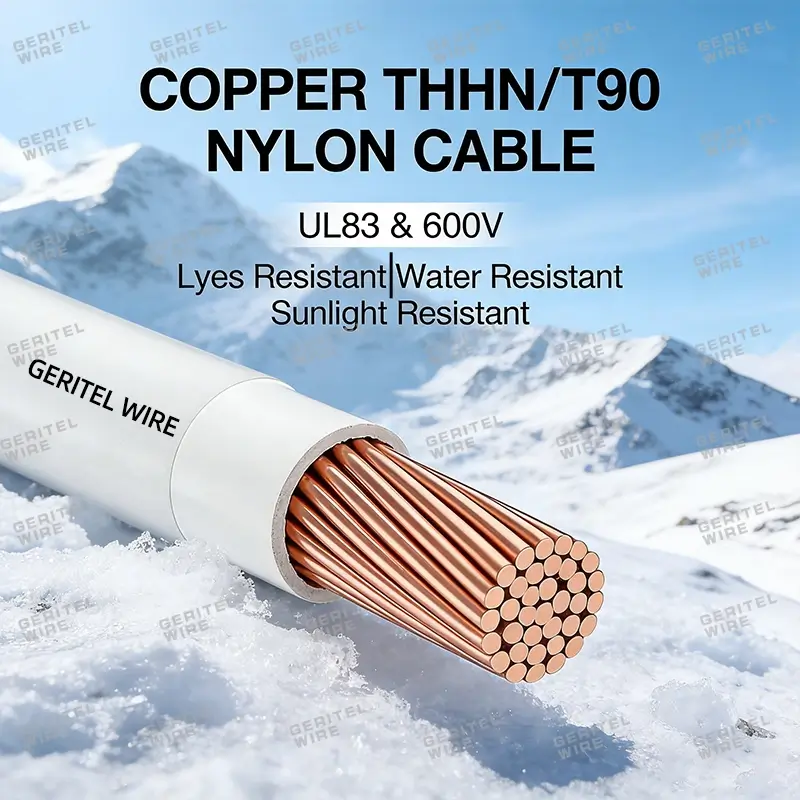
Parameters: UL 83, 600V (suitable for 0.6/1 kV systems), 90°C dry location, PVC insulation with nylon jacket, VW‑1 flame rating. Environment: indoor dry areas, conduit, cable trays.
Why THHN was chosen: The commercial complex has offices, a visitor centre, and a souvenir shop – all dry indoor spaces. THHN is the most common building wire in North and Central America. Local electricians know how to terminate it without special training, and inspectors accept it without question. The THHN with nylon jacket reduces friction during conduit pulls. The VW‑1 flame rating prevents fire spread inside the building. Therefore, THHN was used for lighting, receptacle, and air‑conditioning circuits in dry commercial zones.
THWN‑2 (UL 83 Thermoplastic Wire, Wet‑rated)
Parameters: UL 83, 600V, 90°C wet or dry (no derating), PVC insulation with nylon jacket, VW‑1 flame, oil and moisture resistant. Environment: outdoor, water‑filled conduits, high‑humidity indoor areas, direct burial.
Why THWN‑2 was chosen: Two areas required wet‑rated wire. First, the 200‑meter approach bridge conduits fill with water after heavy rain. Second, the fish market has constant moisture and floor water. Ordinary THHN is only rated 90°C in dry conditions; in wet locations it must be derated to 75°C or lower. This would force larger conductor sizes to carry the same current, increasing cost and conduit fill. THWN‑2 carries the full 90°C ampacity in wet locations – no derating needed. The nylon jacket also reduces friction for the long 200m pull. Thus, THWN‑2 was selected for the main power feeders across the approach bridge, wharf lighting circuits, and all electrical distribution inside the fish market.
XHHW‑2 (UL 44 Thermoset XLPE Wire)
Parameters: UL 44, 600V, 90°C continuous wet/dry, 130°C emergency overload, 250°C short‑circuit. Cross‑linked polyethylene (XLPE) insulation. Sunlight resistant (UV resistant, no extra black jacket required). Oil and chemical resistant. Direct‑burial approved. Abrasion and crush resistant. Environment: outdoor open cable trays, direct burial, high salt‑spray areas, high temperature zones.
Why XHHW‑2 was chosen: The wharf platform has long open cable trays exposed directly to Pacific sun and salt spray. Ordinary PVC wires (including THHN/THWN‑2) degrade under UV in months unless installed inside conduit, which adds cost and labour. XHHW‑2’s black XLPE insulation is inherently UV resistant – it can be laid in open trays without any conduit. The same XLPE material is chemically inert, so salt spray does not accelerate aging. Additionally, some feeder sections required direct burial in rocky ground. XHHW‑2 carries a direct‑burial listing, and its XLPE insulation resists crushing and abrasion from sharp stones. The 130°C emergency overload rating provides extra safety margin during peak port operations. Consequently, XHHW‑2 was used for open‑tray feeders on the wharf, direct‑buried lines, and areas with the highest salt exposure.
3. Summary of How the Three Wires Worked Together
THHN handled dry indoor commercial areas – offices, exhibition spaces, visitor centre – using its familiar UL 83 construction and VW‑1 flame resistance.
THWN‑2 solved the two most critical pain points: the 200‑meter water‑filled conduit pull (nylon jacket reduces friction) and the wet fish market (90°C wet rating avoids ampacity derating).
XHHW‑2 eliminated the need for extra conduit on outdoor cable trays (inherent UV resistance), resisted salt spray (XLPE chemical inertness), and enabled direct burial without concrete encasement.
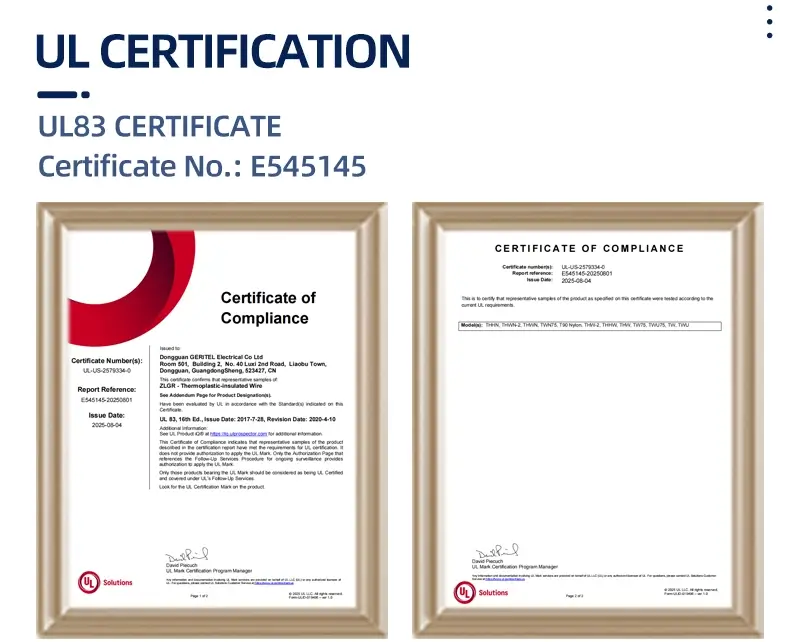
All three products carried active UL listings, satisfying El Salvador’s inspection requirements and reducing project risk.
Customer Feedback
“The cable selection made a real difference on site. Pulling THWN‑2 through the 200‑meter approach bridge conduit was surprisingly smooth – we finished two days ahead of schedule. XHHW‑2 has been sitting on open trays under the Pacific sun for over a year now, and the jacket still looks new. No cracking, no colour fade. And in the fish market, we don’t have to worry about overloads even when the floor is wet. The technical team explained exactly why each wire type was needed for each zone. That kind of engineering support is rare. We will definitely use the same UL‑certified package for our next coastal project.” – Senior Project Engineer, Nuevo Puerto de La Libertad construction team.
Tel/WhatsApp/WeChat: +86 135 1078 4550 / +86 136 6257 9592
Email: manager01@greaterwire.com
 Punta Huete Airport Project in Nicaragua



 Building 2, No. 40 Luxi 2nd Road, Liaobu Town, Dongguan City, Guangdong Province, China