


 Home
HomeHow XHHW-2 Wire Performs in High-Temperature Environments
 GERITEL
 Jul 02,2026

Heat is the enemy of electrical insulation. Every 10°C increase in operating temperature can cut the insulation life in half. In high-temperature environments—boiler rooms, rooftop solar arrays, industrial furnaces, data centers—ordinary wires degrade quickly, leading to insulation failure, downtime, and safety hazards.
That is why engineers and contractors specify XHHW-2 wire for hot environments. Its thermoset XLPE insulation is designed to handle heat that would destroy thermoplastic alternatives.
This article explains how XHHW-2 performs in high-temperature conditions, what its temperature ratings mean, and how to select the right size for hot installations.
1. XHHW-2 Temperature Ratings: What the Numbers Mean
XHHW-2 wire has three temperature ratings that matter for different operating conditions.
- Normal operation: 90°C in wet and dry locations. This is the maximum continuous conductor temperature for normal operation. Unlike THHN, which drops to 75°C when wet, XHHW-2 maintains its full 90°C rating in both wet and dry environments. This is a critical advantage for outdoor and underground installations where moisture is present.
- Emergency overload: 130°C. Under emergency conditions—such as motor starting or temporary overloads—XHHW-2 can handle conductor temperatures up to 130°C for limited durations. This provides a safety margin for unexpected load increases.
- Short circuit: 250°C. During short circuit conditions, XHHW-2 insulation can withstand temperatures up to 250°C for short periods. This is essential for safety during fault conditions.
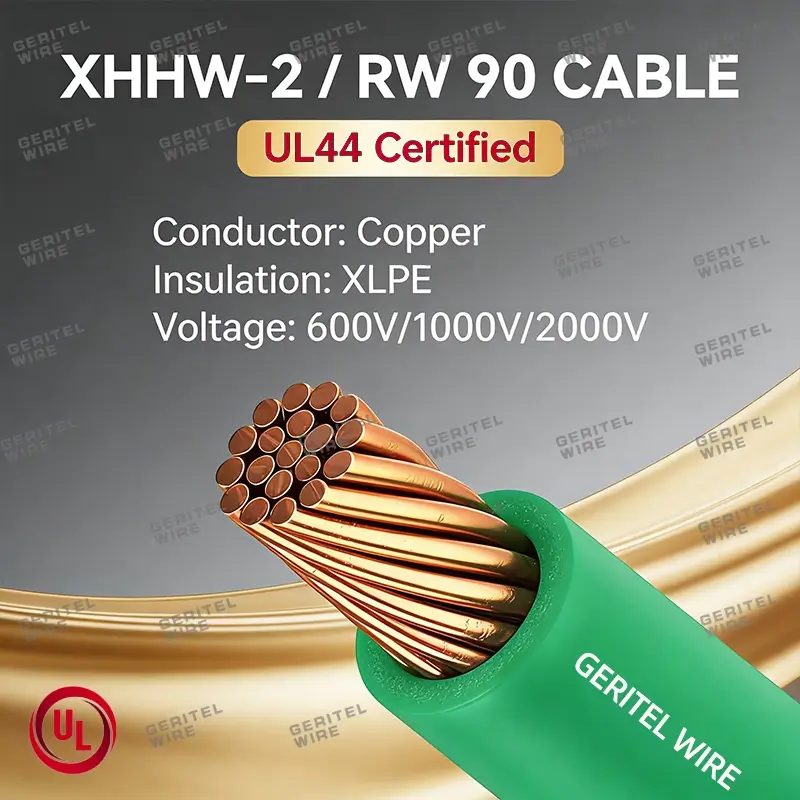
The XHHW-2 high temperature rating makes it suitable for applications where other wires would fail. The cross-linked polyethylene insulation does not melt or flow at high temperatures like thermoplastic PVC.
XHHW-2 wire for hot environments is designed with these ratings in mind. It is the choice when temperatures are high and reliability is critical. For applications requiring maximum heat resistance, high heat resistant XHHW-2 cable is the standard specification.
2. XHHW-2 vs THHN: The High-Temperature Difference
Both XHHW-2 and THHN are rated 90°C in dry locations. But the similarities end there.
- Wet location rating. THHN is only 75°C wet unless dual-rated THWN-2. XHHW-2 is 90°C wet. In a damp or wet high-temperature environment, this difference is significant.
- Insulation type. THHN uses thermoplastic PVC, which softens at high temperatures. XHHW-2 uses thermoset XLPE, which is cross-linked and maintains its integrity at high temperatures. Over time, PVC insulation ages and becomes brittle in heat. XLPE resists thermal aging.
- Emergency ratings. THHN does not have published emergency overload ratings. XHHW-2 has 130°C emergency and 250°C short-circuit ratings.
- Long-term performance. In sustained high-temperature operation, XLPE insulation outlasts PVC. The thermoset material does not degrade as quickly under heat stress.
For XHHW-2 high temperature applications, the choice is clear. When temperatures are elevated, XHHW-2 provides the durability and safety margin that THHN cannot match.
3. Ampacity Derating in High-Temperature Environments
Ampacity tables assume a standard ambient temperature of 30°C (86°F). When the ambient temperature is higher, the wire's ampacity must be reduced—derated—to prevent the conductor from exceeding its maximum operating temperature.
How derating works. For ambient temperatures above 30°C, the ampacity is multiplied by a derating factor. For a 40°C ambient, the factor may be 0.91. For 50°C, it may be 0.82. The higher the ambient temperature, the lower the ampacity.
Why this matters. A wire that is properly sized at 30°C may be undersized at 50°C. The conductor temperature would exceed 90°C, accelerating insulation aging and potentially causing failure.
XHHW-2's advantage. Because XHHW-2 is rated 90°C, it has more ampacity headroom than 75°C rated wire at the same ambient temperature. In hot environments, this difference can mean using one size smaller conductor compared to 75°C wire.
What to do:
- Check the ambient temperature where the wire will be installed
- Apply the correct derating factor from the code tables
- Select a wire size that provides adequate ampacity after derating
- Verify that terminations are rated for the temperature
For a 6 AWG XHHW-2 wire in a 45°C ambient, the ampacity must be derated. The 90°C rating provides more capacity than a 75°C rated wire would in the same conditions, making XHHW-2 the practical choice for hot environments.
4. Common High-Temperature Applications for XHHW-2
XHHW-2 wire is specified in a wide range of high-temperature environments.
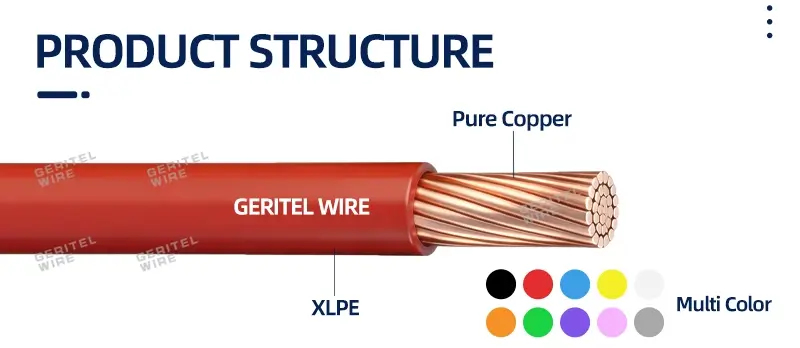
- Industrial plants. Factories with furnaces, heat-treating equipment, and hot processing areas require wiring that can withstand elevated temperatures. A 3/0 AWG XHHW-2 wire is commonly used for feeders to large industrial equipment in these hot environments. The XLPE insulation maintains its integrity even when the ambient temperature is high.
- Rooftop solar installations. Solar panels create heat. Roof surfaces can reach 70°C or higher in summer. XHHW-2 is rated for these conditions and is a preferred choice for photovoltaic system wiring. The insulation is also sunlight-resistant, adding durability for exposed rooftop runs.
- Boiler rooms and mechanical spaces. Boilers, steam lines, and hot water systems raise ambient temperatures significantly. XHHW-2 wire handles the heat without degrading.
- Data centers. Server rooms generate substantial heat. The backup power and distribution wiring must be reliable at elevated temperatures. XHHW-2 is often specified for critical power distribution in data centers.
- Outdoor installations in hot climates. In regions with high summer temperatures, even outdoor wiring is subject to elevated ambient conditions. XHHW-2's 90°C wet/dry rating provides confidence in these environments.
For large feeders in these applications, a 300 kcmil XHHW-2 wire is often specified. The large conductor size handles heavy loads while the XLPE insulation ensures long-term reliability in high-temperature conditions.
5. Installation Considerations for High-Temperature Environments
Installing XHHW-2 in high-temperature areas requires attention to several factors.
- Conduit fill. Higher ambient temperatures reduce ampacity. Conduit fill also affects heat dissipation. More conductors in a conduit mean less airflow and higher temperatures. Use conduit fill tables and apply derating factors for both temperature and fill.
- Termination temperature. The 90°C rating of XHHW-2 is the conductor temperature. Terminations—lugs and terminals—are typically rated 60°C or 75°C. The ampacity of the circuit is limited by the lowest temperature-rated component. This is a common oversight in high-temperature installations.
- Sunlight exposure. For outdoor installations, ensure the wire is marked "Sunlight Resistant." XHHW-2 is available with UV-resistant jackets for exposed outdoor runs.
- Cold bend. XHHW-2 is rated for cold bend at -40°C. This wide temperature range means the same wire works in extreme cold and extreme heat, reducing inventory requirements.
FAQ
Q1: What is the maximum operating temperature for XHHW-2 wire?
90°C for continuous operation in both wet and dry locations. Emergency overload: 130°C. Short circuit: 250°C.
Q2: Can XHHW-2 be used in wet locations at 90°C?
Yes. XHHW-2 is rated 90°C in both wet and dry locations. This is a key advantage over THHN, which is only 75°C wet unless dual-rated.
Q3: Does high ambient temperature affect XHHW-2 ampacity?
Yes. Ampacity must be derated when ambient temperature exceeds 30°C. The higher the ambient, the lower the ampacity.
Q4: Is XHHW-2 suitable for rooftop solar installations?
Yes. XHHW-2 is rated for high temperatures, sunlight resistance, and wet locations—all common in rooftop PV systems.
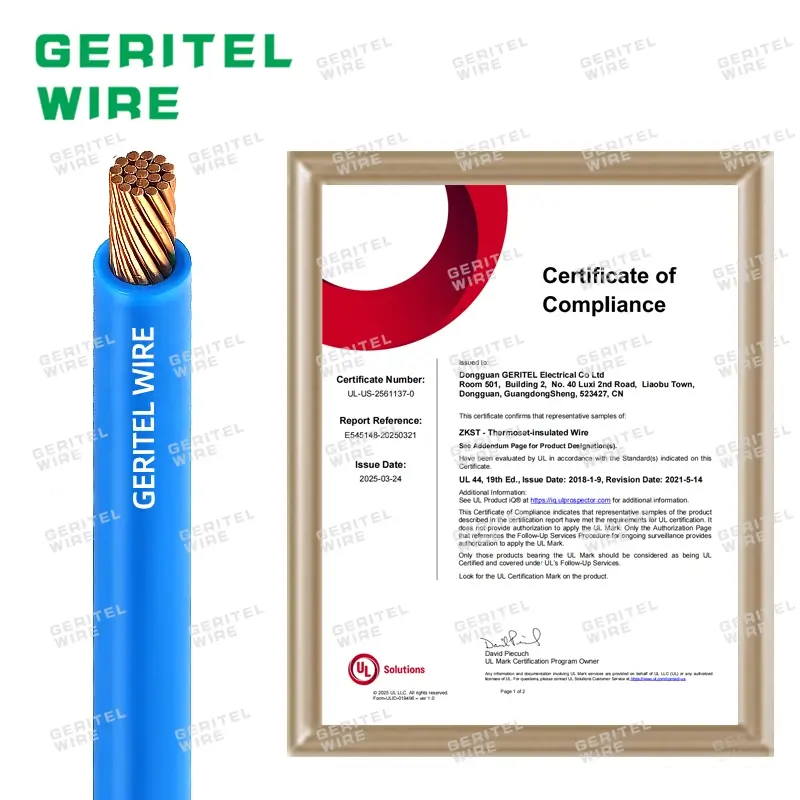
Q5: Does GERITEL provide UL 44 certified XHHW-2 wire for high-temperature applications?
Yes. Dongguan GERITEL Electrical Co., Ltd. offers UL 44 certified XHHW/XHHW-2 copper building wire suitable for high-temperature environments. We can provide the certificate and file number upon request.
Need XHHW-2 Wire for a High-Temperature Project?
Tell us about your project—ambient temperature, load, and installation conditions. We will recommend the right XHHW/XHHW-2 wire size and send a quick quote.
Contact us
Dongguan GERITEL Electrical Co., Ltd.
Tel/WhatsApp/Wechat: +86 136 6257 9592
Tel/WhatsApp/Wechat: +86 135 1078 4550
Email: manager01@greaterwire.com
Website: www.geritelgroup.com
 Best Practices for Pulling XHHW-2 Wire in Conduit Systems



 Building 2, No. 40 Luxi 2nd Road, Liaobu Town, Dongguan City, Guangdong Province, China