


 Home
HomeXHHW-2 Wire for Electrical Panels: Best Practices for Safe Installation
 GERITEL
 Jul 02,2026

1. Why Conventional Panel Wiring Fails: 4 Overlooked Risks Inside Enclosed Cabinets
Anyone who builds or installs electrical panels knows enclosed cabinet environments create wiring challenges that open-air tray routing never does. For panel builders, assembly electricians and project inspectors, four recurring issues lead to rework, premature failure and safety hazards:
· Trapped Heat Accelerates Insulation Aging and Fire Risk
Electrical panels pack breakers, contactors, PLC modules and busbars into a confined space. Without active ventilation, internal ambient temperatures can easily exceed 40–50°C under full load. Standard PVC-jacketed wires soften at sustained high temperatures, lose insulation integrity and crack over time. For 24/7 operating industrial panels, this creates hidden overheating and fire risks that only surface years after installation.
· Tight Layouts Lead to Unintentional Code Violations
New assembly technicians often overlook NEC rules for bend radius, insulation clearance and bundling limits when routing wires around dense component layouts. What looks like a neat, space-saving install on the bench can fail official inspection on site, forcing full re-wire and delaying project delivery.
· Bundled Circuits Cause Voltage Drop and Signal Crosstalk
Panels combine low-voltage PLC control signals and medium-power motor feeders in the same wire duct. When too many current-carrying conductors are bundled together, heat builds up faster, ampacity drops and voltage drift occurs. On sensitive control circuits, electromagnetic crosstalk can also cause false sensor readings and unstable system performance.
· Repeated Sharp Bends Damage Insulation During Assembly
Wires are pulled through duct openings, routed around terminal blocks and bent around panel corners dozens of times during assembly. Stiffer, lower-quality wire develops micro-cracks in the insulation layer that are invisible to the naked eye but cause arc faults and ground faults later in service.
These four risks are exactly why more panel shops now standardize on UL 44 listed XHHW-2 panel wire for both control and power circuits.
2. How 90°C XHHW-2 Addresses Enclosed Panel Wiring Challenges
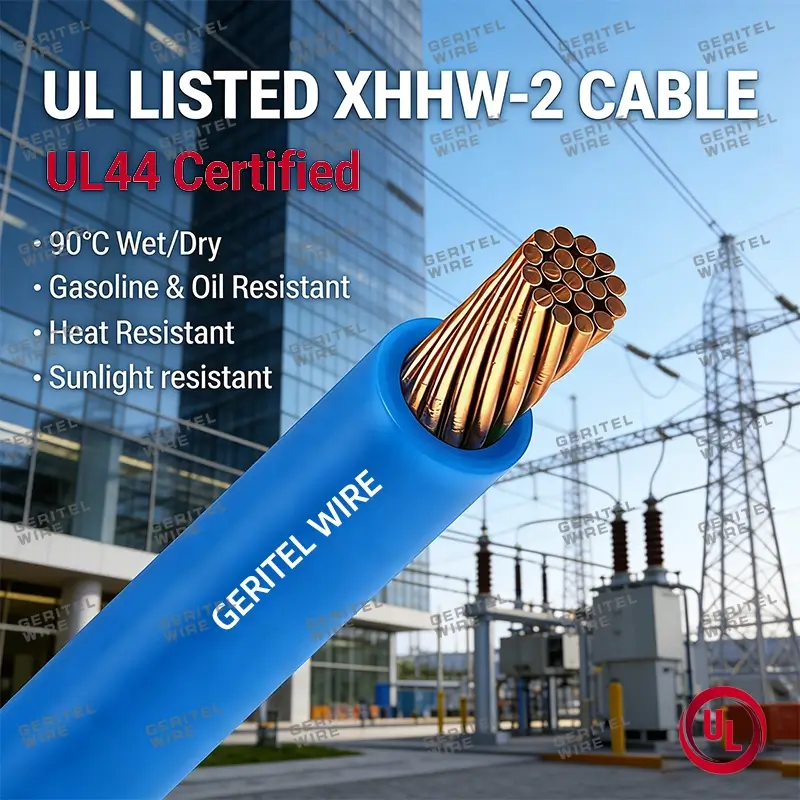
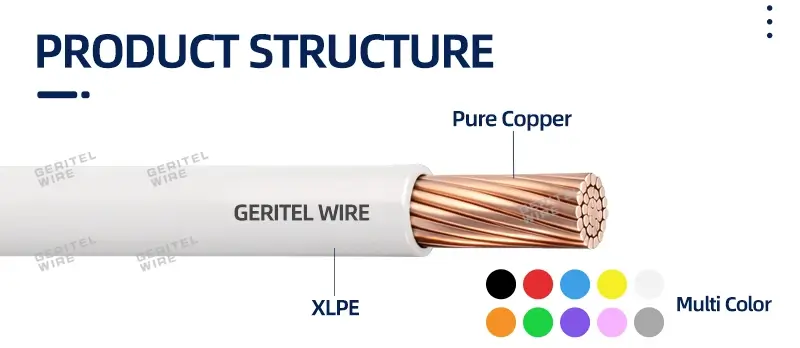
90°C Wet/Dry Copper XHHW-2 Wire is built with cross-linked polyethylene (XLPE) insulation and a protective nylon outer layer, a thermoset construction that outperforms standard THHN/THWN-2 in every way that matters for enclosed panels:
· Slim XLPE Profile: Higher Ampacity in Less Cabinet Space
XLPE insulation delivers higher dielectric strength in a thinner wall than standard PVC. For the same AWG and ampacity rating, 600V Copper XHHW-2 Wire has a smaller overall diameter than equivalent PVC building wire. This saves valuable internal duct and gutter space inside crowded PLC and MCC cabinets, allowing denser component layouts without sacrificing clearance or safety.
· 90°C Wet/Dry Rating: Stable Insulation in Sealed High-Heat Conditions
Unlike 75°C or 60°C PVC wires, XHHW-2 carries a 90°C continuous temperature rating for both dry and damp locations. Inside sealed panels where heat cannot dissipate freely, this extra thermal headroom means the wire maintains full insulation performance and rated ampacity under normal operating temperatures. It reduces the risk of thermal aging, extending panel service life and cutting long-term warranty and service costs. The material also carries inherent flame-retardant, low-smoke properties that slow flame spread and reduce toxic fume release if a short-circuit arc fault occurs inside the cabinet.
· Superior Flexibility Meets NEC Bend Radius Requirements
XHHW-2’s XLPE-nylon construction balances mechanical toughness with bending flexibility. It handles the tight turns and repeated routing adjustments common in panel assembly without cracking or stressing the insulation layer. It fully satisfies NEC minimum bend radius requirements for interior panel wiring, so technicians can route wires cleanly around terminal blocks and component edges without violating installation codes.
· UL 44 Listing Simplifies Factory and Field Acceptance Inspections
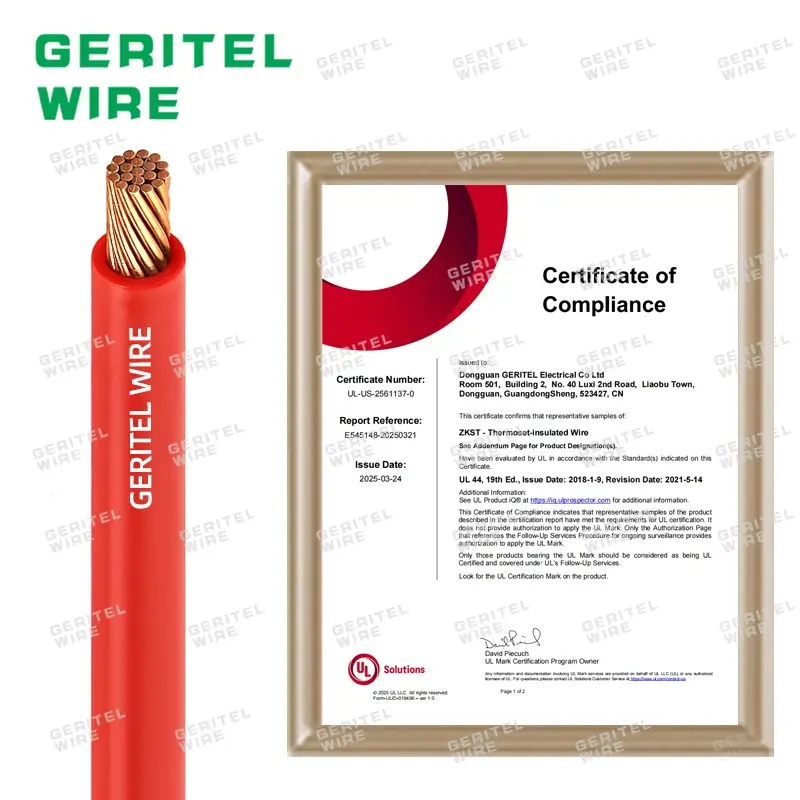
All XHHW-2 wire for electrical panel wiring we supply is fully UL 44 listed and aligned with NEC requirements for interior cabinet and switchgear wiring. This removes the single biggest cause of inspection rejections: unlisted or incorrectly marked wire. For panel builders, it means factory QA checks pass consistently; for on-site installers, it means service entrance and distribution panel work meets local AHJ requirements on the first inspection.
3. Field-Proven Installation Best Practices for XHHW-2 Panel Wiring
To get maximum safety, performance and compliance from XHHW-2 wire for electrical panel wiring, follow these four practical rules on every build:
· AWG Sizing by Circuit Type and Wiring Method
Match wire gauge to actual load, not just breaker size, and account for your routing method:
· Use 14 AWG Copper XHHW-2 Wire for low-power PLC I/O circuits, sensor loops and indicator light wiring inside control cabinets.
· Use 12 AWG Copper XHHW-2 Wire for 20A branch power circuits, small motor control circuits and MCC panel auxiliary feeders.
· For service entrance panel feeders and main distribution bus connections, size up accordingly while staying within the 600V rating of the cable. Always confirm sizing against NEC ampacity tables, and adjust for duct or conduit bundling.
· Correct Bend Radius to Prevent Insulation Cracking
Follow the industry standard minimum bend radius of 6x the overall cable diameter for XHHW-2 inside panels. Avoid sharp 90-degree bends directly at terminal lugs; leave a small service loop instead. This prevents hidden insulation damage that causes premature ground faults.
· Ampacity Derating for Densely Bundled Multi-Circuit Layouts
When more than three current-carrying XHHW-2 conductors run together inside a panel duct or raceway, apply NEC derating factors accordingly. The 90°C rating of XHHW-2 gives you more thermal headroom than THHN, but derating is still required for tightly bundled circuits to avoid overheating inside enclosed ducts.
· Grounding Configuration
For panel internal grounding, use bare ground conductors for main equipment ground bars where code allows, and insulated green ground conductors for circuits that require isolated grounding. In 3/C and 4/C pre-assembled feeder cables entering the panel, verify the ground conductor size matches NEC equipment grounding requirements.
4. XHHW-2 vs. THHN/THWN-2: Which Is Better for Electrical Panel Interiors?
THHN/THWN-2 is widely used for general building wiring, but inside enclosed panels, XHHW-2 has clear advantages. THHN/THWN-2 relies on a thin nylon coating over PVC; at sustained high internal panel temperatures, PVC softens and the nylon layer offers limited extra protection. XHHW-2’s XLPE thermoset insulation does not soften with heat, maintains its dielectric strength and offers better resistance to bending fatigue during assembly. For industrial MCC panels, service entrance cabinets and 24/7 operating control panels, XHHW-2 delivers longer service life and lower long-term risk.
5. FAQs About XHHW-2 Wire for Electrical Panels
Q1: Is UL 44 listed XHHW-2 panel wire approved for NEC panel interior wiring?
Yes. UL 44 listed XHHW-2 is recognized under NEC for use in 600V and below interior panel wiring, switchgear assemblies and control circuit routing, as long as it is installed per manufacturer instructions and NEC bend radius, derating and clearance rules.
Q2: What XHHW-2 AWG sizes are recommended for PLC, MCC and service entrance panels?
14 AWG Copper XHHW-2 Wire is standard for PLC I/O and signal control circuits. 12 AWG Copper XHHW-2 Wire covers most 20A MCC branch and auxiliary power circuits. For service entrance panel main feeders, select larger AWG sizes based on calculated load and short-circuit requirements, all within the 600V rating of XHHW-2.
Q3: Do I need to derate 90°C XHHW-2 copper wire for switchgear enclosed panels?
Yes. Even with a 90°C rating, NEC requires ampacity derating when more than three current-carrying conductors are bundled together in ducts, conduits or enclosed gutters. The 90°C rating does give you a higher starting base ampacity and more thermal margin than 75°C THHN/THWN-2 in the same enclosed space.
Q4: Can XHHW-2 wire be used for service entrance panel feeders?
Yes. XHHW-2 wire for service entrance panels is a common choice for feeder runs entering main distribution panels, particularly in commercial and industrial buildings. Verify that the cable assembly, grounding conductor and overcurrent protection all align with NEC service entrance requirements for your project.
6. Get Custom Sizing & Compliance Support for Your Panel Project
If you are a panel manufacturer, electrical designer or installation contractor sourcing reliable XHHW-2 wire for switchgear and cabinet builds, share your panel type, circuit loads and installation method with our team. We will provide customized AWG sizing recommendations, full UL 44 certification documentation and derating calculation support to help your panels pass every inspection on the first try.
Dongguan GERITEL Electrical Co., Ltd.
Tel/WhatsApp/Wechat: +86 136 6257 9592
Tel/WhatsApp/Wechat: +86 135 1078 4550
Email: manager01@greaterwire.com
Website: www.geritelgroup.com
 How XHHW-2 Wire Performs in High-Temperature Environments



 Building 2, No. 40 Luxi 2nd Road, Liaobu Town, Dongguan City, Guangdong Province, China