


 Home
HomeBest Practices for Pulling XHHW-2 Wire in Conduit Systems
 GERITEL
 Jul 02,2026

Pulling wire through conduit is one of those jobs that looks simple—until it is not. A conduit run with a few extra bends, a tight fitting, or a long pull can turn a straightforward task into a frustrating, time-consuming struggle.
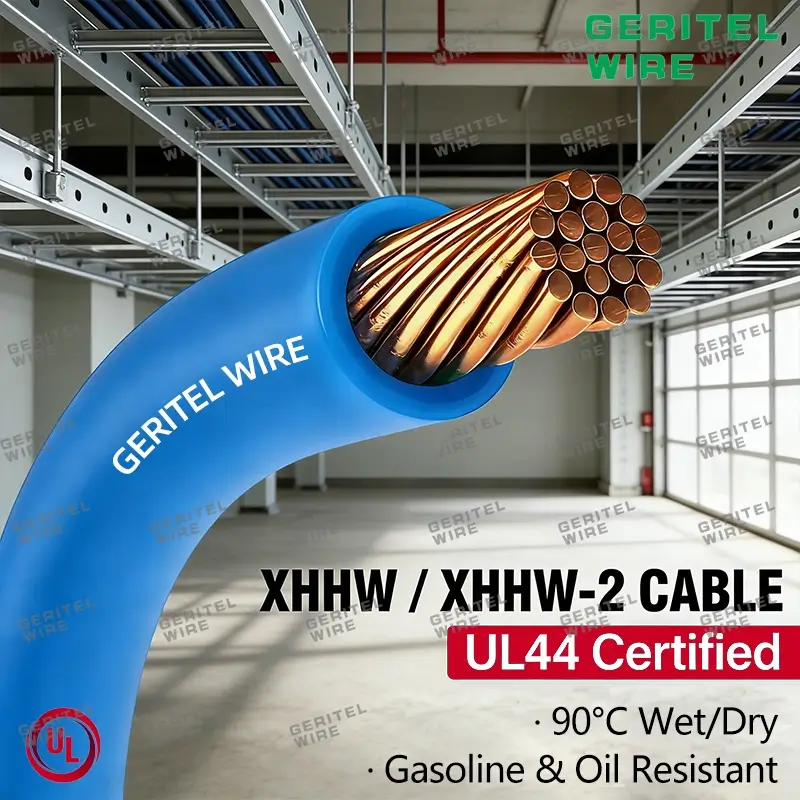
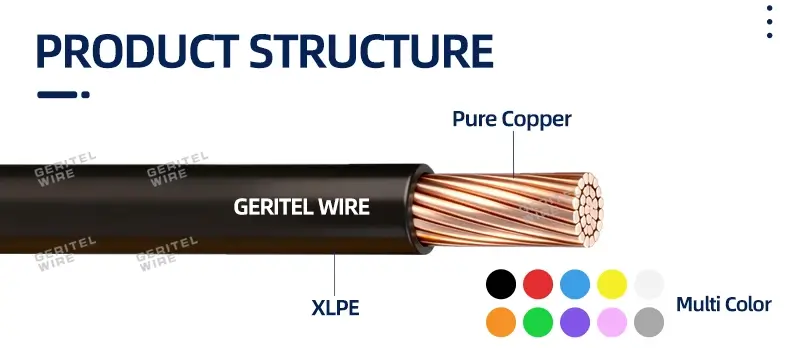
XHHW-2 wire has characteristics that make it easier to pull than most other wire types. The XLPE insulation has a naturally smooth, hard surface that reduces friction against conduit walls. Stranded copper conductors provide flexibility that helps navigate bends without kinking. And the thermoset insulation withstands the heat generated by friction during long pulls—heat that would soften and deform thermoplastic insulation like PVC.
But even with these advantages, proper technique makes the difference between a smooth pull and a day wasted. This article covers best practices for pulling XHHW-2 wire in conduit systems—from preparation to execution to cleanup.
1. Preparation: The Key to a Successful Pull
Good preparation prevents most pulling problems—and XHHW-2's smooth insulation only helps if the conduit is ready for it.
- Check conduit sizing. Undersized conduit is the most common cause of pulling difficulties. The NEC limits conduit fill to 40% for more than two conductors. For long runs with multiple bends, consider using larger conduit than the minimum. A 1/2" conduit is often difficult to pull through because of tight bend radii; 3/4" or larger makes pulling significantly easier. When pulling XHHW-2, the smooth XLPE surface reduces friction, but proper conduit sizing ensures you are not fighting a lost battle from the start.
- Inspect the conduit run. Before pulling, check the entire conduit path. Look for sharp edges at fittings and conduit ends. Install smooth bushings at conduit ends to protect the XLPE insulation from damage during the pull. XHHW-2's thermoset insulation is tougher than PVC, but sharp edges can still gouge it.
- Plan the pull direction. Pull in the direction that minimizes bends. XHHW-2's stranded conductors are flexible, but every bend adds pulling tension. If possible, set up the pull so the wire goes through the straightest sections first.
- Count the bends. The NEC limits total bends in a conduit run to 360 degrees between pull points. More than that and the pulling force becomes excessive—even with XHHW-2's low-friction insulation.
- Use a pull string. For long runs, pull a string through first. Fish tape works for shorter runs. For longer runs, use a vacuum to pull a string through. Two strings are better than one—leave an extra string in place for future pulls.
Have the right tools ready. Pulling grip, swivel, lubricant, and pulling equipment should be on site before you start. Nothing stops a pull like realizing you are out of lube halfway through.
2. Pulling Technique: What Works with XHHW-2 in the Field
With preparation done, here is how to pull XHHW-2 effectively.
- Use proper pulling lubricant. This is non-negotiable. Lubricant reduces friction between the wire and conduit walls. XHHW-2's XLPE insulation has a lower coefficient of friction than PVC, but lubricant still makes a significant difference—especially on long runs.
- Use only lubricant rated for pulling wire. Some lubricants contain chemicals that can damage wire insulation over time. A lubricant rated for XLPE insulation is the safest choice. Water-based lubricants are generally safe for XHHW-2's thermoset insulation. Apply lubricant as the wire enters the conduit, not just at the start.
- Use the right pulling grip. For stranded conductors like XHHW-2, use a pulling grip (kellems grip) that distributes the pulling force across the conductors. XHHW-2 uses stranded copper conductors for flexibility; this construction is ideal for conduit pulls, but the grip must match it. Never attach pulling rope directly to the conductors—this can damage the XLPE insulation and the conductor.
- Include a swivel. A pulling swivel prevents the wire from twisting during the pull. XHHW-2's stranded conductors are flexible, but twisting can still cause the wire to bind in the conduit.
- Maintain steady tension. Pull steadily, not in jerks. Jerking increases the peak force on the wire and can damage the XLPE insulation. If the pull becomes difficult, stop and investigate—do not force it. XHHW-2's thermoset insulation is tough, but excessive force can still damage it.
For long pulls, use a pulling machine rather than manual pulling. Consistent tension is easier to maintain with a machine.
- Coordinate the team. One person feeds the wire at the entry point, one person operates the pulling equipment, and one person monitors the wire as it comes out the other end. Clear communication prevents jams and damage.
XHHW-2 conduit installation tips often emphasize the importance of feeding the wire straight into the conduit without sharp bends at the entry point. XHHW-2's stranded conductors flex easily, but even they benefit from a gentle curve that reduces friction and prevents insulation damage.
3. XHHW-2 vs THHN: A Pulling Comparison
XHHW-2 pulls differently than THHN. Understanding the differences helps you get the best results.
- Insulation surface. XHHW-2's XLPE insulation is harder and smoother than THHN's PVC. This means less friction against the conduit wall. Contractors who have pulled both report that XHHW-2 requires less pulling force for the same run.
- Stranding. XHHW-2 is typically stranded in larger sizes, while THHN can be solid or stranded. Stranded XHHW-2 bends more easily around corners than solid conductors of the same size.
- Heat resistance. Friction generates heat during pulling. THHN's thermoplastic PVC can soften and deform under this heat. XHHW-2's thermoset XLPE maintains its shape and integrity even when heated during pulling.
- Jacket durability. XHHW-2's thermoset insulation is more abrasion-resistant than THHN's PVC. It survives rough handling and sharp edges better.
The advantage is clear: For difficult pulls—long runs, multiple bends, tight conduits—XHHW-2 is the easier pull. The XHHW-2 wire pulling lubricant works effectively with the smooth XLPE surface, reducing the force needed and protecting the insulation.
4. Dealing with Bends and Fittings
Bends are where most pulling problems occur—and where XHHW-2's flexibility and smooth insulation really shine.
- Maintain minimum bending radius. For XHHW-2 conductors, the minimum bending radius is typically 4 to 6 times the cable outside diameter. For larger conductors like 400 kcmil XHHW-2 wire, the minimum bending radius is larger. Check the manufacturer's data sheet for the specific value. XHHW-2's stranded construction allows it to bend more tightly than solid conductors while maintaining its electrical integrity.
- Watch for conduit bodies (LBs). Conduit bodies often have tighter bend radii than the conduit itself. A conduit body that is too small can exceed the minimum bending radius for XHHW-2 conductors. When in doubt, use the next larger size.
- Use sweeping bends instead of sharp elbows. Sweeping bends reduce pulling tension and make the pull easier. XHHW-2's XLPE insulation handles sweeping bends with minimal friction. Plan the conduit route with this in mind.
- Lubricate at bends. Apply extra lubricant at bend points. This is where friction is highest. Pulling XHHW-2 through conduit with a focus on lubricating bends makes the pull significantly easier.
- Measure bend angles before pulling. Know where the bends are and how sharp they are. This helps you anticipate where the pull will be difficult.
5. Common Mistakes to Avoid with XHHW-2 Pulling
Mistake 1: Using the wrong lubricant. Not all lubricants are compatible with XLPE insulation. Some contain petroleum-based compounds that can degrade the XLPE insulation over time. Always use lubricant rated for wire pulling and compatible with XHHW-2.
Mistake 2: Exceeding maximum pulling tension. Every wire size has a maximum pulling tension. Exceeding it can stretch the stranded copper conductor or damage the XLPE insulation. For larger conductors like 400 kcmil XHHW-2 wire, the pulling tension is substantial and requires proper equipment and tension monitoring.
Mistake 3: Pulling without a swivel. Without a swivel, the wire can twist and bind in the conduit. XHHW-2's stranded conductors are flexible, but twisting still causes problems. A simple swivel prevents this.
Mistake 4: Ignoring the 360-degree rule. More than 360 degrees of bends between pull points makes the pull extremely difficult—even with XHHW-2's smooth insulation. Add a pull box or junction box if the run exceeds this limit.
Mistake 5: Forgetting that XHHW-2 is thermoset. Because XLPE is thermoset, it does not soften with heat during pulling. This is an advantage, but it also means you cannot use heat to bend it—use proper bending radius.
Mistake 6: Not leaving a pull string for future. After the pull is complete, leave a pull string in the conduit. This makes future pulls easier.
6. Three XHHW-2 Sizes and Pulling Considerations
Different wire sizes present different pulling challenges.
10 AWG XHHW-2 Wire – Small Conduit Pulls
For 10 AWG, pulling is relatively easy. The small size means less weight and less friction. Stranded 10 AWG XHHW-2 pulls much easier than solid THHN. The main consideration is conduit fill—10 AWG in a 1/2" conduit with other conductors can exceed fill limits. Use 3/4" conduit for easier pulling. The smooth XLPE insulation makes this size particularly easy to work with.
2/0 AWG XHHW-2 Wire – Medium Feeder Pulls
For 2/0 AWG, pulling tension becomes a real concern. Use proper pulling equipment. XHHW-2's stranded construction is essential at this size—solid 2/0 would be nearly impossible to pull. Lubricant is not optional. For long pulls with bends, consider using a pulling machine rather than manual pulling. A pulling grip that distributes the load across the conductors is critical. The XLPE insulation's smooth surface reduces friction significantly compared to PVC of the same size.
400 kcmil XHHW-2 Wire – Large Feeder Pulls
For 400 kcmil, pulling is a heavy-duty operation. This size requires proper planning, equipment, and crew. The minimum bending radius is substantial—XHHW-2's stranded construction helps, but the cable is still large. Conduit sizing must account for the large outside diameter. Pulling tension must be calculated and monitored. Use a pulling machine with tension monitoring. The swivel and pulling grip must be rated for the load. Lubricant should be applied continuously during the pull. The XLPE insulation's durability is an advantage here—it handles the friction of long pulls without softening or deforming.
7. After the Pull: Inspection and Cleanup
The job is not done when the wire is through.
- Inspect the XLPE insulation. Check the wire for any signs of damage—scrapes, cuts, or abrasion. XHHW-2's thermoset insulation is tough, but it can still be damaged by sharp edges. If the insulation is damaged, the wire must be replaced or repaired. The smooth surface should be intact with no visible gouges.
- Check terminations. Ensure the wire is properly terminated at both ends. Use the correct torque for lugs and connectors. XHHW-2's stranded conductors compress differently than solid conductors—follow the lug manufacturer's specifications.
- Label the wire. If multiple conductors are pulled, label them for future identification.
- Leave spare length. Leave enough wire at both ends for future re-termination. Service loops at both ends are a good practice.
- Document the pull. Note the conduit route, pull direction, and any issues encountered. This information is valuable for future maintenance.
FAQ
Q1: What lubricant should I use for pulling XHHW-2 wire?
Use a water-based pulling lubricant rated for wire pulling. Avoid petroleum-based lubricants that can damage XLPE insulation. Check the lubricant manufacturer's compatibility with XHHW-2.
Q2: Does XHHW-2 require less pulling force than THHN?
Yes. XHHW-2's XLPE insulation has a smoother surface and lower coefficient of friction than THHN's PVC, so it generally requires less pulling force for the same conduit run.
Q3: Can solid XHHW-2 be pulled through conduit?
Solid XHHW-2 is available in small gauges (14-10 AWG) and can be pulled through conduit. For larger gauges, XHHW-2 is stranded, which is significantly easier to pull, especially in runs with bends.
Q4: What is the maximum pulling tension for XHHW-2?
Maximum pulling tension depends on the conductor size and material. For copper conductors, a common rule is 0.008 pounds per circular mil. Consult the manufacturer's data sheet for specific values.
Q5: Does GERITEL provide UL 44 certified XHHW-2 wire suitable for conduit installation?
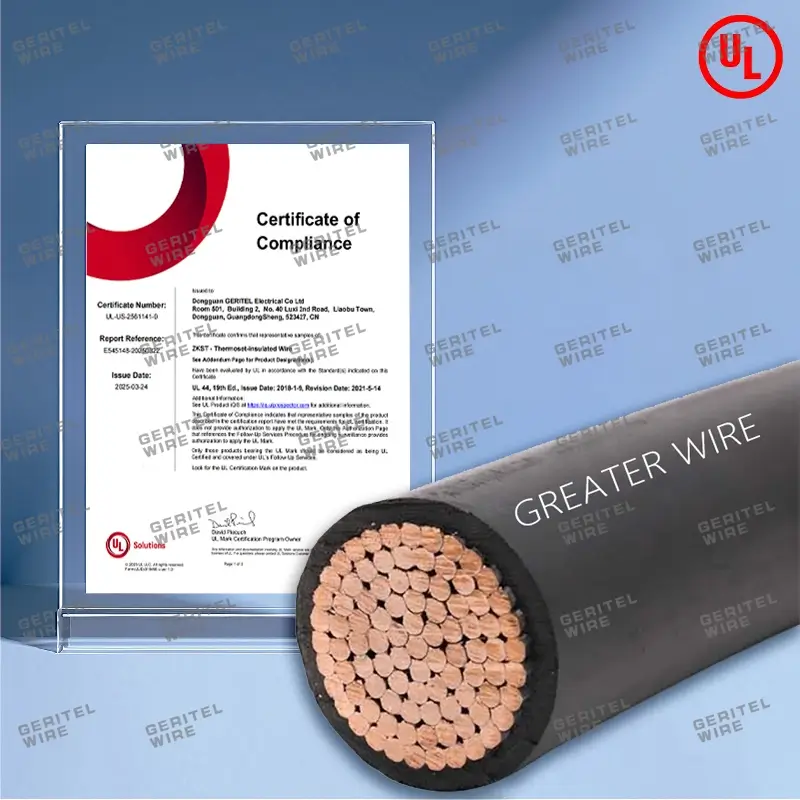
Yes. Dongguan GERITEL Electrical Co., Ltd. offers UL 44 certified XHHW/XHHW-2 copper building wire for conduit and raceway installations. We can provide the certificate and file number upon request.
Need XHHW-2 Wire for Your Conduit Project?
Tell us about your project—wire size, conduit type, and run length. We will recommend the right XHHW/XHHW-2 wire and send a quick quote.
Contact us
Dongguan GERITEL Electrical Co., Ltd.
Tel/WhatsApp/Wechat: +86 136 6257 9592
Tel/WhatsApp/Wechat: +86 135 1078 4550
Email: manager01@greaterwire.com
Website: www.geritelgroup.com
 Differences Between Aluminum XHHW-2 Wire and Copper Conductors



 Building 2, No. 40 Luxi 2nd Road, Liaobu Town, Dongguan City, Guangdong Province, China