


 Home
HomeHow to Calculate Ampacity for XHHW-2 Aluminum and Copper Wire
 GERITEL
 Jul 09,2026

Calculating the ampacity of XHHW/XHHW-2 Copper Wire and aluminum wire is a core step for electrical designers, contractors, and maintenance engineers. Accurate ampacity calculation ensures safe circuit loading, compliant wire sizing, and long-term system stability for commercial, industrial, and utility wiring projects. All calculations follow NEC 2023 Table 310.16 and UL 44 industry standards, covering common large-size specifications including 300 kcmil UL 44 Copper XHHW-2 Wire, 1000 kcmil XHHW-2 Copper Wire, and 600 kcmil 600V Copper XHHW-2 Wire. This guide breaks down definitions, standard values, derating rules, and step-by-step calculation methods for both copper and aluminum XHHW-2 conductors.
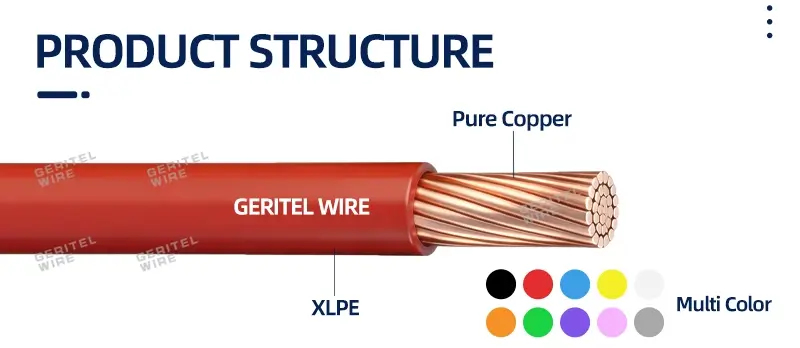
1. Core NEC Standard Ampacity Values (30°C Ambient, ≤3 Current-Carrying Conductors)
Base ampacity data follows NEC Table 310.16, the fundamental reference for all XHHW-2 wire ampacity calculations under standard installation conditions (30°C ambient temperature, no more than 3 current-carrying conductors in raceway or cable). Below are standard values for our key targeted specifications:
300 kcmil UL 44 Copper XHHW-2 Wire: Base ampacity=320A
600 kcmil 600V Copper XHHW-2 Wire: Base ampacity=475A
1000 kcmil XHHW-2 Copper Wire: Base ampacity=650A
Aluminum XHHW-2 equivalent sizes: Approximately 80% of copper wire ampacity under the same specifications (lower conductivity than copper)
Note: These base values are only applicable for standard installation environments. Actual usable ampacity must be adjusted based on ambient temperature, conductor quantity, and installation methods.
2. Key Factors That Affect XHHW-2 Wire Ampacity
The theoretical base ampacity cannot be directly used for field engineering. Three critical derating factors must be included in the calculation to comply with NEC safety codes:
2.1 Ambient Temperature Derating
NEC standards stipulate that the base ampacity is calibrated at 30°C ambient temperature. When the on-site ambient temperature exceeds 30°C, heat dissipation efficiency decreases, and ampacity must be reduced accordingly. For 90°C-rated XHHW-2 wires, temperature correction factors cover 35°C to 60°C ambient ranges, with higher temperatures leading to larger derating ratios.
When more than 3 current-carrying conductors are bundled in the same raceway, cable tray, or duct bank, accumulated heat causes temperature rise, requiring mandatory derating per NEC 310.15(C)(1): 4–6 conductors (80%), 7–9 conductors (70%), 10–20 conductors (50%), and 31–40 conductors (40%). This rule is critical for multi-circuit industrial wiring projects using 300 kcmil, 600 kcmil, and 1000 kcmil large-size XHHW-2 wires.
2.2 Multiple Conductor Bundle Derating
When more than 3 current-carrying conductors are bundled in the same raceway, cable tray, or duct bank, accumulated heat causes temperature rise, requiring mandatory derating per NEC 310.15(C)(1): 4–6 conductors (80%), 7–9 conductors (70%), 10–20 conductors (50%), and 31–40 conductors (40%). This rule is critical for multi-circuit industrial wiring projects using 300 kcmil, 600 kcmil, and 1000 kcmil large-size XHHW-2 wires.
2.3 Termination Temperature Limitation
Although XHHW-2 wire supports 90°C operation, most circuit breakers, lugs, and terminal devices are rated for 60°C or 75°C. Per NEC 110.14(C), the final usable ampacity must follow the lower terminal temperature rating, which is the most easily overlooked step in practical calculations.
Universal formula for actual usable ampacity: Final Ampacity = Base Ampacity × Temperature Correction Factor × Conductor Bundle Derating Factor
3. Step-by-Step XHHW-2 Wire Ampacity Calculation Formula
Calculation Rules:
1)Obtain base ampacity from NEC Table 310.16 or official XHHW/XHHW-2 Copper Wire datasheet
Calculating the actual field ampacity of XHHW-2 copper and aluminum wires relies on NEC standardized correction logic. The base ampacity listed in NEC Table 310.16 only applies to ideal laboratory conditions. For all on-site installations, ampacity must be adjusted with multiple derating factors to comply with UL 44 and NEC safety requirements. This universal calculation method fully applies to 300 kcmil UL 44 Copper XHHW-2 Wire, 600 kcmil 600V Copper XHHW-2 Wire, and 1000 kcmil XHHW-2 Copper Wire, as well as all aluminum XHHW-2 conductor sizes.
Universal Ampacity Calculation Formula
Final Usable Ampacity = Base Table Ampacity × Ambient Temperature Correction Factor × Conductor Bundling Derating Factor
Core Calculation Principles
The final operating ampacity of XHHW-2 wire is always governed by the lowest limiting condition. Even if the wire itself supports 90°C high-temperature operation, terminal temperature ratings, high ambient heat, and dense conductor bundling will reduce the actual safe current load.
Standard Step-by-Step Calculation Workflow
Step 1: Confirm wire specifications and obtain base ampacity. Match the conductor material (copper/aluminum) and wire size from NEC Table 310.16 or the official XHHW/XHHW-2 Copper Wire datasheet to get the standard base ampacity under 30°C ambient and 3 conductors or fewer.
Step 2: Determine ambient temperature correction factor. Measure the actual on-site ambient temperature, select the corresponding NEC temperature correction coefficient, and deduct ampacity for environments higher than 30°C.
Step 3: Apply bundling derating factor. Count all current-carrying conductors in the same raceway, duct bank, or cable tray, and apply the standard NEC multi-conductor derating ratio to eliminate heat accumulation risks.
Step 4: Verify terminal temperature limitations. Check the temperature rating of circuit breakers, lugs, and connection terminals. If terminals are rated 60°C or 75°C, override the 90°C wire rating and recalculate ampacity per the lower terminal standard.
Step 5: Confirm final safe ampacity. Compare all corrected values and take the minimum figure as the official usable ampacity for project design and wire sizing.
2)Confirm on-site ambient temperature and match the corresponding temperature correction factor
3)Count the number of current-carrying conductors to determine the bundle derating factor
4)Compare the calculated result with termination temperature limits and take the minimum value as the final usable ampacity
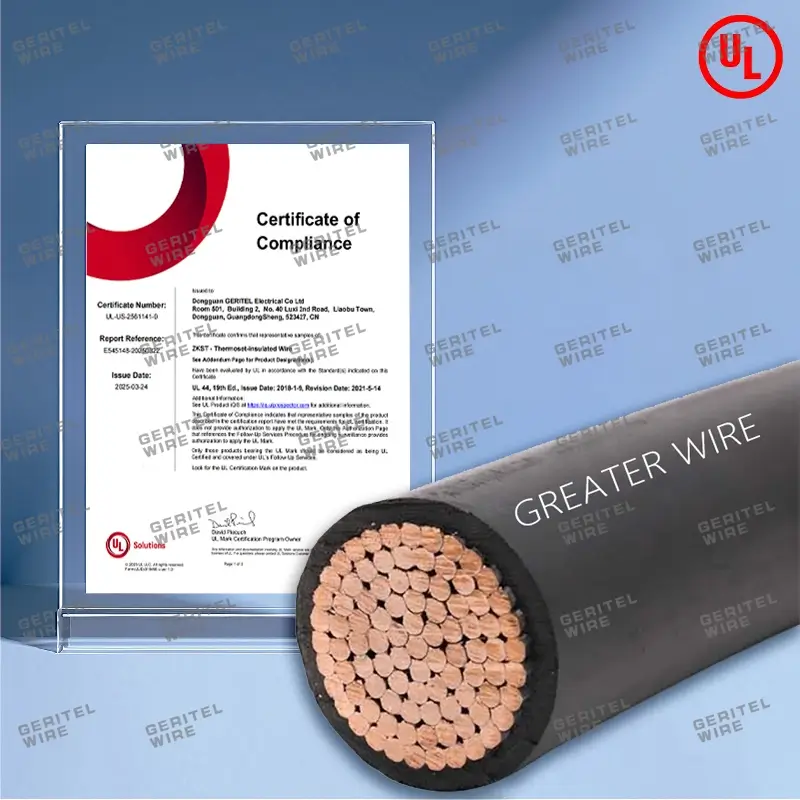
4. Practical Calculation Examples (Copper XHHW-2 Key Sizes)
Example 1: 300 kcmil UL 44 Copper XHHW-2 Wire
Standard condition (30°C, ≤3 conductors): Base ampacity = 320A Field condition: 35°C ambient temperature, 6 bundled conductors Calculation: 320A × 0.96 (temperature factor) × 0.8 (bundle factor) = 245.76A final usable ampacity
Example 2: 600 kcmil 600V Copper XHHW-2 Wire
Standard condition: Base ampacity = 475A Field condition: 40°C ambient temperature, 8 bundled conductors Calculation: 475A × 0.91 × 0.7 = 303.32A final usable ampacity
Example 3: 1000 kcmil XHHW-2 Copper Wire
Standard condition: Base ampacity = 650A Field condition: 45°C ambient temperature, 12 bundled conductors Calculation: 650A × 0.87 × 0.5 = 282.75A final usable ampacity
Example 4: Aluminum XHHW-2 Wire Calculation
Aluminum XHHW-2 wire follows the same calculation logic as copper wire, with a naturally lower base ampacity (approximately 80% of copper). It is more suitable for long-distance, low-load power distribution projects to reduce engineering costs.
5. Common Calculation Mistakes to Avoid
- Using 90°C full ampacity directly without considering 60°C/75°C terminal limitations
- Ignoring derating for multiple bundled conductors in dense cable tray or duct bank layouts
- Neglecting ambient temperature rise in high-temperature industrial workshops or enclosed pipe shafts
- Confusing XHHW and XHHW-2 parameters: XHHW-2 has upgraded long-term wet-location resistance with more stable ampacity retention
6. Quick Reference & Datasheet Tips
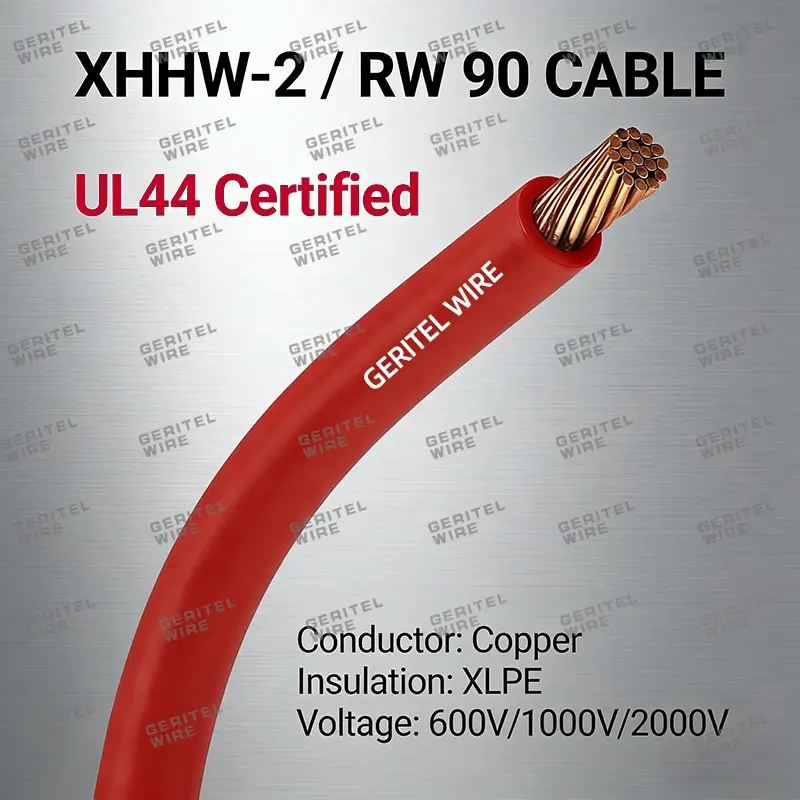
For accurate size-specific parameters, always refer to the official XHHW/XHHW-2 Copper Wire datasheet, which records factory-tested ampacity, insulation resistance, temperature tolerance, and UL 44 certification details. For large-size power cables including 300 kcmil UL 44 Copper XHHW-2 Wire, 600 kcmil 600V Copper XHHW-2 Wire, and 1000 kcmil XHHW-2 Copper Wire, datasheet data is more accurate than general table values and can support formal project design and inspection filings.
Conclusion
Accurate XHHW-2 wire ampacity calculation is a systematic process combining standard base values and on-site derating factors. Copper XHHW-2 wires (300 kcmil, 600 kcmil, 1000 kcmil) provide reliable high-current transmission performance, while aluminum XHHW-2 wires offer economical alternatives. By strictly following NEC 310.16 standards, correcting temperature and bundle derating factors, and referencing official datasheets, engineers can achieve precise wire sizing, ensure electrical system safety, and avoid overload risks and code violations.
Professional XHHW / XHHW-2 Copper & Aluminum Wire Supplier — Dongguan GERITEL Electrical Co., Ltd.
GERITEL Electrical specializes in manufacturing high-quality UL 44 certified XHHW-2 wires, including 300 kcmil UL 44 Copper XHHW-2 Wire, 600 kcmil 600V Copper XHHW-2 Wire, and 1000 kcmil XHHW-2 Copper Wire. All our products comply with strict UL, NEC, and industrial standards, with complete XHHW/XHHW-2 Copper Wire datasheet support for engineering verification, project bidding, and system design. We provide stable quality, competitive pricing, and customized packaging solutions for global commercial, industrial, and utility power distribution projects.
Contact Information
Dongguan GERITEL Electrical Co., Ltd.
Tel/WhatsApp/Wechat: +86 136 6257 9592
Tel/WhatsApp/Wechat: +86 135 1078 4550
Email: manager01@greaterwire.com
Website: www.geritelgroup.com
 Best Practices for Pulling XHHW-2 Wire Through Conduit Safely



 Building 2, No. 40 Luxi 2nd Road, Liaobu Town, Dongguan City, Guangdong Province, China