


 Home
HomeHow Industrial Control Wiring Impacts Equipment Safety and Performance
 GERITEL
 Jun 16,2026

If you’ve managed an industrial automation line, you’ve probably been there: equipment shuts down for no obvious reason, you test the PLC, sensors and VFD drives and they all check out — only to find the issue was the control wiring all along.
Most project teams prioritize controllers, motors and panel hardware, but industrial control wiring is the invisible backbone that ties every component together. A cheap or poorly specified control system cable doesn’t just cause minor glitches; it drives up unplanned downtime, creates safety hazards, and raises long-term maintenance costs. For electrical contractors, automation integrators and project buyers, getting wiring right is one of the highest-impact decisions you can make for project performance and profitability.
1. How Poor Equipment Wiring Causes Downtime and Safety Hazards
Cutting corners on control wiring creates problems that show up months after installation, often when the line is already in full production.
1.1 EMI-induced signal instability and unplanned shutdowns
The single most common complaint from automation teams is also the hardest to trace: electromagnetic interference (EMI). In dense control panels and production floor environments, power cables and VFD drives emit high levels of electrical noise. When unshielded general-purpose wire is used for sensor and control circuits, that noise distorts low-voltage control signals.
The result is erratic sensor readings, false alarms, and random equipment stops that are extremely difficult to diagnose. For continuous production lines, even one hour of unplanned downtime can cost tens of thousands of dollars in lost output and emergency labor. This is exactly the pain point that pushes teams to upgrade from basic building wire to purpose-built automation cable.
1.2 Premature insulation failure in VFD motor circuits
Variable frequency drives create rapid voltage spikes and reflected wave phenomena that standard insulation is not designed to handle. Over time, those spikes break down thin, low-grade insulation, leading to short circuits, ground faults and premature cable failure.
This is not just a maintenance problem. Sudden insulation failure in a live motor circuit creates arc flash risks and can damage expensive drive equipment. In the worst cases, it can cause unexpected motor startup that endangers on-site personnel.
1.3 Physical damage and hidden electrical safety risks
Control wiring on the plant floor gets pulled, bent, stepped on and exposed to oil, dust and moisture. Thin PVC jacket and solid conductors crack or break inside the insulation, creating hidden faults that can go undetected until they cause a failure or safety incident. Cables that are not rated for exposed tray installation also create compliance risks during inspections.
2. What Makes a Control System Cable Built for Industrial Automation
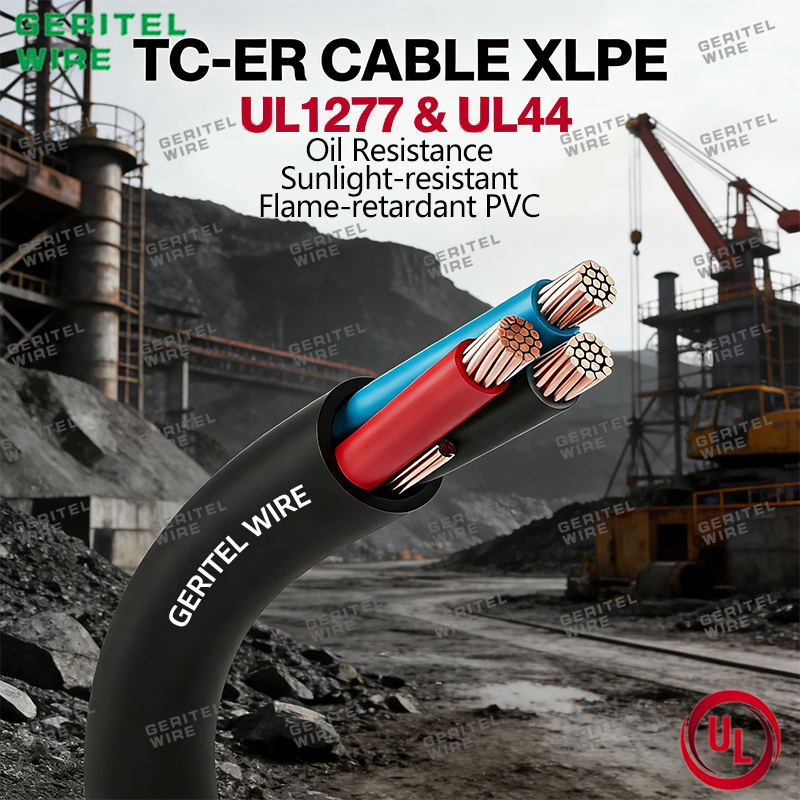
Purpose-built industrial control wiring solves each of these problems through intentional design choices, not marketing claims. TC-ER cable for industrial automation has become the industry standard for good reason: it is engineered from conductor to jacket for the realities of plant-floor and panel environments.
2.1 Shielding: The first defense for control panel signal integrity
For clean, reliable signal transmission, EMI protection is non-negotiable. TC-ER cable for control panels is available with optional shielding that creates a continuous barrier against electrical noise from adjacent power circuits and drive systems.
Unlike unshielded THHN/THWN-2 wires designed for general power distribution, shielded control system cable keeps low-level sensor and control signals stable even in high-density panels. This directly reduces nuisance faults, false alarms and the troubleshooting hours that go with them.
2.2 Heavy-duty insulation that survives VFD voltage spikes
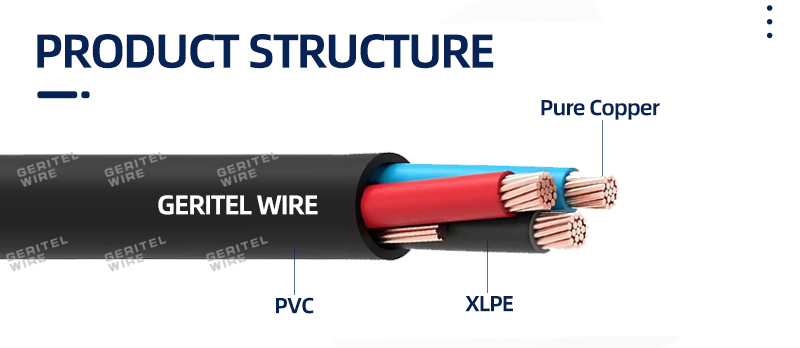
TC-ER cable for VFD applications uses high-grade insulation that stands up to the electrical stress of variable frequency drive circuits. Stranded soft copper conductors are paired with PVC or XLPE insulation for a balance of flexibility and electrical resilience.
For the most demanding installations, the UL 1277 TC-ER XHHW-2 3C 12AWG cable raises the bar further. XHHW-2 insulation delivers excellent heat and oil resistance, rated for 90°C operation in both dry and wet environments, and handles the voltage transients common to VFD motor circuits. All 600V TC-ER cable provides a generous safety margin for standard industrial control and motor circuits.
2.3 Mechanical durability that cuts installation time and cost
Industrial wiring takes abuse during installation and throughout its service life. A tough PVC jacket resists abrasion during pulling and tray installation, and the stranded conductor structure makes the cable flexible and easy to route through tight panel spaces.
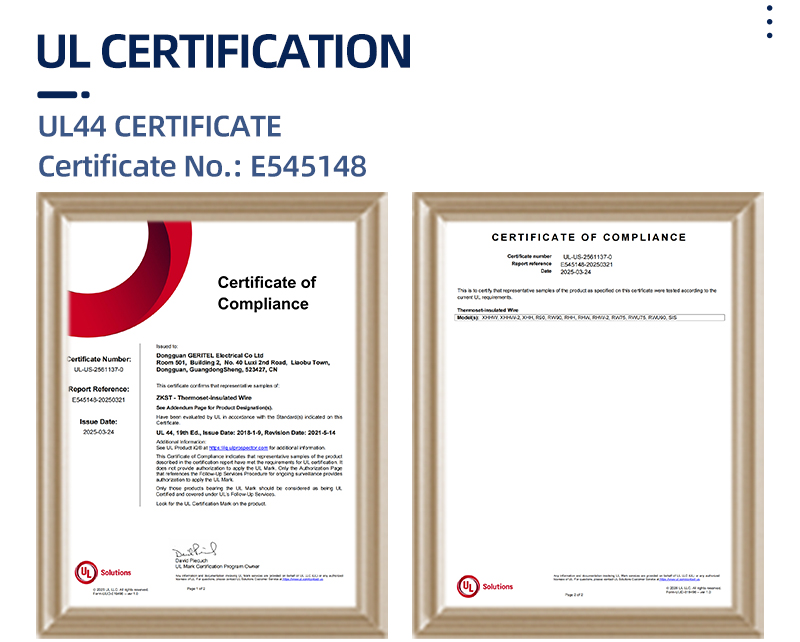
The TC-ER (Tray Cable – Exposed Installation Rating) designation is one of the biggest practical advantages. It allows the cable to be installed directly in cable trays without conduit under defined conditions, which cuts both material cost and on-site labor time significantly. For high-impact areas or heavy-duty environments, upgraded options with aluminum interlocked armor or galvanized steel armor provide extra protection against physical damage and rodent risk.
3. 3-Step Selection Guide for Industrial Control Wiring
Choosing the right cable means matching the product to your actual site conditions, not just ordering a generic “industrial cable.” Use this framework to specify correctly on every project.
3.1 Match shielding to your site’s electromagnetic environment
Always confirm that the cable’s shielding type aligns with your project’s signal sensitivity and on-site EMI levels.
· For quiet control rooms and simple sensor circuits, unshielded cable may be sufficient.
· For production floor panels, VFD-dense areas and facilities with heavy motor loads, shielded TC-ER cable for industrial automation is strongly recommended.
Selecting shielding based on real site conditions avoids unnecessary cost while preventing the single most common cause of control system instability.
3.2 Pick the right conductor count and gauge for your circuit
Core count and wire gauge should be selected based on circuit function, current load and grounding requirements.
· 3/C TC-ER cable is the standard for three-wire control circuits, basic sensor connections and general panel wiring. 12 AWG TC-ER cable is the workhorse gauge for general 600V control circuits, offering a balanced mix of current capacity, flexibility and cost.
· 4/C TC-ER cable adds a dedicated grounding conductor and is required for motor circuits and equipment bonding. For VFD motor connections, 10 AWG TC-ER cable in 4-conductor configuration is the typical specification, available with either a bare ground or insulated green ground conductor to match project requirements.
Always verify conductor size against circuit load and voltage drop calculations for longer cable runs.
3.3 Choose insulation and jacketing for your operating conditions
Insulation type should be selected based on ambient temperature, fluid exposure and installation environment.
· XHHW-2 insulation is preferred for hot, oily or damp industrial environments due to its 90°C wet/dry rating and oil resistance.
· THHN/THWN-2 remains a cost-effective choice for dry indoor control panels and general-purpose circuits.
For exposed tray runs, always confirm the product carries a valid TC-ER rating to ensure installation compliance.
4. Frequently Asked Questions
Q1: Can I use regular THHN wire for industrial control panels?
You can, but it is not recommended for production-floor panels or VFD-adjacent circuits. Standard THHN/THWN-2 has no shielding and is not engineered to resist EMI or VFD voltage spikes. For simple dry-location control circuits in low-noise environments it may work, but for automation applications you will see fewer faults and longer service life with a purpose-built control system cable.
Q2: When do I need 4/C TC-ER cable instead of 3/C?
Use 3/C TC-ER cable for three-wire control circuits, sensor loops and general panel wiring where a separate equipment ground is not required in the same cable. Use 4/C TC-ER cable for motor circuits, VFD connections and any application that requires an integrated grounding conductor — either bare ground or insulated green ground — to meet project bonding requirements.
Q3: Is shielded cable necessary for every VFD application?
Not every single one, but it is a low-cost insurance policy for most plant-floor installations. If the VFD and motor are in a dedicated, electrically quiet room with short cable runs, unshielded may perform acceptably. For VFDs on the production floor, long cable runs, or circuits near sensitive control equipment, shielded TC-ER cable for VFD will reliably prevent signal interference, motor bearing damage and nuisance faults.
5. Get a Project-Specific Cable Recommendation
Industrial control wiring has an outsized impact on equipment safety, uptime and long-term operating cost — and getting it right on the first install saves far more money than it costs.
If you are specifying control cables for a control panel build, VFD upgrade or production line project, share your project details with our team. We will help you select the correct TC-ER cable configuration, gauge and shielding to match your site conditions, and provide a competitive project quotation tailored to your requirements.
Dongguan GERITEL Electrical Co., Ltd.
Tel/WhatsApp/Wechat: +86 136 6257 9592
Tel/WhatsApp/Wechat: +86 135 1078 4550
Email: manager01@greaterwire.com
Website: www.geritelgroup.com
 Best Cable Solutions for Industrial Machinery and Production Equipment



 Building 2, No. 40 Luxi 2nd Road, Liaobu Town, Dongguan City, Guangdong Province, China