


 Home
HomeElectrical Cable Requirements for Industrial Expansion and Retrofit Projects
 GERITEL
 Jun 16,2026

When an industrial plant expands or upgrades its equipment, the existing cable trays are often already full and the old conduits are running at capacity. Production schedules don't allow long shutdowns, and new equipment draws more power than the old wiring was designed to handle.
So what does it take to get the cabling right in an expansion or retrofit project? This article covers the key requirements – and why TC-ER cable is often the best choice for these challenging installations.
1.Why Expansion and Retrofit Projects Have Different Cable Needs Than New Builds
A new plant build is a blank slate. You design the cable trays, plan the conduit runs, and install everything before the equipment arrives. There is space to work, and the schedule is (relatively) forgiving.
Retrofit and expansion projects are the opposite. You are working inside an existing facility. The trays are already filled. The equipment is still running – or at least, it needs to be back online quickly. The space is tight. The environment is messy. And the electrical demands of new equipment are often higher than the old wiring can support.
These differences drive three key requirements for cables in retrofit projects:
First, the cable must be easy to install in tight spaces. There is no room for oversized conduit or rigid armored cables that fight every bend. The cable needs to be flexible enough to route through existing trays, around obstacles, and into crowded cabinets.
Second, the cable must allow for fast installation. Every hour of downtime costs money. The faster the installation, the less production is lost. Cables that require extensive conduit work or complicated terminations are not ideal.
Third, the cable must be compatible with the existing environment. Old plants often have oil, moisture, chemicals, or temperature extremes that have been present for years. The new cable has to survive those conditions – not just meet specs on paper.
TC-ER cable addresses all three of these requirements better than most alternatives.
2. Four Challenges That Make Retrofit Cabling Difficult
If you have ever specified cable for a retrofit, you have probably encountered at least one of these challenges – and likely all four.
Challenge 1: Limited tray space. Existing cable trays were designed for the original equipment. They are often filled to capacity. Adding new cables means either finding unused space, rerouting existing cables, or replacing the tray entirely – all of which add time and cost.
Challenge 2: No room for conduit. In many retrofit situations, pulling new conduit is not practical. The walls are already built. The floors are already poured. Running pipe would require demolition or long detours. A cable that can run exposed in trays – without conduit – is a major advantage.
Challenge 3: Mixed old and new. The existing electrical system may use older cables with different insulation types, different ampacity ratings, and different grounding configurations. The new cable must integrate safely with whatever is already there.
Challenge 4: Short installation windows. Production schedules do not stop for cable installation. The work often has to happen during a weekend, a holiday, or a brief planned outage. Any cable that slows down the installation pushes the project over budget and delays production restart.
These challenges are not theoretical. They are daily realities for plant engineers and electrical contractors. The cable choice makes a big difference in how manageable these challenges become.
3.Why TC-ER Cable Is a Natural Fit for Expansion and Retrofit Work
TC-ER cable was not designed specifically for retrofits – but it solves many of the problems retrofit projects present.
First, the "ER" (Exposed Run) rating means no conduit required. TC-ER cable can be installed in cable trays without conduit. For a retrofit, this is a game-changer. No pipe bending. No conduit fittings. No pulling wires through long runs. Just lay the cable in the existing tray and secure it. This saves days of installation time on a typical project.
Second, TC-ER cable is flexible. Without interlocked armor, TC-ER is lighter and more manageable than MC cable. The stranded conductors bend easily around obstacles. In a crowded tray or a tight cabinet, this makes a real difference.
Third, the XHHW-2 insulation is rated 90°C in both dry and wet locations. It resists oil, chemicals, and moisture. In a chemical plant, a food processing facility, or any environment with regular washdowns, XHHW-2 holds up where other insulation types fail.
Fourth, UL 1277 certification gives you compliance with a recognized standard. This matters for plant safety and regulatory inspections. It also simplifies the approval process when working with plant engineers and safety officers.
Fifth, TC-ER cable is available in multiple conductor counts and gauges. Whether you are adding a single machine or upgrading an entire production line, there is a TC-ER configuration that fits the load and the space.
4. Three TC-ER Cable Specifications for Common Expansion and Retrofit Scenarios
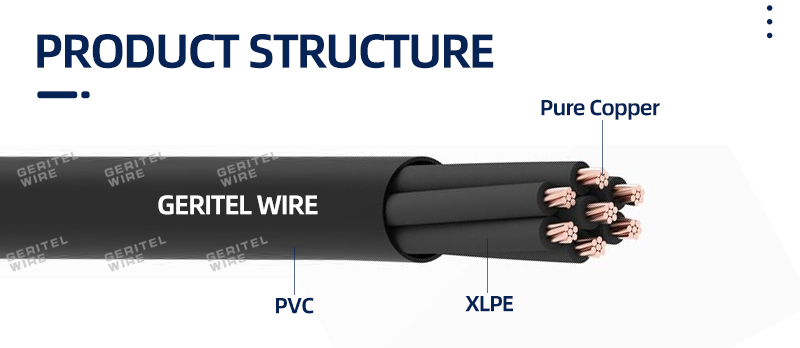
Every expansion or retrofit project is different, but most fall into one of three categories: adding a small new machine, upgrading a group of equipment, or installing a major new production line. Here are three TC-ER cable specifications that cover these scenarios.
Specification 1: 8 AWG 3/C TC-ER Cable – Adding New Equipment to an Existing Line
When a plant adds a new conveyor, a packaging machine, or a small processing unit, the power requirement is usually modest. An 8 AWG 3/C TC-ER cable provides three conductors for three-phase power, with a separate ground conductor run separately or as part of a 4/C configuration.
The 8 AWG size handles moderate motor loads and is small enough to fit into existing tray space without major rerouting. The XHHW-2 insulation protects against oil and moisture, which are common in older plants. For most new equipment additions, this is the workhorse specification.
Typical applications: Adding a new conveyor to an assembly line, installing a new packaging machine, powering a new small compressor.
TC-ER cable for manufacturing plants: This 8 AWG 3/C configuration is one of the most commonly used TC-ER cables for manufacturing plants, where space is tight and reliability is critical.
Specification 2: 4 AWG 5/C TC-ER Cable – Control Panel Upgrades and Multi-Circuit Retrofits
Some retrofit projects are not about a single piece of equipment – they involve upgrading a control panel, adding new sensors and actuators, or rewiring a section of the plant. In these cases, a multi-conductor cable like 4 AWG 5/C TC-ER is a smart choice.
Five insulated conductors in one jacket allow multiple circuits to be run in a single pull. This saves tray space and reduces installation time compared to running five separate cables. The 4 AWG conductors are large enough for both power and control circuits, depending on the load.
For retrofit work where the existing control cabinet is already crowded, using a single 5/C cable instead of multiple individual cables keeps the cabinet cleaner and makes troubleshooting easier.
Typical applications: Control panel upgrades, adding multiple sensors or actuators to an existing line, rewiring a section of a plant with multiple small loads.
TC-ER cable for chemical plants: In chemical plants, the 4 AWG 5/C configuration is popular because the single jacket reduces the number of cable entry points into sealed cabinets – important in environments where vapor and dust ingress are concerns.
Specification 3: 2 AWG 4/C TC-ER Cable – Major Production Line Upgrades
When a plant installs a new production line or upgrades a group of large machines, the power demand increases significantly. A 2 AWG 4/C TC-ER cable provides three phase conductors plus an insulated ground in one flexible, tray-rated cable.
The 2 AWG gauge handles high continuous currents. The insulated ground is particularly valuable in retrofit applications where the existing grounding path may be uncertain. The XHHW-2 insulation remains flexible even in cold or hot environments, making installation easier in unconditioned plant areas.
For large upgrades, the combination of high ampacity, flexibility, and exposed run rating makes 2 AWG 4/C TC-ER a practical alternative to heavier armored cables or rigid conduit systems.
Typical applications: New production line installation, upgrading multiple large machines in a manufacturing cell, replacing an aging feeder to a major piece of equipment.
TC-ER cable for wet location: The XHHW-2 insulation on this 2 AWG 4/C cable is rated 90°C wet, making it suitable for wet location installations commonly found in food processing plants, paper mills, and wastewater facilities undergoing expansion.
When selecting between these three configurations, consider the total load, the distance from the power source, the available tray space, and the existing cable routing. For long runs, voltage drop may require upsizing. For areas with washdown or chemical exposure, the XHHW-2 insulation is essential.
5.Installation Tips for Retrofit Projects
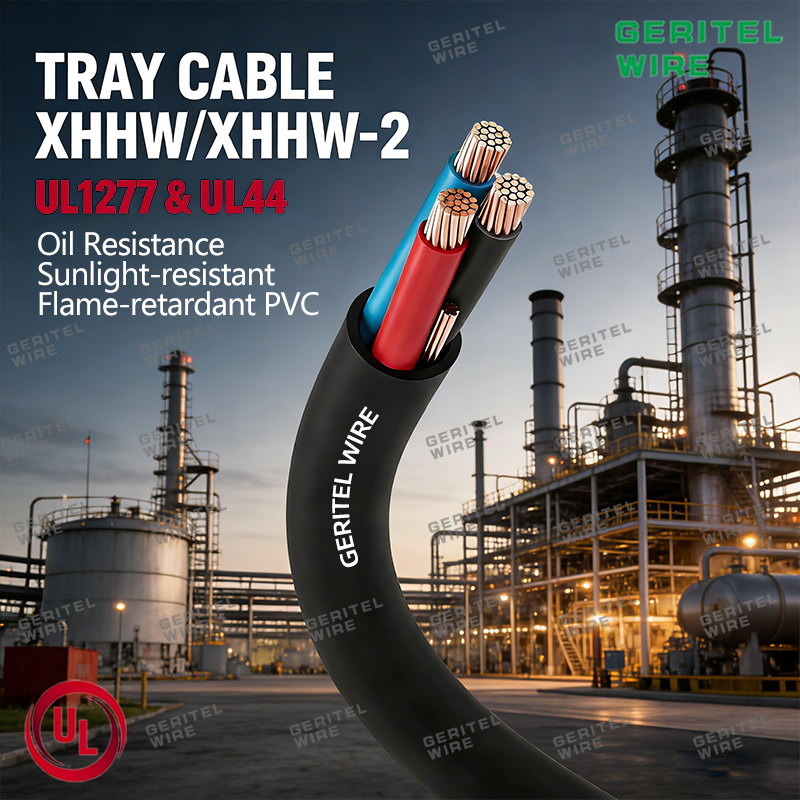
Installing cable in a retrofit is different from installing in a new build. These practical tips can save time and frustration.
Survey the existing tray before you start. Know what is already in the tray and where the spare capacity is. Sometimes rerouting a few old cables can free up enough space to avoid installing new trays.
Use the exposed run rating. TC-ER cable allows you to run without conduit in trays. Take advantage of this. The time saved on conduit installation is significant.
Label every cable at both ends. In a retrofit, you are adding new cables to an existing system that may already be poorly labeled. Clear labeling prevents confusion during termination and future troubleshooting.
Leave service loops. Equipment moves. Production lines change. Leaving extra cable length at each end – a service loop – makes future modifications easier without needing to replace the entire run.
Coordinate with production. Work with plant operations to schedule installation during planned downtime. Having a clear installation plan and the right cable on site before the shutdown starts is half the battle.
Check the jacket marking. Verify that the cable is marked “TC-ER,” “Sunlight Resistant” for outdoor use, and “UL 1277” for compliance. The certification and ratings printed on the jacket are what inspectors and plant engineers will check.
FAQ – Cable Selection for Industrial Expansion and Retrofit
Q1: What is the difference between cabling for a new build and cabling for a retrofit?
In a new build, you have design freedom and open space. In a retrofit, you are constrained by existing cable trays, limited access, and a running production schedule. Retrofits require cables that are flexible, easy to install in tight spaces, and compatible with existing infrastructure. TC-ER cable meets these requirements better than rigid armored cables or conduit-based systems.
Q2: Can I mix TC-ER cable with existing cables in the same tray?
Yes, as long as the existing cables are rated for the same or higher voltage and the combined cable fill does not exceed the tray’s capacity. Check the existing cables’ insulation type and temperature rating to ensure compatibility.
Q3: Is TC-ER cable suitable for outdoor expansion projects?
Yes, if the cable jacket is marked “Sunlight Resistant.” The black PVC jacket on TC-ER cable typically meets this requirement. It can be used in outdoor trays, rooftop installations, and other exposed outdoor locations.
Q4: How does XHHW-2 insulation help in retrofit projects?
XHHW-2 is rated 90°C in both dry and wet locations, so it performs well in environments with moisture, oil, or chemicals – common in older plants. It also remains flexible, which helps when routing through crowded trays and tight spaces.
Q5: Does GERITEL provide UL 1277 certified TC-ER cable for expansion and retrofit projects?
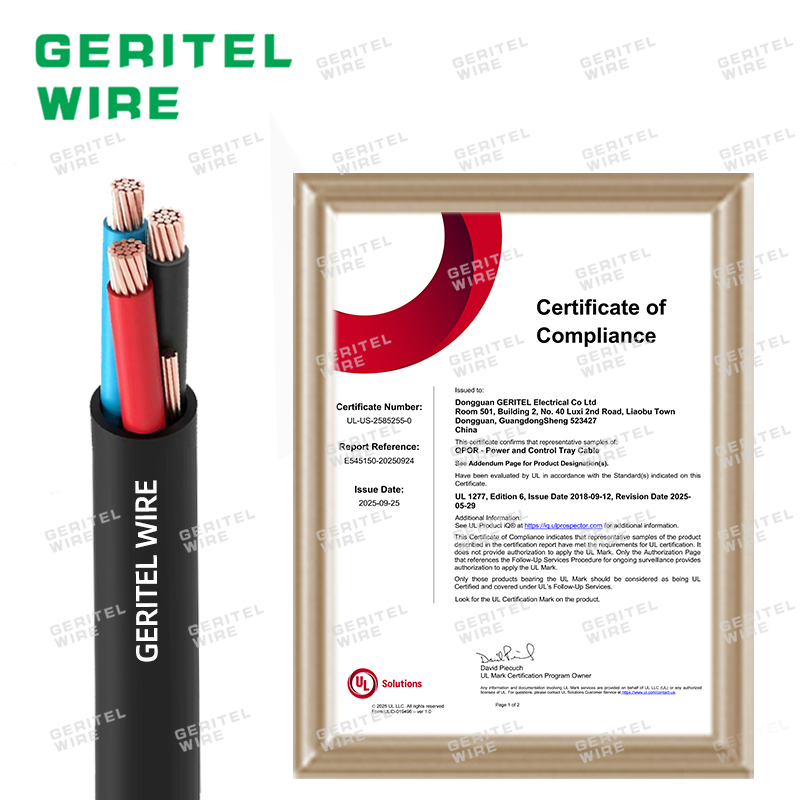
Yes. Dongguan GERITEL Electrical Co., Ltd. holds UL 1277 certification for Power and Control Tray Cable, including TC-ER constructions. We can provide the certificate and file number upon request.
Need a Quote for Your Expansion or Retrofit Project?
Our UL 1277 certified TC-ER cable is available in multiple configurations – 8 AWG 3/C for new equipment additions, 4 AWG 5/C for control upgrades and multi-circuit retrofits, and 2 AWG 4/C for major production line upgrades. We supply cables for manufacturing plants, chemical facilities, and industrial expansion projects worldwide.
Tell us about your project – existing conditions, new equipment loads, and space constraints. We will recommend the right TC-ER cable construction and send you a quick quote.
Contact us
Dongguan GERITEL Electrical Co., Ltd.
Tel/WhatsApp/Wechat: +86 136 6257 9592
Tel/WhatsApp/Wechat: +86 135 1078 4550
Email: manager01@greaterwire.com
Website: www.geritelgroup.com
 How Industrial Control Wiring Impacts Equipment Safety and Performance



 Building 2, No. 40 Luxi 2nd Road, Liaobu Town, Dongguan City, Guangdong Province, China