


 Home
HomeBest Cable Solutions for Industrial Machinery and Production Equipment
 GERITEL
 Jun 16,2026

If you build or maintain production equipment, you have almost certainly run into this frustrating scenario: the machine itself runs perfectly, but a worn-through cable or cracked insulation forces an unplanned shutdown. The repair takes 45 minutes, but the lost output, idle labor and missed delivery penalties add up to far more than the cost of the cable itself.
For too many teams, machine wiring is treated as an afterthought — a commodity part selected on the lowest upfront price. In reality, industrial machinery cable is one of the highest-leverage components for controlling long-term maintenance costs and keeping production lines running. For machinery manufacturers, equipment distributors and facility project managers, choosing the right production equipment cable directly improves equipment reliability, reduces service calls, and lowers total cost of ownership.
1. The 3 Main Reasons Standard Cables Fail on Production Equipment
General-purpose building wires work fine for static wall wiring in offices, but they are not engineered for the harsh conditions of a production floor. Premature failure almost always traces back to one of three root causes.
1.1 Constant mechanical abrasion and flex fatigue
On conveyor lines, moving equipment and robotic cells, cables are pulled, rubbed, bent and stepped on daily. Thin, low-grade PVC jacket material wears through quickly when dragged across metal tray edges, machine frames and concrete floors. For cables that flex with moving equipment, solid conductors develop internal breaks over time — faults that are hard to locate and often cause intermittent downtime.
1.2 Oil, coolant and chemical exposure degrading insulation
Nearly every production environment has some level of oil, lubricant, coolant or cleaning chemical exposure. Standard THHN/THWN-2 wire is designed for general electrical use, not continuous contact with industrial fluids. Over months of exposure, insulation swells, cracks and loses its dielectric strength, leading to ground faults and short circuits.
1.3 Vibration and environmental stress leading to early failure
Motors, pumps and production machinery generate constant vibration during operation. Loose conductors, weak insulation bonds and cheap jacket materials degrade much faster under continuous vibration. In dusty, humid or temperature-swinging shop environments, this degradation accelerates even further.
This is exactly the pain point facility teams face: cables that should last 10 years fail in 2–3 years, driving up replacement labor and causing avoidable production downtime.
2. Tailored Cable Solutions for 3 Core Production Equipment Types
There is no single “best cable” for every machine — the right choice depends on how and where the equipment operates. Below are the recommended solutions for the three most common production floor assets.
2.1 TC-ER cable for motor connections: built for vibration and heavy loads
Motor circuits face two unique stresses: high inrush current at startup, and constant vibration during operation. Standard single-conductor wire pulled through conduit is prone to vibration-related fatigue and is labor-intensive to install and replace.
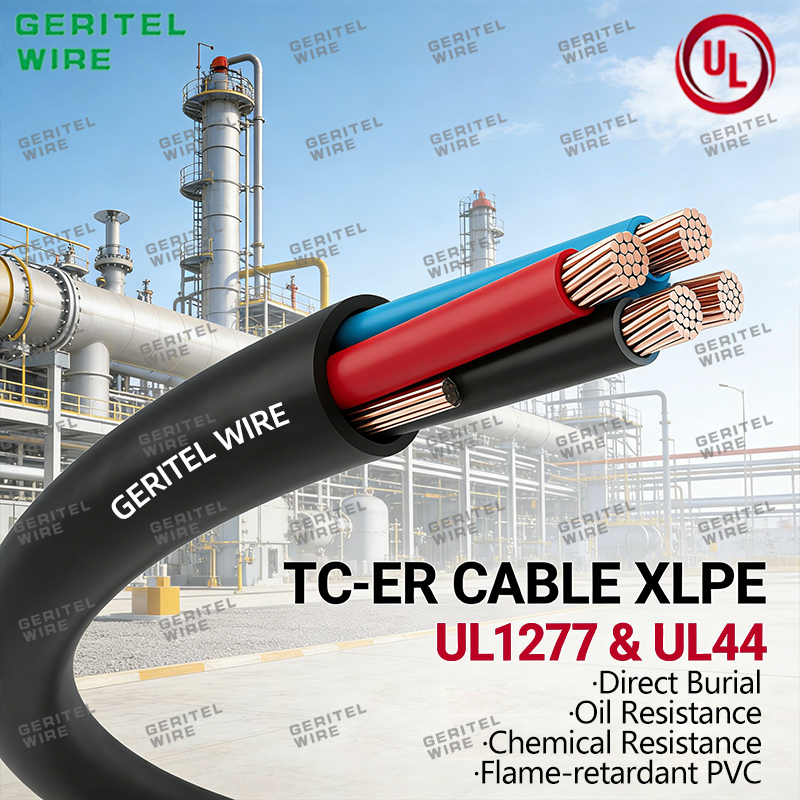
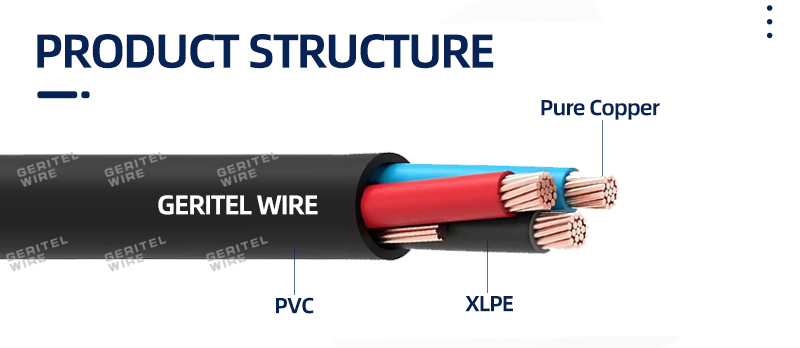
TC-ER cable for motor connections solves both problems. Stranded copper conductors resist vibration fatigue far better than solid wire, and a single multi-conductor cable simplifies tray installation. For standard 600V motor circuits, 8 AWG TC-ER cable in a 3/C or 4/C configuration is the go-to choice for small to mid-sized motors, while 6 AWG TC-ER cable is specified for higher-horsepower units. For circuits requiring control wiring alongside power, 5/C TC-ER cable combines power conductors and control conductors in one jacket, cutting installation time and tray space. Premium builds with XHHW-2 insulation add heat and oil resistance for motors located in lubricant-heavy production areas. Configurations are available with either a bare ground or insulated green ground conductor to match project bonding requirements.
2.2 TC-ER cable for conveyor systems: durable for long runs and flexing sections
Conveyor systems run across long distances, often include moving tail sections or articulating points, and operate in dusty, sometimes oily conditions. Cables on conveyors must hold up to abrasion from tray edges, repeated flexing at movable joints, and exposure to dust and minor fluid splash.
TC-ER cable for conveyor systems is an ideal fit for these demands. A thick, abrasion-resistant PVC jacket withstands rubbing and pulling during long tray runs, while stranded flexible conductors handle repeated bending at conveyor joints without fatigue. For conveyor systems with integrated sensors, safety stops and control circuits, 7/C TC-ER cable combines power and control conductors into a single run, eliminating the need for multiple separate cables. For conveyors in high-impact areas or exposed walkways, upgrades with aluminum interlocked armor or galvanized steel armor add extra crush and impact protection. Rated for exposed tray installation, TC-ER cable also eliminates conduit costs on long conveyor runs.
2.3 TC-ER cable for pump systems: reliable in damp, oily operating environments
Pump systems — whether coolant pumps, hydraulic pumps or process pumps — operate in damp, fluid-exposed environments. Cables near pumps are often exposed to oil splashes, coolant mist and high ambient humidity, which rapidly degrade standard insulation.
TC-ER cable for pump systems is built to hold up in these conditions. XHHW-2 insulation provides excellent moisture and oil resistance, making it far more durable than standard THHN/THWN-2 in damp pump rooms. For standard 600V pump circuits, 4/C configurations with an integrated ground conductor meet bonding requirements in a single cable. For larger industrial pump installations with higher voltage demands, 1000V TC-ER cable delivers an extra safety margin for heavy-duty, continuous-operation pump systems.
3. 3 Non-Negotiable Selection Rules for Industrial Machinery Cable
Choosing cable that lasts means matching the product to your actual operating conditions, not just ordering by price. Use these three rules to specify correctly every time.
3.1 Match jacket and insulation material to your shop’s environmental conditions
Always start with the environment the cable will live in.
· For dry, low-abrasion assembly areas: standard PVC-jacketed 600V TC-ER cable is a cost-effective choice.
· For oily, damp or high-temperature production areas: choose XHHW-2 insulation for improved fluid and heat resistance.
· For heavy oil or chemical exposure: confirm the jacket compound is rated for continuous contact with the specific fluids on your site.
This is the single most important factor for service life — a cable mismatched to its environment will fail years early, no matter how well built.
3.2 Verify mechanical strength and conductor build for movement and abrasion
For equipment that moves, flexes or is exposed to physical wear, conductor and jacket construction matters more than voltage rating.
· For stationary equipment: standard stranded TC-ER cable is sufficient.
· For frequently flexed sections (conveyor joints, moving machine arms): use extra-flexible stranded construction and an abrasion-reinforced jacket.
· For high-impact, high-traffic or rodent-prone areas: specify armored TC-ER cable for reliable mechanical protection.
3.3 Select the right core count, gauge and voltage rating for your circuit
Match the cable configuration exactly to your circuit requirements:
· 3/C for basic three-phase power circuits; 4/C for power with an integrated ground.
· 5/C TC-ER cable for power plus basic control; 7/C TC-ER cable for power plus multiple control or sensor circuits.
· 8 AWG TC-ER cable for mid-sized motors, pumps and conveyors; 6 AWG TC-ER cable for higher-horsepower equipment.
· 600V for standard industrial machinery; 1000V TC-ER cable for heavy-duty, high-power production equipment.
Always confirm gauge against load current and voltage drop, especially for long conveyor and pump runs.
4. Frequently Asked Questions
Q1: Why do my equipment cables keep wearing out in less than two years?
Premature failure is almost always caused by a mismatch between the cable and its operating environment. Most often, a general-purpose cable with a thin PVC jacket and basic insulation was selected for a high-abrasion, high-oil production environment. Upgrading to a purpose-built industrial machinery cable with an abrasion-resistant jacket and appropriate insulation will typically double or triple service life.
Q2: When should I use 7/C TC-ER cable instead of 5/C?
Use 5/C TC-ER cable when you need three power conductors, a ground and one control or sensor circuit in the same cable. Use 7/C TC-ER cable for equipment that requires multiple control circuits, sensor connections or interlock wiring alongside power conductors. Using one multi-conductor cable instead of multiple single wires reduces installation labor and takes up less space in cable trays.
Q3: Is 1000V TC-ER cable worth the extra cost for production equipment?
It depends on your application. For standard 480V machinery, 600V TC-ER cable is fully sufficient and the most cost-effective choice. For heavy-duty production equipment, long cable runs, or facilities with plans to upgrade to higher voltage systems, 1000V TC-ER cable provides an extra safety margin, greater design flexibility and better long-term value. It also offers higher electrical withstand capability for voltage transients on heavy motor loads.
Q4: Do I need armored cable for my production floor?
Armored cable is not required for every application, but it is a smart investment in high-traffic areas, locations with falling debris risk, or facilities with rodent concerns. For clean, protected cable tray runs above equipment, standard PVC-jacketed TC-ER cable will perform reliably at a lower cost.
5. Get a Custom Cable Specification for Your Equipment
The right production equipment cable does more than carry power — it reduces downtime, cuts maintenance costs and improves the total lifetime value of your machinery. Paying a small premium for properly specified cable always pays back quickly in fewer service calls and longer service intervals.
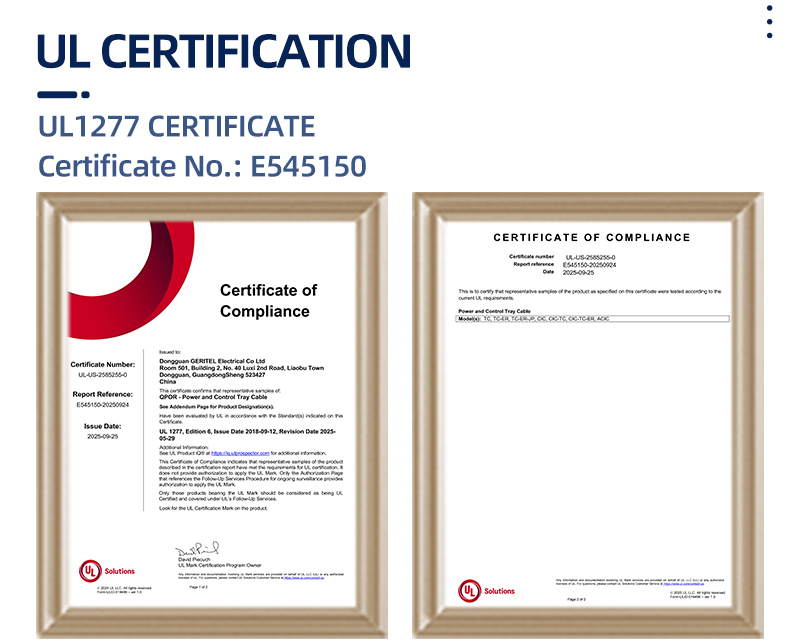
If you are designing new industrial machinery, upgrading a production line, or replacing failing cables on existing equipment, our team can help. Share your equipment types, operating conditions and project volumes, and we will recommend the optimal TC-ER cable configuration, gauge and construction for your application, along with a competitive project quotation.
Dongguan GERITEL Electrical Co., Ltd.
Tel/WhatsApp/Wechat: +86 136 6257 9592
Tel/WhatsApp/Wechat: +86 135 1078 4550
Email: manager01@greaterwire.com
Website: www.geritelgroup.com
 Understanding Facility Power Wiring Requirements for Modern Manufacturing Plants



 Building 2, No. 40 Luxi 2nd Road, Liaobu Town, Dongguan City, Guangdong Province, China