


 Home
HomeHow Factory Automation Cable Supports Smart Manufacturing and Industry 4.0
 GERITEL
 Jun 11,2026

Smart manufacturing and Industry 4.0 promise unprecedented efficiency, predictive maintenance, and production flexibility. Yet many facilities overlook the most critical component that makes all this possible: factory automation cable. When a $50 cable fails on a $500,000 robotic arm, the resulting downtime can cost tens of thousands of dollars per hour.
With over 20 years of experience manufacturing UL44 and UL1277 certified industrial cables, we’ve seen how the right industrial automation cable transforms reliability in smart factories, while the wrong choice becomes a constant source of frustration and lost revenue.
1. The Hidden Bottleneck in Your Smart Factory Transformation
Industry 4.0 relies on seamless communication between sensors, PLCs, robots, and central control systems. Every movement, every data point, every safety interlock depends on cables that can perform consistently under extreme conditions.
Most plant managers are surprised to learn that cable failures account for nearly 30% of unplanned downtime in automated production lines. The problem? Many facilities still use standard THHN/THWN-2 or XHHW-2 cables designed for static building wiring, not the dynamic demands of modern automation.
2. Why Standard Cables Fail in Modern Automation Environments
The customer pain point we hear most often is universal: ordinary cables simply cannot withstand the high-frequency bending, high-speed data transmission, and harsh industrial environments required for long-term automation operation.
Standard building cables use solid conductors and rigid PVC jackets that crack after repeated flexing. Their minimal shielding cannot protect against electromagnetic interference (EMI) from nearby motors and drives, leading to corrupted data signals and unpredictable equipment behavior. In environments with oils, coolants, or chemicals, their jackets degrade rapidly, exposing conductors and creating safety hazards.
3. How TC-ER Industrial Automation Cable Solves Industry 4.0’s Biggest Challenges
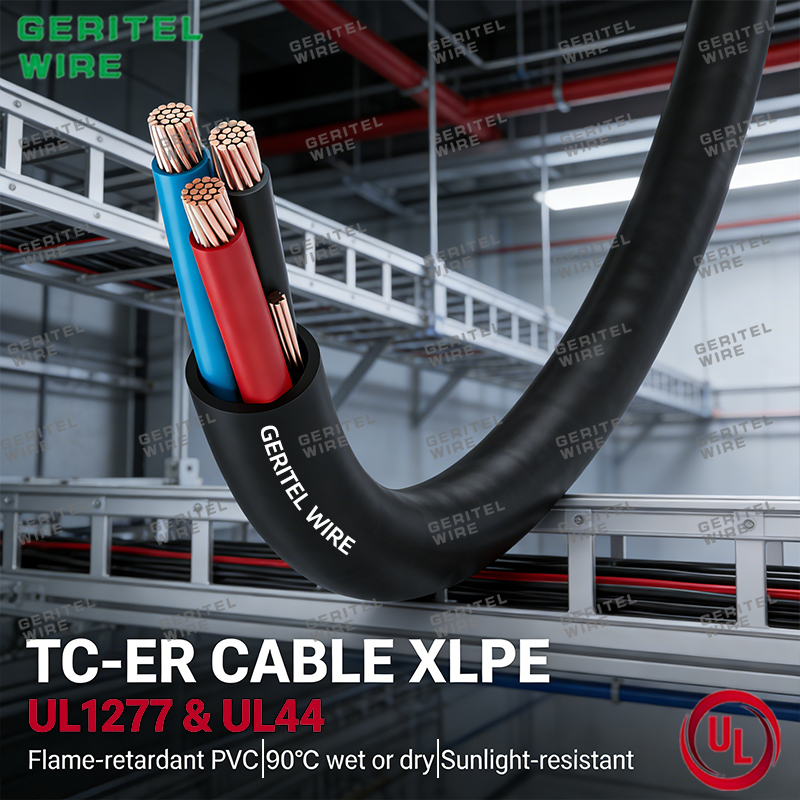
TC-ER cable (Tray Cable - Exposed Run) is engineered specifically to address these limitations, making it the gold standard for smart manufacturing cable and Industry 4.0 cable installations.
· Superior Flexibility for Continuous Robotic Motion
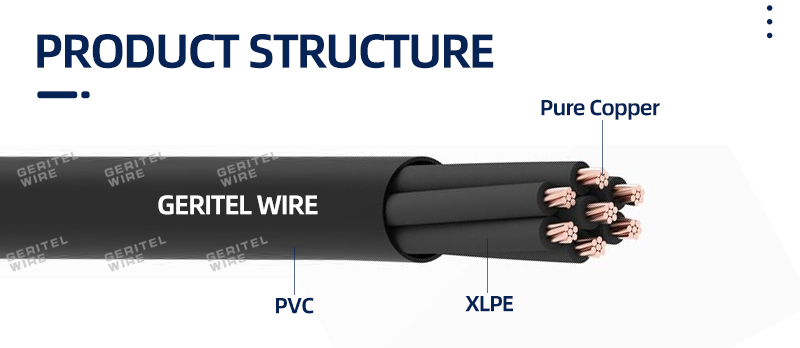
Unlike standard cables with solid conductors, TC-ER control cable uses finely stranded conductors and specially formulated insulation that can withstand millions of flex cycles without failure. This is critical for robotic arms, gantry systems, and moving conveyor lines where cables bend and twist continuously.
When selecting cables for robotic applications, always verify the minimum bending radius specification. A cable rated for 10x diameter static bending may only be rated for 15x-20x diameter for continuous flexing applications—an often-overlooked detail that leads to premature failure.
· Advanced Shielding for High-Speed Data Integrity
Industry 4.0 generates massive amounts of real-time data. Without proper shielding, EMI from variable frequency drives (VFDs) and motors can corrupt these signals, causing equipment malfunctions, production errors, and safety risks.
Premium TC-ER cables feature aluminum interlocked armor or galvanized steel armor that provides exceptional EMI protection while maintaining flexibility. This ensures that critical control signals and sensor data reach their destination without interference, even in electrically noisy factory environments.
· Environmental Resistance for Harsh Industrial Settings
TC-ER cables are available with specialized PVC jackets and insulation compounds that resist oils, greases, acids, and common industrial chemicals. This makes them ideal for use in machining centers, food processing plants, and chemical manufacturing facilities where standard cables would degrade in months.
4. Practical Selection Guide for Smart Manufacturing Cables
Choosing the right factory automation cable requires more than just matching voltage ratings. Here’s what you need to know:
· 1.3.5.1 3/C vs. 4/C TC-ER Cable: Which Do You Need?
· 3/C TC-ER cable is ideal for three-phase power circuits up to 600V, motor leads, and basic control applications where a separate grounding conductor is run separately or not required.
· 4/C TC-ER cable includes three power conductors plus an integrated bare ground or insulated green ground conductor, simplifying installation and ensuring proper grounding for safety-critical systems.
For most modern automation installations, 4/C TC-ER cable is the preferred choice as it provides a complete power and grounding solution in a single cable.
· Critical Specifications to Verify Before Purchasing
When evaluating TC-ER cables, always confirm:
· Bending radius rating: Match this to your equipment’s motion profile
· Signal transmission capability: Ensure it supports your required data rates
· Environmental ratings: Verify oil resistance and temperature range for your specific application
· TC-ER grounding conductor size: Must comply with NEC requirements for your circuit amperage
5. Industry-Specific Applications
· TC-ER Cable for Oil and Gas Industry Automation
The oil and gas industry presents some of the harshest industrial environments, with extreme temperatures, flammable materials, and constant exposure to hydrocarbons. TC-ER cable for oil and gas industry applications is specially formulated to resist oil, gas, and chemical exposure while providing reliable power and control for drilling equipment, pumping stations, and refinery automation systems.
· Robotic Production Lines and Material Handling Systems
In automotive assembly plants, electronics manufacturing facilities, and distribution centers, robotic arms and automated guided vehicles (AGVs) operate 24/7. TC-ER control cable’s superior flex life and EMI protection ensure these systems maintain maximum uptime, directly improving production throughput and profitability.
6. Frequently Asked Questions
Q: Can I use standard THHN/THWN-2 cable for automation applications?
A: Not recommended for dynamic applications. THHN/THWN-2 is designed for static wiring and will fail quickly with repeated bending or exposure to industrial chemicals.
Q: What is the difference between TC and TC-ER cable?
A: TC-ER (Exposed Run) cable meets additional mechanical strength requirements, allowing it to be installed without conduit in exposed locations, reducing installation time and cost.
Q: How do I determine the correct TC-ER grounding conductor size?
A: Grounding conductor size is determined by the circuit’s overcurrent protection rating, following NEC Table 250.122. Always consult a qualified electrician for proper sizing.
Q: Can TC-ER cable be used in wet locations?
A: Yes, most TC-ER cables are rated for wet locations when properly installed, making them suitable for washdown areas and outdoor industrial applications.
7. Ready to Upgrade Your Automation Cabling?
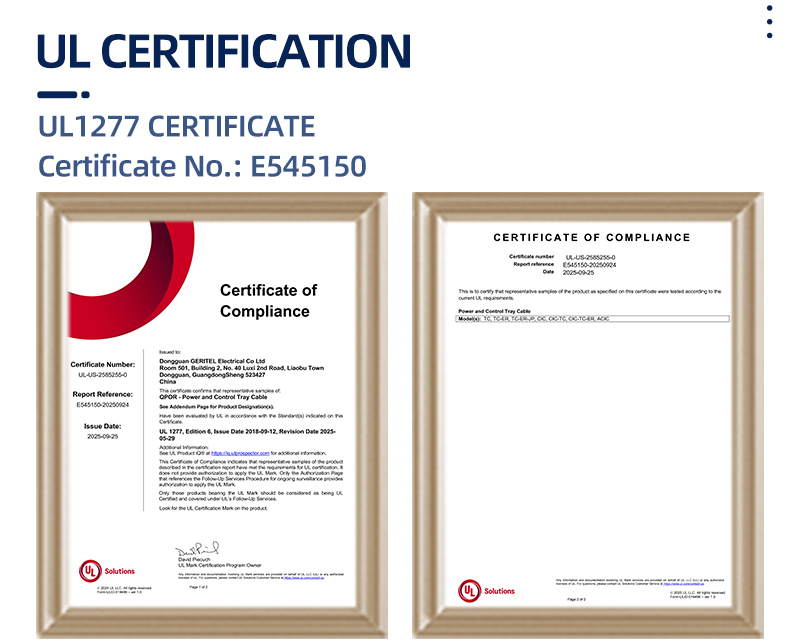
Investing in high-quality factory automation cable is one of the most cost-effective ways to improve the reliability and performance of your Industry 4.0 initiative. With UL44 and UL1277 certification and over 20 years of manufacturing expertise, our TC-ER cables are trusted by automation system integrators and OEMs worldwide.
If you’re planning a smart factory project or experiencing frequent cable failures, our team of cable specialists can help you select the exact products for your application. Contact us today for a free consultation and custom quote tailored to your specific needs.
Dongguan GERITEL Electrical Co., Ltd.
Tel/WhatsApp/Wechat: +86 136 6257 9592
Tel/WhatsApp/Wechat: +86 135 1078 4550
Email: manager01@greaterwire.com
Website: www.geritelgroup.com
 Why Machine Tool Cable Selection Is Critical for Industrial Equipment Performance



 Building 2, No. 40 Luxi 2nd Road, Liaobu Town, Dongguan City, Guangdong Province, China