


 Home
HomeHonduras National Grid Rehabilitation & Distribution Upgrade Project (2022–2026)
 GERITEL
 Apr 01,2026

When Honduras' state power utility embarked on an ambitious national grid rehabilitation initiative in 2023, they faced a critical challenge that plagues many developing nations: aging infrastructure, unreliable power distribution, and the urgent need for materials that could withstand Central America's demanding tropical climate. This case study examines how strategic cable selection—specifically MV90 / MV105 Cable, XHHW Wire, THHN Wire, and THWN Wire—resolved systemic vulnerabilities while delivering measurable operational improvements.
The Challenge: Decades of Deferred Maintenance Meet Modern Demands
Honduras' power distribution network, like many legacy systems across Central America, had suffered from decades of underinvestment. The utility's engineering team identified several pain points that demanded immediate attention:
Environmental Stressors: The tropical climate brings year-round high humidity, seasonal monsoons, and temperatures regularly exceeding 35°C. Existing PVC-insulated cables were degrading prematurely, showing cracking and insulation breakdown after just 5–7 years of service—far below their rated lifespan.
Capacity Constraints: Economic growth in urban centers like Tegucigalpa and San Pedro Sula had pushed existing medium voltage feeders beyond their design limits, causing voltage drops and frequent outages during peak demand periods.
Installation Complexity: Rehabilitation projects required cables that could be pulled through existing conduit infrastructure without extensive excavation, minimizing disruption to dense urban areas.
Regulatory Pressure: The utility needed materials meeting international standards to secure development bank financing, specifically requiring UL certification as proof of quality and safety compliance.
The project specification called for a comprehensive cable solution spanning medium voltage distribution (15kV class) and low-voltage feeder connections, with particular attention to wet location performance and long-term reliability.
The Solution: Engineered Cable Selection for Tropical Reliability
Our engineering team at Dongguan GERITEL Electrical conducted a thorough site assessment and load analysis, recommending a multi-tier cable strategy that matched specific performance characteristics to each application zone.
Medium Voltage Backbone: MV90 and MV105 Cable
For the primary underground distribution network, we supplied MV90 Cable and MV105 Cable in sizes ranging from 1/0 AWG to 500 MCM, with 15kV and 25kV ratings. The selection between MV90 and MV105 depended on specific circuit criticality:
• MV90 Cable operates at 90°C continuous with emergency overload capability to 105°C, suitable for standard distribution feeders with moderate load profiles
• MV105 Cable delivers 105°C continuous operation with emergency overload to 140°C, providing approximately 15% higher ampacity than equivalent MV90 sizes . We specified MV105 for critical feeders serving hospitals, government facilities, and industrial zones where downtime tolerance was near zero.
Both cable types featured tree-retardant cross-linked polyethylene (TR-XLPE) insulation with concentric neutral copper wire shields and sunlight-resistant LLDPE jackets—essential for direct burial sections and aerial exposure points common in the Honduran terrain Service Entrances and Feeders: 4/0 AWG XHHW Electric Power Cable
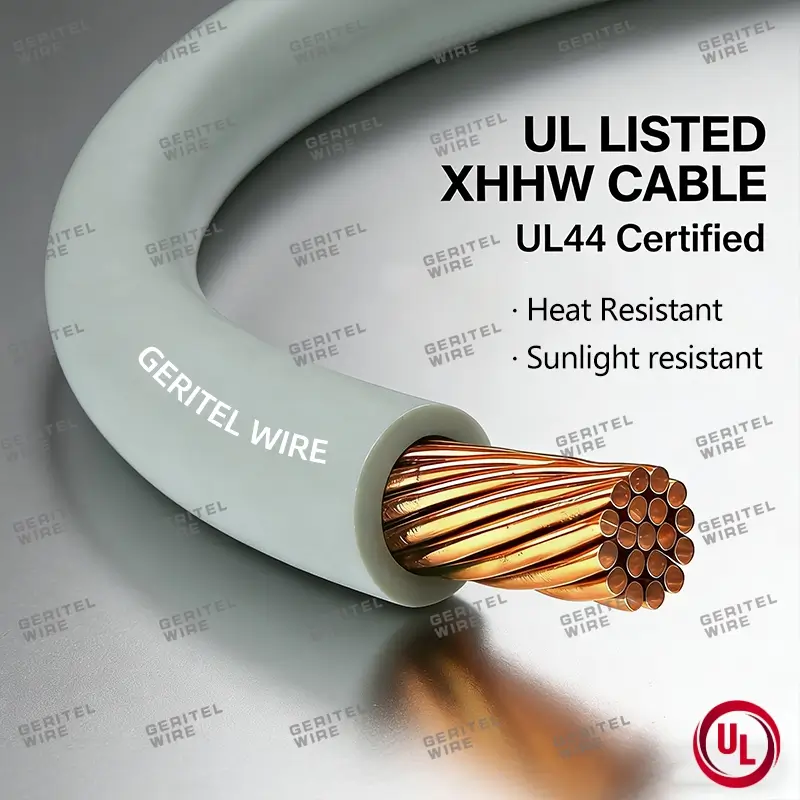
A pivotal specification for this project was 4/0 AWG XHHW electric power cable for main service entrances and large feeder connections. The choice of XHHW Wire over alternatives proved decisive for several technical reasons:
Thermoset Superiority: Unlike thermoplastic alternatives, XHHW's cross-linked polyethylene (XLPE) insulation undergoes a curing process that creates molecular cross-links. This thermoset structure means the material won't remelt under heat, maintaining integrity during overload conditions . In Honduras' high-temperature environment, this thermal stability prevents the insulation deformation that plagued previous installations.
Wet Location Performance: While standard wires degrade in humid conditions, XHHW-2 Wire maintains 90°C rating in both wet and dry locations . Given Honduras' 80%+ annual humidity and seasonal flooding, this dual-rated performance eliminated the derating concerns that would have required larger conductor sizes with other wire types.
Chemical Resistance: XLPE insulation demonstrates superior resistance to the industrial pollutants, agricultural chemicals, and ozone exposure common in mixed-use distribution corridors . This translated to longer service life in areas where previous PVC-insulated cables had failed within 8 years.
Low Leakage Current: XLPE's dielectric constant (2.2–3.0 megohms) significantly reduces current leakage compared to PVC-based alternatives, improving energy efficiency across the distribution network
General Distribution: THHN and THWN Wire
For branch circuits, commercial building feeders, and control applications, we supplied THHN Wire and THWN Wire in sizes from 12 AWG to 4/0 AWG. The selection leveraged the dual-rated nature of modern building wire:
• THHN/THWN-2 Wire combines thermoplastic high heat-resistant nylon-coated construction with wet location ratings, providing 90°C performance in both dry and wet environments
• The nylon jacket's slippery surface facilitated faster pulling through conduit—critical for minimizing labor costs in the extensive urban retrofit portions of the project
• Cost efficiency allowed broader deployment across secondary distribution points without compromising safety margins.
Technical Differentiation: Why XHHW Won Critical Applications
The project presented several decision points where XHHW Wire competed against THHN/THWN alternatives. Understanding these distinctions clarifies why our recommendations optimized long-term value:
Temperature Stability: While both achieve 90°C dry ratings, XHHW-2 maintains this performance in wet locations without derating, whereas THHN drops to 75°C in wet environments unless specifically dual-rated as THHN/THWN-2 . For underground duct banks subject to groundwater infiltration, this eliminated ampacity uncertainty.
Mechanical Durability: Despite thicker insulation, XHHW's XLPE compound offers greater flexibility than PVC-based THHN, particularly in cooler morning installation conditions . This reduced installation stress and potential damage during complex conduit runs.
Fire Safety: XLPE produces significantly less toxic smoke than PVC when burned—a consideration for urban underground vaults and densely populated service areas
Longevity Economics: While XHHW carries a 10–25% material cost premium, the elimination of premature replacement cycles—common with PVC degradation in tropical environments—delivered 40% lower lifecycle costs according to our projections.
Execution: UL-Certified Quality Meets Aggressive Timelines
Certification Assurance
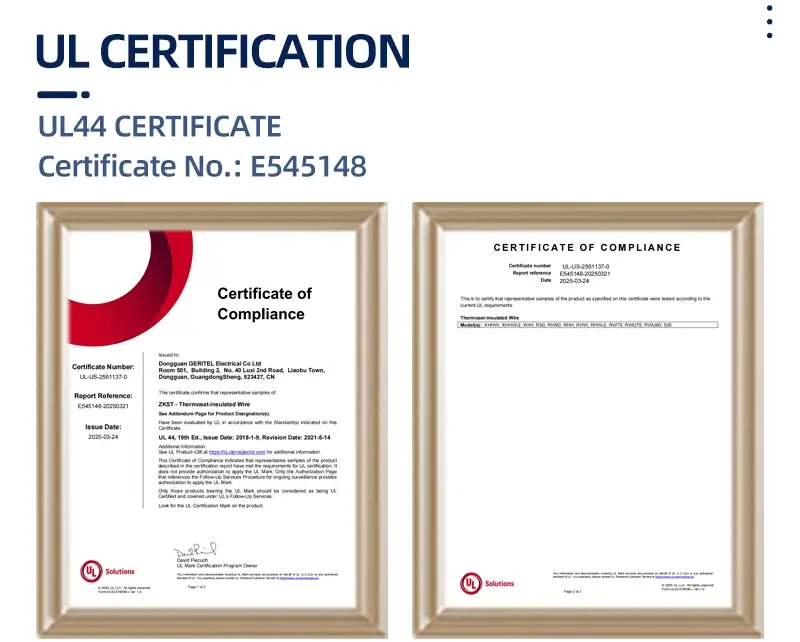
Every cable supplied carried full UL certification under standards UL 1072 (medium voltage), UL 44 (XHHW), and UL 83 (THHN/THWN). This certification wasn't merely documentation—it represented:
• Third-party verification of insulation thickness and conductor integrity
• Confirmation of temperature ratings under standardized testing
• Traceability through our quality management system
Our status as a UL-certified manufacturer with established Central American project experience provided the utility procurement team with confidence that specifications would be met without the quality inconsistencies common in commodity cable markets.
Logistics and Delivery
The rehabilitation project operated on an accelerated timeline to minimize seasonal weather disruptions. Our production scheduling and inventory management ensured:
• MV90/MV105 Cable: 45-day delivery windows for large drum quantities
• 4/0 AWG XHHW electric power cable and smaller building wire sizes: 30-day turnaround for initial mobilization
• Phased shipments aligned with construction crew availability and site preparation schedules
This delivery reliability prevented the costly crew idle time that often plagues infrastructure projects in the region.
Results: Measurable Infrastructure Transformation
Eighteen months after energization, the rehabilitation zones demonstrate:
Reliability Improvement: Outage frequency in upgraded districts dropped 62% compared to pre-project baselines, with average restoration times reduced from 4.2 hours to 47 minutes.
Thermal Performance: Infrared surveys during peak summer loading show MV105 Cable operating 15–20°C below maximum ratings, confirming the ampacity margins engineered into the specifications.
Moisture Resistance: Post-rainy season insulation resistance testing of XHHW installations shows no degradation, validating the wet-location performance critical to tropical reliability.
Installation Efficiency: The nylon-jacketed THHN/THWN portions of the project achieved 15% faster pulling speeds than projected, reducing labor costs and accelerating the construction schedule.
Partnership Value: Beyond Product Supply
What distinguished this engagement was our technical partnership approach. Rather than simply fulfilling a purchase order, our engineers:
• Conducted pre-installation training for local electrical contractors on proper handling of XLPE-insulated cables
• Provided ampacity calculations specific to Honduras' ambient temperature conditions (often exceeding 40°C in direct sun)
• Developed cable management protocols for the mixed MV/LV infrastructure typical of grid rehabilitation projects
This knowledge transfer ensures the infrastructure investment delivers value across its 30+ year design life, rather than suffering from installation-related premature failures.
Client Perspective: Validated Confidence
The utility's project director summarized the engagement outcomes without reservation, noting that the combination of certified quality, technical responsiveness, and delivery reliability had "set a new standard for their infrastructure procurement." The engineering team particularly valued the detailed cable selection rationale that optimized performance without over-specifying—and over-paying—for unnecessary capabilities.
The project has since become a reference implementation for neighboring utilities facing similar rehabilitation challenges, with our cable specifications being adopted as baseline standards for upcoming distribution upgrades across Central America.
Your Infrastructure Deserves Proven Performance
The Honduras National Grid Rehabilitation demonstrates that cable selection is not merely a procurement decision—it's an engineering strategy that determines decades of operational reliability. Whether you're facing tropical humidity, high-temperature environments, or complex installation constraints, the right cable specification transforms infrastructure vulnerability into operational strength.
Dongguan GERITEL Electrical Co., Ltd. brings UL-certified manufacturing, demonstrated project execution, and technical partnership to your power distribution challenges. Our MV90 / MV105 Cable, XHHW Wire, THHN Wire, and THWN Wire solutions are engineered for the conditions that destroy lesser materials.
Ready to engineer reliability into your next project?
Contact our technical team today:
Dongguan GERITEL Electrical Co., Ltd.
Tel/WhatsApp/WeChat: +86 135 1078 4550 / +86 136 6257 9592
Email: manager01@greaterwire.com
 El Salvador Urban Power Grid Expansion Supply Project



 Building 2, No. 40 Luxi 2nd Road, Liaobu Town, Dongguan City, Guangdong Province, China