


 Home
HomeHasbaya 100kWp PV Solar Project – Lebanon (2022–2023)
 GERITEL
 Apr 17,2026

When our team first engaged with the project developer in late 2022, Lebanon's electricity sector was in complete disarray. The national grid, operated by Électricité du Liban (EDL), was providing power for only 2-4 hours per day in the Tyre region. For a commercial facility requiring stable 24/7 operations, this reality created an existential threat to business continuity.
The client had already endured six months of relying solely on diesel generators—an economically devastating arrangement with fuel costs consuming nearly 40% of operational budgets. Their decision to invest in a 200 kWp rooftop solar system with battery storage was born out of necessity, not environmental aspiration. However, they quickly discovered that designing a resilient system for Lebanon's unique conditions required far more than standard off-the-shelf components.
The core technical challenges emerged during our initial site assessment:
The rooftop installation spanned multiple building sections with cable runs exceeding 80 meters between the furthest string and the central inverter station. In Lebanon's intense Mediterranean climate—where summer temperatures regularly exceed 35°C and UV radiation levels are among the highest in the region—standard cable specifications would degrade rapidly. The client had already witnessed premature cable failures in neighboring installations, where PVC-insulated conductors became brittle and cracked within 18 months of exposure.
Compounding these environmental stressors was the system's hybrid architecture. Unlike grid-tied systems in stable electricity markets, this installation needed to seamlessly transition between grid-tied, off-grid, and battery backup modes multiple times daily. Each transition created current surges and voltage fluctuations that would test every connection point in the system.
Material procurement presented equally formidable obstacles. Lebanon's banking crisis had severely restricted international wire transfers, and many European cable manufacturers had suspended shipments to the country due to payment risks. The project timeline—already compressed to minimize generator dependency—faced potential delays of 12-16 weeks if we relied on traditional supply chains.
The Solution: Engineered Cable Architecture for Extreme Reliability
Our engineering team approached this project with a fundamental principle: in an environment where maintenance access is unpredictable and system downtime costs thousands of dollars per hour, cable infrastructure must be a "fit-and-forget" component. We designed a three-tier cable system utilizing H1Z2Z2-K for DC circuits, THHN for AC distribution, and H07V-K for battery interconnections—each selected for specific performance characteristics that addressed the client's operational realities.
DC Side: H1Z2Z2-K Solar Cable
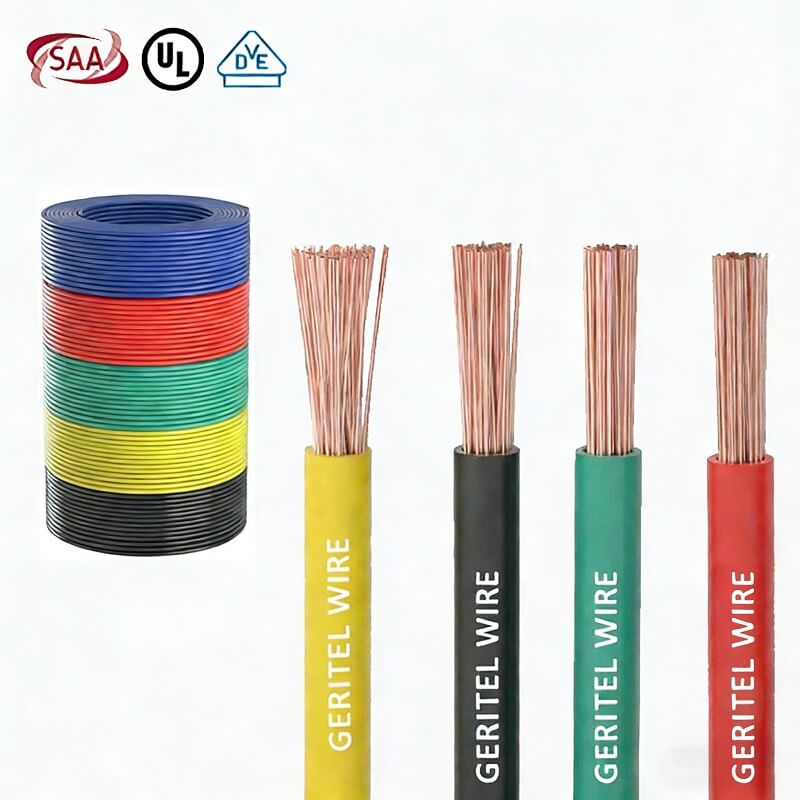
For the photovoltaic array connections, we specified H1Z2Z2-K 1×4mm² for string wiring and H1Z2Z2-K 1×6mm² for homerun circuits to the combiner boxes. This choice departed from the client's initial consideration of standard PV1-F cable, and the rationale was rooted in Lebanon's specific conditions.
The H1Z2Z2-K construction features electron-beam cross-linked polyolefin (XLPO) insulation and sheathing—materials that maintain mechanical integrity across a temperature range of -40°C to +120°C. While the ambient temperature in South Lebanon rarely drops below 5°C, the upper thermal threshold was critical: rooftop surface temperatures in Tyre can reach 70°C during August afternoons, creating conductor temperatures that would degrade standard PVC insulation within seasons.
The double-insulation design of H1Z2Z2-K provides additional protection against the abrasion risks inherent in rooftop installations. Our installation teams observed that the previous contractor's cables had suffered damage from wind-induced movement against mounting rail edges—a failure mode eliminated by the robust outer sheath of the H1Z2Z2-K specification. The tinned copper conductor construction, utilizing Class 5 stranding per IEC 60228, offered superior corrosion resistance against the salt-laden air from the Mediterranean coast just 8 kilometers from the site.
Voltage rating was another decisive factor. While the system design utilized 1500V DC string configurations, we selected cable rated for 1800V DC maximum operating voltage per EN 50618 standards. This 20% safety margin provided crucial headroom for the voltage spikes observed during rapid grid disconnect events, when inverter regulation lag could momentarily elevate array voltages beyond nominal levels.
AC Side: THHN Building Wire
For the inverter output circuits and main distribution connections, we deployed THHN 1×10mm² conductors. This specification required careful justification to the project engineer, who initially questioned why we weren't using PV-rated cable for the entire system.
THHN (Thermoplastic High Heat-resistant Nylon-coated) wire offers distinct advantages for enclosed conduit applications. The nylon jacket provides exceptional mechanical protection during cable pulling through the 40-meter conduit runs from rooftop inverters to the main distribution panel. The 90°C temperature rating and 600V AC operational capacity aligned perfectly with the inverter output specifications, while the compact diameter optimized conduit fill ratios per NEC Chapter 9 guidelines.
Crucially, THHN is designed for dry and damp locations when properly installed in conduit. Unlike exposed rooftop applications, the AC circuits ran entirely through weatherproof raceways, eliminating the need for UV-resistant cable specifications and reducing material costs by approximately 30% compared to all-PV-wire designs. The stranded copper construction facilitated terminations in the inverter's compression lugs, reducing installation time and improving connection reliability.
For control circuits and auxiliary equipment connections—including the monitoring system, transfer switches, and battery management communications—we utilized H07V-K 1×10mm² flexible cable. This harmonized European standard wire provided the flexibility required for equipment terminations while maintaining voltage ratings suitable for 400V AC distribution.
Energy Storage: Heavy-Duty Battery Cabling
The battery energy storage system (BESS) integration demanded cable capable of handling high-current, fluctuating loads without excessive heating. We specified H07V-K 1×16mm² for main battery interconnections and H07V-K 1×25mm² for the critical link between the battery bank and hybrid inverter.
Battery cables experience unique stress patterns: rapid current fluctuations during charging/discharging cycles, potential short-circuit currents during fault conditions, and continuous operation at elevated temperatures within the battery enclosure. The H07V-K specification, with its fine-stranded copper construction and heat-resistant PVC insulation, provided the flexibility needed for tight battery rack configurations while maintaining current-carrying capacities of 85A (16mm²) and 115A (25mm²) respectively at 60°C ambient.
The 25mm² sizing for the main battery-to-inverter run was deliberately oversized. Our calculations indicated that 16mm² would suffice for normal operation, but the 25mm² specification reduced voltage drop to under 1% across the 15-meter run—critical for maximizing round-trip efficiency in a system where every percentage point of loss translated to additional generator runtime during extended grid outages.
Product Specifications and Certifications
The H1Z2Z2-K solar cable, serving as the cornerstone component of this project, establishes its technical credentials through a comprehensive certification framework that underpins long-term system reliability. Holding TÜV Rheinland Certificate No. R60113052 alongside compliance with EN 50618:2014 and IEC 62930 international standards, this product has undergone rigorous third-party scrutiny covering every aspect from raw material selection to manufacturing process control. Electrically, the cable is engineered for routine operation at AC 1000V and DC 1500V, while its 1800V DC maximum withstand capability provides substantial safety margins against voltage transients during rapid switching operations. Thermal performance represents another critical dimension, with an ambient temperature range of -40°C to +90°C complemented by conductor ratings up to +120°C, ensuring stable electrical and mechanical characteristics even when rooftop surface temperatures reach 70°C during Lebanese summers. The conductor employs Class 5 tinned copper stranding per IEC 60228, a design that optimizes bending radius for complex rooftop routing while the tin plating provides effective protection against corrosion from Mediterranean salt-laden atmospheres. The insulation system utilizes electron-beam cross-linked polyolefin (XLPO) in a dual-wall configuration, where the outer black sheath delivers UV resistance and abrasion protection, and the inner red insulation ensures clear polarity identification, collectively forming a comprehensive solution purpose-built for outdoor photovoltaic applications.
THHN building wire assumes critical responsibility for AC-side power transmission in this installation, with its certification portfolio encompassing UL 83 standard that ensure internationally recognized safety compliance in both electrical performance and material environmental characteristics. Rated for 600V AC operation with temperature ratings of 90°C in dry locations and 75°C in wet environments, this wire confidently addresses the sustained high-load operating conditions potentially encountered at inverter output terminals. Structurally, the PVC base material combined with nylon jacketing creates a dual-layer construction that guarantees insulation integrity while imparting excellent mechanical strength and abrasion resistance—particularly crucial for the 40-meter conduit pulls where the nylon's smooth surface reduces friction coefficients to enable long-distance traction, and the jacket's tough texture effectively prevents cutting risks when traversing metal conduit edges. The conductor utilizes standard stranded bare copper processing, a proven traditional design that balances cost-effectiveness with electrical performance, offering sufficient flexibility to accommodate compact terminal block layouts in distribution panels while maintaining adequate rigidity to ensure long-term stability of crimped connections.
H07V-K flexible cable functions as the connection medium for battery systems and control circuits, with technical characteristics reflecting targeted design for dynamic operating environments. Compliant with harmonized standards EN 50525-2-31, the 450/750V voltage rating covers the highest potential differences likely in energy storage systems, while the -5°C to +70°C temperature adaptation range matches thermal management conditions within battery enclosures. The conductor employs Class 5 fine-stranded copper construction, where this high-strand-count design imparts exceptional flexibility enabling complex routing through narrow battery module clearances, while withstanding the micro-vibrations from frequent charge/discharge cycles without inducing metal fatigue. The insulation layer utilizes heat-resistant PVC formulation, providing adequate dielectric strength and oil resistance while maintaining cost competitiveness—particularly important for battery installation environments where electrolyte vapor may be present. Whether in 16mm² cross-section for inter-module bridging or 25mm² for main power transmission, this cable series delivers consistent quality levels and installation convenience, establishing itself as a reliable choice for energy storage system electrical connections.
Execution: Delivering Against Compressed Timelines
The procurement phase tested our supply chain capabilities. With traditional European cable suppliers quoting 14-week lead times, we leveraged our manufacturing partnerships in Dongguan to produce the complete cable package—H1Z2Z2-K, THHN, and H07V-K—within 18 days of order confirmation. Our TÜV-certified production lines maintained full traceability, with each drum labeled with batch numbers corresponding to test reports and material certifications.
Installation proceeded during November 2022, taking advantage of milder temperatures before the winter rains. The H1Z2Z2-K cable's flexibility—despite its double-insulation construction—proved invaluable as installers routed strings around rooftop obstacles and through cable management systems. The pre-tinned conductors eliminated the need for additional antioxidant compounds at MC4 connector terminations, saving approximately 15% of labor time compared to bare copper alternatives.
The THHN installation through existing conduit required careful pulling tension management. We utilized cable lubricant and monitored sidewall bearing pressures to prevent insulation damage during the 40-meter pulls. The nylon jacket's abrasion resistance prevented the "hang-ups" that often occur with standard PVC insulation in long conduit runs.
Commissioning occurred in early December 2022, coinciding with one of Lebanon's most severe grid instability periods. The system immediately demonstrated its value: during the first week of operation, the facility experienced 37 grid disconnections, with the battery system seamlessly maintaining operations without a single interruption. Cable temperature monitoring—implemented as part of the SCADA system—showed conductor temperatures remaining 15-20°C below maximum ratings even during peak summer loads in July 2023.
Results: Transforming Operational Resilience
Eighteen months post-commissioning, the cable infrastructure has performed without incident. The client reports zero maintenance requirements for the electrical distribution system—a stark contrast to their previous experience with generator cabling, which required annual replacement of flexible connections due to vibration fatigue.
Quantified outcomes include:
• Generator runtime reduction: From 18 hours daily to 4 hours during extended grid outages, representing annual diesel savings exceeding $45,000
• System availability: 99.7% uptime since commissioning, with the 0.3% attributed to inverter firmware updates rather than cable or connection issues
• Voltage drop performance: Measured losses of 0.8% on DC circuits and 1.2% on AC distribution—both within design parameters and contributing to overall system efficiency of 84.5%
The H1Z2Z2-K cable's UV resistance has proven particularly valuable. Visual inspection in September 2023—after 14 months of continuous exposure—showed no chalking, cracking, or discoloration of the outer sheath. This durability addresses a critical concern for Lebanese solar investors: in a market where technical maintenance capacity is limited, components must withstand years of neglect without degradation.
Why This Cable Selection Mattered
The client's choice of certified H1Z2Z2-K over lower-cost alternatives from regional traders reflected a sophisticated understanding of total cost of ownership. While the initial material cost was approximately 15% higher than uncertified alternatives, the elimination of replacement cycles and maintenance visits delivered payback within the first year of operation.
The TÜV certification provided more than technical assurance—it facilitated project financing. The international development bank funding a portion of the installation required documentation proving compliance with IEC standards; our certificates and test reports satisfied these requirements without additional third-party testing delays.
For the AC and battery circuits, the decision to use THHN and H07V-K rather than extending PV-rated cable throughout the system demonstrated engineering pragmatism. These specifications matched the environmental conditions (conduit-protected, temperature-controlled) while optimizing material costs—a crucial consideration in a market where capital constraints often limit project scalability.
Partnership Value and Industry Context
This project exemplifies the unique evolution of Lebanon's solar market. Unlike the utility-scale deployments dominating headlines in the UAE or Saudi Arabia, Lebanon's energy transition is occurring one rooftop at a time—driven by grid failure rather than policy incentives. Each installation must function as an autonomous power plant, capable of islanding indefinitely while maintaining grid-interconnection capabilities for when electricity does flow.
Our role extended beyond cable supply to technical consultation—sizing conductors for voltage drop optimization, specifying appropriate ratings for hybrid inverter compatibility, and providing installation training to local electrical contractors unfamiliar with solar-specific requirements. This knowledge transfer addressed a critical gap in Lebanon's emerging solar workforce, where experience with conventional building wiring often doesn't translate to PV system nuances.
The success of the Hasbaya installation has generated direct referrals: three neighboring commercial facilities in Tyre district have since commissioned similar systems, with the original client actively recommending our cable specifications based on their operational experience.
Equivalent reliability for your valuable projects
Lebanon's solar market will continue growing regardless of national grid improvements—businesses cannot afford to wait for institutional solutions. Whether you're developing a 50kWp residential installation or a 500kWp industrial rooftop, cable selection determines whether your system operates for 25 years or requires replacement within five.
We specialize in supplying certified solar cables for challenging environments:
• TÜV-certified H1Z2Z2-K solar cable (EN 50618/IEC 62930) for DC applications
• UL 4703 PV wire for North American standard projects
• THHN/THWN-2 building wire for AC distribution
• H07V-K flexible cable for battery and control systems
Our manufacturing capabilities support rapid turnaround for urgent projects, with full certification documentation provided for every batch. We've supplied cables for over 200 MW of solar capacity across the Middle East and Africa, with particular expertise in hybrid systems operating in grid-unstable environments.
Contact us
Dongguan GERITEL Electrical Co., Ltd.
Tel/WhatsApp/WeChat: +86 135 1078 4550 / +86 136 6257 9592
Email: manager01@greaterwire.com
Let us engineer the connection infrastructure that keeps your solar investment generating returns—regardless of what happens to the grid.
 Mohammed bin Rashid Al Maktoum Solar Park (2021–2023)



 Building 2, No. 40 Luxi 2nd Road, Liaobu Town, Dongguan City, Guangdong Province, China