


 Home
HomeFiji Suva & Lautoka Cold Chain Fish Processing Facility Upgrade
 GERITEL
 Apr 09,2026

In early 2024, the two largest fish processing facilities in the Republic of Fiji—the cold chain complexes located in the capital city of Suva and the western port city of Lautoka—faced critical electrical infrastructure upgrade demands simultaneously. Serving as vital tuna and deep-sea fish export hubs for the South Pacific region, these facilities play a crucial role in supplying high-quality seafood to markets in Australia, New Zealand, and Asia.
The project owner clearly articulated core requirements during preliminary consultations: the new electrical system must strictly comply with Australian/New Zealand AS/NZS standards, as terminal market audits evaluate electrical compliance as a key criterion for product admission. Additionally, the owner emphasized a mandatory requirement for SAA-certified products—in South Pacific island nations, non-SAA-certified electrical equipment not only encounters customs clearance obstacles but also triggers legal risks during insurance claims and liability tracing.
Previous collaborations with local suppliers had exposed three core issues: first, delivered cables failed to match specified standards, causing frequent refrigeration unit tripping; second, lack of professional AS/NZS standard technical support forced installation teams to repeatedly halt work for specification confirmation; third, delivery delays resulted in lost production capacity during peak processing seasons. These experiences made the owner exceptionally cautious when screening new suppliers, requiring demonstrated success records in similar South Pacific region projects.
Needs Diagnosis and Customized Solution Development
Upon receiving the inquiry, our technical team did not immediately provide quotations. Instead, we dispatched engineers to conduct three rounds of in-depth technical coordination via video conference with local electrical contractors in Fiji. Site survey feedback revealed that the Suva facility, constructed in the 1980s, featured aging rubber-insulated cables with cracked insulation layers; the Lautoka facility, expanded in 2020, had employed non-standard cables resulting in excessively high grounding system impedance—creating serious safety hazards in the humid maritime climate.
Based on diagnostic results, we developed a phased cable configuration strategy:
Phase One: Building Distribution System Reconstruction
For internal lighting, office areas, staff rest zones, and general socket circuits, we selected
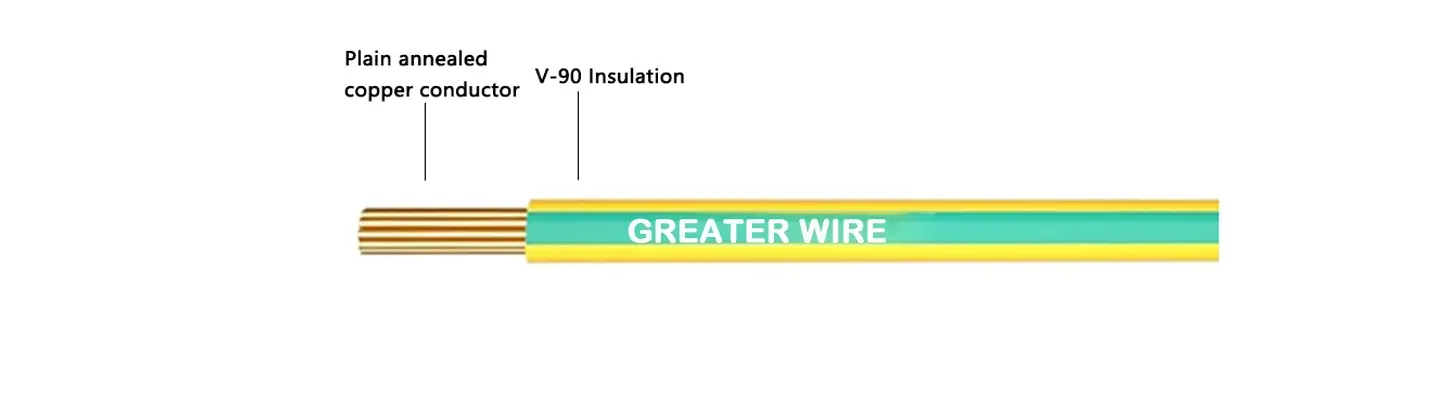
Building Cable (Class 2 copper conductors) in specifications ranging from 6 mm², 10 mm² to 16 mm², rated at 0.6/1 kV. Notably, 6 mm² Building Cable was designated as the standard configuration for office area trunk lines—this specification achieves optimal balance between current-carrying capacity and cost-effectiveness, meeting modern office equipment power demands while reserving capacity for future air conditioning installations. Compared to Class 1 copper, Class 2 copper offers superior cost advantages while maintaining excellent conductivity, making it particularly suitable for budget-constrained renovation projects unwilling to compromise safety.
Phase Two: Power Main System Upgrade
Refrigeration compressors (75kW per unit) and conveyor systems (120 meters total length, segmented drive) constitute the facility's power core. We configured TPS Cable (twin and earth flat cable) in specifications extending from 2.5 mm² to 10 mm². The critical selection rationale for TPS Cable over ordinary round cables lies in its flat profile—in Fiji's humid, salt-spray environment, the flat configuration reduces water accumulation risks within cable trays, while the easily strippable sheath design significantly enhances on-site installation efficiency. All TPS Cables strictly adhere to AS/NZS 5000.2 standards, featuring V-90 grade PVC insulation and 3V-90 grade flame-retardant PVC sheathing, ensuring mechanical integrity at continuous operating temperatures up to 90°C.
Phase Three: Grounding Safety System Reinforcement
Considering the high-humidity characteristics of fish processing environments, we particularly strengthened the grounding network.
Earthing Cable employs bare copper stranded construction in 16 mm² and 25 mm² cross-sections, directly welded to main grounding electrodes and equipment equipotential bonding points. This design controls grounding resistance below 1 ohm—significantly lower than the 4-ohm upper limit stipulated by AS/NZS 3000 Wiring Rules—providing redundant protection against lightning strikes and equipment leakage.
Phase Four: Flexible Control and Equipment Connection
For dynamic connections between refrigeration units, automated packaging machinery, and conveyor control cabinets, we deployed
Multicore Flexible Cable (Class 5 copper conductors) in specifications covering 1 mm², 1.5 mm², and 2.5 mm², rated at 0.6/1 kV. The ultra-fine stranding structure of Class 5 copper conductors (compliant with IEC 60228 Class 5) imparts exceptional flexibility—minimum bending radius of merely 7.5 times cable outer diameter (fixed installation) or 15 times (mobile installation)—perfectly accommodating equipment vibration, cabinet door operation, and maintenance access scenarios. Compared to rigid control cables, flexible cables significantly reduce conductor fracture risks caused by mechanical stress, substantially decreasing unplanned downtime in automated production lines.
Safety Assurance: Certification Systems and Quality Control
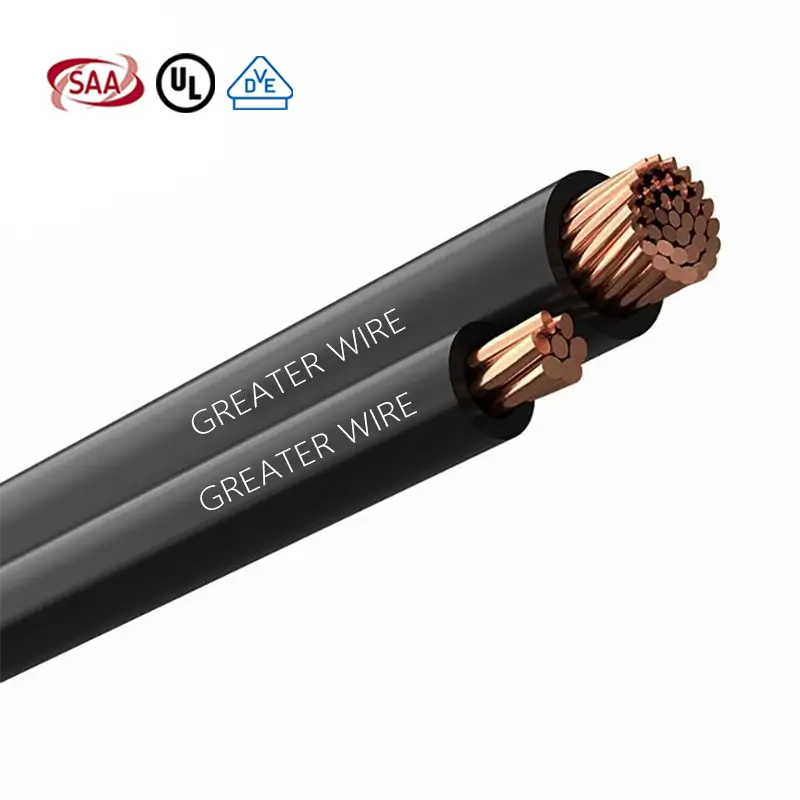
This project's core competitive advantage lies in our comprehensive SAA certification system. All supplied cables have undergone type testing and factory auditing by SAA Approvals Pty Ltd (a JAS-ANZ accredited body), with certificate numbers publicly queryable in the Australian Electrical Equipment Safety System (EESS) database. This signifies:
• Compliance Endorsement: Products meet full requirements of AS/NZS 1125 (conductor standards), AS/NZS 5000 series (cable standards), and AS/NZS 3808 (insulation and sheathing material standards)
• Market Access: The SAA mark represents mandatory entry requirements for electrical projects in Fiji, Australia, New Zealand, and South Pacific island nations (Papua New Guinea, Solomon Islands, etc.)
• Risk Mitigation: Use of non-SAA-certified cables may invalidate project insurance, cause audit failures, and trigger legal liability追溯
Our quality control processes exceed certification baselines: every cable batch undergoes 100% conductor resistance testing, high-voltage withstand testing (2.5kV/5min), and insulation thickness sampling inspection before shipment. Addressing the maritime shipping characteristics of the Fiji project, we employed moisture-resistant steel-wooden drum packaging with humidity indicator cards placed inside containers, ensuring cables remain protected from salt spray erosion during tropical sea transport.
Precision Control of Timelines and Logistics
The seasonal nature of the fisheries processing industry dictated that electrical upgrades must complete during the closed fishing season (March–May annually), with any delays causing missed catch seasons. We activated our rapid response delivery mechanism:
• Pre-production Stocking: Based on technical confirmation documents, we pre-positioned semi-finished core specifications including 6 mm² Building Cable and 2.5 mm² TPS Cable at our Dongguan facility, compressing standard delivery time from 45 days to 28 days
• Segmented Logistics Strategy: Considering berth scheduling limitations at Suva and Lautoka ports, we divided shipments into two batches—urgent specifications air-freighted to Nadi International Airport, with bulk cargo shipped directly to Lautoka Port by sea, achieving seamless "arrive-and-install" coordination
• On-site Technical Support: Our technical engineers arrived in Fiji before cargo port arrival, conducting three-day pre-installation training with local contractors focusing on AS/NZS standard cable laying bending radii, grounding continuity testing methods, and TPS Cable stripping techniques
Ultimately, all cables were delivered within the contracted 28-day period, five days ahead of the owner's required deadline, providing valuable buffer time for system commissioning.
Project Outcomes and Operational Validation
In June 2024, the upgraded cold chain facilities successfully passed the Australian AQIS (Australian Quarantine and Inspection Service) facility audit with a "zero non-conformance" rating for electrical system compliance. Operational data demonstrated:
• Energy Efficiency Improvement: New cable system line losses decreased from 4.2% to 1.8%, generating annual electricity savings of approximately AUD 12,000
• Failure Rate Reduction: Following grounding system upgrades, leakage-induced tripping incidents dropped from 3.2 monthly occurrences to zero
• Maintenance Cost Optimization: Flexible cable application reduced equipment connection point maintenance time by 60%, lowering annual maintenance budgets by 25%
The owner's project director specifically highlighted in acceptance documentation that the supplier's deep understanding of AS/NZS standards and familiarity with South Pacific project logistics characteristics represented the key differentiating factors for project success.
Extended Partnership Value and Strategic Significance
This project's value transcended the single transaction. Through successful delivery at the Suva and Lautoka facilities, we established a benchmark case in South Pacific fisheries processing, validating the following core capabilities:
1. Standard Adaptation Capability: Product selection expertise combining AS/NZS standard systems with island nation special environmental conditions (high humidity, salt spray, limited logistics infrastructure)
2. Full-Cycle Service Capability: End-to-end service chains spanning technical consultation, certification document support, and installation guidance
3. Regional Market Insight: Deep knowledge of electrical regulations, customs clearance procedures, and local contractor operational practices in South Pacific island nations including Fiji, Papua New Guinea, and Samoa
These capabilities secured us preferred negotiation rights for the owner's new facility projects in Vanuatu and New Caledonia in subsequent bidding processes.
Why Choose Us? Three Core Advantages Explained
Advantage One: Authoritative Certification System, Zero Compliance Risk
We maintain over 50 international product certifications, with SAA certification covering our complete product lines including Building Cable, TPS Cable, Earthing Cable, and Multicore Flexible Cable. Every meter of cable is traceable to AS/NZS standard test reports, providing unquestionable compliance endorsement for your projects.
Advantage Two: South Pacific Project Experience, Understanding Your Needs
From Fiji to Papua New Guinea, from Solomon Islands to Samoa, we have delivered over 200 kilometers of AS/NZS standard cables. We understand the logistics pain points, climate challenges, and local construction practices of island nation projects, providing engineering solutions that transcend mere products.
Advantage Three: Agile Delivery System, Guaranteed Schedules
Leveraging our intelligent manufacturing base in Dongguan and strategic inventory configuration, we achieve industry-leading delivery times of 28 days for standard products and 35 days for customized products. For urgent projects, we offer air freight segmented delivery solutions, ensuring your critical milestones remain unaffected by cable supply constraints.
Begin Your Project Upgrade Journey
Whether you are planning new cold chain facilities or facing electrical safety retrofits for existing installations, we can provide AS/NZS standard-compliant cable solutions tailored to your needs. From 6 mm² Building Cable to complete power distribution systems, from certification document support to on-site technical guidance, we are your trusted South Pacific project partner.
Contact us today for free technical consultation and sample support:
Dongguan GERITEL Electrical Co., Ltd.
Tel/WhatsApp/WeChat: +86 135 1078 4550 / +86 136 6257 9592
Email: manager01@greaterwire.com
Let our professional team customize cable configuration solutions for your next fisheries processing, cold chain logistics, or industrial facility project. With SAA-certified superior quality, we help you capture market opportunities.
 Papua New Guinea Morobe Province Wafi-Golpu Project



 Building 2, No. 40 Luxi 2nd Road, Liaobu Town, Dongguan City, Guangdong Province, China