


 Home
HomeElectrical Infrastructure Cable Solutions for Expanding Industrial Operations
 GERITEL
 Jun 15,2026

Expanding a plant is not like building new. You have existing loads, limited spare capacity, and live panels. The cables you choose must work with what is already there, often in tighter spaces and with shorter shutdown windows. TC-ER cable (UL 1277 Tray Cable, Exposed Run) is ideal for expansions because it installs fast (no conduit in trays), handles harsh conditions, and comes in a wide range of gauges and constructions. This article walks through three typical expansion scenarios and the cables that solve them.
1.Three expansion scenarios – and the TC-ER cables that work
Scenario 1 – Adding a new production line in an existing building
You need to run power from the main switchgear to a new panel, plus control wiring for sensors and VFDs. The existing cable trays are crowded, and downtime is limited to a weekend.
- Main feeder (200A): 350 kcmil 4/C Unshielded TC-ER with XHHW‑2, sunlight‑resistant jacket – Handles high current, 4/C gives insulated ground, XHHW‑2 resists heat in crowded trays.
- Motor feeders (50A each): 4 AWG 4/C Shielded TC-ER with XHHW‑2, oil‑resistant jacket – Shield blocks EMI from VFDs on the new line. 4/C for dedicated ground. Oil‑resistant for nearby machinery.
- Control circuits (24V DC sensors): 16 AWG 4/C Unshielded TC-ER with THHN/THWN‑2 – Small gauge saves tray space. Unshielded is fine if VFD cables are separated.
All cables are TC‑ER rated, so they can be laid directly in the existing open trays – no conduit, no shutdown for pipe bending.
Scenario 2 – Outdoor expansion: new warehouse or yard area
The new section is outdoors, exposed to sun, rain, and temperature swings. Cables run on ladder trays or direct buried in some sections.
- Feeder from main building to new warehouse (300A, 400 feet): 500 kcmil 3/C Unshielded TC-ER with XHHW‑2 and sunlight‑resistant jacket – Large gauge reduces voltage drop over long distance. Sunlight‑resistant jacket prevents UV cracking. 3/C is cost‑effective when ground is via tray.
- Branch circuits for outdoor lighting and small motors: 10 AWG 4/C Unshielded TC-ER with XHHW‑2, sunlight‑resistant – XHHW‑2 handles condensation and temperature changes. 4/C provides insulated ground for outdoor safety.
For direct burial sections, verify that the cable is marked “DIR BUR” – otherwise use conduit.
Scenario 3 – Expanding control and monitoring infrastructure
Adding more PLCs, remote I/O, and instrumentation. These cables run close to power lines in trays, so noise immunity is critical.
- Analog signals (4‑20 mA) from new sensors: 16 AWG 4/C Shielded TC-ER with XHHW‑2 – Foil shield + drain wire blocks EMI from nearby power cables. Ground drain wire at the controller end only.
- Digital I/O and fieldbus: 14 AWG 4/C Unshielded TC-ER with THHN/THWN‑2 – Lower cost, sufficient for short‑run digital signals when separated from VFD cables.
2.Why TC-ER cable is the expansion contractor’s best friend
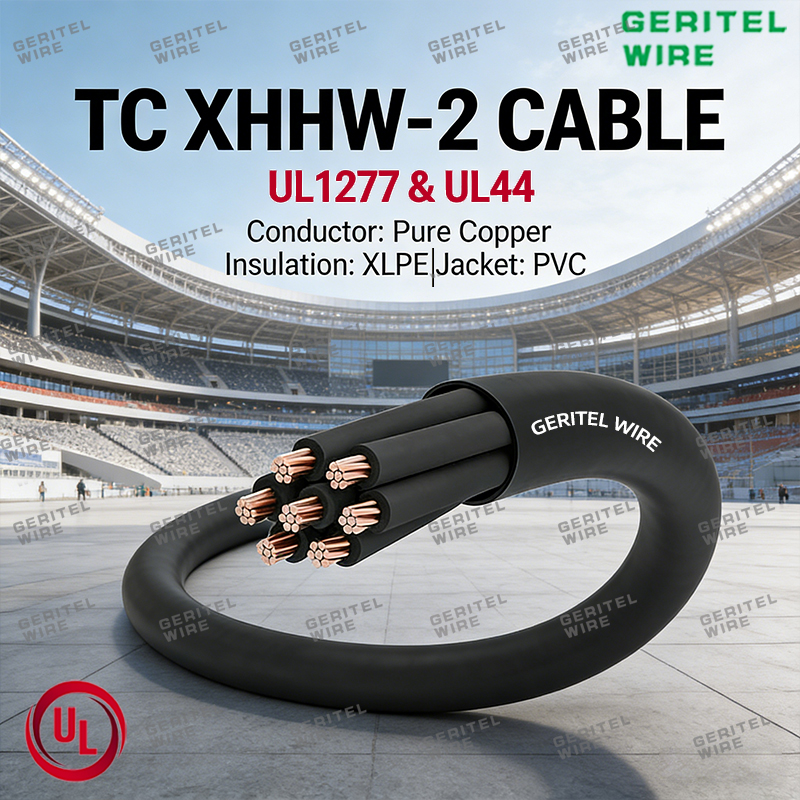
Exposed run (ER) rating – No conduit in trays. This alone cuts installation time by 40‑50%, critical when you have a short shutdown window.
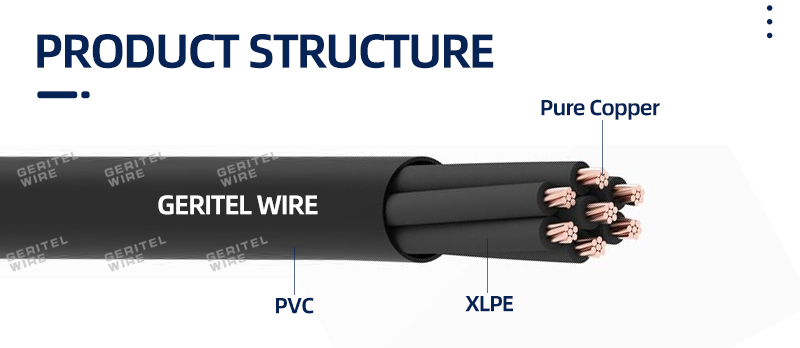
Flexible stranding – Fine‑stranded copper bends easily around existing obstacles and into crowded panels.
Wide temperature and chemical resistance – XHHW‑2 insulation works from -40°C to 90°C wet/dry. Oil‑resistant and sunlight‑resistant jackets survive outdoor and industrial environments.
Shielding options – Use shielded TC-ER for any run near VFDs or instrumentation. Use unshielded for clean power feeders to save cost.
UL 1277 listing – Inspectors accept it without argument, whether in a new tray or an existing one.
3.Planning tips for a smooth expansion
Tip 1 – Always oversize the main feeder by one gauge. Plant expansions rarely stop at one new line. A 350 kcmil today, 500 kcmil tomorrow. The extra copper costs little compared to pulling a new feeder later.
Tip 2 – Use 4/C cables with insulated ground for all outdoor and wet locations. Bare grounds corrode over time. An insulated green ground ensures a low‑resistance path for years.
Tip 3 – Keep spare conductors. Specify 4/C even when you only need 3/C today. That extra conductor becomes a spare for future sensors or controls.
Tip 4 – Label both ends of every new cable. Expansions create complex tray systems. Clear labeling saves hours during future troubleshooting.
Tip 5 – Order custom cut lengths from your supplier. Stock reels waste material and create splices. Greater Wire offers exact lengths for your expansion project – no waste, no extra joints.
4.What plant managers ask us before an expansion
“Can we run new TC-ER cable in the same tray as old, non‑TC‑ER cables?”
Yes, as long as the old cables are still code‑compliant. Keep separation between power and control (at least 6 inches) and use shielded TC-ER for controls.
“How do we avoid voltage drop on a long outdoor feeder?”
Upsize the gauge. For a 400‑foot run at 300A, 500 kcmil keeps drop under 3% at 480V. Calculate before ordering.
“What if our existing trays are at full capacity?”
TC-ER cable can be installed on cable ladders, J‑hooks, or even along structural steel (with proper support). You are not limited to existing trays.
UL Certifications – What the Markings Mean
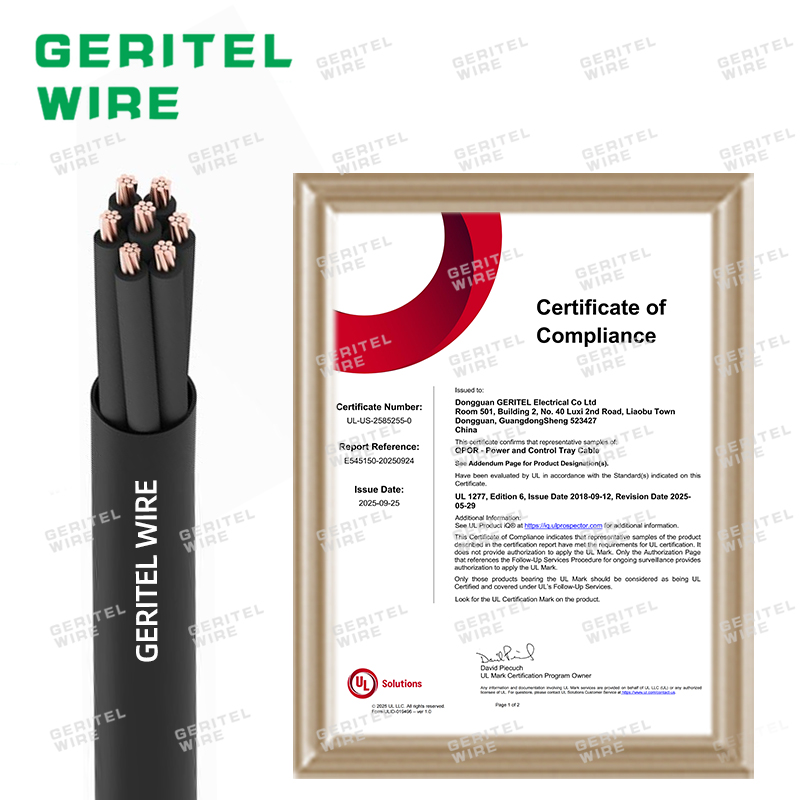
Our TC‑ER cables are UL 1277 listed for Tray Cable with Exposed Run rating. Conductors with XHHW‑2 insulation comply with UL 44 for thermoset‑insulated wires. Conductors with THHN/THWN‑2 comply with UL 83 for thermoplastic‑insulated wires. The UL markings are printed on the jacket. These certifications verify that the cable has passed the flame, crush, and impact tests required for industrial tray installations. For our UL file numbers, request the certificate from our technical team.
FAQ
Q1: Can I mix TC-ER cable with existing THHN wires in the same conduit?
A: Yes, but check conduit fill limits. TC-ER has a larger outer diameter than individual THHN wires. It is usually better to run TC-ER in trays, not in conduit.
Q2: What is the maximum distance for a 350 kcmil TC-ER feeder at 480V?
A: At 300A, voltage drop is about 1.2V per 100 feet. For a 3% drop (14.4V), maximum length is approximately 1,200 feet. Calculate based on your actual load.
Q3: Do I need a separate ground wire if the cable tray is metal and grounded?
A: NEC allows the tray to serve as an equipment ground, but a dedicated insulated ground (4/C construction) provides a lower impedance path and is recommended for sensitive electronic loads.
Q4: Does Greater Wire offer engineering support for large expansion projects?
A: Yes. We provide cable sizing calculations, voltage drop tables, and UL documentation. Contact our project team with your expansion plans.
Need a Quote for Your Industrial Expansion?
Tell us your existing power, new loads, distance, and environment (indoor, outdoor, wet, oily). We will recommend the right Electrical Infrastructure Cable – 350 kcmil, 500 kcmil, 4 AWG, 16 AWG, or other gauges – and send a quote within 24 hours.
Contact us
Dongguan GERITEL Electrical Co., Ltd.
Tel/WhatsApp/Wechat: +86 136 6257 9592
Tel/WhatsApp/Wechat: +86 135 1078 4550
Email: manager01@greaterwire.com
Website: www.geritelgroup.com
 How to Select the Right Electrical Feeder Cable for Industrial Facilities



 Building 2, No. 40 Luxi 2nd Road, Liaobu Town, Dongguan City, Guangdong Province, China