


 Home
HomeChoosing the Best Equipment Connection Cable for Heavy‑Duty Machinery
 GERITEL
 Jun 15,2026

Think of the cable as the machine’s circulatory system. If it fails, nothing else matters. Yet many plant engineers and contractors treat equipment connection cables as an afterthought – grab whatever tray cable is on the shelf. That leads to premature failures, unplanned downtime, and angry customers.
We have seen the same failures repeatedly:
- Insulation cracks from constant heat and moisture.
- Jackets softened by hydraulic oil until they tear.
- Shielding corroded, letting VFD noise trip the drive randomly.
- Copper strands broken from vibration after only a few months.
Each of these failures is preventable. The solution is TC-ER cable – but not just any TC-ER. You need the right construction for your specific machinery.
1.Five real‑world machinery challenges and how TC-ER solves them
Challenge 1 – Constant oil exposure (hydraulic presses, machining centers)
Standard PVC jackets absorb oil, swell, and turn soft. Within months, they tear open, exposing conductors.
Solution: Use TC-ER cable with an oil‑resistant jacket (marked “Oil Resistant I” or “Oil Resistant II”). The compound resists swelling and stays tough. For extreme oil, add XHHW‑2 insulation for the conductors.
Challenge 2 – Vibration that breaks copper strands (presses, shakers, conveyors)
Ordinary building wire has solid or coarse‑stranded copper. Vibration work‑hardens the strands until they snap.
Solution: Choose TC-ER with fine‑stranded copper (Class I or Class II stranding). It bends millions of times without breaking.
Challenge 3 – Heat from motors and hydraulic systems (all heavy machinery)
Inside a machine cabinet, temperatures often exceed 75°C. THHN insulation is only rated 75°C when wet, and even in dry conditions its margin is slim.
Solution: Specify TC-ER with XHHW‑2 insulation – rated 90°C wet and dry. It handles the heat without degrading.
Challenge 4 – Electromagnetic interference from VFDs (spindles, pumps, fans)
VFDs generate high‑frequency noise that radiates from unshielded cables, causing drive faults and sensor errors.
Solution: Use shielded TC-ER – 100% foil coverage plus a tinned copper drain wire. Ground the drain wire at the drive end only.
Challenge 5 – Abrasion from dragging across machine frames
Cables rub against sharp edges, brackets, and moving parts. Standard jackets wear through quickly.
Solution: TC-ER with a tough PVC jacket (the same material used for exposed run ratings) resists abrasion much better than building wire.
2.Three equipment connection cables that work – and one that doesn’t
What works:
| Machine type | Recommended cable | Why |
| Hydraulic press (oil, vibration, VFD) | 1/0 AWG 4/C Shielded TC-ER, XHHW‑2, oil‑resistant jacket | Heavy oil resistance, shielding for VFD, fine stranding for vibration |
| Conveyor line (dry, no VFD, long run) | 4 AWG 3/C Unshielded TC-ER, THHN/THWN‑2 | Cost‑effective, enough ampacity for 50‑80A, 3/C is fine |
| Outdoor crusher (UV, rain, temperature swings) | 2 AWG 4/C Unshielded TC-ER, XHHW‑2, sunlight‑resistant jacket | UV protection, XHHW‑2 handles weather extremes, insulated ground for safety |
What does NOT work:
Using a standard THHN building wire pulled through a loose conduit or taped to the machine frame. It will fail. Guaranteed.
3.How to select the best equipment connection cable – a simple checklist
Before you order cable for any heavy‑duty machine, answer four questions.
- What fluids will the cable contact?
None (dry) → standard PVC jacket is okay.
Oil, coolant, hydraulic fluid → oil‑resistant jacket required.
Water, washdown → XHHW‑2 insulation and oil‑resistant jacket.
- Will the cable flex or vibrate?
No stationary → standard stranding is fine.
Yes, constant motion → fine‑stranded copper (check stranding class).
- Is there a VFD on this machine?
No → unshielded saves cost.
Yes → shielded TC-ER (foil + drain wire). Never use unshielded on a VFD output longer than a few feet.
4. Will the cable be exposed to sunlight or extreme temperatures?
Indoor only → standard jacket is fine.
Outdoor or near windows → sunlight‑resistant jacket required.
Wide temperature range → XHHW‑2 insulation.
4.A word from the field – what mechanics tell us
“We used to replace the cable on our stamping press every eight months. The oil ate through the jacket. Then we switched to TC-ER with oil‑resistant jacket and XHHW‑2. It has been three years, and the cable still looks new.” – Maintenance lead, automotive plant.
“I had a VFD that would randomly trip when the temperature dropped below freezing. The unshielded cable was picking up noise. Switched to shielded TC-ER. Problem gone.” – Plant electrician, food processing.
“Don’t cheap out on the connection cable. The cost of one hour of downtime pays for the upgrade to the right TC-ER.” – Contractor, heavy equipment installer.
5.UL Certifications – What the Markings Mean
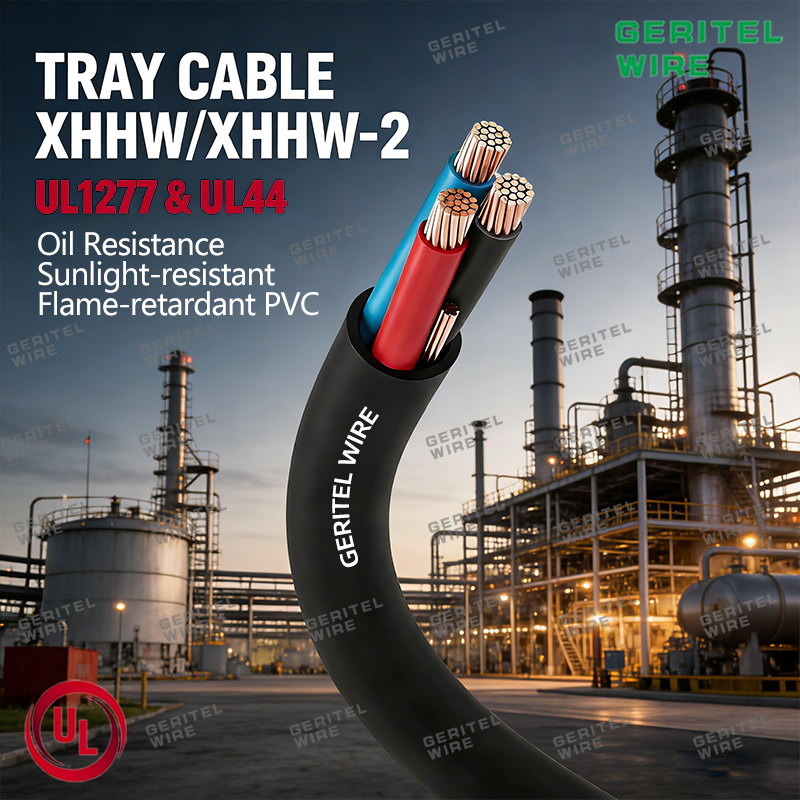
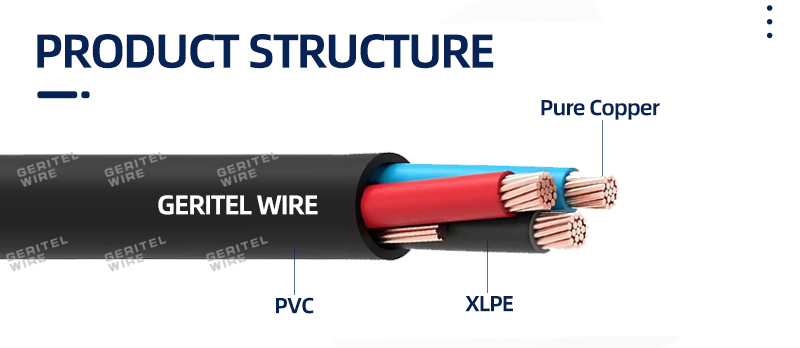
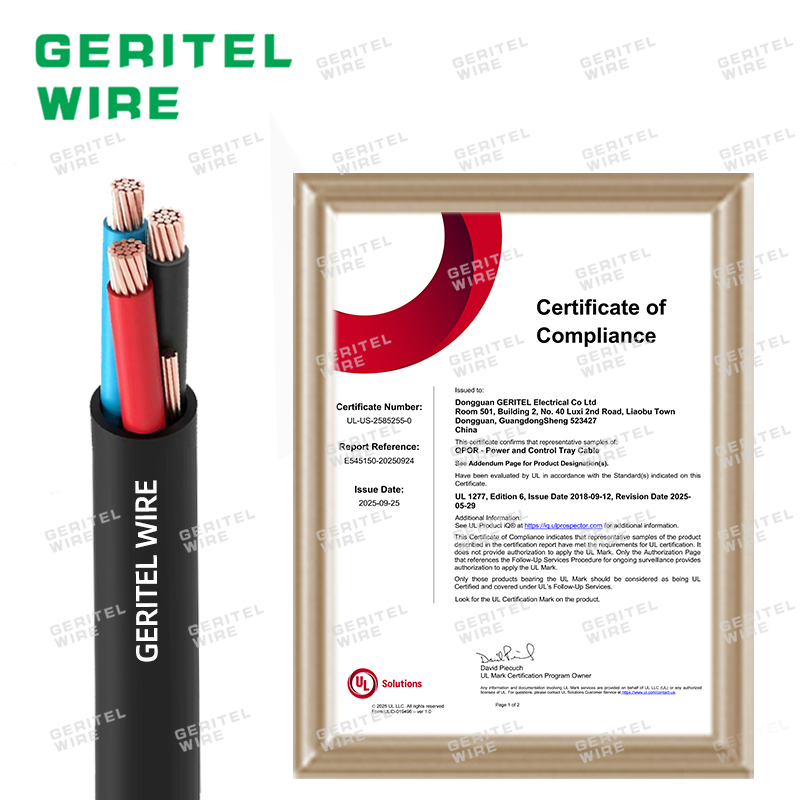
Our TC‑ER cables are UL 1277 listed for Tray Cable with Exposed Run rating. Conductors with XHHW‑2 insulation comply with UL 44 for thermoset‑insulated wires. Conductors with THHN/THWN‑2 comply with UL 83 for thermoplastic‑insulated wires. The UL markings are printed on the jacket. These certifications verify that the cable has passed flame, crush, and impact tests required for heavy‑duty industrial use. For our UL file numbers, request the certificate from our technical team.
FAQ
Q1: What is the difference between “oil resistant” and “oil resistant I/II” on TC-ER cable?
A: Oil Resistant I is for occasional contact (spray, mist). Oil Resistant II is for continuous immersion (submerged in oil). For heavy machinery, specify Oil Resistant II for hydraulic systems, Oil Resistant I for most other applications.
Q2: Can I use unshielded TC-ER cable for a VFD‑driven machine if the run is very short?
A: For runs under 10 feet in a metal conduit, unshielded may work, but it is not recommended. Shielded cable is inexpensive insurance against nuisance trips.
Q3: How do I know if the cable has fine‑stranded copper?
A: Check the datasheet or ask the manufacturer. Standard TC-ER uses Class B stranding. For high‑flex applications, specify Class I or Class K stranding.
Q4: Does Greater Wire offer custom‑printed TC-ER cable with my company name?
A: Yes. We can print your logo, part number, or other markings on the jacket. Minimum order quantities apply. Contact our sales team.
Need a Quote for Your Heavy‑Duty Machinery Connection Cable?
Tell us your machine type, environment (oil, water, vibration, VFD), required current, and distance. We will recommend the right Equipment Connection Cable – 1/0 AWG 4/C shielded, 2 AWG 4/C shielded, 4 AWG 3/C unshielded, or other gauges – and send a quote within 24 hours.
Contact us
Dongguan GERITEL Electrical Co., Ltd.
Tel/WhatsApp/Wechat: +86 136 6257 9592
Tel/WhatsApp/Wechat: +86 135 1078 4550
Email: manager01@greaterwire.com
Website: www.geritelgroup.com
 Electrical Infrastructure Cable Solutions for Expanding Industrial Operations



 Building 2, No. 40 Luxi 2nd Road, Liaobu Town, Dongguan City, Guangdong Province, China