


 Home
HomeWhat Contractors Should Know About Commercial and Industrial Wiring Systems
 GERITEL
 Jun 15,2026

Every contractor has learned the hard way: a cable that works perfectly in a dry office building may fail in six months in a factory with oil mist and vibration. The difference is not just about voltage or ampacity – it is about insulation type, jacket compounds, shielding, and exposed‑run ratings. This article helps you understand those differences so you can bid more accurately, install with confidence, and avoid costly rework.
1. Commercial vs Industrial – What Changes Under the Jacket
Commercial wiring systems (offices, schools, hospitals, retail) typically have:
- Indoor, climate‑controlled, dry conditions.
- Most cables run inside conduit or enclosed raceways.
- Little exposure to oil, chemicals, or extreme heat.
- Minimal EMI concerns (few VFDs or welders).
Industrial wiring systems (factories, warehouses, refineries, food plants) often have:
- Wet, oily, dusty, or corrosive environments.
- Open cable trays with exposed runs (no conduit).
- VFDs, motors, and welding equipment generating EMI.
- Temperature swings from -20°C to 90°C.
- Vibration and occasional impact.
As a contractor, you need to recognize when a job calls for Commercial Wiring Systems grade cable versus an Industrial Wiring Systems grade cable – even when both are labeled “TC‑ER”.
2. Key TC-ER Cable Features That Make the Difference
TC‑ER cable (Tray Cable, Exposed Run) is UL 1277 listed. It can be used in both commercial and industrial settings, but the specifications inside matter.
Insulation – XHHW‑2 vs THHN/THWN‑2
- For dry commercial spaces, THHN/THWN‑2 (90°C dry / 75°C wet) is cost‑effective.
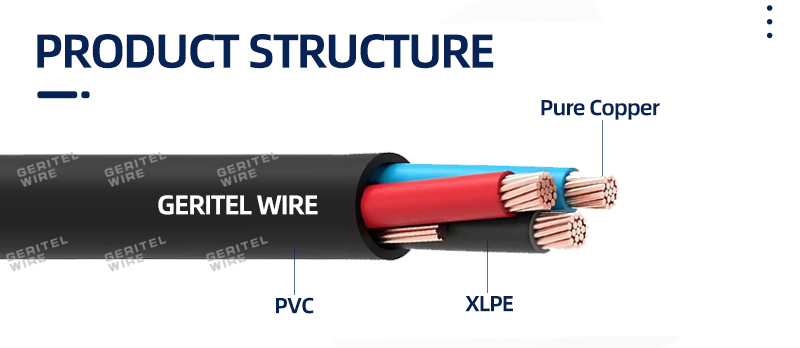
- For industrial areas with moisture, heat, or oils, XHHW‑2 (90°C wet/dry) provides much longer life.
Jacket – Sunlight resistant and oil resistant
- Commercial indoor: standard PVC jacket is acceptable.
- Industrial outdoor or washdown: you must specify sunlight resistant and oil resistant markings on the jacket.
Shielding – Unshielded vs shielded
- Commercial power runs away from sensitive electronics: unshielded saves money.
- Industrial runs near VFDs or instrumentation: shielded TC-ER with foil + drain wire is essential to prevent nuisance trips.
Exposed run (ER) rating
- Conduit is typical in commercial. Industrial cable trays require the TC-ER marking to allow no‑conduit installation – a major labor saver.
3. Three Real‑World Cable Specifications for Contractors
Here are three common scenarios you will face, with recommended TC‑ER constructions.
Scenario 1 – Commercial office building (dry, indoor, conduit)
- Recommended cable: 14 AWG 4/C Unshielded TC-ER with THHN/THWN‑2
- Why: 14 AWG handles 15–20A branch circuits. 4/C gives three phases plus an insulated ground. Unshielded is fine. THHN/THWN‑2 is adequate.
- Typical use: Lighting panels, receptacle circuits, HVAC controls.
Scenario 2 – Industrial manufacturing plant (oily, VFDs, open tray)
- Recommended cable: 8 AWG 3/C Shielded TC-ER with XHHW‑2, oil‑resistant and sunlight‑resistant jacket
- Why: 8 AWG carries ~50‑55A for smaller motors or sub‑feeders. Shield blocks EMI from VFDs. XHHW‑2 and oil‑resistant jacket survive coolant and oil. Sunlight‑resistant for any outdoor tray sections.
- Typical use: Motor feeders, control panel mains, conveyor power.
Scenario 3 – Outdoor industrial yard (UV exposure, long feeder runs)
- Recommended cable: 2 AWG 4/C Unshielded TC-ER with XHHW‑2 and sunlight‑resistant jacket
- Why: 2 AWG handles ~115‑130A for larger feeders. Unshielded is fine if no VFDs. Sunlight‑resistant jacket prevents UV cracking. 4/C provides an insulated ground for safety in wet outdoor areas.
- Typical use: Substation to building feeders, outdoor equipment supply, solar combiner box feeders.
4. Product Advantages That Contractors Appreciate
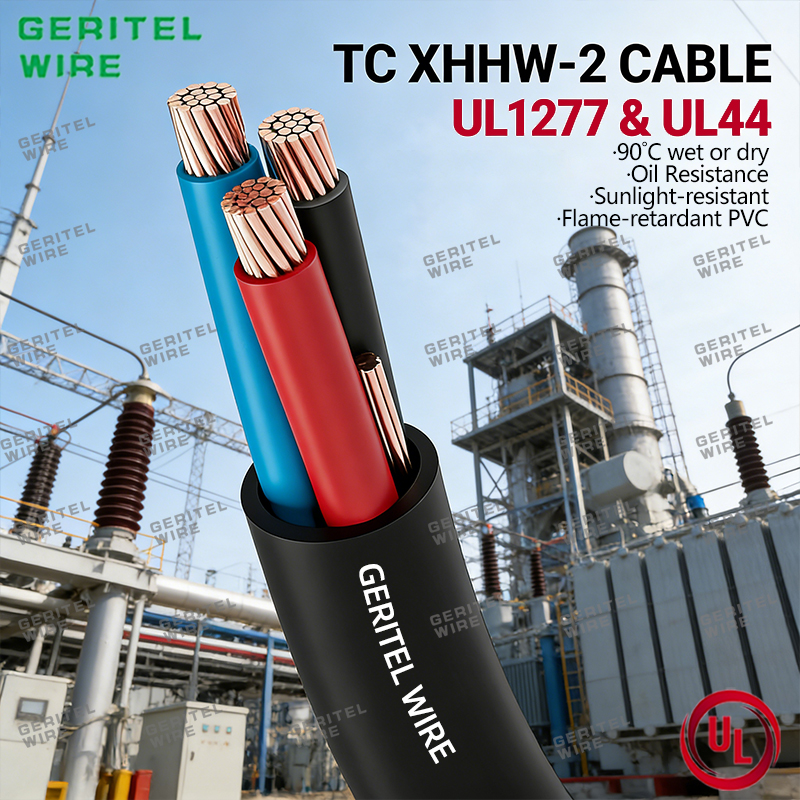
Oil resistance – Our TC‑ER jacket uses a compound that resists swelling and softening from industrial lubricants, hydraulic fluids, and cutting oils. This directly reduces callbacks.
Sunlight resistance – UV stabilizers prevent cracking after years of outdoor exposure. For rooftop trays or exterior runs, this is non‑negotiable.
Shielding – 100% foil coverage + tinned copper drain wire provides reliable EMI suppression. Ground the drain wire at one end only to avoid ground loops.
Exposed run (TC‑ER) – Saves 40‑50% labor compared to installing conduit. For industrial retrofits or large tray jobs, this can make your bid competitive.
UL 1277 listing – Flame, crush, and impact tested. Inspectors accept it without argument, whether in a commercial or industrial setting.
5. Selection Reminder – Contractor’s Quick Checklist
From our upport team: Before you order cable for a project, run through this checklist.
- Environment: dry (commercial) or wet/oily (industrial)? Dry → THHN/THWN‑2. Wet/oily → XHHW‑2 and oil‑resistant jacket.
- Sunlight exposure? Yes → sunlight‑resistant jacket required.
- VFDs or sensitive electronics nearby? Yes → shielded TC-ER with drain wire.
- Open tray or conduit? Open tray → must have TC-ER marking on jacket.
- Insulated ground needed? For analog signals or wet locations → 4/C. For dry power only → 3/C is fine.
Critical contractor reminder: Never assume that a “tray cable” is automatically industrial‑grade. A commercial‑rated THHN/THWN‑2 unshielded TC‑ER cable installed in an industrial tray will fail prematurely – typically within two years. Spending a little more on the correct construction (XHHW‑2, shielding, oil‑resistant jacket) protects your reputation and your profit margin.
6. UL Certifications – What the Markings Mean
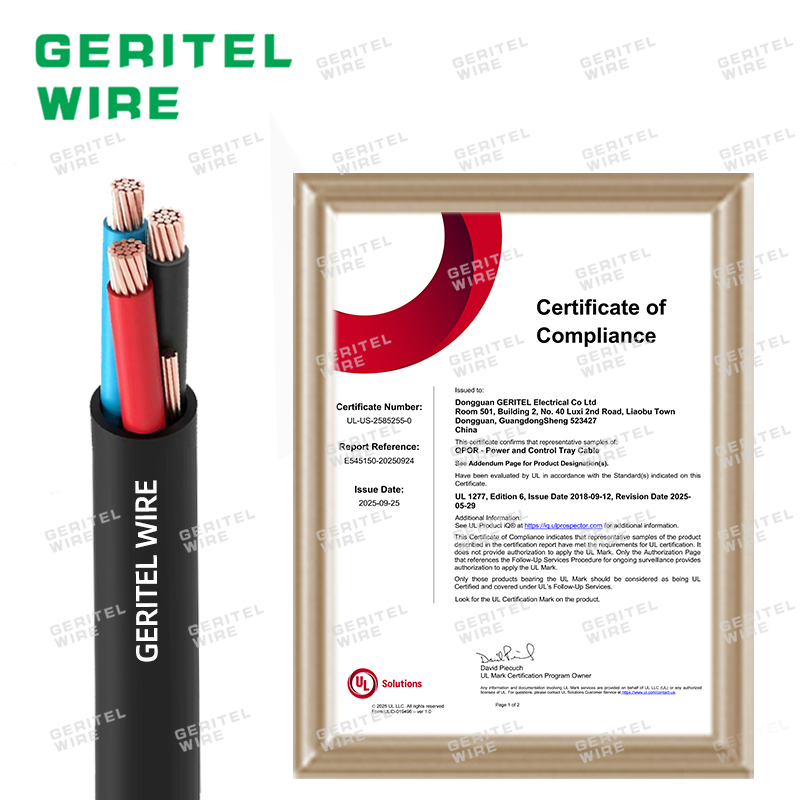
Our TC‑ER cables are UL 1277 listed for Tray Cable with Exposed Run rating. Conductors with XHHW‑2 insulation comply with UL 44 for thermoset‑insulated wires. Conductors with THHN/THWN‑2 comply with UL 83 for thermoplastic‑insulated wires. The UL markings are printed on the jacket. These certifications verify that the cable has passed the flame, crush, and impact tests required for both commercial and industrial tray installations. For our UL file numbers, request the certificate from our technical team.
FAQ
Q1: Can I use the same TC-ER cable for both commercial and industrial projects?
A: Yes, but you must select the right construction. For commercial dry areas, THHN/THWN‑2 and unshielded works. For industrial wet/oily areas, choose XHHW‑2, shielded, and an oil‑resistant jacket. The same part number cannot serve both extremes.
Q2: What is the labour saving from using TC-ER instead of conduit in an industrial tray?
A: Typically 40‑50% less labor because you eliminate pipe bending, pulling wires, and associated fittings. This often makes your bid more competitive.
Q3: How can I tell if a TC-ER cable has an oil‑resistant jacket?
A: Look for “Oil Resistant” or “Oil Resistant I/II” printed on the jacket. Standard PVC is not oil‑resistant. Always verify the marking.
Q4: Does Greater Wire offer custom put‑ups or cut lengths for large contractor jobs?
A: Yes. We supply TC-ER cable on non‑returnable reels, custom cut lengths, and with sequential footage markings. Contact our contractor desk with your project BOM.
Need a Quote for Your Next Commercial or Industrial Wiring Project?
Tell us your project type (commercial or industrial), environment (dry, wet, oily, outdoor), load current, distance, and whether you need shielding or an insulated ground. We will recommend the right TC-ER cable – 14 AWG 4/C, 8 AWG 3/C, 2 AWG 4/C, or other gauges – and send a quote within 24 hours.
Contact us
Dongguan GERITEL Electrical Co., Ltd.
Tel/WhatsApp/Wechat: +86 136 6257 9592
Tel/WhatsApp/Wechat: +86 135 1078 4550
Email: manager01@greaterwire.com
Website: www.geritelgroup.com
 Choosing the Best Equipment Connection Cable for Heavy‑Duty Machinery



 Building 2, No. 40 Luxi 2nd Road, Liaobu Town, Dongguan City, Guangdong Province, China