


 Home
HomeCopper vs Aluminum XHHW-2 Wire: Cost and Performance Comparison
 GERITEL
 Jul 09,2026

Copper prices have been climbing. Project budgets are under pressure. And yet, the demand for new commercial and industrial buildings continues to grow. For many project buyers and contractors, the question is no longer “should we consider aluminum?” but “why haven't we switched yet?”
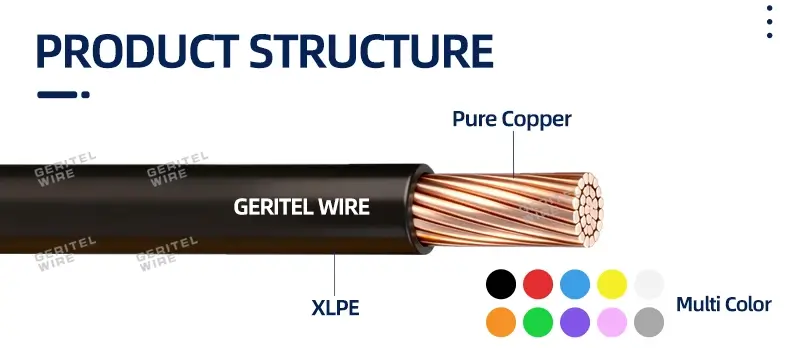
XHHW-2 wire is available in both copper and aluminum conductors. Both are UL 44 certified, rated 90°C in wet and dry locations, and suitable for conduit, cable tray, and direct burial applications. But the differences between them go far beyond material cost.
This guide provides a side-by-side comparison of copper and aluminum XHHW-2 wire—cost, performance, installation, and long-term reliability—so you can make the right choice for your project.
1. Cost and Material Differences: The Upfront Tradeoff
The most obvious difference between copper and aluminum XHHW-2 is material cost and weight.
Aluminum XHHW-2 typically costs 40-50% less than copper equivalents. For large projects with substantial conductor quantities, the savings can be substantial. A 500 kcmil aluminum XHHW-2 conductor can deliver the ampacity needed for large feeders at a fraction of the cost of equivalent copper.
Weight is another major factor: aluminum is roughly one-third the weight of copper for the same volume. This translates to lower shipping costs, easier handling on site, and lower labor costs during installation.
However, the upfront cost difference is not the whole story. Aluminum conductors must be upsized to match copper's ampacity. For example, where an 8 AWG copper XHHW-2 carries approximately 50A at 75°C, an aluminum equivalent would require 6 AWG to safely handle the same current. The larger aluminum conductor reduces some of the material cost advantage.
For a copper XHHW-2 wire vs aluminum comparison, the cost question is: how much are you willing to pay for smaller conductors and easier terminations?
2. Performance: Conductivity, Ampacity, and Voltage Drop
Copper has approximately 61% higher conductivity than aluminum. This means for a given cross-sectional area, copper can carry more current with less resistance.
What this means in practice:
- Aluminum conductors typically need to be two AWG sizes larger than copper to carry the same current
- Copper provides lower voltage drop over long runs, which is critical in long-distance feeders
- Copper runs cooler under the same load, reducing thermal stress on insulation
For copper aluminum XHHW-2 ampacity comparison, here are three common sizes:
4 AWG Copper XHHW-2 Wire
- 75°C ampacity: 85A
- Typical use: 70-80A sub-feeders, large branch circuits, HVAC equipment
- Aluminum equivalent: 2 AWG
- Cost tradeoff: Copper costs more but saves space in crowded conduits
250 kcmil Copper XHHW-2 Wire
- 75°C ampacity: 255A
- Typical use: 200A feeders, main distribution panels, commercial service entrances
- Aluminum equivalent: 350 kcmil
- Cost tradeoff: 250 kcmil aluminum XHHW-2 wire needs approximately 350 kcmil to match copper ampacity, but the aluminum option still costs significantly less overall
500 kcmil Copper XHHW-2 Wire
- 75°C ampacity: 380A
- Typical use: 400A service entrances, large industrial feeders, utility distribution
- Aluminum equivalent: 750 kcmil
- Cost tradeoff: Aluminum requires much larger conduit and bending radius but offers substantial material savings
An aluminum XHHW-2 wire cost savings analysis must account for the larger conductor size required to match copper's ampacity.
3. Installation: Termination, Handling, and Practical Challenges
Installation is where copper and aluminum diverge most significantly in practice.
Connection and termination — where aluminum requires care. Connection reliability is one of the most critical differentiators. Copper forms a soft, conductive oxide that does not significantly impair connection integrity. Copper terminations are straightforward and reliable. This is why many contractors default to copper—it is more forgiving during installation.
Aluminum develops a hard, non-conductive oxide layer that can increase resistance and generate heat at termination points. Modern aluminum installations require anti-oxidant paste at terminations, connectors rated specifically for aluminum (marked AL/Cu or AL7CU), precise torque specifications, and proper installation practices to mitigate oxidation.
Thermal expansion. Aluminum expands and contracts about 35% more than copper under temperature changes. Repeated heating and cooling cycles can loosen connections if not properly maintained. For long-term reliability, copper terminations are more forgiving. Aluminum terminations require trained installers and proper materials.
Handling and pulling — aluminum's weight advantage. Aluminum's lighter weight provides significant advantages in large-scale installations. Easier to handle and pull, lower labor costs, less strain on cable trays and support structures, and reduced shipping costs. However, aluminum must be larger in diameter than copper wire to carry the same current, requiring larger conduit and bending radius, and proper termination requires trained personnel.
4. Long-Term Reliability and Lifespan: The Real Cost of the Decision
Both copper and aluminum XHHW-2 can provide decades of reliable service when properly installed. But the risk profile is different—and these differences compound over time.
- Copper reliability: Copper offers superior mechanical strength and flexibility, making it more resistant to damage from vibration or bending. It requires no special termination requirements beyond standard practices. In corrosive environments, copper shows longer service life, and its high thermal conductivity helps dissipate heat more effectively, reducing stress on the insulation. These factors combine to make copper a lower-risk choice for critical applications where failure is not an option.
- Aluminum reliability: Modern 8000-series alloys have improved creep resistance and flexibility significantly from earlier alloys. Aluminum shares the same 90°C wet/dry rating as copper. However, it requires proper termination practices to achieve full service life and is more susceptible to oxidation and thermal expansion issues. In high-vibration environments, aluminum terminations may need periodic inspection and retorquing to maintain connection integrity.
- Total cost of ownership. The true cost of the conductor material extends beyond the initial purchase price. Copper's lower resistance means less energy lost as heat over the life of the installation—typically 2-5% lower line losses. In a 30-year installation, this energy savings can offset much of the upfront cost difference. Copper also requires fewer maintenance interventions, reducing long-term labor costs. Aluminum offers lower material cost and lighter weight, but the larger conductor size and more careful termination requirements mean longer installation time and higher labor cost for terminations. The maintenance burden is slightly higher due to periodic connection inspection requirements.
For critical infrastructure where failure is not an option, copper's reliability premium is often worth the cost. For large-scale distribution where budget is a primary concern, aluminum's cost savings can outweigh the additional installation care required.
5. Application Guide: Which One Should You Choose?
Choose Copper XHHW-2 when:
- The installation is in corrosive or high-vibration environments
- Space is limited—copper's smaller size saves conduit space
- Connections must be simple and reliable
- Long-term reliability is critical
- The project involves sensitive equipment requiring stable voltage
- For copper XHHW-2 wire vs aluminum decisions, copper is the premium choice for demanding applications
Choose Aluminum XHHW-2 when:
- The project is large-scale and budget is a primary concern
- Weight reduction is important (long runs, elevated trays)
- Skilled installers are available for proper termination
- Conduit space is not a constraint
- The application is straight power distribution without sensitive electronics
- For aluminum XHHW-2 wire cost savings, large feeders and long runs offer the best return
A 4 AWG copper XHHW-2 wire is the standard choice for branch circuits and sub-feeders where space is tight and terminations must be simple. For the same ampacity, the aluminum equivalent (2 AWG) may not fit in existing conduits.
A 250 kcmil copper XHHW-2 wire provides reliable power for 200A feeders with minimal voltage drop. The aluminum alternative (350 kcmil) requires larger conduit but offers significant cost savings.
A 500 kcmil copper XHHW-2 wire delivers maximum ampacity for large service entrances. The aluminum equivalent (750 kcmil) provides the same current capacity at a fraction of the cost but requires careful installation planning.
FAQ
Q1: Is aluminum XHHW-2 as reliable as copper?
Yes, when properly installed. Modern 8000-series aluminum alloys and proper termination practices make aluminum wire reliable for building power systems. However, copper is more forgiving during installation.
Q2: How much can I save with aluminum XHHW-2?
Aluminum typically costs 40-50% less than copper. For large projects, the savings can be substantial. Factor in the larger conductor size required for equivalent ampacity.
Q3: Does aluminum XHHW-2 have the same temperature rating as copper?
Yes. Both are rated 90°C in both wet and dry locations.
Q4: Can I terminate aluminum XHHW-2 on standard copper lugs?
No. Aluminum requires lugs rated for aluminum conductors. Use connectors marked AL/Cu or AL7CU and anti-oxidant paste.
Need Copper or Aluminum XHHW-2 Wire for Your Project?
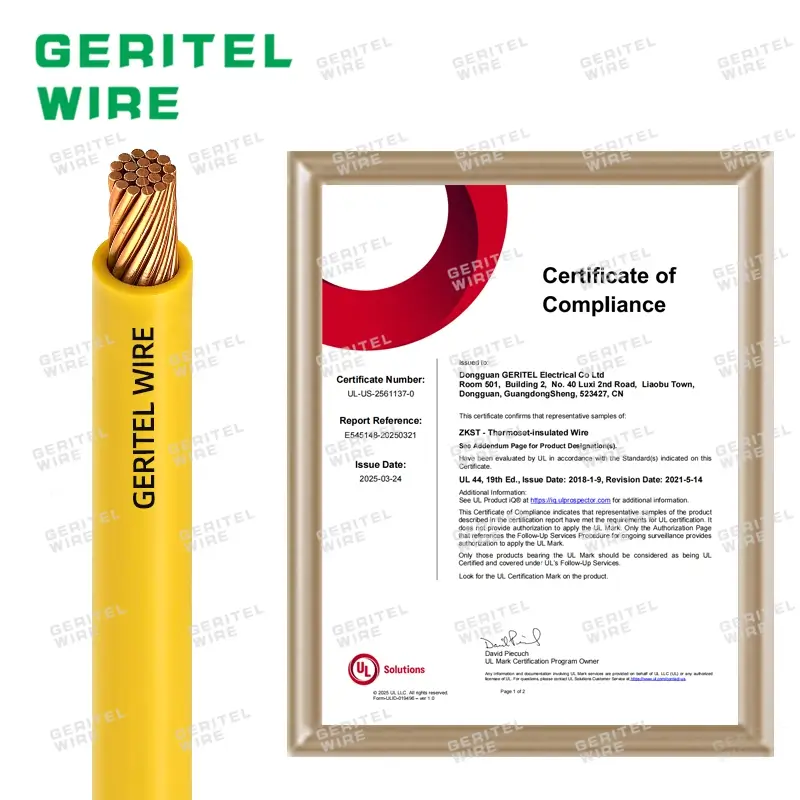
When your project demands wiring that will last decades, the choice of manufacturer matters as much as the conductor material. Our XHHW/XHHW-2 building wire is available in both copper and aluminum, with UL 44 certification ensuring rigorous safety and performance standards. Whether you need the premium performance of copper or the cost-effective reliability of aluminum, we have the right solution for your installation.
Tell us about your project—application, load requirements, and budget. We will recommend the right conductor material and wire size and provide the documentation you need.
Contact us
Dongguan GERITEL Electrical Co., Ltd.
Tel/WhatsApp/Wechat: +86 136 6257 9592
Tel/WhatsApp/Wechat: +86 135 1078 4550
Email: manager01@greaterwire.com
Website: www.geritelgroup.com
 Can XHHW-2 Wire Be Used in Underground Electrical Conduit Systems?



 Building 2, No. 40 Luxi 2nd Road, Liaobu Town, Dongguan City, Guangdong Province, China