


 Home
HomeWhat Is the Lifespan of XHHW-2 Building Wire in Electrical Installations?
 GERITEL
 Jul 09,2026

When you specify wire for a commercial building, industrial plant, or solar farm, you are not just buying copper and insulation. You are buying years of reliable service. The wire you choose today will determine maintenance costs, downtime risk, and replacement frequency for decades.
So how long does XHHW-2 wire actually last?
The short answer: 30 years or more under proper conditions. But the full answer is more nuanced. This article explains the expected lifespan of XHHW-2 building wire, what factors extend or shorten its life, and how it compares to other wire types.
1. What Determines XHHW-2 Wire Lifespan?
Before looking at specific numbers, it helps to understand what causes wire to age and fail.
- Insulation degradation is the primary failure mechanism. Over time, heat, moisture, chemicals, UV radiation, and mechanical stress attack the insulation. As insulation degrades, it becomes brittle, cracks, loses dielectric strength, and eventually fails.
- Temperature is the single most important factor. Every 10°C increase in operating temperature can cut insulation life in half. This is why temperature rating is critical.
- Moisture accelerates insulation degradation, especially in thermoplastic materials that absorb water. Water ingress can cause dielectric breakdown and corrosion of the conductor.
- Chemical exposure —oils, solvents, acids—can attack insulation materials, causing swelling, softening, or cracking.
- UV radiation breaks down the molecular structure of many insulation materials, causing chalking, cracking, and loss of flexibility.
XHHW-2 wire lifespan is determined by how well its XLPE insulation resists each of these attack vectors.
2. Expected Lifespan: The Numbers
XHHW-2 wire is engineered for long-term reliability. Here is what the data shows.
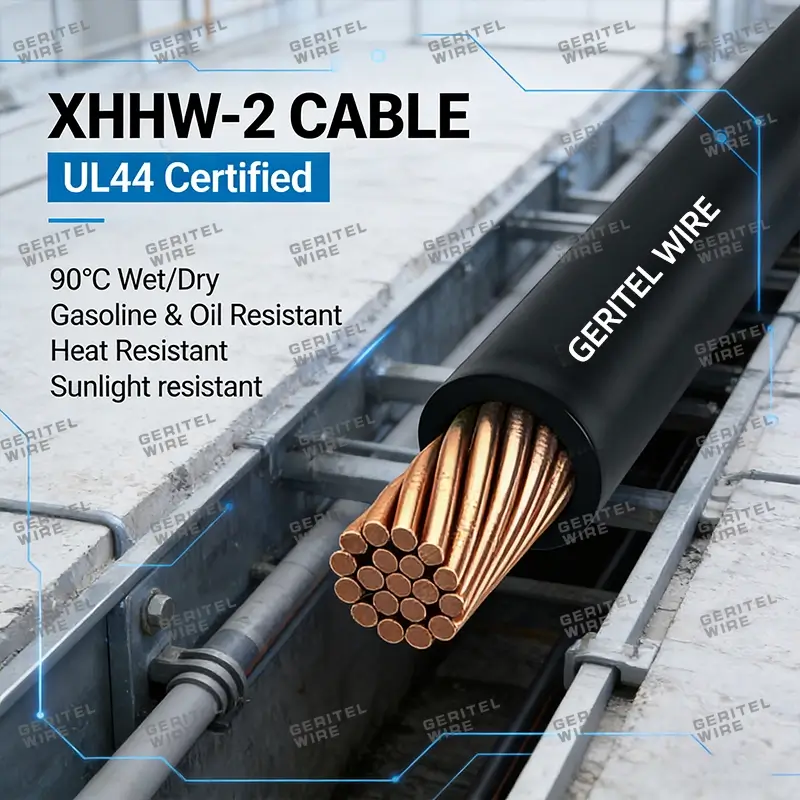
Typical service life: 30+ years. Under proper installation and operating conditions, XHHW-2 cables typically last 30 years or more. In photovoltaic systems, XHHW-2 matches the 25-30 year design life of solar panels. For industrial and commercial building wiring, the lifespan is comparable—often outlasting the building's first major renovation cycle.
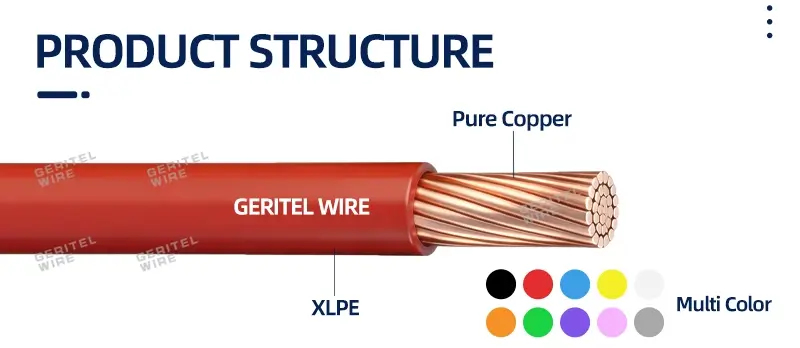
XLPE insulation advantage. The cross-linked polyethylene insulation is a thermoset material. Unlike thermoplastics (PVC), XLPE does not melt or soften at high temperatures. It maintains its structural integrity even under continuous thermal stress. This is why XLPE-insulated cables have longer service lives than PVC-insulated cables under the same conditions.
Comparison with THHN/THWN-2. THWN-2 (PVC+nylon insulation) has a typical lifespan of 20-25 years. XHHW-2's XLPE insulation provides superior resistance to heat, moisture, UV, and chemicals, extending its service life by 5-10 years or more in demanding environments. In government and infrastructure projects where facilities are expected to last 50+ years, engineers often specify XHHW-2 specifically for its longevity.
XHHW-2 wire life expectancy in real-world installations depends on conditions. In benign indoor environments, it can last much longer than 30 years. In harsh industrial or outdoor environments, proper installation and maintenance practices are critical to achieving the full lifespan.
3. How XLPE Delivers 30+ Years of Service Life
Several factors contribute to XHHW-2's long service life.
- XLPE thermoset insulation. The cross-linked molecular structure of XLPE provides exceptional resistance to thermal degradation. It does not soften or deform at high temperatures. It resists moisture absorption, chemical attack, and UV damage.
- 90°C wet/dry rating. XHHW-2 maintains its full temperature rating in both dry and wet locations. This means it does not lose ampacity in damp environments, reducing thermal stress on the insulation.
- Chemical and oil resistance. XLPE resists degradation from oils, solvents, and industrial chemicals. In factories, refineries, and processing plants, this extends cable life significantly.
- UV and sunlight resistance. XHHW-2 carries UL "Sunlight Resistant" certification. The insulation withstands long-term UV exposure without cracking or chalking.
- Low moisture absorption. XLPE has very low moisture absorption compared to rubber-based insulations. It does not allow water to penetrate and degrade the insulation from the inside.
- Abrasion resistance. The tough XLPE insulation resists physical wear during installation and service, protecting the conductor from damage.
- Factors that can shorten life. Even the best wire can fail prematurely if conditions are wrong: overloading (operating above rated ampacity generates excess heat), improper termination (loose connections create high resistance and heat), physical damage (cuts or crushing during installation), chemical exposure beyond rating, and incorrect installation (sharp bends, insufficient support).
4. Lifespan Comparison: XHHW-2 vs. Other Wire Types
Here is how XHHW-2 compares to other common building wires.
| Wire Type | Insulation | Max Temp | Typical Lifespan | Best Applications |
| XHHW-2 | XLPE (thermoset) | 90°C wet/dry | 30+ years | Outdoor, wet, industrial, PV |
| THWN-2 | PVC + Nylon | 90°C wet/dry | 20-25 years | Indoor, dry, general purpose |
| THHN | PVC + Nylon | 90°C dry / 75°C wet | 20-25 years | Dry indoor, conduit |
| RHW-2 | Thermoset rubber | 90°C dry / 75°C wet | 25-30 years | Damp, underground |
Three XHHW-2 sizes and their lifespan expectations:
2 AWG XHHW-2 Wire – Sub-Feeders and Medium Equipment. Used for 100A sub-feeders in commercial buildings and industrial plants. Expected lifespan: 30+ years in normal indoor conditions, 25+ years in damp or outdoor environments. For a XHHW-2 wire service life assessment, this size is a reliable choice for medium-term to long-term installations.
3/0 AWG XHHW-2 Wire – Large Feeders and Main Distribution. Used for 200A main feeders and large equipment power. Expected lifespan: 30+ years in most conditions. The larger conductor cross-section dissipates heat more effectively, reducing thermal stress on the insulation. For XHHW-2 wire life expectancy in heavy-load applications, this size provides decades of reliable service.
300 kcmil XHHW-2 Wire – Service Entrances and Utility Feeders. Used for large service entrances, transformer feeders, and utility-scale distribution. Expected lifespan: 30+ years, with some installations exceeding 40 years. For a how long does XHHW-2 wire last question in critical infrastructure, this size is specified to match the 30+ year design life of the facilities it serves.
5. The Economic Value of Longer Wire Lifespan
XHHW-2 typically costs more upfront than THHN/THWN-2. But the total cost of ownership tells a different story.
- Higher upfront cost. XHHW-2 is more expensive than PVC-insulated wire. The difference varies by gauge and market conditions.
- Lower lifetime cost. With a service life 5-10 years longer than THWN-2, XHHW-2 reduces the frequency of replacement. In a 50-year facility lifespan, XHHW-2 may need replacement once, while THWN-2 may need replacement twice.
- Reduced downtime risk. Cable failure causes unplanned downtime. The cost of downtime—lost production, emergency repairs, labor—often far exceeds the material cost difference. XHHW-2's longer lifespan and higher reliability reduce this risk.
- Fewer maintenance interventions. XHHW-2's resistance to environmental factors means fewer inspections, fewer repairs, and lower long-term maintenance costs.
For XHHW-2 wire service life, the value proposition is clear: pay a little more upfront, save a lot over time. When a building or facility is designed for a 30-50 year service life, investing in wire that matches that lifespan is not an expense—it is a sound economic decision.
FAQ
Q1: How long does XHHW-2 wire typically last?
XHHW-2 wire typically lasts 30 years or more under proper installation and operating conditions. In benign indoor environments, it can last significantly longer.
Q2: Does XHHW-2 last longer than THHN/THWN-2?
Yes. XHHW-2's XLPE thermoset insulation provides superior resistance to heat, moisture, UV, and chemicals. Typical lifespan: XHHW-2 30+ years vs. THWN-2 20-25 years.
Q3: What factors shorten XHHW-2 wire lifespan?
Overloading, improper termination, physical damage, chemical exposure beyond rating, and incorrect installation can all shorten lifespan. Proper installation and operation are essential to achieving 30+ years.
Q4: Is XHHW-2 worth the extra cost over THHN?
For long-life installations—commercial buildings, industrial plants, infrastructure projects—yes. The longer lifespan, reduced downtime risk, and lower maintenance costs make XHHW-2 more economical over the full life of the installation.
Need XHHW-2 Wire for a Long-Life Installation?
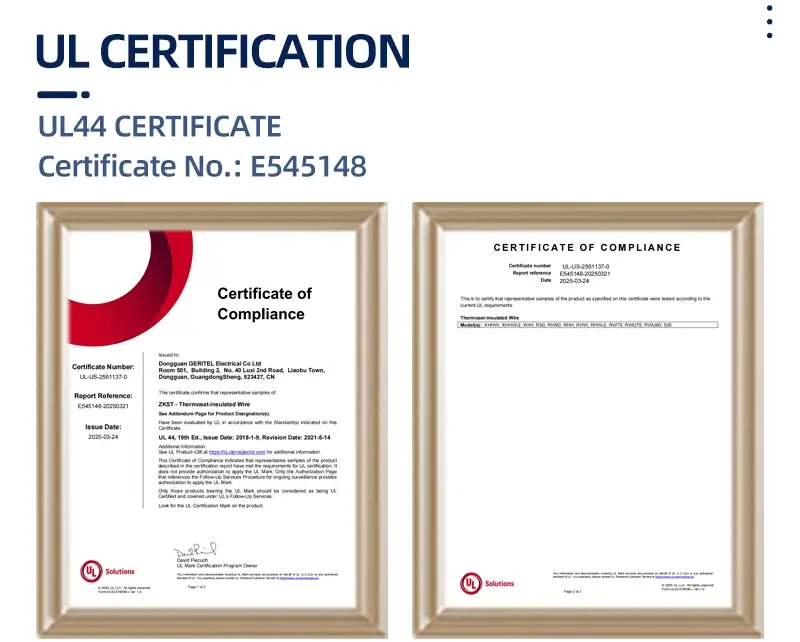
When your project demands wiring that will last decades, the choice of manufacturer matters as much as the wire itself. Our XHHW/XHHW-2 copper building wire is UL 44 certified, meaning it has been tested and approved by Underwriters Laboratories to meet rigorous safety and performance standards. This certification provides documented proof of quality, giving you confidence that the wire you install will perform reliably for years to come. Whether it is a commercial building, industrial plant, solar farm, or infrastructure project, our UL 44 certified XHHW-2 wire delivers the longevity and reliability your installation requires.Tell us about your project—application, environment, and expected lifespan.
We will recommend the right XHHW/XHHW-2 wire size and provide the documentation you need.
Contact us
Dongguan GERITEL Electrical Co., Ltd.
Tel/WhatsApp/Wechat: +86 136 6257 9592
Tel/WhatsApp/Wechat: +86 135 1078 4550
Email: manager01@greaterwire.com
Website: www.geritelgroup.com
 Copper vs Aluminum XHHW-2 Wire: Cost and Performance Comparison



 Building 2, No. 40 Luxi 2nd Road, Liaobu Town, Dongguan City, Guangdong Province, China