


 Home
HomeComplete Guide to UL83 THHN/THWN-2 Cable: Models, Materials, and Applications
 GERITEL
 Mar 25,2026

When selecting building wire for a real project—whether it’s a commercial high-rise, an industrial plant, or a data center upgrade—the decision is never just about “picking a cable.” It’s about choosing a solution that balances safety, code compliance, installation efficiency, and long-term reliability, which is why UL83 THHN/THWN-2 cable has become a top choice for modern electrical systems.
Decision Point: Understanding the Real Usage Environment
In real projects, engineers and contractors don’t start by looking at cable models—they start with where the cable will operate and what load it will carry. A wire that performs perfectly inside a dry control panel may fail prematurely if installed in a wet or chemically exposed environment, causing safety risks and costly maintenance.
For example, THHN building wire commercial use, in a commercial office building, THHN/THWN-2 cable is often pulled through EMT conduits above ceilings to supply lighting and HVAC systems. In this scenario, the cable must withstand temperature variations, tight spaces, and easy pull requirements. Meanwhile, in an industrial plant, the same cable may run through trays or conduits exposed to oil vapors and vibration, requiring enhanced abrasion and chemical resistance.
Using THHN/THWN-2 cables allows engineers and project managers to rely on a single cable type for multiple environments, reducing installation errors, simplifying procurement, and ensuring long-term system reliability.
Understanding Models: Why THHN vs THWN-2 Matters
One of the most common mistakes is assuming THHN and THWN-2 are interchangeable without understanding their ratings:
THHN: Rated for 90°C in dry locations only, ideal for indoor conduit systems
THWN: Rated for 75°C in wet locations, limited in temperature
THWN-2: Rated for 90°C in both wet and dry locations, offering maximum flexibility
In practice, for example, in a shopping mall distribution system where conduits pass through both air-conditioned spaces and damp service areas, selecting THWN-2 eliminates the need for multiple cable types, simplifies procurement, and reduces installation mistakes.
Materials Breakdown: Why Construction Impacts Performance
The performance of THHN/THWN-2 cables depends heavily on their materials, which is why they meet UL83 standards for safety and reliability.
Conductors (Copper or Aluminum)
Copper provides superior conductivity, making it suitable for critical systems such as data centers and hospitals, while aluminum is cost-effective for larger feeder circuits.
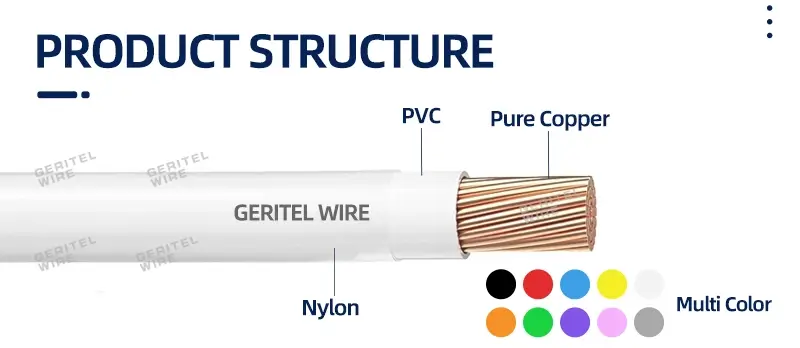
PVC Insulation
Thermoplastic PVC provides electrical insulation and flame retardancy, ensuring compliance with building safety codes.
Nylon Jacket
The outer nylon layer adds resistance to abrasion, oils, chemicals, and reduces friction when pulling through conduits, saving installation time and labor costs.
In real-world scenarios, this construction reduces cable damage during installation and lowers long-term maintenance risks.
Specifications and Real-World Applications
Selecting the correct size is not just about ampacity—it’s about matching cable specifications to application needs.
14–12 AWG: Lighting circuits and office control wiring
10–8 AWG: Small equipment, HVAC units, and branch circuits
6–2 AWG: Feeders and medium-load distribution systems
1/0 AWG and above: Heavy-duty industrial feeders, transformers, and main distribution panels
For instance, in a manufacturing facility, undersizing a motor feeder could cause overheating, while oversizing increases project costs. Correct specification selection ensures both safety and budget efficiency.
Performance Advantages That Influence Purchasing Decisions
From a buyer’s perspective, THHN/THWN-2 cables offer a combination of advantages that directly impact project outcomes:
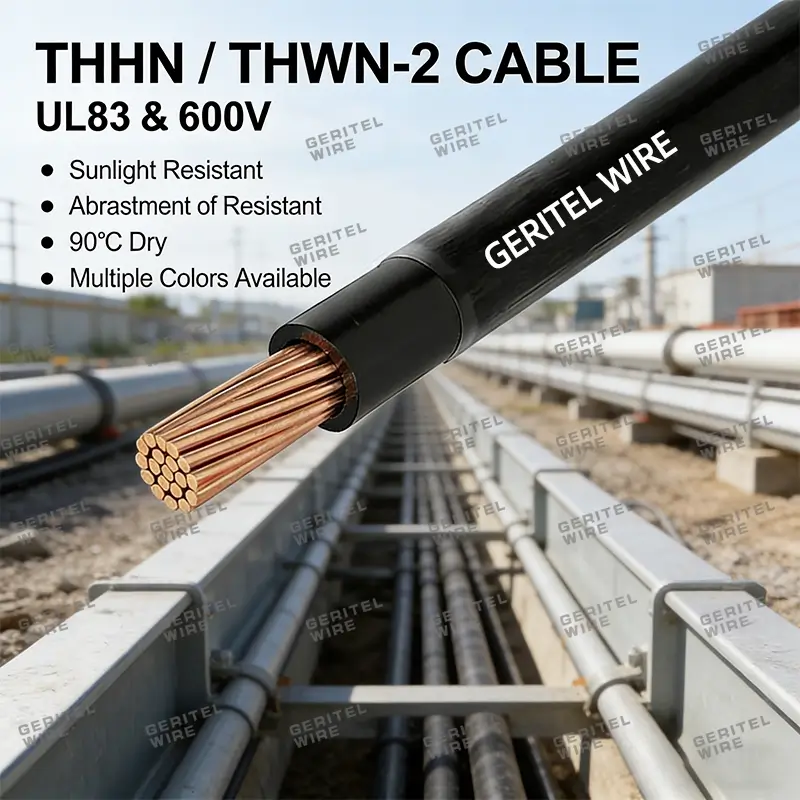
High temperature resistance up to 90°C
- Dual dry/wet rating (THWN-2)
- Strong mechanical durability
- Excellent chemical and oil resistance
- Smooth surface for faster installation
These features translate to reduced downtime, faster installation, and longer service life, which are critical for contractors and project managers.
Risks of Incorrect Selection
Selecting the wrong cable type or size can lead to serious operational and safety problems:
- Using THHN in wet locations may cause insulation degradation or failure
- Incorrect conductor sizing can result in overheating and voltage drops
- Ignoring chemical exposure may lead to jacket cracking and reduced lifespan
- Mismatched temperature ratings can accelerate aging and increase fire risk
In real projects, such mistakes often result in costly rework, system downtime, or even safety hazards, making proper upfront selection far more cost-effective.
Why Engineers and Contractors Prefer THHN/THWN-2
THHN/THWN-2 cables are widely specified not just because they meet UL83 standards, but because they simplify decision-making across complex projects. One cable type can cover multiple environments, reduce inventory complexity, and ensure code compliance.
Whether for a commercial building upgrade, industrial expansion, or a new infrastructure project, these cables provide a reliable balance of performance and cost.
Conclusion: Choose the Right Cable from the Start
For projects with mixed environments, varied load requirements, and strict safety regulations, UL83 THHN/THWN-2 cables offer a proven, flexible, and efficient solution that maximizes performance while minimizing risk, making them a smart choice for long-term electrical reliability.
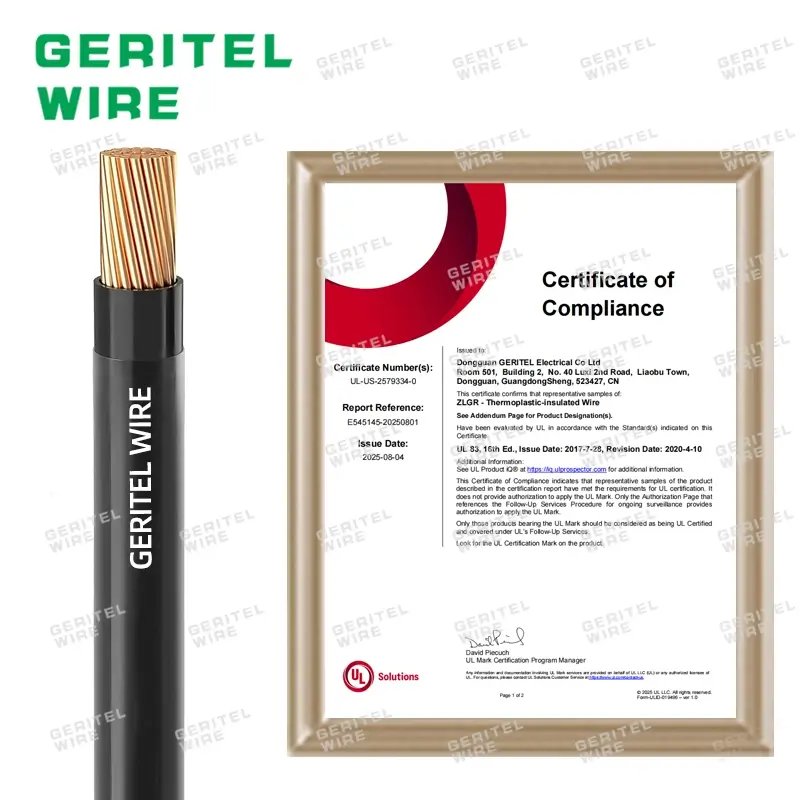
Dongguan GERITEL Electrical Co., Ltd. provides high-quality UL83 certified THHN and THWN-2 cables, delivering safe, durable, and standards-compliant solutions for commercial, industrial, and infrastructure projects worldwide.
Contact us:
If you are evaluating cable options for your next project, feel free to contact us for technical support, datasheets, or a competitive quotation, and let us support your success with reliable, compliant, and cost-effective cable solutions.
Tel / WhatsApp / WeChat: +86 135 1078 4550 / +86 136 6257 9592
Email: manager01@greaterwire.com
Website: www.greaterwire.com
 Common Issues with THHN/THWN-2 Cables and How to Fix Them



 Building 2, No. 40 Luxi 2nd Road, Liaobu Town, Dongguan City, Guangdong Province, China