


 Home
HomeCommon Issues with THHN/THWN-2 Cables and How to Fix Them
 GERITEL
 Mar 25,2026

When you are selecting THHN/THWN-2 cables for commercial buildings, industrial facilities, HVAC systems, or infrastructure projects, it is tempting to assume that a widely used and standardized cable type will automatically deliver reliable long-term performance; however, in real-world applications, many failures are not caused by the cable itself, but by incorrect specification, misapplication, or installation mistakes, which often remain hidden until the system is already in operation—at which point the cost of fixing them becomes significantly higher than getting it right from the beginning.
Understanding these common issues is therefore not just a technical exercise, but a critical step in avoiding downtime, reducing risk, and ensuring your project runs safely and efficiently from day one.
Overheating Due to Incorrect Ampacity Selection in Real Installations
If your project involves high ambient temperatures, multiple conductors in conduits, or tightly grouped cable installations, and you select THHN electrical wire nylon jacket or THWN-2 copper conductor nylon cable sizes based only on standard ampacity tables without applying correction factors, you may encounter overheating shortly after commissioning, which can gradually lead to insulation degradation, unexpected shutdowns, and even fire risks that result in costly rework.
To prevent this, it is essential to calculate ampacity based on real installation conditions—including temperature correction and conduit fill—while considering upsizing the conductor or optimizing routing; in practice, cables manufactured with consistent conductor quality and stable insulation thickness provide more reliable thermal performance, helping reduce overheating risks in demanding environments.
Hidden Insulation Damage During Installation
During long cable pulls in high-rise buildings, factories, or underground conduits, excessive pulling tension, tight bending radii, or the absence of proper lubrication can cause micro-damage to the nylon jacket and PVC insulation of THHN/THWN-2 copper cable PVC insulation cables, which may not be visible during installation but can later result in leakage currents, insulation failure, or grounding faults once the system is under load.
To avoid these hidden failures, installers should follow proper pulling procedures, use cable lubricants, and ensure compliant bending practices; additionally, cables with strong mechanical resistance and smooth surface finishing are less prone to installation damage, especially in complex routing conditions.
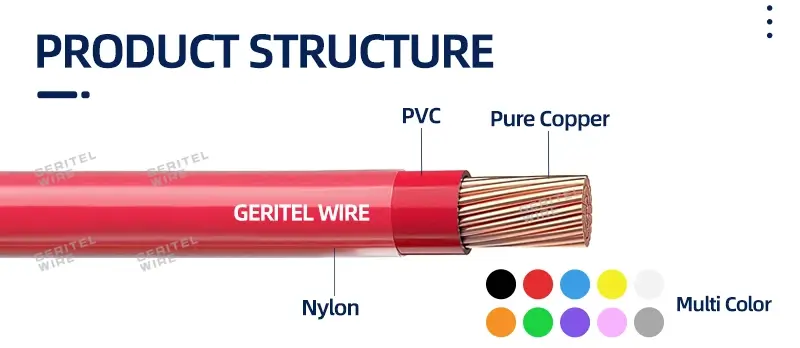
Misapplication in Wet Locations Due to THHN vs THWN-2 Confusion
One of the most common and costly mistakes occurs when cables are used in environments they are not designed for, particularly when THHN-rated cables are mistakenly installed in wet or outdoor locations due to misunderstanding product labeling or assuming all variants perform the same, which can lead to moisture ingress, insulation breakdown, and early system failure.
To avoid this, always confirm that the cable is dual-rated THHN/THWN-2 and suitable for wet locations, especially in underground or outdoor installations, and ensure compliance with standards such as Underwriters Laboratories (UL), since certified products provide verified performance and greater long-term reliability.
Voltage Drop in Long-Distance Cable Runs
In large facilities such as warehouses, manufacturing plants, or commercial complexes, where power must travel over long distances, undersized THHN/THWN-2 conductors can result in significant voltage drop, which may not be immediately noticeable during installation but will appear as reduced equipment efficiency, dim lighting, or unstable motor performance during operation.
This issue can be addressed by calculating voltage drop during the design phase, increasing conductor size, optimizing routing, or using parallel conductors for high-load circuits; and in these cases, cables with consistent conductivity and strict quality control help ensure that actual performance matches design expectations.
Environmental and Chemical Exposure Leading to Insulation Degradation
Although THHN/THWN-2 cables are known for their versatility and cost-effectiveness, they are not suitable for all harsh environments, and prolonged exposure to oils, chemicals, or UV radiation without proper protection can cause insulation to soften, crack, or degrade, leading to reduced service life and increased maintenance costs.
To mitigate this, evaluate the operating environment carefully and apply protective measures such as conduits or trays, or select alternative insulation types when necessary; choosing cables made from high-quality materials with controlled manufacturing processes can also significantly improve resistance to environmental stress.
Poor Termination Practices Causing Localized Failures
Even with the correct cable selection, improper termination—such as using incompatible lugs, applying incorrect torque, or damaging the conductor during stripping—can create high-resistance points that generate heat, cause arcing, and eventually lead to equipment failure or safety hazards.
Ensuring proper termination techniques, using suitable accessories, and following installation standards are essential, while consistent conductor structure and insulation quality further enhance connection reliability.
Compliance Issues That Lead to Costly Delays
In some projects, cables fail inspection because they do not meet required standards or lack proper certification markings, often due to procurement decisions focused solely on cost rather than compliance and long-term reliability.
To avoid delays, penalties, or reinstallation, always select THHN/THWN-2 cables that comply with standards such as UL83 and are supplied by manufacturers with verified certification systems, ensuring both performance and regulatory approval.
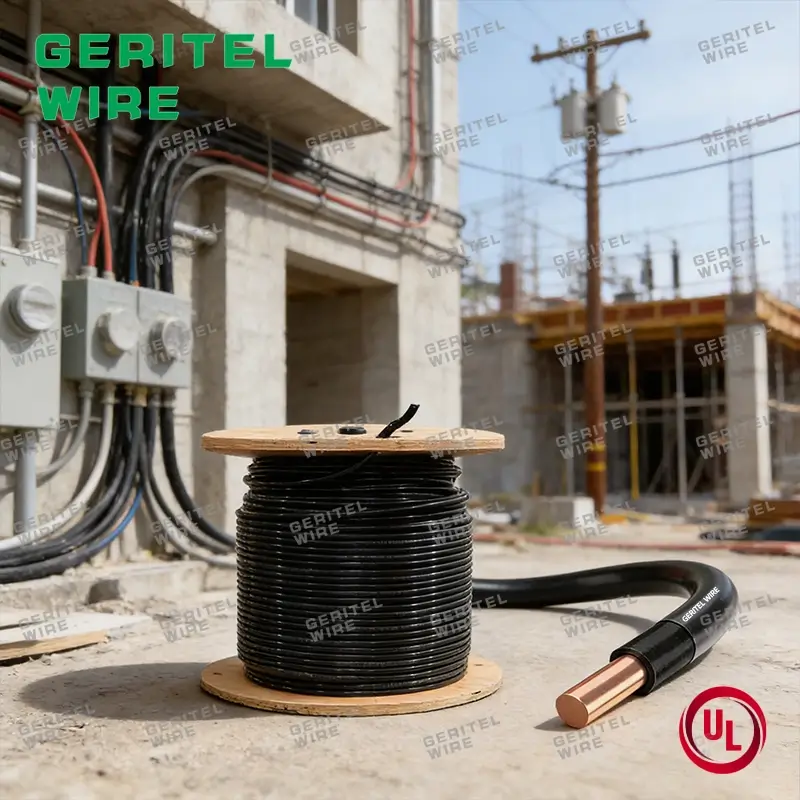
How to Avoid These Problems During Cable Selection
To minimize risks, cable selection should always be based on real application conditions rather than assumptions, meaning that load requirements, installation methods, environmental factors, and compliance standards must all be considered together; because in practice, the difference between a cable that performs reliably for years and one that fails prematurely often lies in these critical details.
Conclusion: The Real Cost Is Failure, Not the Cable
THHN/THWN-2 cables are widely used because they offer an excellent balance between performance and cost, but the true expense in any project is not the cable itself—it is the cost of failure, downtime, and rework when something goes wrong; therefore, making the right selection from the start, supported by accurate specifications and reliable manufacturing quality, is the most effective way to protect both your project and your budget.
If you are currently evaluating THHN/THWN-2 cables and want to avoid common failures while ensuring long-term performance, selecting a supplier with stable quality control, complete certification, and real project experience can make a significant difference; and if you are unsure which specification best fits your application, getting professional support early can help you avoid costly mistakes later.
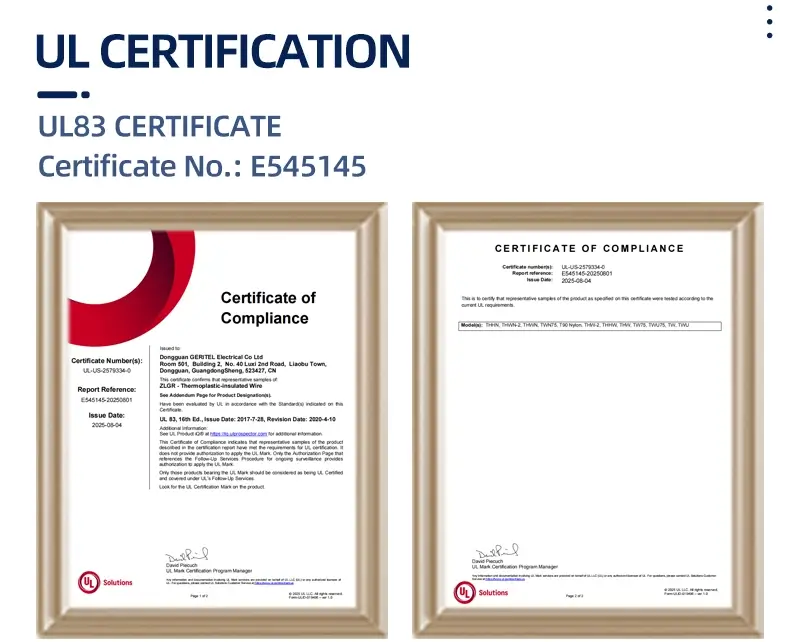
For contractors and project managers seeking dependable solutions, investing in professionally engineered and fully certified THHN/THWN-2 cables is not just a compliance requirement—it is a strategic decision that guarantees performance, safety, and peace of mind over the long term.
Dongguan GERITEL Electrical Co., Ltd. specializes in high-quality building wires and cables tailored for international markets.
We provide:
Stable supply of UL83 THHN/THWN-2 cable
Consistent quality control and technical support
Fast response for quotations and customization
contact us:
Email: manager01@greaterwire.com
Tel/WhatsApp/WeChat: +86 135 1078 4550 / +86 136 6257 9592
Website: www.greaterwire.com
We are ready to support your next project with safe, compliant, and high-performance cable solutions.
 Temperature Ratings of UL83 Standard Cables: THHN/THWN-2 Explained



 Building 2, No. 40 Luxi 2nd Road, Liaobu Town, Dongguan City, Guangdong Province, China